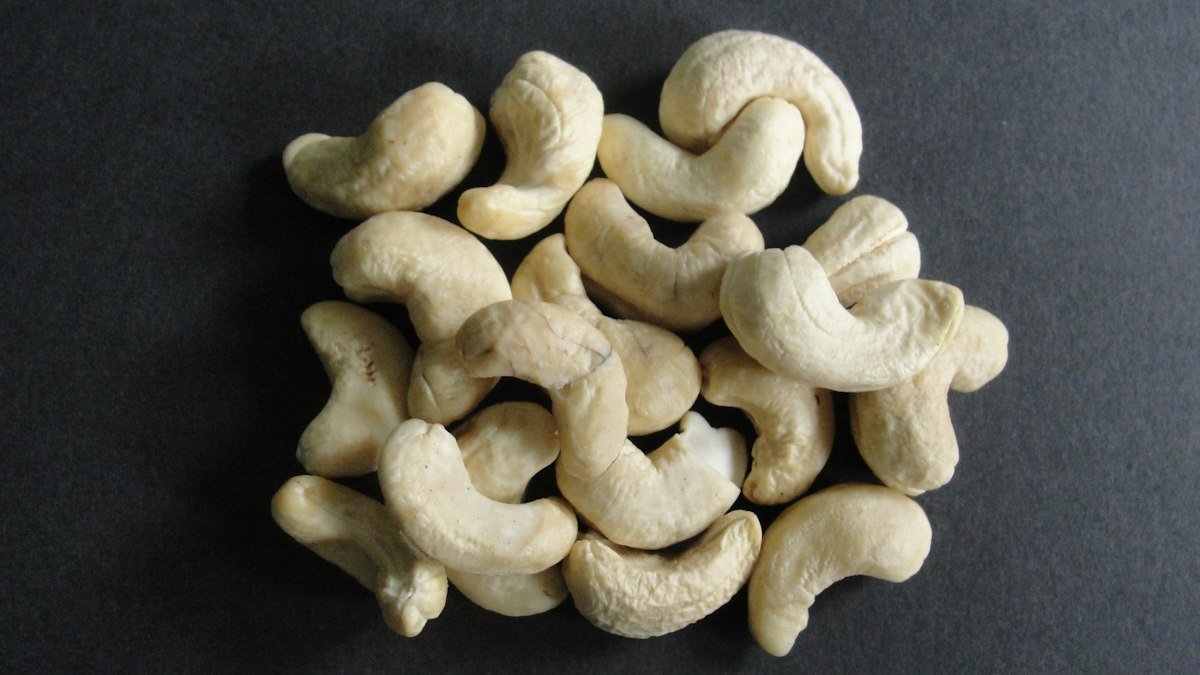
Cashews salted are one of the easiest snacks to reach for and one of the easiest to overeat. They are creamy, lightly crunchy and satisfying, and a small handful rarely feels like enough. The question most people ask first — are salted cashews a good snack? — has a balanced answer: they can be part of a sensible snack, as long as you watch the portion and the salt, and treat them as a small treat rather than a free refill.
Cashews are the kidney-shaped seeds of the cashew tree, native to Brazil and now grown in warm climates around the world. Salted cashews are usually roasted and coated with salt, which brings out their buttery flavour. This guide explains how they are made, what a sensible portion looks like, how they compare with other nuts, and how to store them so they stay fresh.
Key takeaways
- Salted cashews are roasted cashews coated with salt; the salt adds flavour and sodium.
- A small handful of about 28 grams is a sensible portion, with roughly 150 to 160 calories.
- Cashews are lower in fat than some nuts but still energy-dense, so portions matter.
- People with a tree nut allergy should avoid cashews entirely.
- Store salted cashews in an airtight container away from heat and light to keep them crisp.
What are salted cashews?
Salted cashews are cashew nuts that have been roasted and seasoned with salt. The nuts come from the cashew tree, Anacardium occidentale, and grow in a shell attached to a fleshy fruit called the cashew apple. The shell contains an oil that irritates the skin, so cashews are always processed — usually steamed or roasted — before they reach the shops, including the ones sold as raw.
Roasting gives cashews their golden colour and crisp, buttery texture. Salt is added during or after roasting, and it clings to the light coating of oil on the nut. Some are dry-roasted with no added oil, while others are roasted in oil before salting; the difference in taste is small. What matters more is the amount of salt, which varies by brand, so check the label if salt intake matters to you.
Best for: a small, satisfying snack with drinks, or a crunchy topping for salads and noodle dishes.
How salted cashews are made
The journey from tree to snack bowl is longer than most people realise. Cashew nuts are harvested, dried in the sun, then steamed or roasted to remove the shell safely. The kernels are peeled, graded by size and colour, then roasted a second time for flavour. Salt is added while the nuts are still warm, so it sticks.
Some producers roast in oil, which gives a richer flavour, while others dry-roast, which keeps the nuts lighter. Honey-roasted and chilli-coated cashews follow the same process with different seasonings, but plain salted remains the most popular. The nuts are then cooled and packed in sealed bags or tubs. Because cashews contain natural oils, they can go stale if the packaging is left open, which is why airtight storage matters.
Cashews are not a cheap crop to produce. Each nut is shelled by hand or by machine in a careful process, and a large share of the world’s cashews are grown in Vietnam, India and West Africa. That labour is part of why cashews cost more than peanuts, and why a small portion is the norm.
Best for: understanding why a small bag of cashews costs more than a large bag of crisps.
Salted cashews: nutrition at a glance
Cashews are energy-dense, like all nuts, and the numbers below are approximate ranges for a small handful of about 28 grams, roughly 18 whole cashews. Exact figures vary by brand, roast and salt level, so treat these as a guide. The table compares salted cashews with two other popular snack nuts.
| Nut | Calories (approx.) | Fat (approx.) | Sodium (approx.) |
|---|---|---|---|
| Salted cashews | 150 to 160 | 12 to 13 g | 150 to 200 mg |
| Almonds, salted | 160 to 170 | 14 to 15 g | 150 to 200 mg |
| Peanuts, salted | 160 to 170 | 14 g | 150 to 200 mg |
The main difference is texture and fat: cashews are softer and creamier, with slightly less fat than almonds or peanuts, but the gap is small. The salt is where salted cashews stand out — a small handful can contain roughly 150 to 200 milligrams of sodium, a meaningful share of the day’s salt for people who watch their intake. Unsalted cashews have almost no sodium by comparison, so switching to unsalted is the simplest way to cut the salt.
Cashews also provide small amounts of minerals, including magnesium, iron and zinc, plus plant protein and fibre. They are not a health food in the way a piece of fruit is, but they are more filling than crisps or biscuits, because the fat and protein slow you down. The guide to eating healthier with cooked vegetables has more ideas for building a balanced plate around simple foods.
Best for: a snack that fills you up — as long as the portion stays small.
How much is a sensible portion?
A sensible portion of salted cashews is a small handful, about 28 grams, or roughly 18 whole nuts. That sounds small, and it is — but it is also about 150 to 160 calories, a reasonable size for a snack between meals. The trouble starts when the bag stays open on the desk or the sofa, and one handful quietly becomes three or four.
The easiest way to keep portions honest is to serve yourself a small bowl and put the bag away. Eating from the bag makes it hard to notice how much you have had, and cashews are easy to eat quickly because they are soft and need little chewing. A small bowl, eaten slowly, is usually satisfying, especially with a drink of water or a piece of fruit alongside.
It also helps to think about when you eat them. Cashews work well as a mid-afternoon snack, when a little fat and protein can carry you to dinner, or as a small nibble with drinks. They are less useful as a meal replacement, and at their worst as a mindless snack in front of a screen. For more snack ideas, the round-up of trending healthy snacks is a good place to look.
Best for: a small bowl, eaten slowly, with the bag put away — the portion habit that matters most.
Salted cashews and allergies
Cashews are a tree nut, and anyone with a tree nut allergy should avoid them entirely. Reactions can be serious, and even a small amount can cause one in someone who is sensitive. If you have a known tree nut allergy, do not eat salted cashews, and check labels on mixed nuts, snack bars and Asian dishes, where cashews often appear.
Cashews are related to pistachios, as both belong to the same plant family, and some people who react to one also react to the other. They are also related to mango, though most people with a cashew allergy can eat mango without a problem. If you are unsure, ask a doctor or an allergy specialist.
Cross-contact is another risk. Nuts are often processed on shared equipment, and a packet of salted cashews may warn that it was made in a factory that also handles other nuts. These warnings matter for people with severe allergies, and they are worth reading even when the product contains only cashews.

Best for: anyone serving snacks to guests — always ask about nut allergies before putting a bowl on the table.
How to store salted cashews
Salted cashews keep best in an airtight container in a cool, dark cupboard, away from heat and sunlight. They stay crisp for several weeks after opening, and unopened packs keep for months. The enemy is air: once the bag is open, the natural oils slowly turn stale, and the salt draws in moisture, which softens the crunch.
For longer storage, the fridge or freezer works well. Put the nuts in a sealed bag or container, squeeze out the air, and they will keep for several months in the fridge or longer in the freezer. Let them come back to room temperature before eating, as cold cashews taste dull and soft. A quick warm in a dry pan restores the crunch.
Throw cashews away if they smell sharp, bitter or like old oil, or if they taste rancid. Stale nuts taste unpleasant, and it is better to replace them. Buying smaller bags more often is usually better than buying a large bag that sits open for weeks. Other pantry staples need the same care, and the guide to burdock root covers another ingredient that rewards proper storage.
Best for: a sealed jar in a cool cupboard, with the bag folded shut and clipped between servings.
Salted cashews checklist
- Serve a small handful of about 28 grams in a bowl, and put the bag away.
- Choose unsalted cashews if you want to cut the sodium without giving up the snack.
- Check the label for salt content, added oil and allergen warnings.
- Ask guests about tree nut allergies before serving cashews.
- Store salted cashews in an airtight container in a cool, dark place.
- Refrigerate or freeze for longer storage, and bring back to room temperature before eating.
- Throw away any cashews that smell sharp, bitter or rancid.
Frequently asked questions
Are salted cashews healthy?
Salted cashews can be part of a balanced diet in small portions. They provide plant protein, fibre and minerals, but they are energy-dense and the added salt contributes sodium. A small handful is a reasonable snack; eating them by the bagful is not.
How many calories are in salted cashews?
A small handful of about 28 grams contains roughly 150 to 160 calories. Exact figures vary by brand and roast, so treat this as an approximate range. A larger handful of about 50 grams contains roughly 270 to 290 calories.
Are salted cashews high in sodium?
They contain more sodium than unsalted cashews. A small handful typically has roughly 150 to 200 milligrams of sodium, depending on the brand. If salt intake matters to you, unsalted cashews are the simpler choice.
Can I eat salted cashews if I have a nut allergy?
No. Cashews are a tree nut, and people with a tree nut allergy should avoid them entirely. Cashews are related to pistachios, and some people react to both. If you are unsure, speak to a doctor or an allergy specialist.
Do salted cashews go off?
Yes, they can go stale. The natural oils turn rancid over time, especially once the pack is open and exposed to air, heat and light. Store them in an airtight container in a cool, dark place, and throw them away if they smell sharp or bitter.
Are raw cashews the same as salted cashews?
No. Cashews sold as raw have been steamed or roasted to remove the shell safely, but they have no added salt or oil. Salted cashews are roasted and coated with salt, which adds flavour and sodium. Unsalted roasted cashews sit in between: roasted for flavour, with no added salt.
Conclusion
Salted cashews are a good snack when the portion is small and the salt is kept in mind. A small handful, served in a bowl with the bag put away, gives you the creamy crunch without the creeping calories. Choose unsalted to cut the salt, store them airtight, and always ask about allergies before sharing.
General information only: this guide is about food and snacking, not medical or dietary advice. Nutrition figures are approximate ranges and vary by brand, roast and serving size. If you have an allergy, a health condition or a dietary question, speak to a qualified professional.