What if the hardest part of an Iceland trip isn’t the weather, the prices, or the driving, but simply deciding where to point the car first? That is the real puzzle. Iceland packs glaciers, volcanoes, black-sand beaches, thundering waterfalls, and steaming lava fields into a country you can cross in a long day. The shortlist below cuts through the noise and names the places worth your limited time, with the trade-offs nobody mentions in the brochures.
The Shortlist at a Glance
| Place | Best for | Standout draw | Main limitation | Cost note |
|---|---|---|---|---|
| Reykjavík | City time, food, culture | Compact walkable center, Hallgrímskirkja, Harpa | Priciest base in the country | Harpa building access free; Hallgrímskirkja tower ticketed |
| Golden Circle (Þingvellir, Geysir, Gullfoss) | First-timers, short trips | Geysers, hot springs, two-stage waterfall | Crowded at midday | Gullfoss parking fee not confirmed; check locally |
| South Coast waterfalls and black sands | Road-trippers | Waterfalls, glaciers, volcanic beaches | Weather can close roads fast | Tour-dependent |
| Jökulsárlón and ice caves | Winter adventurers | Ice caves, glacial lagoon | Seasonal and guide-only | Tour-dependent |
| Snæfellsjökull National Park | Scenery without crowds | Land and marine park on one peninsula | Long detour from the Ring Road | Free to roam |
| Akureyri and the north | Slow travel, whale watching | Arctic gardens, fjord views, seafood | Far from the south’s highlights | Varies |
| Westfjords and Hornstrandir | Hikers, solitude seekers | Rugged, remote, near-empty | Rough roads, short season | Varies |
| Grímsey Island | Birders, Arctic Circle bragging rights | Puffins, cliffs, the Arctic Circle line | Long ferry, tiny community | Ferry from Dalvík, roughly three hours |
| Blue Lagoon and other geothermal spas | Recovery days | Warm water in cold weather | Busy and commercial | Book ahead |
Reykjavík: Start Here Even If Cities Aren’t Your Thing

Nearly every Iceland trip begins and ends in the capital, and that’s fine, because Reykjavík earns its place. It’s compact enough to explore on foot, with the rainbow-painted stretch of Laugavegur for shopping and the stepped concrete facade of Hallgrímskirkja looming over the rooftops. A hilltop tower climb gives you the postcard view; the tower is ticketed, while the mirrored Harpa concert hall by the harbor keeps its public interior spaces free to wander.
The food is the quiet highlight. Free-range lamb, Arctic char, plokkfiskur (a creamy fish hash), pylsa hot dogs, and ice cream all show up on walking tours with tasting stops. A guided walk pays off here because the city’s stories don’t announce themselves.
The limitation is simple: Reykjavík is the most expensive base in the country, and it’s a city, not a landscape. Give it a day or two at the start, then leave. If you’re a student building a travel-and-career plan on a budget, the same discipline that helps you land an internship and boost your resume applies here: pick your priorities, book early, and don’t waste money on things you don’t actually care about.
The Golden Circle: Geysers, Hot Springs, and One Big Waterfall
The Golden Circle is Iceland’s greatest hits compressed into a loop, and it’s the single best choice for a first visit or a short layover. Þingvellir National Park serves up history and geology in one stop, with trails that Game of Thrones fans will recognize as the “Bloody Gate” filming location. Geysir’s hot springs and bubbling vents do the dramatic work, and Gullfoss finishes the day with a two-stage waterfall dropping into a canyon.
Here’s the practical warning: the Golden Circle is also the most crowded route in Iceland. Tour buses arrive mid-morning and stack up through early afternoon. Go at the edges of the day, or drive it yourself in reverse order. At Gullfoss, stay on the open platforms and check parking arrangements on site, since the fee situation isn’t confirmed in the sources reviewed here.
The South Coast: Waterfalls, Glaciers, and Black Sand
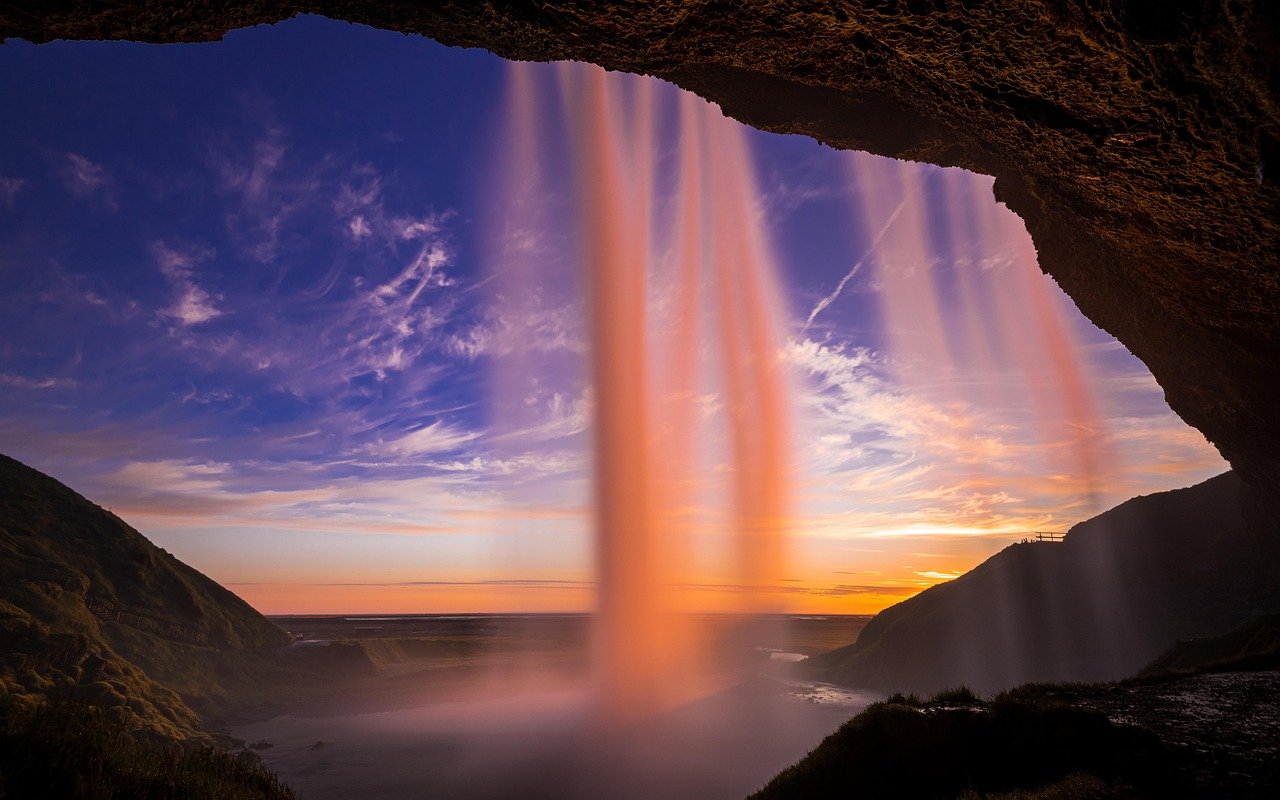
If you have three or more days, the South Coast is where Iceland stops feeling like a checklist and starts feeling like another planet. Thundering waterfalls, glacier tongues reaching toward the road, and black-sand beaches sit within a few hours of each other. A first-time route that combines the Golden Circle with the South Coast catches the highest concentration of highlights in the country.
The limitation is weather. Coastal storms can shut roads with little notice, and wind at the beaches is genuinely dangerous. Build a buffer day into your plan and never treat a driving schedule as fixed. This is also the stretch where a rental car beats tours on flexibility, though winter driving demands real experience.
Jökulsárlón and the Ice Caves: Winter’s Best Argument
From roughly November through March, the glacier lagoon and its neighboring ice caves become Iceland’s most otherworldly experience. Crystalline blue chambers, drifting icebergs, and the sense that you’ve wandered into a nature documentary make the cold worth it. Ice cave visits run with guides only, and conditions change daily, so book with a licensed operator and accept that some days get cancelled.
The limitation: this is a winter product. In summer, the lagoon still stuns, but the caves are gone. Pair it with the Northern Lights if the sky cooperates, and remember that aurora viewing is a gamble, not an itinerary item you can schedule.
Snæfellsjökull National Park: West Iceland’s Quiet Star
On the Snæfellsnes Peninsula, Snæfellsjökull National Park stands out as the only one of Iceland’s three main parks with both land and marine areas. That means coastal cliffs, lava fields, and a glacier-capped volcano in one compact package, usually with a fraction of the Golden Circle’s crowds.
It suits travelers who’ve already done the classics and want breathing room. The limitation is geography: it’s a detour off the Ring Road, so it costs you a day you might spend elsewhere. For photographers and slow travelers, it’s usually worth it.
Akureyri and the North: Iceland Without the Queue
Iceland’s second city, Akureyri, sits at the head of a stunning fjord and offers something the south struggles with: breathing room. Akureyri Church is the iconic landmark with fjord views, the Botanical Gardens hold an extensive collection of Arctic and cold-climate plants, and the city has a lively cultural calendar of galleries, theaters, and year-round festivals. It’s also a superb place to eat seafood, including a proper bowl of plokkfiskur.
The north is also whale-watching country, with tours running from both Akureyri and Húsavík. The limitation is distance: basing yourself here means skipping some southern highlights unless you commit to the full Ring Road. For a slower, more affordable trip, that trade is often smart.
The Westfjords and Hornstrandir: For People Who Want Empty
The Westfjords deliver the rugged, remote beauty that Iceland’s marketing promises, and Hornstrandir Nature Reserve takes it further, with near-total solitude and no facilities to speak of. This is hiking country, with short seasons and rough roads that punish rushed drivers.
Choose it if you value emptiness over efficiency. Skip it if you have four days and want waterfalls. There’s no shame in either choice.
Grímsey Island: Cross the Arctic Circle
A speck of an island about 25 miles north of the mainland, Grímsey sits directly on the Arctic Circle and hosts around 100 people against roughly a million seabirds in summer. Puffins fill the cliffs from April through August, alongside razorbills, black-legged kittiwakes, and northern fulmars. Hike to the southern tip for the tangerine lighthouse, then eat fish and chips at the island’s only restaurant.
Two warnings. First, Arctic terns nest here and will dive-bomb intruders, so give them space. Second, getting there takes commitment: a ferry from Dalvík runs roughly three hours each way. It’s a full day for a very specific payoff, and birders will tell you it’s worth every minute.
Geothermal Spas: The Blue Lagoon and Its Rivals
The Blue Lagoon on the Reykjanes Peninsula remains the famous soak, and bathing in hot springs while snow falls around you is a genuinely great travel memory. Book ahead, especially in peak season, and treat it as a recovery day rather than a sightseeing stop.
The limitation is obvious: it’s commercial and busy. Iceland has other geothermal pools and lagoons that trade polish for quiet. If you want the iconic experience, take it; if you want solitude, look around.
How to Choose Your Iceland Route
Work backward from three questions.
- How many days do you have? Under four days, do Reykjavík plus the Golden Circle and call it a win. Five to seven days, add the South Coast. Ten days or more, drive the Ring Road and fold in Snæfellsnes or the north.
- What season are you traveling? Winter unlocks ice caves and the Northern Lights but closes interior roads and shortens daylight. Summer unlocks the Highlands, the Midnight Sun, and all-day hiking.
- What do you actually want? Crowds and convenience, or emptiness and effort? Iceland serves both, but rarely in the same place.
One more practical note: distances on a map deceive. A two-hour drive can become four with weather, photo stops, and gravel. Plan fewer stops than you think you need.
Conclusion
Iceland rewards travelers who choose deliberately. The Golden Circle and South Coast deliver the iconic fire-and-ice drama with minimal planning. Reykjavík feeds you and orients you. Snæfellsjökull, Akureyri, the Westfjords, and Grímsey reward anyone willing to drive further for fewer people and stranger landscapes. Pick two or three anchors, build slack into the schedule, and let the weather write part of the itinerary. That’s how the best Iceland trips actually happen.
FAQ
What is the single best place to visit in Iceland for a first-timer?
The Golden Circle. It bundles Þingvellir, Geysir’s hot springs, and Gullfoss into one manageable loop close to Reykjavík, which makes it the highest-value day for a short trip.
How many days do you need in Iceland?
Four days covers Reykjavík and the Golden Circle comfortably. Seven days lets you add the South Coast waterfalls and black-sand beaches. Ten days or more justifies the full Ring Road.
When is the best time to see the Northern Lights in Iceland?
Winter months, when nights are long and dark. Summer’s Midnight Sun makes aurora viewing impossible. Even in winter, sightings depend on solar activity and clear skies, so treat it as a bonus rather than a guarantee.
Is the Blue Lagoon worth it?
Yes, if you want the iconic geothermal soak and don’t mind booking ahead and sharing the water. Travelers who prefer quiet should look at smaller geothermal pools instead.
Do you need a rental car to visit Iceland’s best places?
Not strictly. Guided tours cover the Golden Circle and South Coast well. But a car gives you timing control, which matters enormously when weather shifts and crowds build at midday.
What should you not miss on a longer Iceland trip?
Snæfellsjökull National Park for coastal scenery without crowds, Akureyri for fjord views and Arctic gardens, and Grímsey Island if you want to stand on the Arctic Circle with puffins overhead.
And if your longer trip doubles as career research, the same deliberate planning pays off when you turn a student trip into resume material instead of just photos. Whichever anchors you pick, book the ice caves and lagoons early, keep a weather buffer, and let the island’s empty corners surprise you.
Keep Planning Your Trip
For more northern travel ideas, compare the best places to visit in Norway in 2026, the best places to visit in Scotland, and the best places to visit in New Zealand before you book your next trip.