
Thanksgiving Day 2026 falls on Thursday, 26 November 2026, the fourth Thursday of November, and it is the day Americans gather with family and friends to share a meal and give thanks for the year. If you are planning the holiday, booking travel or simply wondering why the date moves each year, this guide has the answers: the history of the first Thanksgiving in 1621, how the holiday became a national tradition, what people eat and do, and how to make the most of the day.
Key takeaways
- Thanksgiving Day 2026 is Thursday, 26 November 2026, the fourth Thursday of November.
- The holiday traces back to a 1621 harvest feast shared by Plymouth colonists and the Wampanoag people.
- Abraham Lincoln proclaimed a national Thanksgiving in 1863, and Congress fixed the fourth Thursday in 1941.
- The traditional meal centres on roast turkey, stuffing, potatoes, cranberry sauce and pumpkin pie.
- Parades, American football and the turkey pardon are part of the modern celebration.
- Canada celebrates its own Thanksgiving on the second Monday in October.
What Thanksgiving Day is
Thanksgiving Day is an annual national holiday in the United States celebrating the harvest and the blessings of the past year. Families and friends gather to express gratitude over a shared feast, and for many people it is the largest family gathering of the year. The holiday is observed on the fourth Thursday in November in the United States, which is why the date shifts from year to year, and on the second Monday in October in Canada. Thanksgiving is described on Wikipedia as a harvest festival with roots in English traditions of days of prayer and thanksgiving, carried to America by early colonists.
The day is a federal holiday in the United States, which means government offices close and many businesses give staff the day off, with a long weekend that runs through to Sunday. Schools close, travel surges as people head home, and the days around the holiday are among the busiest travel days of the year. For all its familiarity, Thanksgiving is a holiday with a long and contested history, and understanding where it came from makes the celebration richer.
The story of the first Thanksgiving
The Thanksgiving story most Americans learn begins in Plymouth, in what is now Massachusetts. In September 1620, the Mayflower left Plymouth in England carrying 102 passengers, and the colonists who survived their first hard winter established the settlement of New Plymouth. In the autumn of 1621, after their first corn harvest proved successful, Governor William Bradford organised a celebratory feast and invited the Wampanoag people, their Native American allies, including the chief Massasoit.
That three-day harvest gathering is now remembered as the first Thanksgiving, though the Pilgrims probably did not use the term at the time. About 50 English settlers and around 90 Wampanoag men took part. The Wampanoag contributed venison, and the meal likely included fowl, fish, shellfish, stews, vegetables and beer. There were no pies or cakes, since the colonists had no oven and little sugar. Much of what we know comes from the Pilgrim chronicler Edward Winslow, who wrote that the governor sent four men out fowling and they killed enough in one day to serve the company almost a week.
It is worth remembering that the tidy story taught in schools leaves much out. The Wampanoag had their own long traditions of feasting and giving thanks that predated the colonists, and the decades that followed brought conflict, land loss and suffering for Native peoples. Many Native Americans mark the day as a National Day of Mourning, first observed in Plymouth in 1970, honouring Indigenous ancestors and drawing attention to that history. A full picture of Thanksgiving holds both the gratitude and the grief.
How Thanksgiving became a national holiday
For more than two centuries after 1621, days of thanks were celebrated by individual colonies and states rather than the nation as a whole. The New England colonists regularly held days of prayer to thank God for blessings such as a good harvest, a military victory or the end of a drought, and the Continental Congress proclaimed national Thanksgivings from time to time. It was not until the Civil War that the holiday became truly national.
On 3 October 1863, President Abraham Lincoln proclaimed a national day of thanksgiving to be celebrated on Thursday, 26 November of that year. Every president after him proclaimed the holiday annually, and the date chosen was usually the last Thursday in November. In the 1930s, President Franklin D. Roosevelt briefly moved it a week earlier to extend the Christmas shopping season, a change that proved unpopular. In 1941, Congress settled the matter by law, establishing the fourth Thursday in November as Thanksgiving Day, and the date has stayed there ever since.
How Thanksgiving is celebrated today
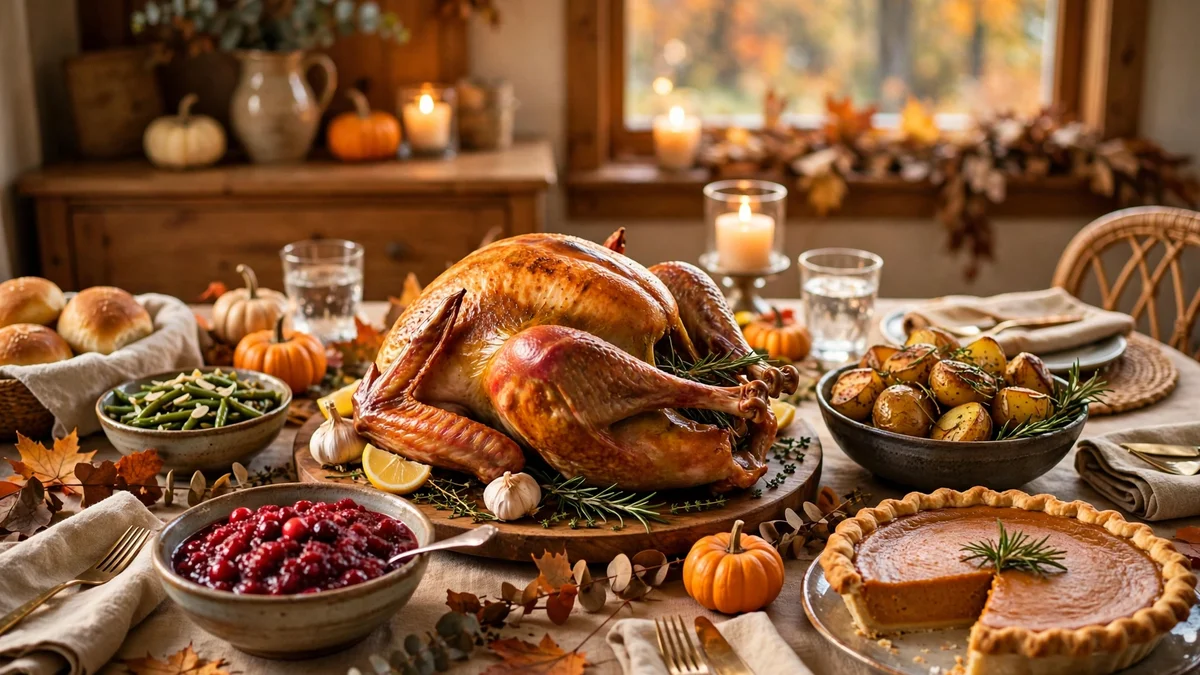
The centrepiece of the modern celebration is the meal. The traditional fare typically includes roast turkey, bread stuffing, mashed potatoes, cranberries and pumpkin pie, and many families add their own dishes, from sweet potato casserole to green bean casserole. The turkey is usually the largest bird the cook can manage, and the leftovers feed the family for days: cold turkey sandwiches the next day are a tradition in their own right. Carving the turkey at the table is a small ceremony, and the cook often keeps the wishbone for two people to pull apart afterwards, with the winner said to get a wish.
Beyond the table, the day has its own rituals. The Macy’s Thanksgiving Day Parade in New York, first held in 1924, fills the morning with giant balloons, marching bands and floats, and millions watch it on television while the turkey cooks. American football is the other great tradition, with professional games played through the afternoon. The White House turkey pardon, in which the president spares a turkey from the table, became a formal tradition under President George H. W. Bush in 1989. And for many families, the day begins with everyone saying what they are thankful for, a simple moment that captures what the holiday is about. Sweet things have their place at the table too, and the guide to chocolate covered strawberries offers a dessert idea that works well after a heavy meal.
Thanksgiving Day dates, 2024 to 2028
Because Thanksgiving always falls on the fourth Thursday of November, the date moves within a narrow range each year. The table below gives the dates for five years, so you can plan ahead.
| Year | Thanksgiving Day | Day of the week | Canada’s Thanksgiving |
|---|---|---|---|
| 2024 | 28 November 2024 | Thursday | 14 October 2024 |
| 2025 | 27 November 2025 | Thursday | 13 October 2025 |
| 2026 | 26 November 2026 | Thursday | 12 October 2026 |
| 2027 | 25 November 2027 | Thursday | 11 October 2027 |
| 2028 | 23 November 2028 | Thursday | 9 October 2028 |

Planning your Thanksgiving 2026
A little planning takes the strain out of the day. If you are hosting, settle the guest list early and ask about dietary needs, since a vegetarian or gluten-free guest is easy to feed with a bit of notice and a headache without it. A turkey needs time to thaw in the fridge, roughly a day for every two kilos, so work backwards from Thursday, 26 November and put it in the fridge in good time. Write a shopping list and a cooking timetable: dishes that can be made ahead, such as cranberry sauce and pies, should be finished the day before, leaving the oven free for the turkey and the last-minute sides.
Travel is the other thing to book early. The Wednesday before Thanksgiving is one of the busiest travel days in the United States, so travelling on Tuesday or early on Thursday can save hours. If you are a guest rather than a host, offer to bring something specific, such as a side dish or a bottle, and arrive on time: the cook’s timetable depends on it. And if the day feels long, remember that the best Thanksgivings are rarely the most elaborate. A simple meal, a walk after lunch, and time to talk properly with people you love will be remembered longer than a perfect table. If you are planning the menu, the guide to the best picnic recipes has ideas for relaxed, crowd-pleasing dishes, and the guide to the best inexpensive wines can help with choosing a bottle for the table.
Your Thanksgiving Day 2026 checklist
- Mark the date: Thursday, 26 November 2026, the fourth Thursday of November.
- Settle the guest list early and ask about dietary needs.
- Order or buy the turkey in good time and allow a day of fridge thawing for every two kilos.
- Make cranberry sauce and pies the day before to free the oven.
- Write a cooking timetable so everything is ready at the same time.
- Plan travel early: Wednesday is the busiest day, so travel Tuesday if you can.
- Set aside a moment for everyone to say what they are thankful for.
- Keep the wishbone for the traditional pull after the meal.
What date is Thanksgiving Day 2026?
Thanksgiving Day 2026 is Thursday, 26 November 2026. In the United States it is always the fourth Thursday of November, so the date changes from year to year.
Why does Thanksgiving fall on a different date each year?
The holiday is fixed to the fourth Thursday of November rather than a calendar date, so it falls between 22 and 28 November depending on the year. Congress established the fourth Thursday rule in 1941.
What happened at the first Thanksgiving?
In the autumn of 1621, Plymouth colonists and Wampanoag people shared a three-day harvest feast in what is now Massachusetts. About 50 settlers and around 90 Wampanoag took part, with venison, fowl, fish and vegetables on the table.
What food is traditionally served at Thanksgiving?
The classic meal centres on roast turkey, bread stuffing, mashed potatoes, cranberry sauce and pumpkin pie. Families add their own dishes, and leftovers, especially cold turkey sandwiches, are part of the tradition.
Is Thanksgiving celebrated outside the United States?
Yes. Canada celebrates Thanksgiving on the second Monday in October, which falls on 12 October in 2026. Other countries have their own harvest festivals, though the American holiday is the best known.
What is the turkey pardon?
The turkey pardon is a White House tradition in which the president spares a turkey from the Thanksgiving table. It became a formal tradition under President George H. W. Bush in 1989.
The bottom line
Thanksgiving Day 2026 falls on Thursday, 26 November 2026, and it remains what it has been since 1621: a day to gather, to eat well and to give thanks. Its history runs from a three-day harvest feast in Plymouth through Lincoln’s 1863 proclamation to the parades, football and family tables of today, and it carries a harder history too, one worth remembering alongside the celebration. Plan early, keep the meal simple, and give the day its proper centre: the people around the table.