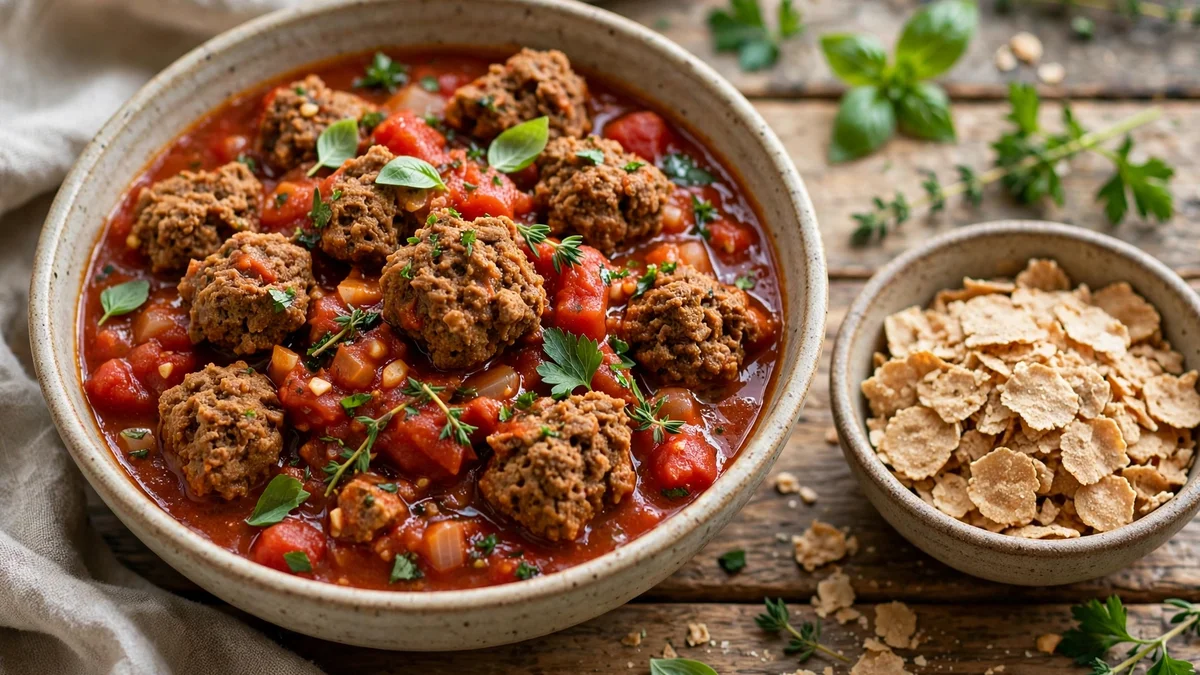

Textured vegetable protein is one of the cheapest high-protein foods you can buy, and it has been quietly feeding people for more than fifty years. Also known as textured soy protein, soy meat or soya chunks, textured vegetable protein is a defatted soy flour product, a by-product of extracting soybean oil, and it is often used as a meat analogue or meat extender. If you have ever wondered what those dry, beige flakes in the health food shop actually are, whether they are worth cooking with, and how to make them taste like something you would choose to eat, this guide answers all three questions. The short version is that it is simple, versatile and very cheap, but it needs seasoning and a proper soak before it earns its place on the plate.
Key takeaways
- Textured vegetable protein, or TVP, is made from defatted soy flour left over from soybean oil production.
- It was invented by Archer Daniels Midland in the 1960s, in Chicago, Illinois.
- Dry TVP is about 51 per cent protein and has a shelf life of longer than a year.
- It can soak up as much as three times its weight in liquid when rehydrated.
- Rehydrated at a two-to-one ratio, its protein content drops to about 16 per cent, similar to minced meat.
- Anyone with a soy allergy should avoid TVP, since it is made from soy.
What textured vegetable protein is
Textured vegetable protein, usually shortened to TVP, is made from high-protein soy flour, which contains about 50 per cent soy protein, or from soy concentrate, which contains about 70 per cent. It can also be made from other protein-rich seed meals left over from vegetable oil production, including lentils, peas and faba beans, and from cottonseed, wheat and oats. The name textured vegetable protein and the initials TVP are registered trademarks owned by Archer Daniels Midland, the agricultural commodities company that invented the product in the 1960s in Chicago. The company first developed a textured soy protein isolate made with an extruder in the shape of rods or tubes, and sold it for use in chilli con carne, though that early product was not commercially successful. By 1968, TVP was widely used in a variety of food products, and consumption rose sharply after 1971, when TVP was approved for use in school lunch programmes in the United States. By 1980, rival companies were making similar products, but Archer Daniels Midland remained the leader in production. Today you will find it in health food shops and larger supermarkets, usually in the bulk section, and it is also widely used in schools, prisons and disaster preparedness, because it is light, cheap, high in protein and keeps for a long time.
How it is made
TVP is made by extrusion, which is a way of shaping food by forcing it through a nozzle under heat and pressure. The defatted soy proteins are heated to between 150 and 200 degrees Celsius, which turns them into a fibrous, insoluble, porous network. As the pressurised mixture leaves the extruder, the sudden drop in pressure makes it expand into a puffy solid, which is then dried. The result is a dry, light product that can soak up as much as three times its weight in liquid, which is the key to cooking with it: the dry flakes are a blank sponge, and whatever liquid you soak them in becomes their flavour. The product is extruded into various shapes, including chunks, flakes, nuggets, grains and strips, and each shape suits different dishes. Many producers use hexane to separate soy fat from soy protein, and trace amounts of the solvent are left after manufacturing, but measured levels are around 20 parts per million, and the rodent studies that have been done suggest it would be almost impossible to get enough hexane from TVP to cause harm. In its dehydrated form, TVP has a shelf life of longer than a year, but it will spoil within several days after being hydrated, so only soak what you plan to cook.
The different forms, and what each one suits
TVP comes in several shapes, and picking the right one makes cooking easier. Flakes and granules behave most like minced meat, chunks and nuggets work better in stews and curries, and strips suit stir-fries and sandwiches. The table below sets out the main forms and their best uses.
| Form | Texture when cooked | Best for |
|---|---|---|
| Flakes | Fine, like minced meat | Chilli, bolognese, tacos |
| Granules | Small, crumbly pieces | Burgers, stuffing, sauces |
| Chunks | Firm, chewy bites | Stews, curries, kebabs |
| Nuggets | Chunky and meaty | Stir-fries, roast dinners |
| Strips | Long, flat pieces | Sandwiches, wraps, stir-fries |

Whatever form you buy, the nutrition is similar. Dried TVP is about 6 per cent water, 51 per cent protein, 33 per cent carbohydrates and 3 per cent fat, and 100 grams provides 366 kilocalories according to the nutrition table, with a rich supply of folate, copper, zinc, phosphorus, magnesium and iron. It is a source of soy phytoestrogens, and the extrusion process reduces antinutritional factors such as phytate. The mild beany flavour is the main thing to manage: it is not unpleasant, but it is plain, and it needs strong seasoning. That plainness is also the point. TVP takes on the flavour of whatever you cook it with, so a well-seasoned tomato sauce, a spiced curry or a smoky barbecue marinade will all come through clearly.
How to cook it well
The single most important step is rehydration. Both flakes and chunks need soaking before use, and you can add flavouring at the same step, which is the easiest way to make TVP taste good. The usual ratio is two parts liquid to one part TVP by weight, which drops the protein content to about 16 per cent, close to that of minced meat. Use hot stock, tomato juice or seasoned water rather than plain water, and let it soak until the pieces are soft all the way through. Then squeeze out the extra liquid gently: too much water left in makes the texture soggy, and too little makes it dry. After that, treat it like minced meat. Fry it with onions, garlic and spices until it browns at the edges, then add it to your sauce and simmer. TVP is primarily used as a meat substitute because it costs less than a third of the price of minced beef, and when it is cooked together with meat it helps retain more nutrients by absorbing juices that would otherwise be lost. It works in vegetarian and vegan versions of chilli con carne, spaghetti bolognese, sloppy joes, tacos, burgers and burritos, and it can also be used as a low-cost extender in meat dishes, which lowers the fat and cholesterol of the finished meal. A slow cooker suits TVP well, since the long, gentle cooking lets the pieces absorb the sauce fully, and the Puerto Rican food guide shows how beans and rice dishes from another tradition welcome a protein that soaks up seasoning. If you are tracking your intake, the calorie burn calculator guide is a useful companion to a lighter, plant-based meal.
Cooking checklist
- Measure the dry TVP first, then add twice its weight in hot, well-seasoned liquid.
- Let it soak until every piece is soft all the way through before you cook it.
- Squeeze out the extra liquid gently so the texture is moist, not soggy.
- Fry the rehydrated TVP with onions, garlic and spices until the edges start to brown.
- Season boldly, since dry TVP has only a mild beany flavour of its own.
- Add it to sauces early enough to absorb flavour, not at the last minute.
- Store dry TVP in a sealed container in a cool, dry place away from moisture.
- Only rehydrate what you will cook today, since soaked TVP spoils within days.
Questions cooks ask
Is textured vegetable protein healthy?
It is high in protein and fibre and low in fat, with useful amounts of iron, magnesium, zinc and folate. Like any single food, it works best as part of a varied diet rather than as the only protein you eat.
Does TVP taste like meat?
Not on its own. Dry TVP has a mild beany flavour, and its texture is similar to meat once it is rehydrated and cooked. The flavour comes from the liquid you soak it in and the seasoning you cook it with, so it tastes like the dish you make.
How long does TVP last?
In its dehydrated form, TVP has a shelf life of longer than a year when kept dry and sealed. Once hydrated, it will spoil within several days, so store leftovers in the fridge and use them promptly.
Can I use TVP in place of minced beef?
Yes. Use it in chilli, bolognese, tacos, burgers and similar dishes, rehydrating it first at a two-to-one ratio of liquid to TVP. It also works as an extender, mixed half and half with minced meat, which cuts cost and fat.
Is TVP the same as tofu?
No, though both are made from soy. Tofu is made from soy milk that is curdled and pressed, while TVP is made from defatted soy flour that is extruded into dry, textured shapes. TVP is drier, lighter and keeps far longer than tofu.
Who should avoid TVP?
Anyone with a soy allergy should avoid it, since it is made from soy. It also contains soy phytoestrogens, so if you have a medical reason to limit soy, talk to your doctor before making it a regular part of your diet.
The bottom line
Textured vegetable protein will never be glamorous, and that is fine. It is cheap, light, high in protein, keeps for over a year in the cupboard, and turns into a convincing stand-in for minced meat once you soak it in something tasty and season it properly. Start with flakes in a chilli or a bolognese, where the sauce does the heavy lifting, and work up to chunks in a curry once you trust the method. You will save money, eat more plants, and wonder why you did not try it sooner. You can read more about it on Wikipedia.
This article is general information about a food ingredient, not medical or dietary advice. If you have a soy allergy, a medical condition, or questions about your diet, speak to a qualified health professional before making changes.