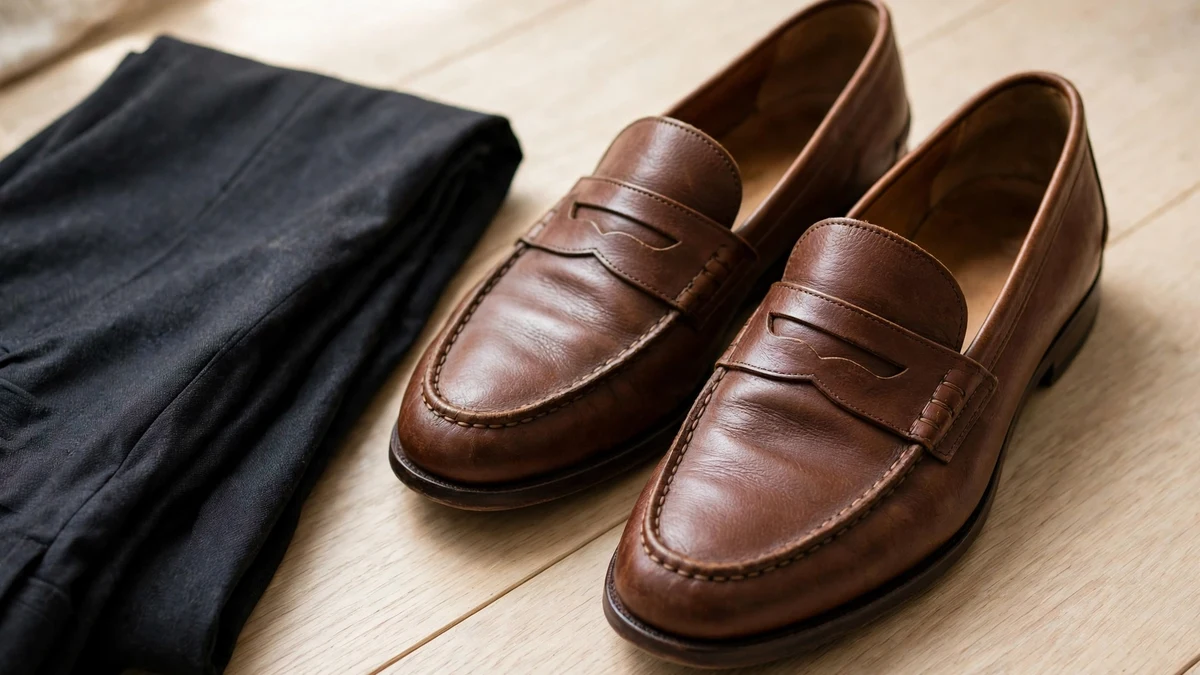

Penny loafers are slip-on shoes with a leather strap across the top of the foot, cut with a small slot that generations of wearers have used to hold a coin. They are low, laceless leather shoes with a moccasin-style stitched toe, a low heel and a separate sole, sitting between a trainer and a lace-up dress shoe. This guide explains where penny loafers came from, why they carry a coin in the strap, how the main styles differ, and how to choose and wear a pair.
Key takeaways
- Penny loafers are laceless leather slip-ons with a strap, or saddle, across the vamp and a slot cut into it.
- The design descends from Norwegian slip-ons, made famous in America by G.H. Bass and its Weejuns from 1936.
- The coin habit comes from American college students of the 1950s, who slipped a penny into the strap slot.
- Fit matters most: a loafer should feel snug at first, with the heel held firmly and no gaping at the sides.
- Dark brown leather is the most useful first pair; black suits tailoring, suede suits warm weather.
- Condition the leather regularly, use shoe trees, and resole before the heel wears unevenly.
What are penny loafers?
A penny loafer is a low slip-on shoe made of leather, with no laces, buckles or zips. The front is built like a moccasin, with the leather wrapping under the foot and a separate piece, the apron, stitched across the toe. Across the instep sits a band of leather called the saddle, and in its middle is a small diamond or crescent-shaped cut-out. That cut-out is the whole point of the name: it is the slot into which wearers slip a coin. A loafer in the wider sense covers several styles, but only the penny version has the slotted strap, and that detail is what most people picture when they hear the word.
A short history of the penny loafer
The penny loafer began far from the American college campuses it is now linked with. Its roots lie in the slip-on shoes worn by farmers and fishermen in Norway, where a simple leather shoe that could be stepped into at the door made practical sense. In the village of Aurland, shoemaker Nils Gregoriusson Tveranger, who had learned his trade in the United States, combined the moccasin construction he had seen in North America with the traditional Norwegian slip-on. Around 1930 he introduced a version with a heel and a leather strap across the vamp, known as the Aurland moccasin. In 1936 G.H. Bass of Maine launched its own version under the name Weejuns, a play on Norwegians, adding the saddle strap with its diamond cut-out, and it became the template for every penny loafer since.
The coin arrived later. In the late 1940s and early 1950s, American prep school and college students began slipping a penny into the slot, and the habit spread until the shoe took its name from it. Exactly why they did it is not documented with certainty. One story says the coin was a lucky charm; another says it was emergency money for a telephone call, although payphones of the era took a nickel or a dime rather than pennies, so that is now treated as legend. By the mid-1950s the penny loafer was a fixture of the Ivy League look.
Penny loafers and the other loafer styles
Not every loafer is a penny loafer. The family shares the same slip-on construction, but the detail across the vamp changes the character of the shoe. A penny loafer is the most understated of the group: no metal, no tassel and no fringe, only the quiet saddle strap. Tassel loafers add two leather tassels, horsebit loafers carry a metal bar shaped like a horse’s snaffle, Venetian loafers have a plain vamp, and kiltie loafers add a fringed tongue.
| Style | Detail across the vamp | Character | Best worn with |
|---|---|---|---|
| Penny loafer | Leather saddle strap with a slot | Classic, understated, preppy | Chinos, jeans, suits, skirts |
| Tassel loafer | Two leather tassels | Decorative, slightly dressy | Tailored trousers, blazers |
| Horsebit loafer | Metal snaffle bar | Polished, Italian, formal leaning | Suits, smart evening dress |
| Venetian loafer | Plain vamp, no detail | Minimal, sleek, modern | Tailored separates, summer suits |
| Kiltie loafer | Fringed leather tongue | Traditional, rustic | Tweed, casual country dress |
| Suede penny loafer | Saddle strap in suede | Soft, relaxed, warm weather | Linen trousers, shorts, knitwear |

How to choose a pair
Choosing penny loafers comes down to four decisions: leather, fit, sole and colour. Full-grain calf leather is the best choice for a first pair, because it takes a shine, resists scuffs and improves with conditioning. Suede is softer and more casual, but it marks easily and needs protection from rain. Check the stitching around the apron: it should be even and tight, and the sole should be stitched rather than only glued if you want the shoes to last long enough to resole. A leather sole looks smarter, while a rubber sole grips better in wet weather and suits everyday wear.
Fit is where most people go wrong, because a loafer has no laces to adjust. The shoe should feel snug when new, with light pressure across the top of the foot and the heel held firmly. Leather stretches with wear, so a pair that feels loose in the shop will only get looser. Your toes should not be pinched and the sides should not gape when you stand. Try both shoes with the socks you intend to wear, walk for several minutes, and watch for heel slip: a little at first is normal, but the heel should settle as the leather softens. If it still slips, try a half size down. For colour, dark brown is the most useful first choice, working with navy, grey, khaki and denim. Black suits a dark suit and formal occasions, while tan or cognac suits summer.
How to wear penny loafers
Penny loafers are at their best in smart-casual dress. With chinos in khaki or navy and a button-down shirt, they look considered without looking formal, and the same combination works with a blazer for dinner or a smart lunch. With straight-leg jeans in a mid or dark wash and a plain white tee or polo shirt, they lift a casual outfit without making it look dressed up. The trouser length matters: the hem should sit at the top of the shoe with a slight break, or just above the ankle, so the shoe is visible. Trousers that puddle over the shoe hide it entirely, while a hem two inches above the ankle leaves an awkward gap.
With a suit, the rules are narrower. A penny loafer in polished black or dark brown leather works with a navy or grey suit at country weddings, garden parties and business-casual offices, but it is not a black-tie shoe and should not be worn to a formal evening event that calls for oxfords. In colder months wear thin dark socks or fine wool socks, and in summer go sockless with no-show liners, which protect the leather from sweat while keeping the bare-ankle look. Never wear chunky athletic socks with loafers unless you are deliberately styling a retro look. Keep the leather clean and conditioned: scuffed leather undermines the whole outfit, because the loafer’s appeal is its polish.
Caring for leather loafers
Leather loafers last for years when looked after, and the routine is simple. Brush them after each wear, and wipe them with a slightly damp cloth if they have been out in rain or mud. Condition the leather every couple of months with a cream conditioner, which feeds the leather and keeps it supple, and polish with cream polish before formal occasions. Let wet shoes dry naturally at room temperature, stuffed with newspaper or cedar shoe trees, and never put them near a radiator, which dries the leather out and can crack it. When the heel starts to wear unevenly, take the shoes to a cobbler for a resole; a quality pair can be resoled several times.
A checklist for buying penny loafers
- Choose full-grain calf leather for a first pair; save suede for a second pair or summer.
- Check that the apron stitching is even and tight, and prefer a stitched sole over a glued one.
- Try both shoes with the socks you will wear, and walk in them for several minutes.
- Look for a snug fit, a firmly held heel and no gaping at the sides.
- Start with dark brown, which works with navy, grey, khaki and denim; add black for formal wear.
- Decide on the sole: leather for smart wear, rubber for grip, or leather with a rubber heel and toe.
- Buy cedar shoe trees, conditioner and cream polish for regular care.
- Check the return policy before buying online, since sizing varies between makers.
Frequently asked questions
Why are they called penny loafers?
The name comes from the small slot cut into the leather saddle strap. In the late 1940s and early 1950s, American college students began slipping a penny into the slot, and the habit spread until the shoe took its name from it. The exact reason is not documented: it may have been a lucky charm or a fashion statement. The telephone explanation is now treated as myth, since payphones did not accept pennies.
Are penny loafers formal or casual?
They sit between the two. A polished leather penny loafer is smart enough for a business-casual office, a country wedding and a dinner with a blazer, but it is not a formal shoe and should not be worn to black-tie events. Suede versions are more casual and suit warm weather. One pair can cover a working week and a weekend, provided the leather is clean.
Should you wear socks with penny loafers?
It depends on the season. In summer, go sockless with no-show liners, which protect the leather from sweat while keeping the bare-ankle look. In colder months, wear thin dark socks or fine wool socks. Avoid chunky white athletic socks, which clash with the shoe’s clean lines. If you go without liners, air the shoes after each wear.
How should penny loafers fit?
They should feel snug when new, with light pressure across the top of the foot and the heel held firmly. Leather stretches with wear, so a loose pair will only get looser. Your toes should not be pinched, and the sides should not gape when you stand. Expect a little heel slip at first, which should settle as the leather softens.
Can women wear penny loafers?
Yes. Penny loafers have been worn by women since the style became popular, and women’s versions come in the same leather and suede finishes, sometimes with a slightly narrower fit. They work with tailored trousers, pleated skirts, dresses and cropped jeans.
Do penny loafers need breaking in?
Most leather pairs need a short breaking-in period of a few wears. The leather softens across the vamp, the heel settles and any initial tightness eases. Wear them for short periods at first, around the house or on short walks, rather than for a full day. If a pair is painful after several wears, the fit is wrong and you should try a different size.
The bottom line
Penny loafers have lasted nearly a century because they solve a real problem: they are as easy to put on as a slipper and as presentable as a dress shoe. Buy one good pair in dark brown leather, make sure it fits snugly, keep it conditioned and resole it when the heel wears, and it will carry you through offices, weddings, weekends and summers alike. For more on looking after polished leather and relaxed days out, read our guide to how to polish wood furniture, our guide to line-dancing, and our guide to best picnic recipes.