
Lymphatic drainage massage near me is a search many people type after surgery, during recovery from an injury, or when swelling in an arm or a leg will not settle. The good news is that finding a good therapist is straightforward once you know what to look for: a properly trained practitioner, a clear explanation of what the treatment involves, and a clinic that asks about your health before you ever lie down on the table.
Key takeaways
- Lymphatic drainage is a gentle, light-pressure technique, not a deep-tissue massage.
- Look for a therapist with specific training in manual lymphatic drainage.
- A good clinic asks about your health history before your first session.
- Ask about qualifications, experience with your situation, and session length.
- Check reviews, but weigh training and a proper consultation more heavily.
- Some health conditions need a doctor’s approval before treatment.
What lymphatic drainage massage is
Lymphatic drainage massage is a gentle form of massage that aims to encourage the natural movement of lymph fluid around the body. The lymphatic system is part of the immune system, carrying fluid and white blood cells through a network of vessels and nodes. Unlike blood, lymph has no pump of its own, so it relies on movement, breathing and muscle activity to keep flowing. When that flow slows, fluid can collect in the tissues and cause swelling, heaviness or a feeling of tightness, particularly in the arms or legs.
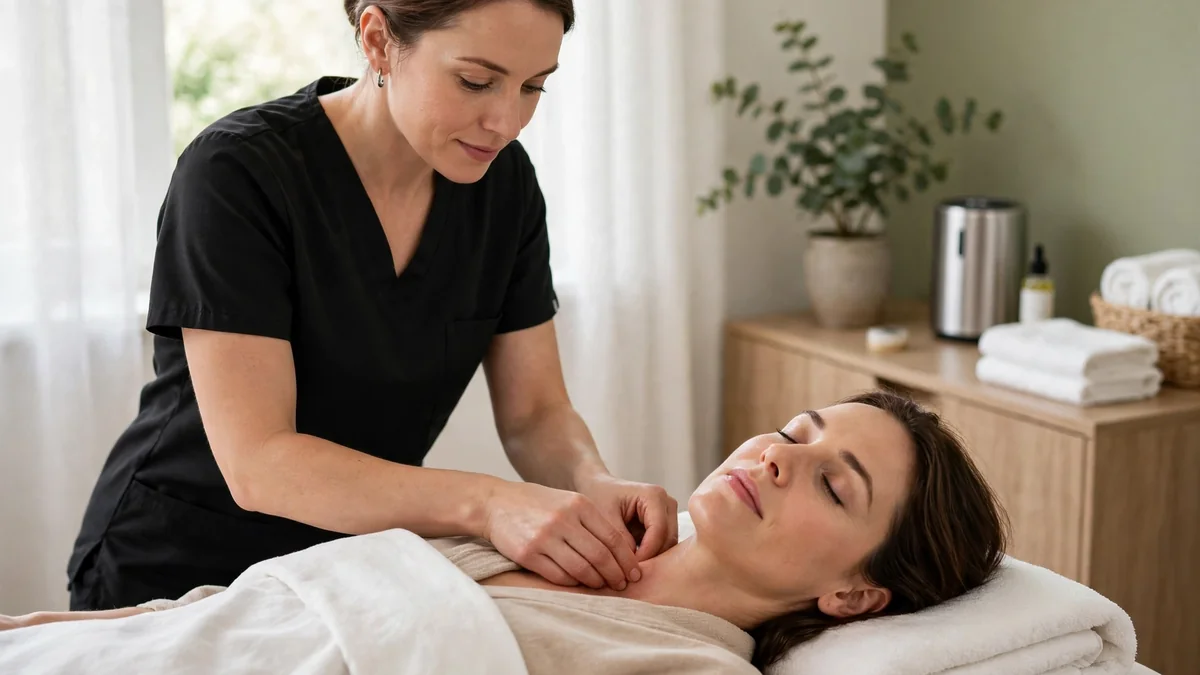
The technique itself is very different from the massage most people picture. The pressure is light, slow and rhythmic, using soft, sweeping strokes and gentle pumping movements over the skin. The therapist works in a set sequence, usually starting near the neck or the centre of the body before moving towards the area that needs attention. The manual lymphatic drainage page on Wikipedia gives a clear overview of the technique, its origins and how it differs from other forms of massage. People seek it out after surgery, for lymphoedema, or simply when they feel puffy after a long flight or a period of inactivity. It is not a dramatic detox treatment, it does not replace medical care, and it should never be painful.
How to find a therapist near you
The simplest way to start your search for a lymphatic drainage massage near you is to use the search tools you already trust: a maps search, a local clinic directory, or the website of a professional massage association in your country. Search for the treatment by name rather than for massage in general, because many excellent massage therapists have never trained in this particular technique. Look for practitioners who mention manual lymphatic drainage by name and describe their training, rather than simply listing it on a long menu of treatments.
Word of mouth is often the most reliable route of all. If you are recovering from surgery, ask your surgeon, nurse or physiotherapist whether they can recommend someone, since hospitals and rehabilitation clinics often work with trusted therapists. If you have lymphoedema, a lymphoedema nurse or your doctor may know practitioners who specialise in your condition. When you have a shortlist, look at each clinic properly: a professional website should say who the therapist is, what training they have, and how long sessions last.
What qualifications to look for
Training is the single most important thing to check when you are choosing a therapist. Manual lymphatic drainage is a specialist skill, taught in dedicated courses that cover the anatomy of the lymphatic system, the sequence of movements, and the conditions where treatment is suitable or should be avoided. Ask the therapist where they trained and how many hours the course involved. A practitioner who is happy to answer these questions is usually a practitioner worth trusting.
In many countries, massage therapists belong to a professional association or hold a recognised qualification, and membership often requires proof of training and insurance. What matters is that the therapist can explain their background clearly and holds professional insurance. If you have a medical condition such as lymphoedema, heart trouble, or an active infection, look for a therapist with experience in that area. Be cautious about anyone who promises dramatic results or pressures you to book a long course of sessions before you have had a single treatment.
Types of lymphatic drainage massage
Not every lymphatic drainage session is the same, and the right type depends on why you are seeking treatment. The table below sets out the main kinds you are likely to come across, what each one involves, and who it generally suits.
| Type | What it involves | Who it suits |
|---|---|---|
| Manual lymphatic drainage | Light, rhythmic strokes following the lymph pathways | People with mild swelling, or anyone wanting a gentle treatment |
| Post-surgery drainage | Very gentle work around the surgical area once healing allows | People recovering from surgery, with their surgeon’s agreement |
| Drainage for lymphoedema | A structured programme, often with compression and exercise | People living with lymphoedema, guided by their care team |
| Self-drainage at home | Simple strokes learnt from a therapist, used between sessions | People managing ongoing swelling at home |
If you are unsure which type fits your situation, say so when you enquire. A good therapist will ask about your health and tell you honestly whether their treatment is suitable or whether you should speak to your doctor first.

What to ask before you book
A short phone call or message before booking can save you time and disappointment. Start by asking about the therapist’s training in manual lymphatic drainage and how much experience they have with your particular situation, whether that is post-surgery swelling, lymphoedema, or general puffiness. Then ask what a first session involves: how long it lasts, whether it includes a consultation, and what you should wear.
Practical questions matter too. Ask the cost of a session and whether there is a reduced rate for a course of treatments, but be wary of paying for a large block of sessions in advance. Ask about the cancellation policy, the location and parking, and how far ahead you need to book. It is also worth asking what happens after the session and when you should come back.
What a session feels like
A first session usually begins with a consultation. The therapist will ask about your health, any surgery or medical conditions, medicines you take, and what you hope the treatment will achieve. They may ask to see the area that is swollen, and they will explain what they plan to do. Answer honestly and mention anything that worries you, even if it seems small.
During the massage itself, you will usually lie on a treatment table, covered with towels or a sheet, with only the area being worked on uncovered. The touch is feather-light compared with other massages, which surprises many people the first time. The strokes are slow and rhythmic, and the therapist works in a set order, often beginning at the neck and the centre of the body. The pressure should never hurt, and if anything feels uncomfortable, say so straight away. Afterwards, many people feel relaxed and a little sleepy, and some notice that the treated area feels lighter or less tight.
Everyday habits that support the lymphatic system
Massage is only one part of looking after your lymphatic system, and the everyday habits around it matter just as much. Gentle movement is the most important of these, because muscle activity helps move lymph fluid through the body. Walking, stretching, swimming and slow, deep breathing all help, and they are easy to build into an ordinary day. Simple routines such as those in a guide to easy self-care tips for every day can help you build rest, movement and good sleep into a busy week. Skin care is also relevant, particularly if you have lymphoedema, because the skin over a swollen area can be more vulnerable to infection, so keep it clean and moisturised. Some people learn a few gentle self-massage strokes from their therapist to use between sessions, but learn them in person rather than from a video alone, since the direction and pressure matter. If your hands or wrists trouble you, the symptoms described in a guide to carpal tunnel syndrome symptoms are worth reading about, and a guide to how to make a natural face wash offers a simple starting point for gentle skin care at home.
Your checklist before booking
- Confirm the therapist has specific training in manual lymphatic drainage, not just general massage.
- Check that they have experience with your situation, whether that is surgery, lymphoedema or general swelling.
- Ask what a first session includes, how long it lasts, and what it costs.
- Tell them about any medical conditions, medicines and recent surgery before you book.
- Check the clinic location, access, parking and cancellation policy.
- Read a few recent reviews, but weigh training and the consultation more heavily.
- Ask what aftercare they recommend and when you should come back.
- Trust your instincts: if the answers feel vague or pressured, choose another therapist.
How do I find a lymphatic drainage massage near me?
Search by the treatment name rather than for massage in general, using a maps search, a local clinic directory, or a professional massage association website. Ask your doctor, surgeon or physiotherapist for a recommendation, since healthcare professionals often know trusted local therapists. Then check the therapist’s training and ring the clinic before you book.
How much pressure is used in lymphatic drainage massage?
Very little. The pressure is light, slow and rhythmic, far gentler than a deep-tissue or sports massage. The therapist uses soft, sweeping strokes on the skin, because the lymph vessels lie close to the surface. The treatment should never hurt, and if anything feels uncomfortable you should say so straight away.
How many sessions will I need?
That depends on why you are seeking treatment. Some people feel better after one or two sessions, while others with ongoing swelling or lymphoedema need regular treatment over a longer period. A good therapist will discuss this with you after your first session and review your progress.
Can lymphatic drainage massage help after surgery?
Many people have this treatment after surgery to ease swelling and stiffness around the operation site, but only once healing allows and with their surgeon’s agreement. The therapist will want to know when the operation took place and whether there are any restrictions.
Is lymphatic drainage massage safe for everyone?
No. While it is gentle, there are situations where it may not be suitable, such as an active infection, a fever, certain heart conditions, or blood clots. That is why a proper consultation matters: the therapist should ask about your health history before treating you. If you have any medical condition, mention it when you book and check with your doctor first.
What should I wear to a lymphatic drainage session?
Wear comfortable, loose clothing that is easy to change out of, and be prepared to undress to your underwear beneath towels or a sheet on the treatment table, as with most massage treatments. The therapist will only uncover the area being worked on.
The bottom line
Finding a good lymphatic drainage massage near you comes down to three things: a therapist with proper training in the technique, a clinic that takes your health history seriously, and a first session that leaves you informed rather than pressured. Search by the treatment name, ask for recommendations from your healthcare team, and check qualifications before you book.
This article is for general information only and is not medical advice. Lymphatic drainage massage is not a substitute for medical care, and some health conditions require a doctor’s approval before treatment. If you have swelling, pain, or any health concern, speak to your doctor or another qualified healthcare professional before booking a session.