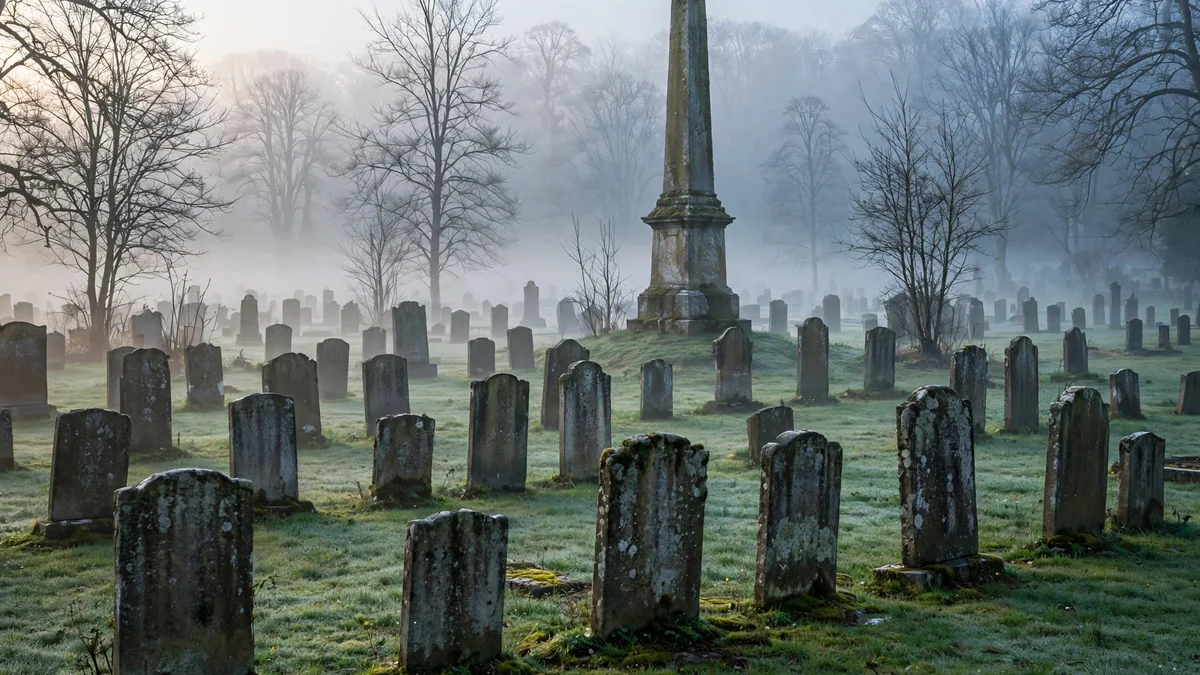

A burial plot is a set space in a cemetery where a person is laid to rest, and buying one is really about buying the right to use that space, not the ground itself. Most people only look into it once, at a hard moment. This guide covers the types you can choose from, how buying works in the UK and the United States, and the extra costs that catch families out.
Key takeaways
- A burial plot is a designated space in a cemetery, also called a gravesite or cemetery plot.
- You normally buy a right of burial in the plot, not the land, which stays with the cemetery operator.
- In the UK an Exclusive Right of Burial is a lease, typically for 50 to 100 years, and 25 years for new rights in Scotland.
- Single, companion, family and cremated-remains plots cover most needs, and double-depth burial is a cheaper option.
- The plot price usually leaves out opening and closing the grave, a liner or vault, the headstone and maintenance fees.
- Prices vary sharply by location, cemetery and plot type, so ask the cemetery for its own published price list.
What a burial plot actually is
A burial plot is a marked space in a cemetery set aside for burial. You might also hear it called a gravesite or a cemetery plot, and the three terms mean the same thing in everyday use. The plot sits in a cemetery run by a council, a trust, a church or a private company, and that operator keeps the land. What you pay for is the right to bury someone there, known as a right of burial, an interment right, an exclusive right of burial or a burial deed, depending on where you are.
That distinction matters. Because you hold a right rather than freehold land, the right can run out, and the cemetery sets rules about what can go on the plot, from headstone size to whether flowers can be planted. A celebration of life is often planned around the same decisions, so think of the plot, the service and the marker as one set of choices. The Wikipedia page on burial sets out the wider history of the practice.
The types of plot you can buy
Most cemeteries offer a short list of plot types. A single plot holds one person. A companion plot, sometimes called a double plot, holds two people, usually a couple, side by side. A family plot is a larger area for several members of one family, and a cremated-remains plot is a smaller space for ashes.
Double-depth burial is worth knowing about if money is tight. Two coffins are placed in one plot, one above the other, so one plot serves two people at a lower cost than two separate plots. It suits couples, though not every cemetery allows it, and the paperwork should spell out who holds the right. Ask to see the actual ground before you decide, because a plot on a slope or under a tree can feel very different from the one on the plan.
How buying a burial plot works in the UK
In the UK, the right to a plot is called the Exclusive Right of Burial, and it is a lease rather than a purchase of land. The lease typically runs for 50 to 100 years, after which it can be renewed for a fee. England and Wales cap council grants at 100 years at a time, while Scotland now sells new rights for an initial 25 years. When the lease ends without renewal, the cemetery may reuse the plot under its own rules, so keeping the deed safe and telling the family where it is kept matters as much as buying the plot in the first place.
Most people in the UK arrange a plot through a funeral director rather than buying direct from the cemetery. The plot cost usually appears as a third-party fee on the funeral bill, and it is usually not covered by a funeral plan, because prices change. Ask for the cemetery’s own price list in writing and check whether the quoted figure is the plot alone or the plot plus the burial itself. A guide to aged care can help with the wider planning around these decisions, and a piece on sympathy and empathy helps if you are supporting a bereaved family at the same time.
How buying a burial plot works in the United States
In the United States the picture is more mixed, because cemeteries set their own rules state by state. Some sell plots in advance, years before they are needed, while others sell only at the time of need. Buying in advance can mean a wider choice of location, and it lets the family settle the decision without the pressure of a funeral week.
Private resale of plots is more common in the US than in the UK, though some states regulate it, so a plot bought from another family needs its paperwork checked with the cemetery before money changes hands. The national cemetery system run by the Department of Veterans Affairs confirms a veteran’s eligibility in advance, but the actual gravesite is assigned only at the time of need. Wherever you buy, get the deed in writing and check whose name is on it, because that name decides who can authorise a burial later.
What the plot price usually leaves out
The figure quoted for a burial plot is rarely the full bill, and the gap is where families get surprised. Opening and closing the grave, digging it and filling it in again, is usually charged separately, as is a grave liner or vault, the concrete or metal box many cemeteries require around the coffin. The headstone or marker is separate too, and so is any one-off maintenance or perpetual-care fee, which pays for the upkeep of the grounds.
The plot and the burial are two different services, and the honest way to compare cemeteries is to ask each one for the same list of items priced line by line. Prices vary sharply by location, cemetery and plot type, and no single national figure would mean much, so a cemetery’s own published price list is the only number worth trusting. Premium spots inside a cemetery cost more, city plots, London in particular, cost far more than rural ones, and a family area can bring the cost per plot down.
| Item | Usually included in the plot price? | What to ask |
|---|---|---|
| Opening and closing the grave | No, usually charged separately | Is digging and filling in included, and at what rate? |
| Grave liner or vault | No, often required by the cemetery | Which type is required, and what does it cost? |
| Headstone or marker | No, bought separately | What sizes and materials does the cemetery allow? |
| Maintenance or perpetual-care fee | Sometimes, sometimes a one-off charge | Is it included, and what upkeep does it cover? |

Natural burial and other choices
Not everyone wants a traditional grave, and cemeteries have widened what they offer. In a natural or green burial, the body is returned to the earth to break down without embalming chemicals, usually in a biodegradable coffin or shroud, and often with a tree planted in place of a headstone. The idea took hold in the UK in the early 1990s, after Ken West set up a natural burial ground in Carlisle, and the Green Burial Council now certifies natural burial grounds in the US and Canada.
The phrase six feet under comes from a 1665 order during the Great Plague of London, not from a modern rule. In the US there is no nationwide burial-depth regulation, and each local authority sets its own, commonly 30 to 36 inches of soil above the coffin, with California requiring only 19 inches. In the UK the soil must be three feet above the highest point of the coffin, or two feet where the burial authority considers the soil suitable. Depth is a local rule, not a fixed tradition.
Your burial plot checklist
- Ask the cemetery for its published price list, with the plot and the burial priced line by line.
- Check whether you are buying a right of burial or a lease, and for how many years it runs.
- Decide between a single, companion, family or cremated-remains plot before you view the ground.
- Ask what is not included: opening and closing, liner or vault, headstone and maintenance fees.
- Visit the actual plot, and check its slope, path access and distance from trees and roads.
- Confirm who holds the deed, and keep it somewhere the family can find it.
- Check the cemetery’s rules on headstone size, materials and planting before you pay.
- If buying in advance, ask what happens to the right if the family moves away.
Do you own the land when you buy a burial plot?
No, in most countries you do not. You buy a right of burial in a specific plot, and the land stays with the cemetery operator, whether that is a council, a trust, a church or a private company.
How long does an Exclusive Right of Burial last in the UK?
It is a lease, typically for 50 to 100 years, and it can be renewed for a fee. England and Wales cap council grants at 100 years at a time, and Scotland now sells new rights for an initial 25 years.
Can you buy a burial plot in advance?
Yes, in many places. Some US cemeteries sell in advance and some sell only at the time of need, while in the UK a plot is commonly arranged through a funeral director, often as part of planning ahead.
Can you sell a burial plot you no longer need?
Private resale is more common in the US, though some states regulate it, so the cemetery should check the paperwork before any sale. In the UK the right can usually be transferred or surrendered, but the cemetery’s own rules apply.
What is double-depth burial?
Two coffins are buried in one plot, one above the other. It is a cheaper way for a couple to share a plot, though not every cemetery allows it, and the deed should record who holds the right.
Is six feet under a real rule?
No. The six-foot idea comes from a 1665 plague order in London. Modern depth rules are set locally: commonly 30 to 36 inches of soil above the coffin in the US, and three feet in the UK, or two feet where the soil is judged suitable.
The bottom line
A burial plot is a right to use a piece of cemetery ground, not a piece of land you own, and the best way to buy one is slowly, with the cemetery’s own price list in your hand and the deed in your name. Settle the plot type, check what the price leaves out, and keep the paperwork where the family can find it.
Cemetery rules, lease lengths and fees vary by place and change over time, so treat this guide as a starting point and confirm the details with the cemetery and, where needed, a solicitor or funeral director before you sign anything.