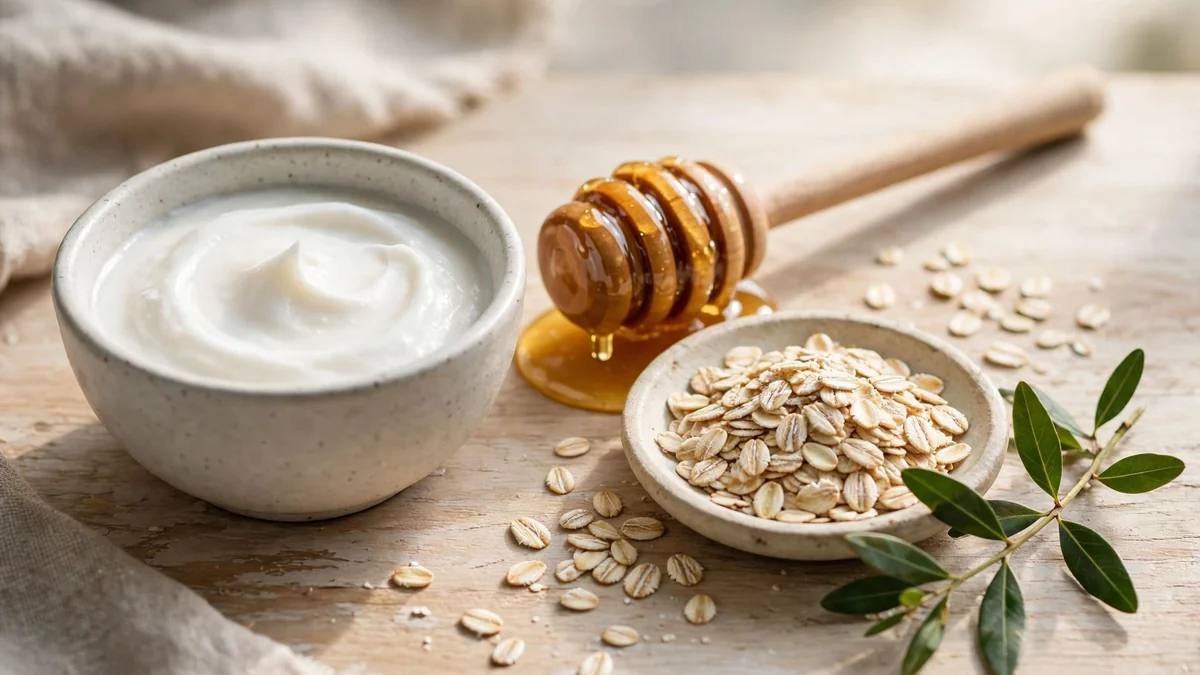

How to make natural face wash at home is simpler than most skincare guides suggest, and it starts with ingredients you may already own. A gentle homemade cleanser needs only three things: something to lift away dirt and oil, something to soothe the skin, and lukewarm water. Honey, finely ground oats and plant oils can each do that job, and this guide gives you three recipes built around them, plus the safety habits that matter more than any recipe.
What a face wash actually has to do
A face wash has one job: to remove the dirt, oil, sunscreen and makeup that gather on the skin during the day, without stripping the skin itself. Healthy skin has a slightly acidic surface, often called the acid mantle, and a barrier of natural oils that keeps moisture in and irritants out. A harsh cleanser damages that barrier, which is why skin can feel tight, dry or sore after washing. A good cleanser, homemade or shop-bought, cleans gently and leaves the skin feeling comfortable, not squeaky. The NHS advises washing with lukewarm water and a mild cleanser, and patting the skin dry rather than rubbing it, which is the standard dermatologists recommend for most skin types.
Recipe one: the honey cleanser
The honey cleanser is the simplest recipe in this guide, and the best place to start. Take one teaspoon of raw honey, warm it between your palms for a few seconds, and massage it over a damp face in slow circles for about a minute. Rinse with lukewarm water and pat dry with a clean towel. That is the whole recipe. Honey is naturally thick, so it stays where you put it, and it rinses away cleanly with warm water.
Honey suits normal and dry skin best, because it leaves a light, moisturised feeling rather than a stripped one. It is less suited to very oily skin, where an oil-based method or a plain water rinse may feel cleaner. Keep the jar in a cool cupboard, and use a clean spoon rather than a wet finger, so water never gets into the jar.
Recipe two: the oat cleanser
The oat cleanser is the gentlest of the three, and the best choice for sensitive or easily irritated skin. Grind two tablespoons of plain rolled oats to a fine powder in a blender or spice grinder, and store the powder in a dry jar. To wash, mix one teaspoon of the powder with a little lukewarm water in your palm until it forms a smooth paste, massage it over a damp face, and rinse well. Oatmeal has been used to soothe skin for generations, and finely ground oats are a recognised skin protectant in pharmacy, which is why they appear in so many products for itchy or dry skin.
Make only what you need for one wash, because a wet oat paste does not keep: it will ferment within a day or two at room temperature. The dry powder, kept in a sealed jar away from steam, keeps for several weeks, so grind a fresh batch when the jar runs low. Rinse thoroughly after use, since oat residue left on the skin can feel dry and tight as it dries.
Recipe three: the oil cleanser
The oil cleanser, sometimes called the oil cleansing method, suits oily and combination skin better than most people expect. Pour a teaspoon of a plain plant oil into your palm, massage it over a dry face for about a minute, then press a warm, damp cloth over your face for thirty seconds and wipe the oil away gently. The oil dissolves the day’s grime, and the warm cloth lifts it off. Jojoba oil is the safest starting point, because its composition is close to the skin’s own sebum and it suits most skin types. Sunflower oil is a cheaper alternative that works well for most people, and sweet almond oil suits dry skin. Use a single oil on its own for the first two weeks, so you know exactly what your skin is reacting to if anything changes.
Avoid essential oils in a wash you make yourself: they are concentrated plant extracts, they are common irritants, and a face wash is a rinse-off product, so the scent is gone within a minute anyway. If your skin feels oily after the cloth, you have used too much oil or the cloth was not warm enough; if it feels tight, you have wiped too hard. Use the oil cleanser once a day, in the evening, and rinse with lukewarm water alone in the morning.
Three recipes compared
Each recipe suits a different skin type and a different routine. The table below lines them up so you can choose the one that fits your skin, your time and your cupboard.
| Recipe | Main ingredient | Best for | Time per wash | Storage |
|---|---|---|---|---|
| Honey cleanser | Raw honey | Normal and dry skin | About one minute | Jar keeps for months |
| Oat cleanser | Finely ground oats | Sensitive skin | About two minutes | Dry powder keeps weeks |
| Oil cleanser | Jojoba or sunflower oil | Oily and combination skin | About two minutes | Bottle keeps for months |
| Water only | Lukewarm water | Very sensitive skin | Under a minute | Nothing to store |
| Shop-bought gentle wash | Mild surfactants | Anyone who wants a lather | Under a minute | Months, with preservatives |

What to leave out
Some popular homemade skincare ingredients do more harm than good, and they are worth naming plainly. Lemon juice is often suggested for brightening, but it is strongly acidic and can irritate the skin and make it more sensitive to sunlight. Baking soda is the opposite problem: it is alkaline, with a pH far above the skin’s natural acidity, and it can strip the barrier that keeps skin comfortable. Undiluted essential oils, including tea tree and lavender, are common causes of contact reactions, and they have no place in a wash you make at home.
The NHS notes that fragrances and preservatives in toiletries are among the common causes of skin reactions, and a homemade wash avoids both, but it also avoids the testing that catches problems before a product reaches the shelf. Our guide to face shapes looks at the other side of the same question: knowing your own face, its shape and its skin, before you choose what to put on it. If you enjoy making things for your skin and hair at home, our guide to the best rosemary oil for hair growth and our guide to eyelash and hair extensions are worth a read before you try anything new.
Patch testing, storage and routine
Patch testing is the habit that makes homemade skincare safe. Before you use a new wash on your face, apply a small amount to the inner forearm or behind the ear, once or twice a day for a few days, and watch for redness, itching, burning or swelling. If your skin stays calm, try it on a small area of your face before using it all over. If you notice a reaction, wash it off and do not use the product again. Introduce one recipe at a time, so that if your skin reacts, you know which one caused it. The NHS page on contact dermatitis explains how skin reacts to irritants and allergens, and when a reaction is worth showing to a pharmacist or a GP.
Storage matters because a homemade wash has no preservative. Keep dry ingredients, such as oat powder, in a sealed jar away from steam, and keep honey in its own jar with a clean spoon. Mix wet recipes fresh for each wash, and throw away anything you have mixed but not used. Keep oil bottles out of sunlight and away from heat, and replace them when they start to smell stale. A simple routine is enough: cleanse once in the evening, rinse with lukewarm water in the morning, pat dry, and moisturise while the skin is still slightly damp.
A checklist for making natural face wash
- Choose one recipe and use it alone for two weeks before you try another.
- Patch test on the inner forearm or behind the ear for a few days before using a wash on your face.
- Use lukewarm water, never hot, and pat your skin dry instead of rubbing it.
- Mix wet recipes fresh for each wash, and keep dry ingredients in a sealed jar away from steam.
- Leave out lemon juice, baking soda, undiluted essential oils and rough scrubs.
- Use a clean spoon for honey and clean hands and cloths for everything else.
- Cleanse once in the evening and rinse with water alone in the morning.
- Stop using a recipe at once if your skin turns red, itchy, sore or swollen.
Frequently asked questions
Can I wash my face with honey every day?
Yes, most people can use a honey cleanser once a day, usually in the evening. Patch test first, and if your skin feels sticky or heavy afterwards, use less honey or switch to a morning water rinse instead.
Is oat face wash good for sensitive skin?
Finely ground oats are one of the gentlest options for sensitive skin, and they have a long history of use for soothing irritation. Grind the oats to a fine, silky powder, and stop using the wash if your skin feels dry or tight after rinsing.
Does the oil cleansing method cause spots?
It can do if you use the wrong oil. Coconut oil is highly comedogenic and more likely to block pores, while jojoba and sunflower oils are lighter and suit most skin types. Use one oil alone for two weeks, and stop if spots appear.
How long does homemade face wash keep?
Dry ingredients keep for weeks in a sealed jar, and honey and bottled oil keep for months. Anything you mix with water should be used at once and thrown away if it is left over, because it has no preservative.
Can I add essential oils to a homemade face wash?
It is best not to. Essential oils are concentrated plant extracts and common irritants, and a face wash is rinsed off within a minute, so the scent is gone almost at once. If you want fragrance, use a scented moisturiser instead.
What should I do if a homemade wash irritates my skin?
Stop using it at once, rinse with lukewarm water, and do not apply anything else until the skin calms. If redness, itching or swelling persists, or if the skin blisters, speak to a pharmacist or a GP.
The bottom line
Making a natural face wash at home is simple: honey for normal and dry skin, finely ground oats for sensitive skin, and a light plant oil for oily and combination skin. Each recipe takes a minute or two, costs very little, and avoids the fragrances and preservatives that cause many skin reactions. The best face wash is not the one with the most ingredients, but the one your skin is happy with, day after day.
Skin-safety note: this article is general information, not medical advice. Homemade skincare is not tested the way shop-bought products are, and natural ingredients can still cause reactions. Always patch test a new wash on a small area of skin first, stop using it at once if your skin turns red, itchy, sore or swollen, and speak to a pharmacist or a GP if a reaction persists or if you have eczema, rosacea or any other skin condition. Do not use a homemade wash on broken or sunburnt skin, and keep it away from children.