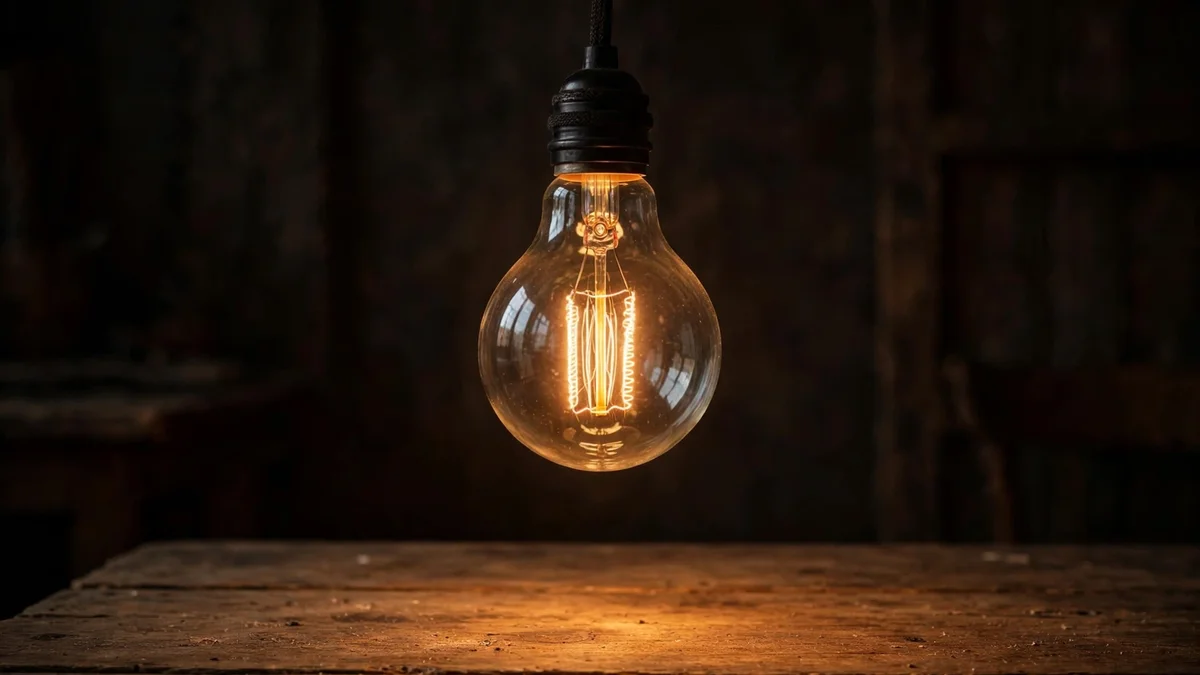

Incandescent light bulbs are the oldest form of electric lighting still found in homes, and the question most people ask is a simple one: are they worth keeping now that LED bulbs dominate the shelves? The short answer is that incandescent light bulbs still make sense in a few specific places, mainly where their warm light, instant brightness and easy dimming matter more than running costs, but for everyday lighting an LED is almost always the better buy.
Key takeaways
- An incandescent bulb makes light by heating a tungsten filament until it glows.
- Most of the electricity becomes heat, not light, which is why they are inefficient.
- Their warm colour and smooth dimming still suit some fittings and moods.
- An LED typically uses around 80 per cent less electricity for the same brightness.
How an incandescent bulb makes light
The idea behind incandescent light bulbs is beautifully simple, and it has barely changed since the late nineteenth century. Inside a sealed glass bulb sits a thin coil of tungsten wire, called the filament. When you switch the light on, electricity flows through the filament, and the wire resists that flow. The resistance makes the filament heat up to around 2,700 degrees Celsius, and at that temperature the metal glows with a warm, yellow-white light. The glass bulb is filled with an inert gas, usually argon with a little nitrogen, which slows the rate at which the tungsten evaporates.
Tungsten is used because very few materials can survive that kind of heat; it has the highest melting point of any metal. Even so, the filament slowly thins as tiny amounts of tungsten evaporate each time the bulb is used, until it eventually breaks. That is also why bulbs often fail at the moment they are switched on, when the cold filament suddenly heats and expands.
What comes out of the bulb is light across a broad, continuous spectrum, which is one reason incandescent light feels so natural. Unlike some early energy-saving bulbs, which could make skin look grey and food look dull, an incandescent bulb renders colours faithfully. It also switches on instantly at full brightness and dims smoothly from full brightness down to a faint glow without flicker or buzz, provided the dimmer is suitable. The Wikipedia page on the incandescent light bulb gives a clear account of the filament, the gas filling and the history of the design.
Why the light feels different
Anyone who has swapped an incandescent bulb for a cheap replacement and then swapped it straight back knows that light quality is not only about brightness. Incandescent light sits at the warm end of the spectrum, around 2,700 kelvin, which is the colour of late-afternoon sunlight. That warmth flatters skin tones, makes wood and fabric look richer, and creates the relaxed atmosphere people want in a living room or bedroom in the evening.
The second quality people notice is the dimming. An incandescent bulb on a dimmer fades smoothly and grows warmer and more amber as it dims, much like a fire dying down. Most LED bulbs dim too, but only if they are marked dimmable and paired with a compatible dimmer, and even then the colour often stays the same as the light fades.
An incandescent bulb also contains no electronics, so it works with every standard fitting, switch and dimmer ever made for it, and it still appears in ovens and fridges where heat or tight spaces make electronic bulbs a poor choice.
Where incandescent bulbs still make sense
Efficiency rules have pushed incandescent bulbs out of most everyday uses, and in many countries the least efficient versions can no longer be sold. Even so, there are corners of the home where they remain the practical choice, as the comparison below shows.
| Bulb type | Warmth of light | Energy use for the same brightness | Typical lifespan | Best for |
|---|---|---|---|---|
| Incandescent | Warm, around 2,700 kelvin | Highest | Around 1,000 hours | Dimmed lighting, ovens |
| Halogen | Warm, slightly whiter | High | Around 2,000 hours | Spotlights |
| Compact fluorescent | Warm to cool | Low | Around 8,000 hours | Long-use rooms |
| LED | Available warm or cool | Lowest | 15,000 hours or more | Everyday fittings |
The strongest case for keeping an incandescent bulb is a fitting that is used briefly and dimmed often, such as a bedside lamp or a dining-room chandelier. In those spots the extra running cost is small because the light is rarely on for long, while the quality of the dimmed light is noticeable every evening. Appliances are another sensible holdout: oven bulbs must survive high heat, and fridge bulbs must switch on instantly in the cold, and an incandescent bulb does both without complaint. Some people also keep them in rarely used cupboards, lofts and sheds, where a bulb may be on for a few minutes a month.

Where incandescent bulbs make little sense is anywhere a light stays on for hours each day. A hallway, kitchen or living-room ceiling light running for five or six hours every evening will cost several times more to run with an incandescent bulb than with an LED of the same brightness, and the bulb will need replacing far more often. The same applies to outdoor security lights and porch lights.
Efficiency and running costs
The honest weakness of incandescent light bulbs is efficiency. Only a small share of the electricity they consume becomes visible light; the rest leaves the bulb as heat. That is why an old 60-watt bulb feels almost too hot to touch after a few minutes. By contrast, a modern LED converts far more of its electricity into light, which is why it stays cool enough to handle and costs so much less to run.
The practical way to compare bulbs is lumens, not watts. Watts measure how much electricity a bulb uses; lumens measure how much light it produces. An old 60-watt incandescent bulb produces roughly 700 to 800 lumens, and an LED producing the same light typically uses around 8 to 10 watts. When you shop, look for the lumen figure on the box and match it to the brightness you want, then check the wattage to see what it will cost to run.
Heat is also worth considering as a cost. In winter the warmth from incandescent bulbs contributes a little to heating the room, but it is an expensive way to heat a home. In summer the same heat works against you, adding warmth exactly when you want the house to stay cool. Small household savings add up, and the same clear-eyed approach helps with other jobs too, from keeping cooling equipment in good order to planning ahead with the May 2026 calendar.
Safety: heat, placement and disposal
Incandescent bulbs run hot, and that heat deserves respect. A bulb that has been on for a while can burn skin on contact, so always switch the light off and let the bulb cool before changing it. Keep bulbs away from curtains, bedding, paper lampshades and anything else that could scorch, and never fit a bulb with a higher wattage than the fitting is rated for. The maximum wattage is usually printed on the lampholder or the shade, and exceeding it can overheat the fitting itself.
Placement matters in other ways too. A bulb in an enclosed fitting traps heat and shortens the bulb’s life, so check that the fitting allows air to circulate. In a bathroom, only use fittings designed for damp conditions, and never handle a bulb with wet hands. A bulb that is flickering or showing dark patches inside the glass is a sign to replace it.
When a bulb does fail, disposal is simple but worth getting right. Ordinary incandescent bulbs are not recyclable with household glass, so they belong in general household waste. Wrap a broken bulb in paper before binning it so nobody handling the bag is cut, and sweep up fragments with a damp cloth rather than a bare hand. Halogen bulbs follow the same rule, while compact fluorescent bulbs and LEDs need separate handling because they contain electronic components.
A quick checklist before you buy or replace
- Check the fitting type first: screw or bayonet, and the size of the cap.
- Read the maximum wattage printed on the fitting and never exceed it.
- Match brightness in lumens, not watts, when comparing bulb types.
- Choose warm white, around 2,700 kelvin, if you want the incandescent look.
- Confirm the bulb is marked dimmable if it will sit on a dimmer switch.
- Let a hot bulb cool fully before touching it or changing it.
Switching a whole house to LED in one go is rarely necessary. A sensible approach is to replace bulbs as they fail, starting with the lights that are on for the longest each day, and to keep incandescent bulbs only where their particular qualities genuinely matter. Small household routines benefit from the same steady approach, and a simple habit such as making your own natural face wash shows how replacing one everyday item at a time is easier to sustain than an overnight overhaul.
Do incandescent light bulbs still get sold?
Yes, in many places, although the least efficient versions have been phased out of sale in several countries, including across the European Union and in the United States, where efficiency standards now apply. Specialist types, such as oven bulbs, appliance bulbs and some decorative filament bulbs, are usually still available. Availability varies by country, so check local rules and shop stock.
Why do incandescent bulbs burn out so quickly?
The tungsten filament slowly evaporates each time the bulb is used until it thins and breaks. Frequent switching, vibration and high mains voltage all shorten its life. A bulb rated for around 1,000 hours will typically last about a year in a fitting used for three hours a day, far shorter than an LED in the same fitting.
Are incandescent bulbs bad for the environment?
Their main environmental cost is the extra electricity they use, which is several times higher than an LED producing the same light. They contain no mercury and no electronic waste, but the energy they waste over their lifetime outweighs that advantage for everyday lighting.
Can I put an LED bulb in any fitting that had an incandescent bulb?
In most cases, yes, provided the cap type matches and the bulb physically fits the shade. Check that the LED is marked dimmable if the fitting is on a dimmer, and make sure enclosed fittings have room for air to circulate. If the LED flickers on a dimmer, the dimmer may need replacing with one designed for LED loads.
Why does my incandescent bulb feel hot enough to burn?
Because most of the electricity it uses becomes heat rather than light. The glass surface can reach temperatures well above 100 degrees Celsius, so always let the bulb cool before handling it, and keep it clear of flammable materials.
What should I do with a broken incandescent bulb?
Wrap the pieces in newspaper, place them in your general household waste, and sweep up small fragments with a damp cloth. Do not put incandescent bulbs in the glass recycling bin, and do not handle broken glass with bare hands. If a bulb breaks while it is still in the fitting, switch the power off at the wall before removing the base.
The bottom line
Incandescent light bulbs are not the best choice for most of the home any more, and an LED will beat them on running costs and lifespan in almost every everyday fitting. Yet they have not become useless. For a dimmed dining-room light, a bedside lamp or an oven, their warm colour, instant brightness and simple reliability still earn them a place. Use them where those qualities genuinely matter, switch the hard-working lights to LED, and handle every bulb with respect for the heat it produces.