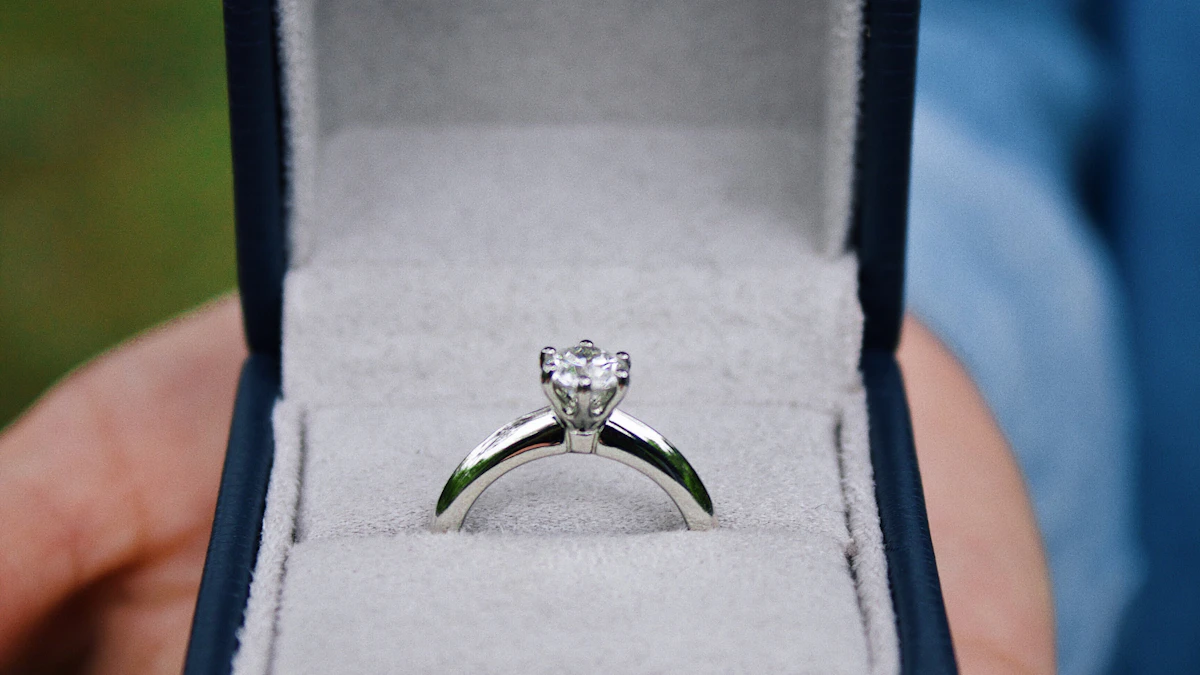

Emerald cut engagement rings are the quiet choice in a world of sparkle: a rectangular stone with long, stepped facets and cropped corners, chosen for clean lines rather than flash. What makes emerald cut engagement rings different from round or oval rings? They trade brilliance for clarity and calm, showing broad flashes of light across a flat, open table instead of a scatter of tiny sparks. If you love structure, symmetry and a vintage feel, this is the cut to understand first.
This guide explains what an emerald cut is, how to judge one, which settings suit it, and where it falls short. There is no single right answer, only a set of trade-offs to weigh before you buy.
Key takeaways
- Emerald cut engagement rings use a step cut: long, parallel facets that create a hall-of-mirrors effect instead of brilliant sparkle.
- Clarity matters most, because the large open facets show inclusions plainly.
- A length-to-width ratio between about 1.30 and 1.50 gives the classic rectangular look most buyers picture.
- Solitaire, halo, three-stone and east-west settings all suit the shape, each changing how large the stone looks.
- The cut flatters the finger and looks larger face-up than a round stone, but it sparkles less.
What an emerald cut actually is
An emerald cut is a rectangular diamond with cut corners and long, flat facets arranged in parallel rows, like the steps of a staircase. The name comes from the gem emerald, which was traditionally cut this way because the step cut protects a brittle stone and shows off its colour. The cut typically has 58 facets, and its most recognisable feature is the large, flat table on top, bordered by concentric rows of steps.
The cut became especially popular in the Art Deco era of the 1920s and 1930s, when clean lines and geometry were in fashion, and it has never really gone out of style since. What you see in an emerald cut is different from a round or oval stone. Instead of many small sparkles, it gives broad flashes of light and a calm, glassy depth as the steps reflect one another.
Best for: buyers who value clean lines, symmetry and a vintage feel over maximum sparkle — an emerald cut in a simple solitaire setting.
The 4Cs, with emerald cut priorities
Cut, colour, clarity and carat all matter, but an emerald cut rearranges their order. Clarity comes first, because the open step facets work like windows into the diamond. Inclusions that a brilliant cut would hide among its sparkle are easier to see in an emerald cut, so most buying guides recommend VS2 clarity or higher, with VS1 as the safer choice for a stone you will look at every day. One near the edge, tucked under the steps, is far less noticeable than one in the middle of the table.
Colour comes next. Step cuts show body colour a little more than brilliant cuts. In white gold or platinum, many buyers choose G or H and higher, while in yellow gold a slightly warmer grade can look lovely, because the setting warms the diamond anyway. As for cut itself, the Gemological Institute of America does not give emerald cuts an overall cut grade, so you judge proportions by eye and by the numbers below.
Best for: a stone that looks clean to the naked eye — VS2 clarity or higher, colour G or H in a white metal, judged on video from straight above.
Length-to-width ratio and proportions
The length-to-width ratio is the number that decides whether an emerald cut looks square, classic or long and slim. Most emerald cuts fall between about 1.25 and 1.55. A ratio of 1.25 to 1.35 gives a shorter, squarer stone; 1.35 to 1.50 gives the classic rectangle most people picture; and 1.50 and above gives a long, dramatic stone that lengthens the finger.
Two other numbers deserve attention. Buying guides commonly cite a depth of 59 to 69 per cent and a table of 58 to 72 per cent as a healthy range, and they warn about windowing: a washed-out area in the middle of the stone, caused by a cut that is too shallow. A well-cut emerald shows a clear pattern of bright and dark steps across the whole stone. Look for Excellent or Very Good polish and symmetry, and judge the rest on video or in person.
Best for: the classic look — a ratio of about 1.35 to 1.40, with a clear step pattern and no washed-out centre.
Settings that suit the shape
A solitaire is the purest setting for an emerald cut, and it remains the most popular. Four or six prongs hold the stone with minimal metal, so the shape speaks for itself, and a thin band makes the stone look larger by contrast. A halo setting surrounds the centre stone with smaller diamonds, adding sparkle and perceived size for buyers who miss the brilliance of a round stone.
A three-stone setting pairs the emerald cut with side stones, often baguettes or trapezoids, which echo the straight lines of the centre stone and give a balanced, symmetrical look. An east-west setting turns the stone sideways, setting it horizontally across the band for a modern twist that suits shorter fingers and lower profiles. As for metal, platinum or white gold complements the cut’s cool tones, while yellow gold adds vintage warmth and suits the Art Deco character of the shape.
Best for: a timeless look — a solitaire in platinum or white gold; for extra presence, a halo or three-stone setting with baguette side stones.
The honest pros and cons
The strengths of emerald cut engagement rings are real and specific. The elongated shape flatters the finger, creating a lengthening effect that suits most hands. The stone looks larger face-up than a round diamond of the same weight, because its weight sits in a broad, flat outline. The style is timeless, working in vintage Art Deco designs and modern minimalist settings alike, and the cropped corners catch less on clothes than pointed corners.
The weaknesses are the mirror image of the strengths. An emerald cut sparkles less than a brilliant cut, trading fire and scintillation for broad flashes of light, so buyers who want maximum dazzle will be disappointed. The open facets show inclusions and tints plainly, which pushes most buyers toward higher clarity and colour grades than they would need in a round stone. The large table also shows smudges and dust, so the ring needs frequent cleaning to look its best.
Best for: buyers who want elegance and presence rather than glitter — and who are happy to clean the ring often and choose clarity first.
Care, cleaning and everyday wear
An emerald cut needs a little more attention than a brilliant cut, and the routine is simple. Wash it in warm water with a drop of mild washing-up liquid, brush gently with a soft toothbrush, rinse and pat dry. That is enough to keep the table clear and the steps bright. Take it to a jeweller once a year for a professional clean and a check of the prongs, because a loose prong is the most common cause of a lost stone.
Daily habits matter more than most buyers expect. Put the ring on after perfume, hairspray and hand cream, since those leave films on the table that dull the light. Take it off for the gym, gardening and heavy housework, and store it in a lined box away from other jewellery. With that small amount of care, an emerald cut ring will look as clean in ten years as it did on the day you bought it.
Best for: a ring you will wear daily — a secure four- or six-prong setting, checked once a year, with a quick weekly wash at home.

| Setting | What it does | Suits | Best for |
|---|---|---|---|
| Solitaire | Shows the stone with minimal metal | Clean, classic taste | Letting the shape speak |
| Halo | Adds sparkle and perceived size | Buyers who miss brilliance | Extra presence |
| Three-stone | Pairs the centre stone with side stones | Balanced, symmetrical looks | Baguette side stones |
| East-west | Sets the stone horizontally | Modern taste, shorter fingers | A contemporary twist |
How to choose: a quick checklist
- Decide the shape first: a ratio of 1.25 to 1.35 for squarer, 1.35 to 1.50 for classic, 1.50 and above for long and slim.
- Put clarity first and aim for VS2 or higher, checking the stone on video from straight above.
- Choose colour G or H in white gold or platinum, or a slightly warmer grade in yellow gold.
- Check for windowing: a washed-out centre means the cut is too shallow, whatever the certificate says.
- Look for Excellent or Very Good polish and symmetry, and view the stone in daylight as well as shop light.
- Pick the setting for your life, not only for looks: a bezel or six prongs if you work with your hands.
If you are planning the proposal around the ring, the guide to date ideas has low-key ways to mark the occasion, the piece on celebration of life covers marking milestones with family, and the guide to cufflinks covers the other half of a formal outfit.
Frequently asked questions
What is an emerald cut engagement ring?
An emerald cut engagement ring holds a rectangular diamond with stepped facets and cropped corners. The step cut gives a hall-of-mirrors effect with broad flashes of light instead of the small sparkles of a brilliant cut.
What is the best length-to-width ratio for an emerald cut?
Most emerald cuts fall between about 1.25 and 1.55. A ratio of 1.35 to 1.50 gives the classic rectangular look most buyers picture, while 1.25 to 1.35 looks squarer and 1.50 and above looks long and slim.
What clarity do I need for an emerald cut?
Aim for VS2 clarity or higher, with VS1 as the safer choice. The large open facets show inclusions more plainly than a brilliant cut does, so a grade that would look clean in a round stone can look included in an emerald cut.
Do emerald cut diamonds sparkle less?
Yes, they sparkle less than brilliant cuts such as round or princess stones. An emerald cut trades brilliance and fire for broad flashes of light and a calm, glassy depth. If maximum sparkle is your priority, a round or oval stone will suit you better.
What setting is best for an emerald cut?
A solitaire with four or six prongs is the classic choice, showing the stone with minimal metal. A halo adds sparkle and size, a three-stone setting with baguette side stones suits the shape’s straight lines, and an east-west setting turns the stone sideways for a modern look.
How do I clean an emerald cut engagement ring?
Wash it in warm water with a drop of mild washing-up liquid, brush gently with a soft toothbrush, rinse and pat dry. Clean it weekly, since the large table shows smudges and dust, and take it to a jeweller once a year for a professional clean and a prong check.
The bottom line
Emerald cut engagement rings suit buyers who want structure over sparkle. The step cut, the cropped corners and the long rectangular outline give a ring that looks calm, deliberate and quietly expensive, and the shape has survived a century of fashion without dating. The trade-off is honest: you give up some brilliance, and you pay more attention to clarity, colour and cleaning.
Choose the ratio by eye, put clarity first, check for windowing on video, and pick a setting that fits your daily life. Do that, and the ring you buy will be one you still love in twenty years.