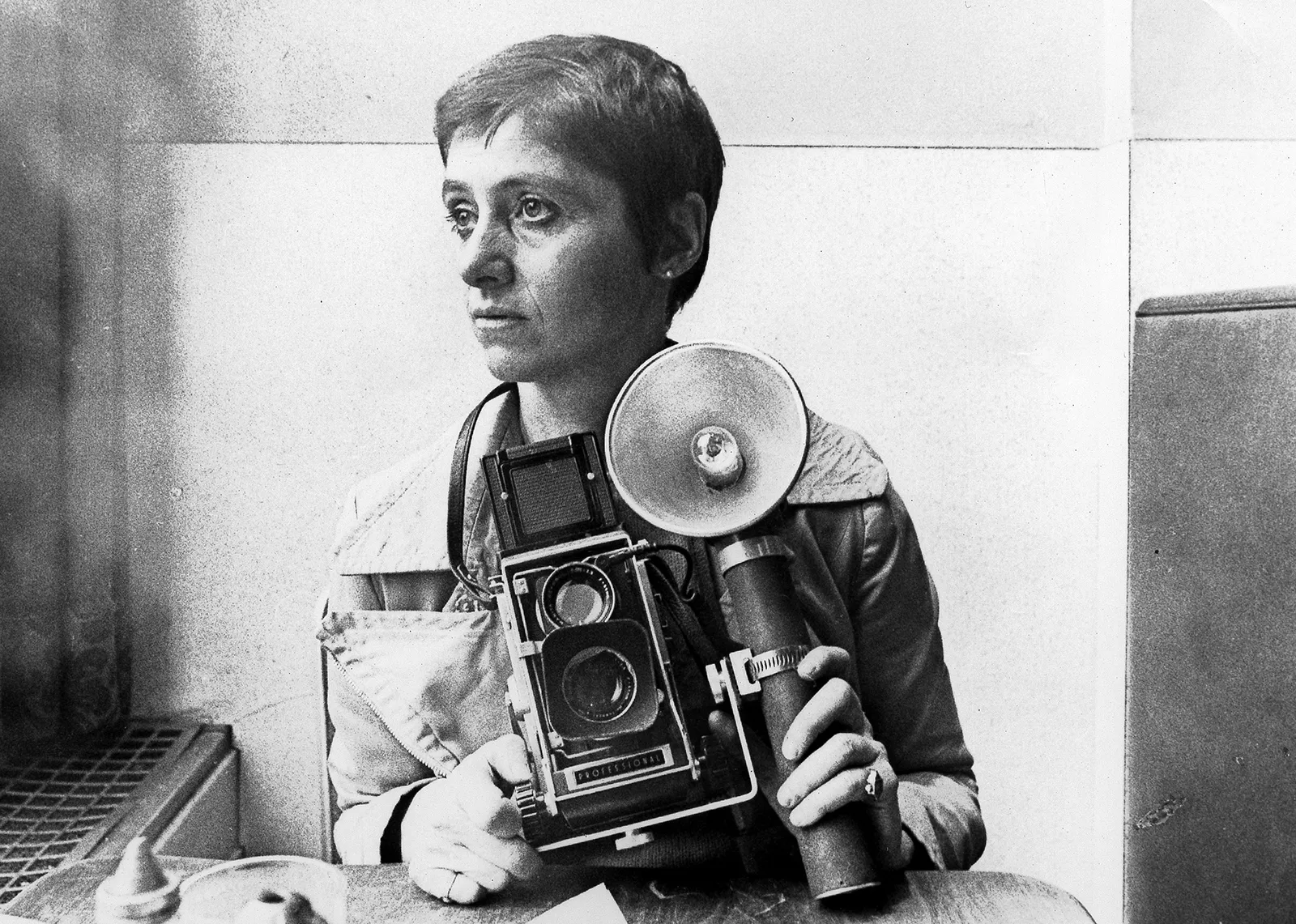
Diane Arbus (1923–1971) was a pioneering American photographer who revolutionized 20th-century documentary art. She is famous for her raw, intimate black-and-white portraits of marginalized individuals, subcultures, and everyday citizens on the fringes of mainstream society. Using medium-format cameras and direct flash, her distinct, confrontational style challenged traditional standards of beauty and art.
Arbus matters today because her work laid the foundation for modern portraiture and identity-focused photography. By shifting the photographic lens from idealized commercial fashion to the diverse, authentic reality of human vulnerability, she permanently expanded the boundaries of visual journalism. Her influential portfolio remains a cornerstone for discussions on artistic ethics, representation, and empathy in contemporary visual culture.
Diane Arbus was a groundbreaking American photographer whose work redefined documentary photography in the 20th century. She is celebrated for her intimate, raw portraits of individuals on the margins of society.
Who Was Diane Arbus?
Diane Arbus (née Nemerov) was an influential mid-century American photographer. Born on March 14, 1923, into a wealthy New York City family, she initially worked in commercial fashion before pursuing independent documentary art.
Her work challenged traditional concepts of beauty by documenting people outside mainstream society. She captured subjects in their natural environments, establishing an intimate connection that defined her career.
Diane Arbus Photography Style and Techniques
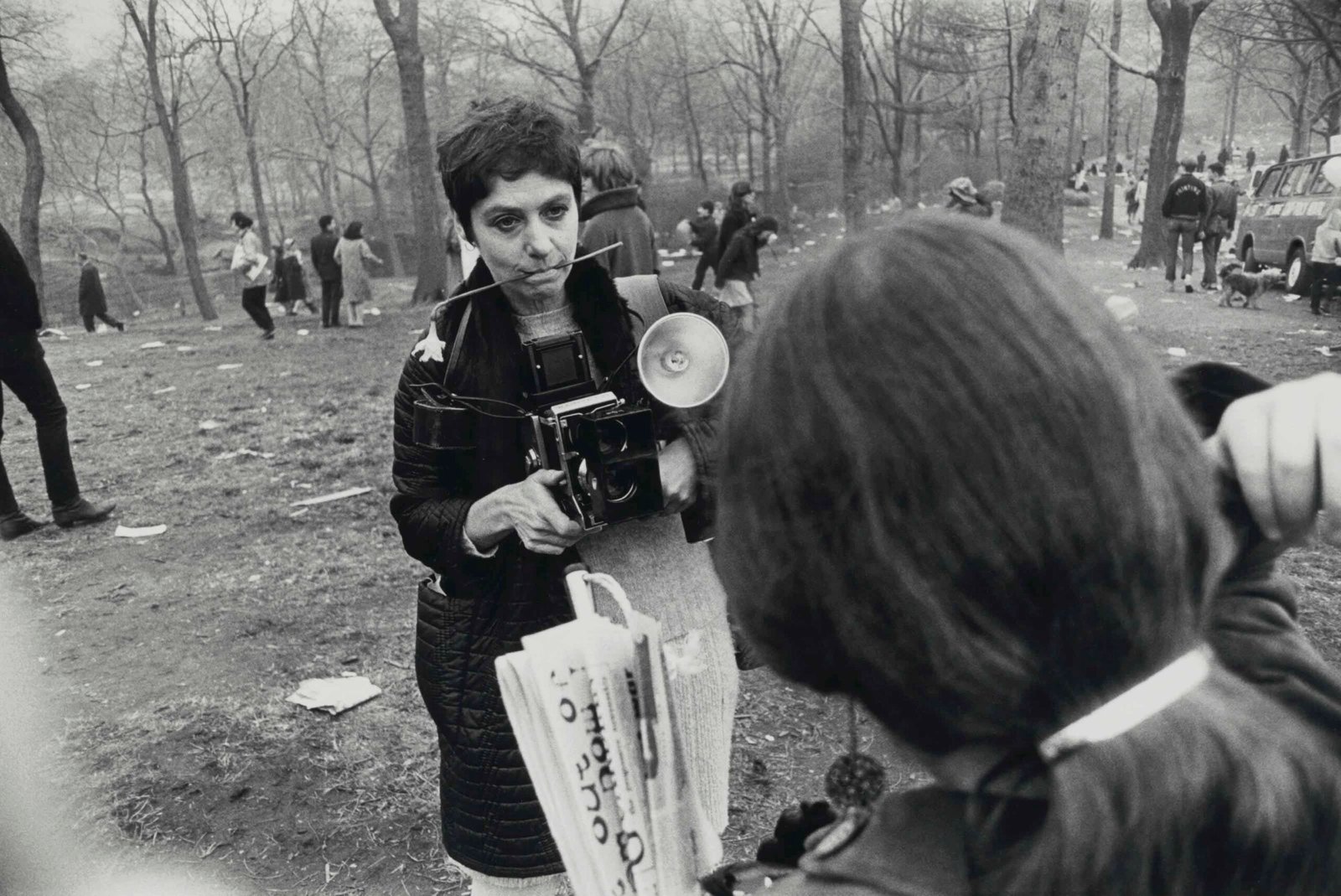
The Diane Arbus photography style is defined by a direct, confrontational, and deeply psychological approach. Unlike traditional documentary photographers who remained detached, she built close relationships with her subjects.
She favored a distinct square format and utilized precise techniques to achieve her signature look:
-
The Square Format: She used medium-format cameras to create balanced, intense compositions.
-
Direct Flash: She frequently used daylight flash to isolate subjects and expose raw textures and expressions.
-
Frontal Composition: Subjects looked directly into the lens, removing the barrier between the viewer and the subject.
What Camera Did Diane Arbus Use?
The primary Diane Arbus camera was a Rolleiflex medium-format TLR (Twin-Lens Reflex) early in her career. She later switched to a Mamiya C33 medium-format camera. These systems allowed her to capture exceptional detail and produce square negatives.
Famous Photographs by Diane Arbus
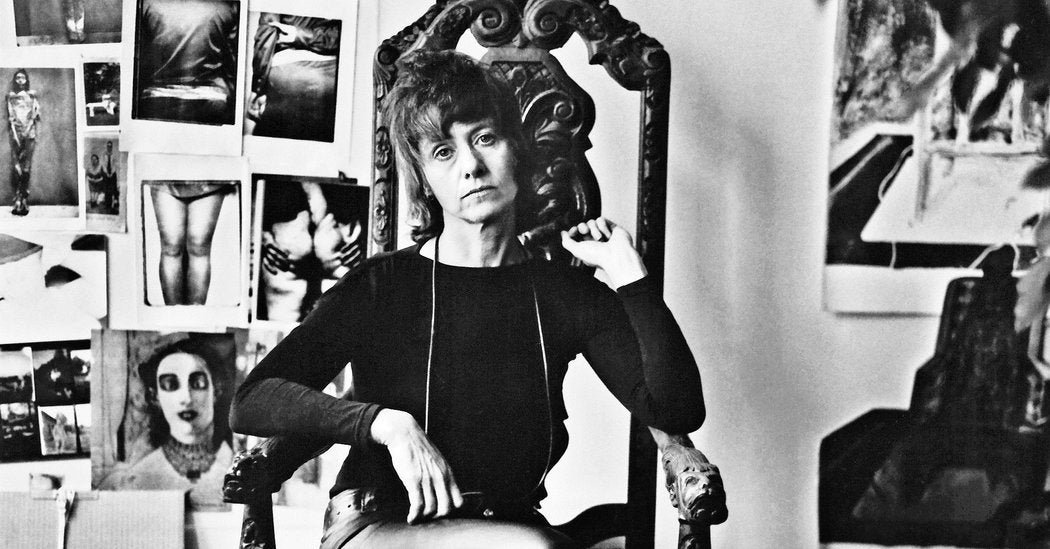
Diane Arbus created some of the most recognizable imagery in photographic history. Her portfolio focuses on subcultures, carnivals, nudist camps, and everyday citizens.
-
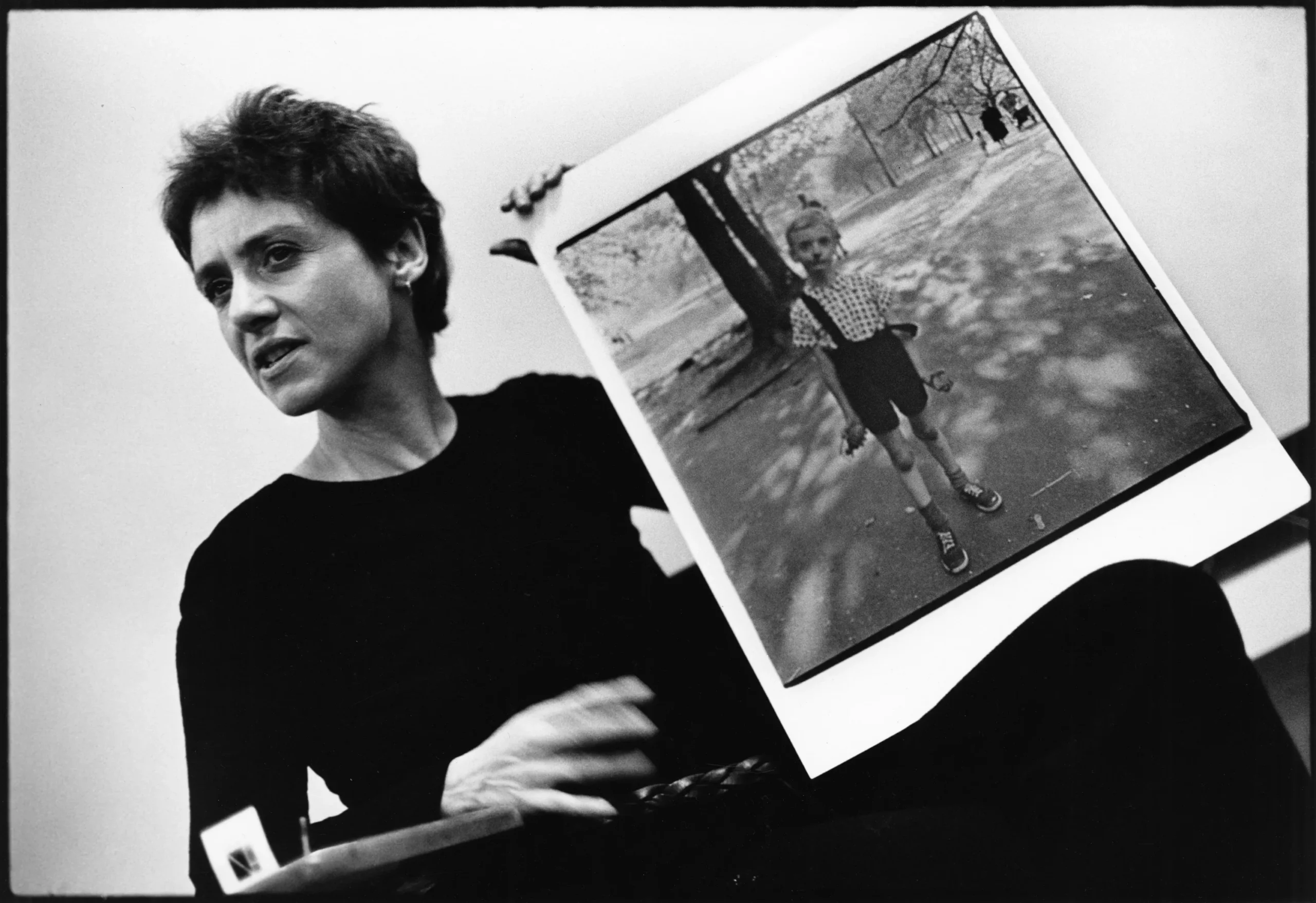
Child with Toy Hand Grenade in Central Park (1962): A portrait of a boy with a manic expression clutching a toy weapon.
-
Identical Twins, Roselle, New Jersey (1967): A striking shot of twin sisters side by side, which inspired the imagery in Stanley Kubrick’s film The Shining.
-
Jewish Giant at Home with His Parents in the Bronx, NY (1970): A frame capturing Eddie Carmel, a man over 8 feet tall, standing with his average-sized parents.
Diane Arbus Husband and Children
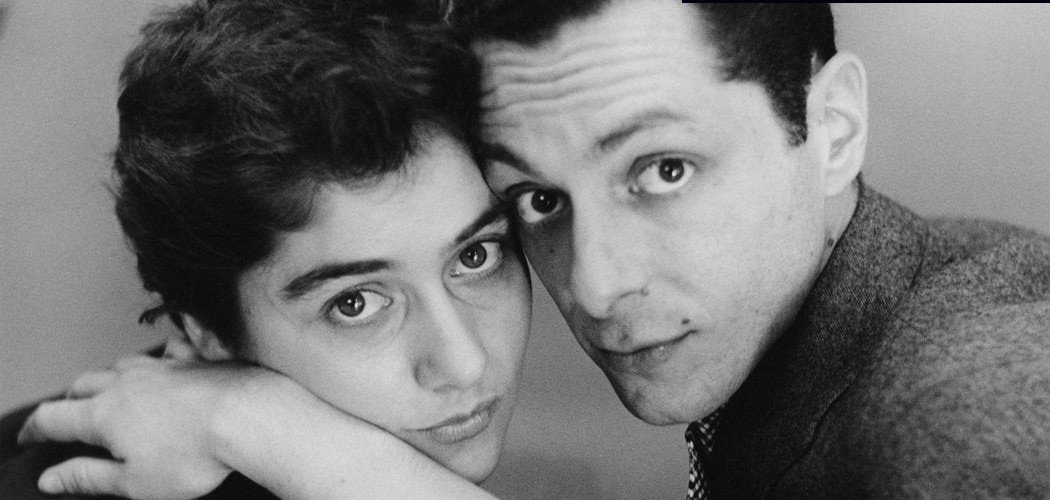
Diane married Allan Arbus in 1941. Together, they ran a highly successful commercial and fashion photography studio for over a decade, contributing to magazines like Vogue and Harper’s Bazaar. They separated in 1959 and divorced in 1969.
Who are the Diane Arbus Children?
Diane Arbus had two children with Allan Arbus:
-
DoON Arbus: Born in 1945, she became a writer and journalist who managed her mother’s estate.
-
Amy Arbus: Born in 1954, she followed in her mother’s footsteps to become a professional photographer.
Net Worth and the Value of Her Art
There is no verified historical record of Diane Arbus’s personal net worth at the time of her death in 1971. She struggled financially throughout much of her independent career, relying on grants and periodic magazine assignments.
Today, her estate is highly valuable. Her vintage prints command substantial sums at elite art auctions:
-
A rare print of Identical Twins sold for $478,400 at a Christie’s auction.
-
A portfolio of ten iconic prints sold for $1,025,000 at an auction in 2018.
How Did Diane Arbus Die?
Diane Arbus died by suicide on July 26, 1971, at the age of 48. She suffered from severe, depressive episodes throughout her adult life. She passed away in her apartment at the Westbeth Artists Community in New York City.
Diane Arbus Legacy
The Diane Arbus legacy permanently transformed contemporary photography. She forced the art world to acknowledge subjects that had previously been ignored or hidden away.
In 1972, she became the first American photographer to be featured at the Venice Biennale. Her posthumous retrospective at the Museum of Modern Art (MoMA) drew massive crowds, cementing her status as a pioneer of American photographic art.
Quick Facts
| Attribute | Details |
| Full Name | Diane Nemerov Arbus |
| Birth Date | March 14, 1923 |
| Birth Place | New York City, New York, U.S. |
| Death Date | July 26, 1971 |
| Age at Death | 48 years old |
| Nationality | American |
| Profession | Photographer, Photojournalist |
| Known For | Black-and-white portraits of marginalized people and subcultures |
| Spouse | Allan Arbus (married 1941, divorced 1969) |
| Children | Doon Arbus, Amy Arbus |
| Education | Ethical Culture Fieldston School |
| Famous Works | Child with Toy Hand Grenade in Central Park, Identical Twins, Roselle, N.J. |
| Net Worth | Not Publicly Known (Estate prints value millions) |
Early Life and Education
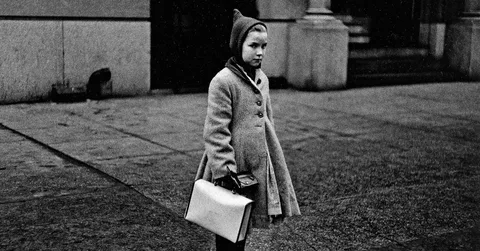
Diane Arbus was born into a wealthy Jewish family in New York City. Her parents, David Nemerov and Gertrude Russek, co-owned Russeks, a high-end Fifth Avenue department store. This background exposed her early to luxury, fashion, and visual presentation.
She grew up in apartments on Central Park West, largely raised by governesses. This affluent isolation deeply isolated her, creating a lifelong desire to explore realities outside her privileged environment.
Arbus attended the Ethical Culture Fieldston School, a progressive institution that nurtured her artistic talents. Her father also hired a private art teacher, painter Dorothy Thompson, who encouraged her to look past surface appearances.
In 1937, at age 14, she met Allan Arbus, a department store employee. Their early relationship introduced her to photography, steering her away from a traditional socialite path toward a professional career in visual media.
Career Highlights
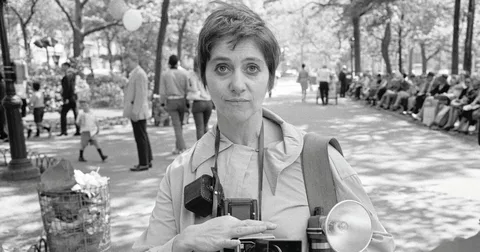
How Diane Arbus Started
Diane Arbus began her professional career in 1941 alongside her husband, Allan Arbus. Together, they established “Allan and Diane Arbus,” a highly successful commercial photography studio.
For over a decade, they shot high-fashion advertisements and editorial spreads for major publications like Vogue, Glamour, and Harper’s Bazaar. Diane acted as the art director and stylist, while Allan handled the camera mechanics.
By 1956, Arbus became disillusioned with the artificial nature of commercial fashion. She walked away from the studio to pursue independent, raw street photography, beginning her study under influential photographer Lisette Model.
Breakthrough Moment
Her definitive artistic breakthrough occurred in 1960 when Esquire magazine published her photo-essay titled “The Full Circle.” This feature showcased her distinct, gritty portraits of eccentric New Yorkers, establishing her solo reputation.
In 1963 and 1966, Arbus received back-to-back John Simon Guggenheim Fellowships. These grants provided the financial freedom to travel and document American subcultures, nudist camps, and carnival performers.
Her ultimate mainstream breakthrough arrived in 1967. She was featured in the landmark “New Documents” exhibition at the Museum of Modern Art (MoMA), alongside Garry Winogrand and Lee Friedlander, which redefined American documentary photography.
Major Achievements
Arbus created some of the most enduring imagery of the 20th century. Her 1962 photograph, Child with Toy Hand Grenade in Central Park, became a historic symbol of psychological tension in post-war America.
She successfully captured hidden American subcultures with unprecedented intimacy. Her photographs were regularly featured in leading publications of the era, including The New York Times Magazine and Harper’s Bazaar.
Posthumously, she achieved historic recognition. In 1972, Arbus became the very first American photographer ever selected to exhibit at the prestigious Venice Biennale, cementing her global status in fine art.
Influence on the Industry
Arbus completely transformed the industry by shifting the focus of documentary photography from objective journalism to deep, psychological portraiture. She replaced the traditional detached snapshot with direct, collaborative composition.
Her signature use of square-format medium negatives and harsh, direct flash influenced generations of artists. This style stripped away glamorous illusions, forcing viewers to confront raw human vulnerability.
Her work fundamentally expanded the acceptable subject matter of fine art. Filmmakers like Stanley Kubrick directly drew upon her imagery, and modern portrait photography continues to mirror her confrontational, empathetic approach.
Most Famous Works
| Work | Year | Why It Matters |
| Child with Toy Hand Grenade in Central Park | 1962 | Captures post-war psychological tension and youth alienation within an ordinary public space. |
| Identical Twins, Roselle, N.J. | 1966 | Explores human symmetry, individuality, and psychological duality; directly inspired Stanley Kubrick’s The Shining. |
| A Young Man in Curlers at Home on West 20th Street | 1966 | Documents underground LGBTQ+ and gender-fluid subcultures with dignity decades before mainstream social acceptance. |
| A Jewish Giant at Home with His Parents in the Bronx | 1970 | Visualizes domestic friction, physical scale, and the profound emotional spaces between family members. |
Famous Photographs
Child with Toy Hand Grenade in Central Park
-
Year: 1962
-
Context: Arbus captured young Colin Wood grimacing and tensely clutching a toy grenade in Manhattan.
-
Why It Became Iconic: It became a historic symbol of post-war American anxiety, turning an ordinary playground scene into a raw, psychological profile of youth vulnerability.
Identical Twins, Roselle, N.J.
-
Year: 1966
-
Context: Arbus framed young twin sisters Cathleen and Colleen Wade side by side at a local Christmas party.
-
Why It Became Iconic: The stark, direct framing isolates their contrasting expressions to challenge concepts of identity, making it a foundational reference point for psychological symmetry in modern visual culture.
A Young Man in Curlers at Home on West 20th Street
-
Year: 1966
-
Context: Captured inside a private Greenwich Village apartment, this portrait shows a man preparing for a night out when cross-dressing was illegal.
-
Why It Became Iconic: The intimate, non-judgmental use of direct flash reveals a private moment of self-actualization, humanizing an identity heavily criminalized by mid-century society.
A Jewish Giant at Home with His Parents in the Bronx
-
Year: 1970
-
Context: Arbus documented 8-foot-9-inch Eddie Carmel standing inside his parents’ cramped, low-ceilinged living room.
-
Why It Became Iconic: The severe, claustrophobic domestic framing emphasizes the extreme physical and emotional chasm between a unique individual and standard domestic life.
Frequently Asked Questions
Why did Diane Arbus switch from a Rolleiflex to a Mamiya C33 camera?
While most sites just list her equipment, Arbus switched to the Mamiya C33 because it featured an interchangeable lens system and a closer focusing bellows mechanism. This technical shift allowed her to get physically closer to her subjects and capture the extreme, raw facial textures that defined her later, iconic style, which the fixed-lens Rolleiflex couldn’t achieve as easily.
Did Diane Arbus print her own photographs?
Early in her career, Arbus developed and printed her own work in her apartment darkroom. However, as her career progressed and her depression deepened, she increasingly relied on trusted master printers, particularly Neil Selkirk. Selkirk became the only person authorized to print from her negatives after her death, making the distinction between vintage prints and posthumous Selkirk prints highly crucial for art collectors.
What is the connection between Diane Arbus and the movie The Shining?
Director Stanley Kubrick was a close friend and contemporary of Diane Arbus in the New York photography scene. Kubrick directly paid homage to Arbus’s 1966 photograph, Identical Twins, Roselle, N.J., by creating the eerie visual staging of the Grady twins in the hallways of the Overlook Hotel, mirroring Arbus’s composition, framing, and psychological tension.
Why is Diane Arbus’s photography style considered controversial by critics?
Major biographies often gloss over the ethical debate: critics like Susan Sontag famously argued that Arbus’s work was predatory and voyeuristic. The controversy stems from whether Arbus was genuinely humanizing marginalized people or exploiting her subjects’ unusual appearances to shock affluent, mainstream museum audiences for her own artistic gain.
Did Diane Arbus leave a suicide note or explanation for her death?
Diane Arbus did not leave a formal suicide note explaining her actions. When she died by suicide in July 1971, her diary was found open to the date of her death, with the words “Last Supper” written across it, leaving her exact final thoughts a subject of intense speculation among historians and art critics.
How did Diane Arbus die?
Diane Arbus died by suicide on July 26, 1971, at the age of 48. Throughout her adult life, she suffered from severe, recurring depressive episodes. She passed away in her home at the Westbeth Artists Community apartment complex in New York City.
What are Diane Arbus’s most famous photographs?
Her most iconic works include Child with Toy Hand Grenade in Central Park (1962), which captured youth anxiety, and Identical Twins, Roselle, N.J. (1966), which explored human duality and directly inspired the imagery of the ghost twins in Stanley Kubrick’s film The Shining.
What camera did Diane Arbus use?
Early in her independent career, Arbus used a Rolleiflex TLR (Twin-Lens Reflex) medium-format camera. She later transitioned to a Mamiya C33 medium-format camera. Both systems allowed her to capture exceptional negative detail and produce her iconic square compositions.