
A county integrated development plan is the five-year document that sets out what a Kenyan county government intends to build, fund and deliver, and the question most residents ask is a practical one: how does this plan affect the roads, clinics and water supplies in my area? The short answer is that the plan is the county’s official list of priorities, and every annual budget and project in the county is supposed to follow from it.
Kenya has forty-seven counties, each with its own elected government, and each county must prepare its own integrated development plan. The plan covers health, agriculture, roads, water, education and the environment, and it is meant to reflect what residents actually need, not only what officials would like to build. Understanding how it works is the first step towards holding a county government to account.
Key takeaways
- A county integrated development plan is a five-year plan for one Kenyan county.
- It sets the priorities that annual budgets and projects must follow.
- Kenya has forty-seven counties, and each one prepares its own plan.
- The plan is prepared by the county executive and approved by the county assembly.
- Public participation is a required part of preparing the plan.
- Residents can use the plan to check whether promised projects were delivered.
What a county integrated development plan is
A county integrated development plan, usually shortened to CIDP, is a strategic document that guides a county’s development over five years. It brings together the county’s goals, the projects it intends to carry out, and the resources it expects to use, into a single plan that can be read, debated and monitored. The word integrated matters: the plan is supposed to join up sectors that are often handled separately, so that a new road, a new clinic and a new water scheme in the same area are planned together rather than in isolation.
The plan is a legal requirement. Under Kenya’s devolved system of government, established by the 2010 constitution, counties are responsible for many local services, and the County Governments Act requires each county to prepare an integrated development plan. The Wikipedia page on the counties of Kenya explains how the forty-seven counties were created and what they are responsible for, which is useful background for anyone reading a CIDP for the first time.
Each plan runs for five years, matching the term of the county government that prepares it. When a new governor and assembly take office, they prepare a new plan, and when the five years end, the plan is reviewed and replaced. That cycle gives residents a regular chance to judge whether the promises in the last plan were kept.
What goes into a county integrated development plan
| Part of the plan | What it contains | Why it matters |
|---|---|---|
| County profile | Population, geography, economy and existing services | Shows the starting point for all planning |
| Development priorities | The main goals for the five years, by sector | Sets out what the county intends to achieve |
| Flagship projects | Large projects such as hospitals, roads and markets | The most visible promises in the plan |
| Resource plan | Expected funds from national transfers and local revenue | Shows whether the promises are affordable |
| Monitoring framework | Indicators and targets for tracking progress | Lets residents check whether delivery is on track |

How a county integrated development plan is prepared
Preparation begins with the county executive, the governor’s team, which gathers information about the county’s needs. Officers collect data on health facilities, schools, roads, water points and markets, and they look at what was achieved, and what was not, under the previous plan. This stock-taking stage is meant to be honest, since a plan built on flattering figures will fail when it meets reality.
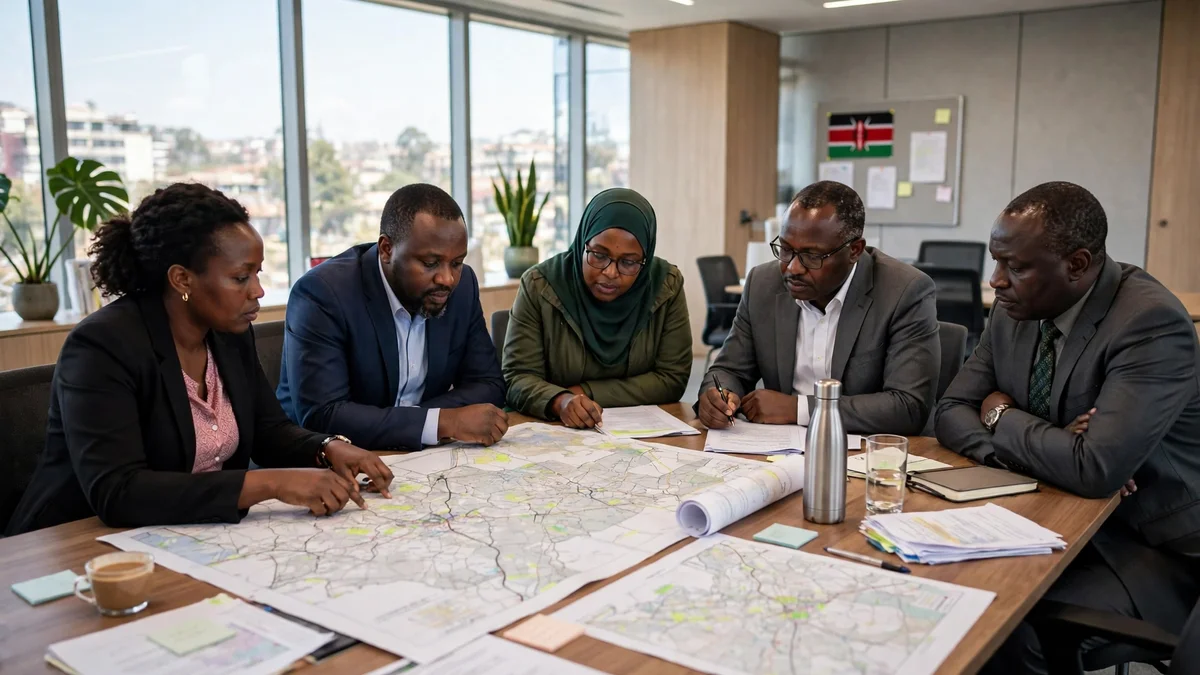
Public participation follows, and it is one of the most important parts of the process. Residents are invited to meetings, often at ward level, where they can say what their area needs most: a dispensary, a borehole, a repaired road, a market shed. These meetings are sometimes poorly attended, and sometimes dominated by a few voices, but they are the main way that ordinary residents can shape the plan. A county that skips genuine consultation has missed the point of the exercise.
Once the draft is written, it goes to the county assembly, the elected body that debates and approves it. Assembly members can amend the plan, and they are expected to check that it reflects the needs of their wards. Approval turns the draft into the county’s official plan, and from that point the annual budgets and development plans are supposed to follow it. Our guide to where to meet people is about a different kind of gathering, but the principle is the same: showing up in person is how communities make themselves heard.
How the plan connects to budgets and projects
A CIDP on its own builds nothing. Its power comes from the rule that annual budgets must be based on it. Each year, the county prepares an annual development plan drawn from the CIDP, and then a budget that funds the projects listed in that annual plan. A project that is not in the CIDP should not appear in the budget, and a project that is in the plan but never funded is a broken promise that residents can point to.
This chain is also where plans most often fail. A county may write an ambitious CIDP and then approve budgets that do not match it, funding new priorities while the planned projects wait. Or it may fund the projects but fail to complete them, leaving half-built clinics and stalled roads. The monitoring framework in the plan is meant to catch this, with indicators and targets that show whether work is progressing, but monitoring only works if someone reads the reports and acts on them.
Residents have a practical role here. The CIDP is a public document, and it can be requested from the county government or found on the county website. Comparing the plan with the budget, and then with what is actually built, is one of the simplest forms of civic oversight, and it requires no special expertise, only patience and a willingness to ask questions.
Common problems with county plans
One common problem is over-ambition. A plan that promises a hospital in every ward, a tarmac road to every village and a water connection for every household will please everyone at launch and disappoint everyone at the end, because the funds are never enough. A good plan is honest about what can be afforded, and it sequences projects so that the most urgent come first.
Another problem is weak data. If the county does not know how many of its water points work, or how far residents travel to a clinic, it cannot plan sensibly. Some counties have improved their data collection considerably, while others still rely on estimates that are years out of date. The quality of the plan depends directly on the quality of the information behind it.
A third problem is poor follow-through on participation. Meetings are held, views are recorded, and then the final plan looks much as it would have done without them. Residents notice this, and they stop attending, which makes the next round of consultation even weaker. Breaking that cycle requires counties to show, in the published plan, which community suggestions were adopted and which were not, with reasons. Keeping a county tidy is part of the same story, and our guide to the recycling bin covers how waste services, one of the everyday services a plan should address, are organised.
A checklist for reading your county plan
- Find the current CIDP for your county on its website or at the county offices.
- Check the county profile for facts about your ward, such as clinics and water points.
- Look for the projects listed for your area and note their timelines.
- Compare the plan with the annual budget to see what is actually funded.
- Visit the project sites and check whether work matches the plan.
- Attend public participation meetings and raise the needs of your area.
- Ask your ward representative what has been delivered and what is delayed.
- Keep notes year by year, so that promises can be checked against delivery.
Frequently asked questions
What is a county integrated development plan?
A county integrated development plan, or CIDP, is a five-year strategic plan prepared by a Kenyan county government. It sets out the county’s development priorities, the projects it intends to carry out, and the resources it expects to use, across sectors such as health, roads, water, agriculture and education.
How many counties does Kenya have?
Kenya has forty-seven counties, each with its own elected government. Each county prepares its own integrated development plan, so there are forty-seven CIDPs in force at any time, one for each county.
Who prepares the plan?
The county executive, led by the governor, prepares the draft plan, with input from county officers and from residents through public participation. The county assembly then debates and approves the plan, and may amend it before approval.
How long does a CIDP last?
A CIDP runs for five years, matching the term of the county government. At the end of the five years it is reviewed, and a new plan is prepared by the incoming government.
Can residents influence the plan?
Yes. Public participation is a required part of preparing a CIDP, and residents are invited to meetings where they can state what their area needs. The influence is real when residents attend, speak clearly about priorities, and follow up by checking whether their suggestions appear in the final plan.
Where can I find my county’s plan?
The CIDP is a public document. It is usually available on the county government’s website or from the county offices, and copies are often shared at public participation meetings. If it is not easy to find, asking your ward representative is a good next step, and keeping track of local services is easier when you know where to look. For a sense of how public occasions are organised, see our piece on Presidents Day 2027, which shows how ceremony and civic life meet.
The bottom line
A county integrated development plan is not just paperwork. It is the document that decides which roads are repaired, which clinics are built and which water schemes are funded in your county over five years. Read it, compare it with the budget, and check what is actually delivered on the ground. A plan only works when residents use it, and the counties that deliver best are usually the ones whose residents are paying attention.