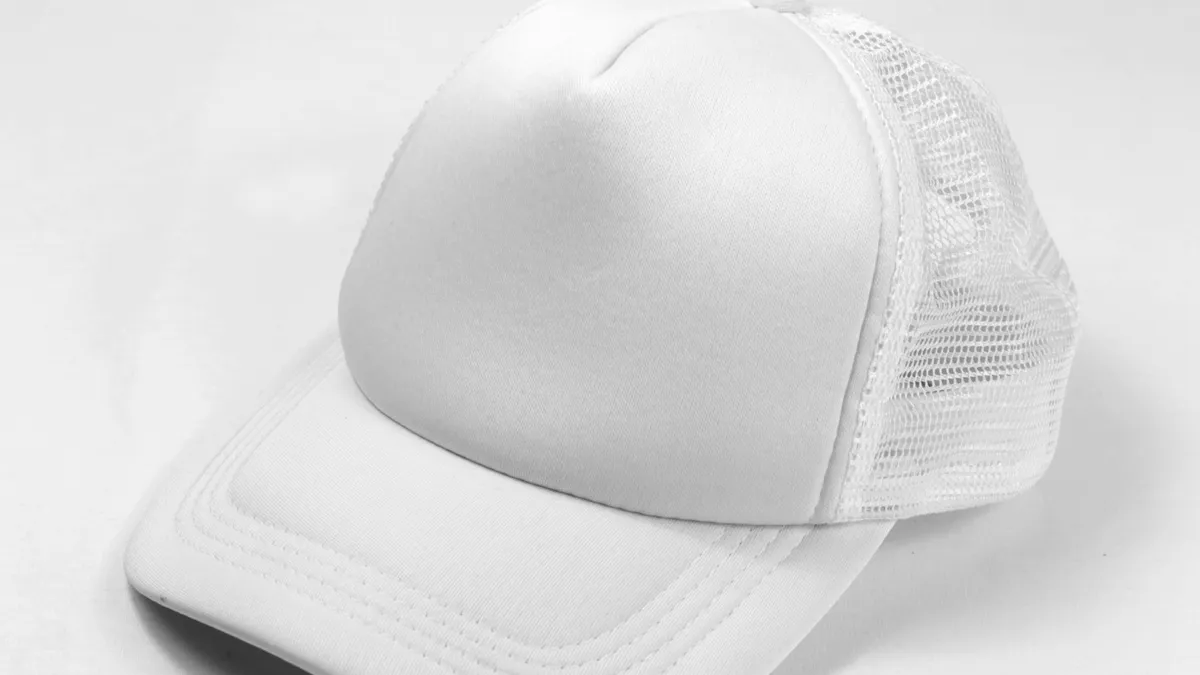

Caps are brimmed headwear with a crown that sits on the head and a peak that shades the eyes, and the best way to choose one is to match the style to the job: a baseball cap for everyday wear, a fitted cap for a tailored look, and a flat cap for smarter outfits. The question most shoppers ask is which type suits them, and the answer is that fit, fabric and purpose matter far more than fashion rules.
This guide explains the main types of caps, how each one is built, what the fabrics and closures mean, how to get the size right, and how to care for a cap so it keeps its shape.
Key takeaways
- The main styles are baseball, dad, snapback, fitted, trucker, five-panel and flat caps.
- Structured caps hold their shape with stiffened front panels, while unstructured caps sit softer and lower on the head.
- Fit is set by size, crown depth and closure type, and a cap should sit level without squeezing or sliding.
- Cotton twill, wool, linen and mesh each behave differently, so the fabric should match the weather and the use.
- Most caps should be cleaned by hand, since machine washing can warp the brim and shrink the crown.
- Cap also means a bottle top or a limit, but in clothing it always means brimmed headwear.
What a cap is
A cap is a soft head covering with two essential parts: a crown that covers the top of the head and a brim, or peak, that sticks out at the front to shade the eyes. Most caps are made from panels of fabric stitched together, with a small button at the top where the panels meet and small eyelets that let air through. The back usually has an adjustable strap, a snap, a buckle or an elastic band, although fitted caps have no adjustment and come in set sizes.
Caps differ from hats in a useful way: hats generally have a brim all the way round, while a cap has a brim only at the front, which is why caps work so well for sport and everyday wear. The baseball cap is the style most people picture first, worn since baseball teams adopted brimmed caps in the nineteenth century.
The main types of caps
The baseball cap is the standard against which the others are measured. It has a rounded six-panel crown, a curved brim and an adjustable strap, and it suits almost everyone because the shape is balanced and familiar. A structured baseball cap has stiffened front panels that stand up on their own, while an unstructured one has a softer front and sits lower, which many people find more comfortable.
The dad cap is an unstructured baseball cap with a low profile and a slightly curved brim, usually in washed cotton. It takes its name from the plain, unfussy caps worn by fathers on weekends, and its appeal is exactly that lack of fuss. It pairs easily with casual clothes and suits people who find structured caps too tall or too rigid.
The snapback has a flat brim and a plastic snap closure at the back, and it became closely tied to streetwear and hip-hop culture. Its crown is usually structured and high, giving it a bold outline. The fitted cap looks similar but has no adjustable closure; it is made in numbered sizes, which gives a cleaner, more tailored fit.
The trucker cap, sometimes called a mesh cap, has a foam front panel and mesh panels at the back, which makes it light and ventilated. It was originally associated with rural workwear, and its high foam front takes printed designs well. The five-panel cap, also called a camp cap, has a lower, boxier crown and a short brim, and it is popular with cyclists, skaters and streetwear labels.
The flat cap is the outlier. It has a low, rounded crown and a short, stiff brim that sits close to the forehead, and it is traditionally made from wool or tweed. It has long been associated with Britain and Ireland, where it was once everyday working dress, and today it reads as a smarter choice that works with coats, jackets and tailored clothes.
How caps are made and what the fabrics mean
Most caps are built from six triangular panels, although five-panel and flat caps use fewer, and the panels are stitched together over a form to give the crown its shape. A fabric-covered button sits at the top, eyelets in the panels allow ventilation, and the brim is made from a stiffened insert covered in the same fabric. The sweatband inside absorbs moisture and helps the cap grip.
Cotton twill is the most common cap fabric because it is durable, breathable and easy to dye, and washed cotton has a soft, broken-in feel that suits dad caps. Wool and tweed give warmth and structure, which is why they dominate flat caps and winter styles, while linen blends are lighter and better for warm weather. Polyester blends dry quickly and hold their shape, so they appear in sports caps, and mesh backs in trucker caps give airflow that solid fabric cannot match.

Caps compared
The table below sets out the main styles side by side, so the differences in shape, fit and use are easy to compare before you buy.
| Style | Crown | Brim | Fit | Best for |
|---|---|---|---|---|
| Baseball cap | Rounded, six panels | Curved | Adjustable strap | Everyday wear and sport |
| Dad cap | Low, unstructured | Curved | Strap or buckle | Relaxed casual outfits |
| Snapback | High, structured | Flat | Plastic snap | Streetwear looks |
| Fitted cap | Structured, closed back | Flat or curved | Numbered sizes | A clean, tailored fit |
| Trucker cap | High foam front, mesh back | Curved | Snap closure | Warm weather and ventilation |
| Five-panel cap | Low, boxy, five panels | Short, flat or curved | Strap closure | Cycling and casual style |
| Flat cap | Low, rounded, one piece | Short and stiff | Sized or elastic | Smarter outfits and cold weather |
How to choose a cap
Start with purpose. If you need sun protection for walking, gardening or sport, a baseball or trucker cap with a curved brim and breathable fabric is the practical choice. For city outfits, a dad cap or a five-panel cap gives a relaxed look, while a flat cap suits coats and jackets. For running or training, look for light performance fabric and a secure fit.
Size comes next, and it is worth measuring. Wrap a tape measure around your head just above the eyebrows and ears, keep it level, and note the measurement in centimetres or inches. Compare it with the maker’s size guide, remembering that adjustable caps cover a range while fitted caps need an exact match. A cap should sit level, with the brim roughly parallel to the ground, and feel secure without pressing into the forehead or leaving a red mark when you take it off.
Crown depth is the detail most people overlook. A deep crown suits a larger head or thicker hair, while a shallow crown suits a smaller head. If a cap perches high, the crown is too tall for you; if it squeezes, it is too small. Trying a cap on for a few minutes tells you more than any size chart.
Caring for your caps
Caps last longer when they are cleaned gently. Most caps should be washed by hand in cool water with a small amount of mild detergent, using a soft brush on marked areas and taking care around embroidery. Rinse well, reshape the crown while it is damp, and leave the cap to dry in the open air away from direct heat.
Machine washing is risky because the agitation can warp the brim, crush the crown and shrink the fabric, and tumble drying is worse still. The safe default is hand washing. Store caps on a hook or a shelf rather than crushed in a bag, and keep them out of strong sunlight, which fades colours. Wipe the sweatband after wear and let the cap air out between uses.
Other meanings of the word cap
The word cap does not only mean headwear. A bottle cap is the small top that seals a bottle, and it shares the idea of a covering that sits on top of something. In finance, a cap is a limit, such as the maximum amount that can be charged, and in sport a cap can mean an appearance for a national team. In informal speech, saying something is “no cap” means it is true and not exaggerated, a piece of slang that has spread widely in recent years. For shopping, though, the headwear sense is the one that matters.
Your caps checklist
- Decide the job first: sun protection, sport, warmth or style.
- Pick the style that matches it: baseball, dad, snapback, fitted, trucker, five-panel or flat.
- Measure around your head above the eyebrows and ears before ordering.
- Check whether the cap is structured or unstructured.
- Match the fabric to the weather: cotton and mesh for warmth, wool for cold.
- Try the cap on and wear it for a few minutes to test comfort.
- Check that the brim sits level and the cap does not squeeze or slide.
- Choose a colour that works with your clothes.
- Wash by hand and dry in the open air.
- Store the cap where it will not be crushed, and keep it out of strong sunlight.
Frequently asked questions
What is the difference between a baseball cap and a dad cap?
A dad cap is a type of baseball cap, but it is unstructured and low profile, usually in washed cotton, so it sits softer and lower on the head than a standard baseball cap.
How should a cap fit?
A cap should sit level with the brim roughly parallel to the ground, secure without pressing into your forehead, and it should not slide over your eyes or leave a red mark when you take it off.
Can you wash a cap in a washing machine?
It is best not to. Machine washing can warp the brim and shrink the fabric, and tumble drying makes it worse. Hand washing in cool water and drying in the open air is safer.
What is a structured cap?
A structured cap has stiffened front panels that hold their shape, giving a taller, crisper profile. An unstructured cap has no stiffening, so the crown is softer and moulds to your head.
Are flat caps still in fashion?
Yes. The flat cap has moved from everyday working dress to a classic style choice, widely worn with coats and jackets. Wool and tweed versions suit cold weather, while cotton versions work in milder conditions.
What does “no cap” mean in slang?
In informal speech, “no cap” means “no lie” or “I am telling the truth”, used to stress that a statement is genuine. It is now common in music and social media.
The bottom line
Caps are simple pieces of headwear, but the differences between styles matter: a structured baseball cap, a soft dad cap, a flat-brimmed snapback, a sized fitted cap, a ventilated trucker and a classic flat cap each suit a different purpose and a different head. Measure your head, choose the fabric for the weather, try the cap on for comfort, and clean it by hand so it keeps its shape. If you want a break from choosing, our guide to stress relief techniques can help you unwind, our guide to the best breakfast food has ideas for a slow morning, and our guide to the best water bottles covers staying hydrated while you are out in the sun.