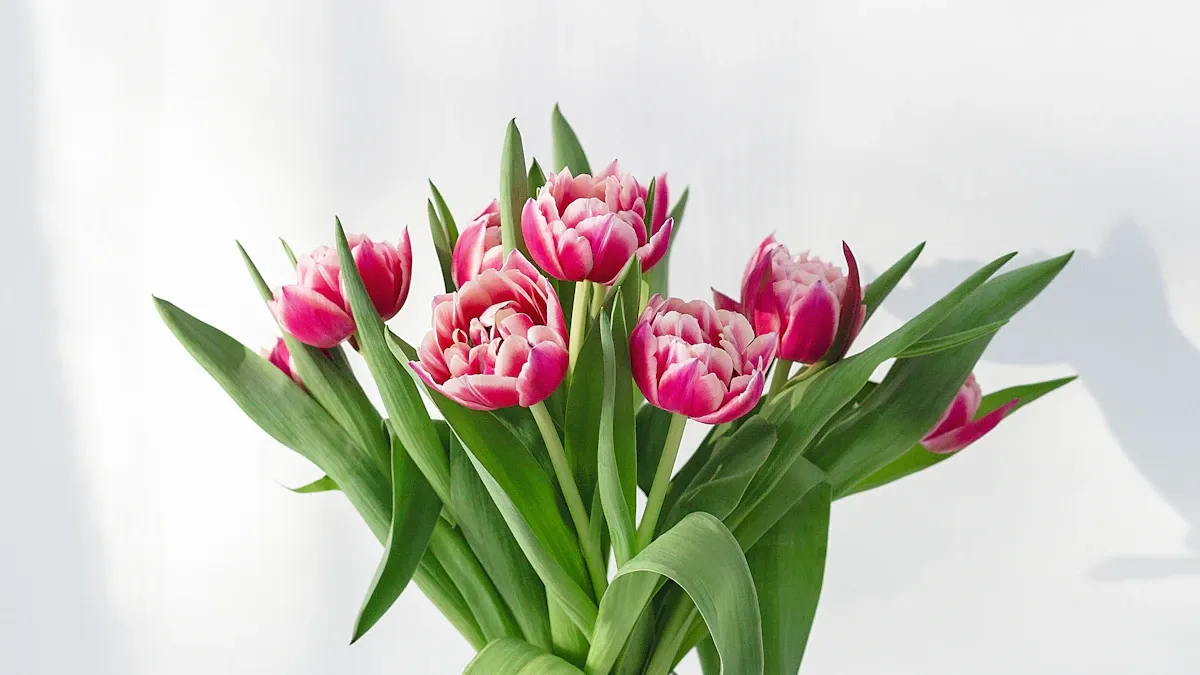

A bouquet is a bunch of flowers arranged to be given as a gift or carried on a special day, and a good one says more than a card ever could. The right bouquet matches the occasion, suits the person receiving it, and stays fresh long enough to be enjoyed, while the wrong one wilts in a day or sends the wrong message entirely.
This guide explains how to choose a bouquet, what different flowers and colours mean, how to look after cut flowers at home, and how to give flowers well.
Key takeaways
- A bouquet is an arranged bunch of flowers, usually tied or wrapped, given as a gift or carried for a ceremony.
- Match the bouquet to the occasion: roses for romance, bright mixed flowers for birthdays, and gentle whites for sympathy.
- Seasonal flowers last longer and cost less than out-of-season stems flown in from far away.
- Fresh flowers have firm stems, bright petals and no brown edges or drooping heads.
- Change the water every two days, trim the stems at an angle, and keep the vase out of direct sun.
- Always remove the wrapping before arranging a bouquet in a vase, and check whether any flowers are toxic to pets.
What a bouquet is
The word bouquet comes from French, where it originally meant a small cluster of trees, and it now describes a bunch of flowers arranged together as a gift or decoration. A florist’s bouquet is usually tied with twine or ribbon and wrapped in paper, ready to be placed in water as soon as it reaches its new home. Bridal bouquets are carried rather than displayed, and they are often made to be kept or preserved after the day.
Bouquets come in many shapes. A hand-tied bouquet has stems of different lengths gathered loosely, giving a natural, garden-like look. A structured bouquet is arranged tightly in a dome shape, which suits formal occasions. A cascading bouquet trails flowers downwards and is usually seen at weddings. The shape matters less than the freshness of the flowers and whether the arrangement suits the person receiving it.
Choosing a bouquet for the occasion
The occasion is the first thing to consider, because it sets the tone for everything else. A romantic bouquet is usually built around roses or peonies in deep reds or soft pinks, with a generous, lush shape. A birthday bouquet can be brighter and more playful, with mixed seasonal flowers in several colours. A thank-you bouquet is best kept simple and cheerful, while a sympathy bouquet should be gentle, using whites, creams and soft greens.
Think about the person as well as the occasion. Someone with a small flat may prefer a compact bouquet that fits a modest vase, while someone with a large kitchen table can enjoy a generous arrangement. If the recipient has allergies, choose low-pollen flowers such as roses, tulips or orchids, and avoid heavily scented lilies. If there are pets in the house, check that the flowers are safe for them, since lilies in particular are dangerous to cats.
Roses, tulips, lilies and peonies
Roses are the classic bouquet flower, and they suit almost any occasion when the colour is right: red for romance, pink for admiration, white for sympathy or a wedding, and yellow for friendship. They last well in a vase, usually a week or more with proper care, and their scent is part of the pleasure. A dozen red roses remains the most recognised romantic gift in the world.
Tulips are a spring flower with a clean, simple shape, and they suit modern tastes and smaller budgets. They keep growing after they are cut, so a tulip bouquet changes shape over a few days, which some people love and others find untidy. Lilies are dramatic and strongly scented, which makes them ideal for large rooms and formal occasions, but their pollen stains and their scent can overwhelm a small space.
Peonies are the most seasonal of the popular bouquet flowers, available for only a few weeks in late spring and early summer. Their large, soft blooms make a bouquet look luxurious with only a few stems, but their short season means they are expensive and easy to miss. If peonies are out of season, garden roses give a similar full, romantic look.
Seasonal flowers and why they matter
Seasonal flowers are the ones growing naturally at the time you buy them, and they are almost always the better choice. They last longer because they have not travelled far, they cost less because they are plentiful, and they look right for the time of year. Daffodils and tulips in spring, sunflowers and sweet peas in summer, dahlias in autumn and amaryllis in winter all carry the character of their season.
Out-of-season flowers are not impossible to find, since many are grown in greenhouses or flown in from other countries, but they cost more and often fade faster. A florist can tell you what is in season, and a good one will steer you towards it. If your heart is set on a particular flower, ask the florist what is available and how long it is likely to last.
What bouquet colours mean
Colour is the part of a bouquet that people notice first, and it carries meaning whether you intend it or not. Red is the colour of love and passion, which is why red roses dominate Valentine’s Day. Pink suggests admiration and gratitude, and it suits birthdays, thank-yous and new babies. White suggests purity and sympathy, and it is the traditional colour for weddings and funerals alike.
Yellow is cheerful and friendly, and yellow flowers suit congratulations and get-well wishes, though in some traditions yellow carries a hint of jealousy, so it is best avoided for a romantic gift. Purple suggests admiration and dignity, and it works well for a formal thank-you. Orange is energetic and warm, and it suits a bold, modern bouquet for someone with a strong personality.
How to keep a bouquet fresh
Cut flowers begin to fade the moment they leave the plant, but good care can add several days to their life. Start by removing the wrapping and trimming an inch off each stem at a 45-degree angle, which opens up the stem so it can drink. Use a clean vase filled with fresh, cool water, and add the flower food sachet that comes with the bouquet, following the instructions on the packet.
Change the water every two days, and trim the stems again each time you do. Remove any leaves that sit below the waterline, since they rot and breed bacteria that block the stems. Keep the vase out of direct sunlight, away from radiators, and away from the fruit bowl, because ripening fruit releases a gas called ethylene that speeds up wilting.

Bouquet styles compared
Different occasions call for different styles of bouquet. The comparison below covers the most common types, what they suit, and what to expect from each one.
| Style | Look | Best for | Typical flowers |
|---|---|---|---|
| Hand-tied | Loose, natural, garden-like | Birthdays and thank-yous | Mixed seasonal flowers |
| Structured dome | Tight, rounded, formal | Weddings and formal gifts | Roses, peonies, hydrangeas |
| Cascading | Flowers trailing downwards | Bridal bouquets | Orchids, roses, ivy |
| Single variety | One flower, one colour | Romance and bold statements | Roses, tulips, lilies |
| Wildflower | Loose, meadow-like, informal | Country weddings and relaxed gifts | Daisies, cornflowers, grasses |
Giving a bouquet well
How you give a bouquet matters almost as much as the flowers themselves. Deliver it in person when you can, and hand it over with the stems towards you and the blooms towards the recipient, so they see the flowers first. Include a short handwritten note, because a few sincere words stay with the recipient long after the flowers have faded.
If you are sending flowers by delivery, choose a florist who delivers in water or with the stems wrapped in a wet wrap, so the bouquet arrives fresh. Include clear delivery instructions, and check whether the recipient will be at home, since a bouquet left on a doorstep in the sun will not last long. Many florists offer a timed delivery for a small extra charge.
Your bouquet checklist
- Match the bouquet to the occasion first, and to the recipient second.
- Choose seasonal flowers where you can, since they last longer and cost less.
- Check the flowers are fresh: firm stems, bright petals and no brown edges.
- Pick a size that fits the recipient’s home and their largest vase.
- Ask about allergies and pets, and avoid lilies in a house with cats.
- Use the right colours for the message, and ask the florist if you are unsure.
- Trim the stems at an angle and place the bouquet in fresh water straight away.
- Change the water every two days and remove leaves below the waterline.
- Keep the vase out of direct sun, away from radiators and away from ripening fruit.
- Include a short handwritten note, and deliver the bouquet in person when you can.
Frequently asked questions
How long does a bouquet last?
A fresh bouquet usually lasts between five and ten days, depending on the flowers and how it is cared for. Roses and carnations often last a week or more, while tulips and peonies fade faster.
What flowers are best for a birthday bouquet?
Bright mixed seasonal flowers are usually the best choice for a birthday, since they look joyful and suit almost anyone. Roses, tulips, sunflowers and gerberas all work well. If you know the recipient’s favourite flower or colour, build the bouquet around it.
Which bouquet is right for a wedding?
A bridal bouquet is usually a structured dome or a cascading arrangement in whites, creams and soft pinks, built around roses, peonies or lilies. The flowers should suit the dress, the season and the scale of the ceremony. Order from a florist who specialises in weddings, and arrange a trial bouquet if the day matters enough to warrant one.
Are lilies safe around cats?
No. Lilies are highly toxic to cats, and even a small amount of pollen, leaf or petal can cause serious kidney damage. If there is a cat in the house, do not send lilies at all, and choose a pet-safe alternative such as roses, tulips or orchids. If a cat has chewed a lily, contact a vet immediately.
Should I remove the wrapping from a bouquet?
Yes. The wrapping protects the bouquet in transit, but it traps moisture and warmth once the flowers are indoors. Remove the paper and twine, trim the stems at an angle, and place the bouquet in a clean vase of fresh water as soon as you can.
Can I make a bouquet at home?
Yes, and a home-made bouquet can be more personal than a bought one. Cut flowers in the cool of the morning, strip the lower leaves, and arrange the tallest stems first, then fill in around them. Use flowers from your garden or a market, keep the stems in water while you work, and trim them to length before tying the bunch.
The bottom line
A good bouquet is a small act of care: the right flowers, for the right occasion, given at the right moment, and looked after well enough to last. Choose seasonal stems, match the colours to the message, check for allergies and pets, and give the bouquet in person with a few honest words. If the bouquet is for a breakfast table, our guide to the best breakfast food will help you plan the morning around it, our guide to the best tea brands has a brew to serve alongside the flowers, and our guide to the best dog breeds for families will help you choose a four-legged companion to enjoy the garden with.