
The best gel pens are the ones that match what you actually do with them: a fine tip for small handwriting, a broad tip for bold journaling, and a smooth, quick-drying ink for left-handers and exam papers. Gel pens use a water-based gel ink that is thicker than the ink in a ballpoint and thinner than the ink in a rollerball, which is why they write so smoothly and produce such vivid colour. The right choice depends on ink, tip size and paper, not on the brand name on the barrel.
This guide explains how gel ink works, how tip sizes change the writing experience, which pens suit journaling, art and exams, and how to avoid the two most common complaints: smudging and skipping. No pen here has been personally tested for this article; the advice is based on how gel pens are made and how they behave on paper.
Key takeaways
- Gel pens use a water-based gel ink that writes smoothly and shows vivid colour.
- Fine tips suit small handwriting; broad tips suit bold writing and drawing.
- Quick-drying ink matters most for left-handers and for exam papers.
- Smooth, heavier paper reduces bleed-through and feathering.
- Metallic and white gel inks work best on dark paper, not on white paper.
- Store gel pens horizontally, and keep the cap on when you are not writing.
How gel ink works
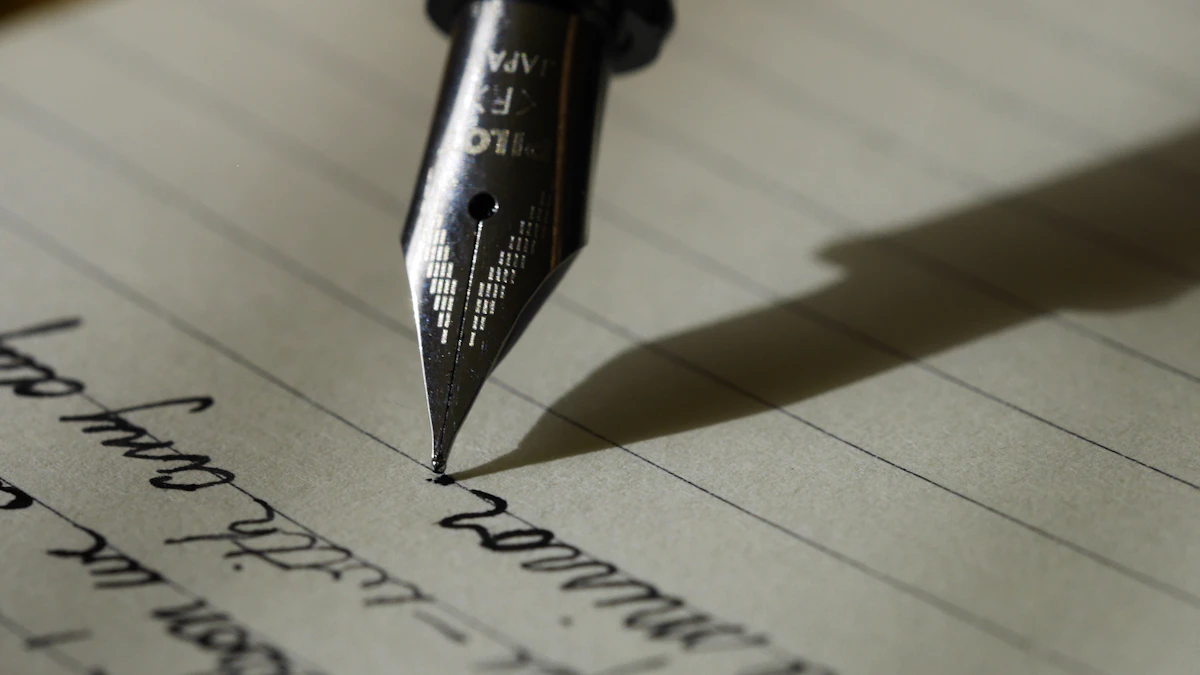
Gel ink is a water-based ink thickened with a gelling agent, which gives it a consistency somewhere between a liquid and a paste. Inside the pen, a small ball at the tip rotates as you write, picking up the gel and laying it down on the paper in an even line. Because the ink is thicker than ballpoint ink, it stays where it is put: the line is clean, the colour is strong, and the pen needs very little pressure.
That low pressure is the main reason people prefer gel pens for long writing sessions. A ballpoint needs to be pressed down to keep the ink flowing, which tires the hand over a page or two. A gel pen glides with its own weight, so the hand stays relaxed. The trade-off is drying time. Gel ink sits on the surface of the paper rather than soaking in, so it takes a little longer to dry, and a careless hand can smudge a fresh line. Quick-drying formulations reduce this, but they rarely remove it entirely.
Tip sizes, and what they change
Tip size is measured in millimetres, and it describes the diameter of the ball at the end of the pen. A 0.3 mm or 0.4 mm tip draws a fine, precise line, ideal for small handwriting, annotations and detailed drawing. A 0.5 mm tip is the most versatile size: fine enough for everyday notes, bold enough to read easily. A 0.7 mm tip or larger draws a broad, confident line that suits journaling, headings and sketching, but it uses more ink and is more likely to bleed through thin paper.
The same size can feel different from one pen to another, because the width of the line also depends on the ink flow and the shape of the tip. The best way to choose is to try a few sizes on the paper you actually use, and to write at your normal speed rather than carefully.
Needle tips and conical tips
Gel pens come with two main tip shapes. A needle tip has a long, thin point that makes the exact position of the line easy to see, which suits precise work such as technical drawing and small lettering. A conical tip has a shorter, sturdier point that is more forgiving of pressure and angle, which suits everyday writing. Needle tips can feel scratchier and are easier to bend if dropped; conical tips are the safer choice for a pen that will live in a bag or a pocket.

Choosing a gel pen for writing
For everyday writing — notes, lists, letters and journals — a 0.5 mm pen with a conical tip and a quick-drying black or blue ink is the most reliable choice. It is fine enough for small handwriting, dark enough to read at a glance, and forgiving of cheap paper. If your handwriting is small or cramped, step down to 0.4 mm; if it is large and loose, step up to 0.7 mm and enjoy the bolder line.
Left-handers should put drying time first. A left hand follows the pen across a fresh line, so slow-drying ink smudges under the palm. Look for pens described as quick-drying or fast-drying, write with a lighter touch, and give each line a moment before the hand passes over it. Some left-handers also prefer a finer tip, because it lays down less ink and dries faster. A smooth, coated paper makes smudging worse, so plain, uncoated paper is usually the better choice.
Choosing a gel pen for drawing and colouring
For drawing, the priorities change. Line width and control matter more than drying time, and colour matters more than anything. A set of fine tips in the 0.3 mm to 0.5 mm range covers most sketching and outlining, while a broad tip adds weight to shadows and borders. Black is the workhorse colour for line work; a waterproof or archival black is worth seeking out if the drawing will later be coloured with water-based markers or paint, since ordinary gel ink can dissolve and bleed.
Coloured gel pens open up a different set of uses. Pastel and neon inks are popular for journaling, planners and greetings cards, while metallic and glitter inks are made for dark paper, where ordinary ink disappears. White gel pens are a particular case: a good one can add highlights, correct small mistakes, or write on black card. White ink is thicker than coloured ink and clogs more easily, so shake the pen and scribble on scrap paper first.
Gel pens for exams and official forms
Exams and official forms have their own rules, and they are worth checking before the day. Some exam boards require black ink, and some specify a ballpoint rather than a gel pen, because gel ink can smudge under a scanning machine or take too long to dry when pages are turned quickly. If the rules allow gel pens, choose a quick-drying black pen with a 0.5 mm tip, and bring a spare: a gel pen that runs out mid-exam is harder to replace than a ballpoint.
For forms, the main risk is bleed-through. Thin form paper shows the ink from the other side, and a broad tip makes it worse. A fine tip, a light touch and a quick-drying ink keep the page clean.
Paper matters more than you think
The same pen can feel wonderful on one paper and dreadful on another. Smooth, heavy paper — the kind used in good notebooks and journals — lets a gel pen glide, and it resists bleed-through. Cheap, thin copy paper absorbs the ink unevenly, which causes feathering, where the line spreads into the fibres, and show-through on the reverse side. Rough or textured paper can catch the ball and cause skipping.
If you are buying a notebook for gel pens, look for paper described as fountain-pen friendly or bleed-proof, and check the weight if it is given: paper around 100 grams per square metre handles gel ink comfortably, while 80 grams is the minimum worth using.
| Tip size | Line | Best for | Watch out for | Paper |
|---|---|---|---|---|
| 0.3 mm | Very fine | Small writing, detail drawing | Can feel scratchy | Smooth, heavy paper |
| 0.4 mm | Fine | Annotations, small handwriting | Less bold on the page | Most notebook paper |
| 0.5 mm | Medium | Everyday notes and journals | Very little | Most paper |
| 0.7 mm | Broad | Bold journaling, headings | Bleed on thin paper | Heavy paper |
| 1.0 mm | Very broad | Art, signatures, cards | Slow drying, heavy ink use | Thick card or art paper |
Smudging, skipping and other fixes
Smudging is the most common complaint, and it has three usual causes: slow-drying ink, coated paper, and a hand that rests on the fresh line. Quick-drying ink and uncoated paper fix the first two; for the third, a sheet of scrap paper under the writing hand keeps the palm off the page. Letting a page dry for a few seconds before closing a notebook also helps, and it costs nothing.
Skipping — the pen leaving gaps in a line — usually means the ball is dry, dirty or cold. Scribbling in small circles on scrap paper often clears it, and warming the tip between your hands can help in cold weather. If a pen skips repeatedly, the ink may have dried in the tip from being stored upright or left uncapped.
Your best gel pens checklist
- Decide what the pen is for: writing, drawing, journaling or exams.
- Choose 0.5 mm for everyday writing, 0.4 mm for small handwriting, 0.7 mm for bold lines.
- Pick quick-drying ink if you are left-handed or the pen is for exams.
- Try the pen on the paper you actually use before you buy a set.
- Match the paper to the pen: heavier, smoother paper for broad tips.
- Use waterproof black ink if a drawing will be coloured over later.
- Save metallic, glitter and white inks for dark paper and highlights.
- Store gel pens horizontally with the cap on.
- Carry a spare for exams and important signing.
- Test a new pen on scrap paper first, especially white and metallic inks.
Frequently asked questions
What is the difference between a gel pen and a ballpoint?
A gel pen uses a water-based gel ink that flows smoothly and shows strong colour, while a ballpoint uses an oil-based ink that needs more pressure and dries faster. Gel pens write more smoothly but take longer to dry and can smudge.
Which gel pen tip size is best for everyday writing?
A 0.5 mm tip suits most people for everyday notes and journals. It is fine enough for small handwriting and bold enough to read easily. Step down to 0.4 mm for small writing, or up to 0.7 mm for a bolder line.
Do gel pens smudge?
They can, because the ink sits on the surface of the paper and takes a little while to dry. Quick-drying ink, uncoated paper and a sheet of scrap paper under the writing hand all reduce smudging.
Are gel pens good for left-handers?
Yes, provided the ink dries quickly. Look for pens described as quick-drying or fast-drying, use a finer tip, and choose plain, uncoated paper rather than smooth, coated paper.
Can I use a gel pen in an exam?
It depends on the exam board. Some require black ink, and some specify a ballpoint. Check the rules before the day, choose a quick-drying black pen if gel pens are allowed, and bring a spare.
Why has my gel pen stopped working?
Usually the ink has dried in the tip, often from being stored upright or left uncapped. Scribbling on scrap paper or warming the tip can revive it, but a badly dried pen may be past saving.
The bottom line
The best gel pens are not the most expensive ones; they are the ones that fit the job. A 0.5 mm quick-drying pen on good paper covers most writing, a fine tip covers detail and small handwriting, and a broad tip covers bold journaling and art. Choose the tip for the task, the ink for the drying time, and the paper for the pen, and keep the caps on and the pens flat. If you enjoy slow, analogue pleasures, our guide to stress relief techniques covers unwinding without a screen, our guide to the best tea brands covers a proper brew for a writing session, and our guide to the best breakfast food covers a slow start to the day.