To stay motivated after career setback, you first need to accept that feeling lost or disappointed is completely normal. However, a setback doesn’t mean you’ve failed permanently. Instead, it marks a turning point where you can reassess your goals and how you want to move forward.
When your plans collapse, it’s easy to slip into self-doubt and worst-case thinking. Yet, with the right mindset and structure, your motivation can become stronger than before. So, this guide will walk you through practical ways to rebuild your drive, protect your confidence, and start moving again with clarity.
A Simple Framework to Stay Motivated After Career Setback
Creating a clear system gives your mind something stable to follow. Yet, many people rely only on willpower, which drops quickly after disappointment. So, this framework helps you stay grounded while your confidence rebuilds. This method blends mindset, routine, and environment design.
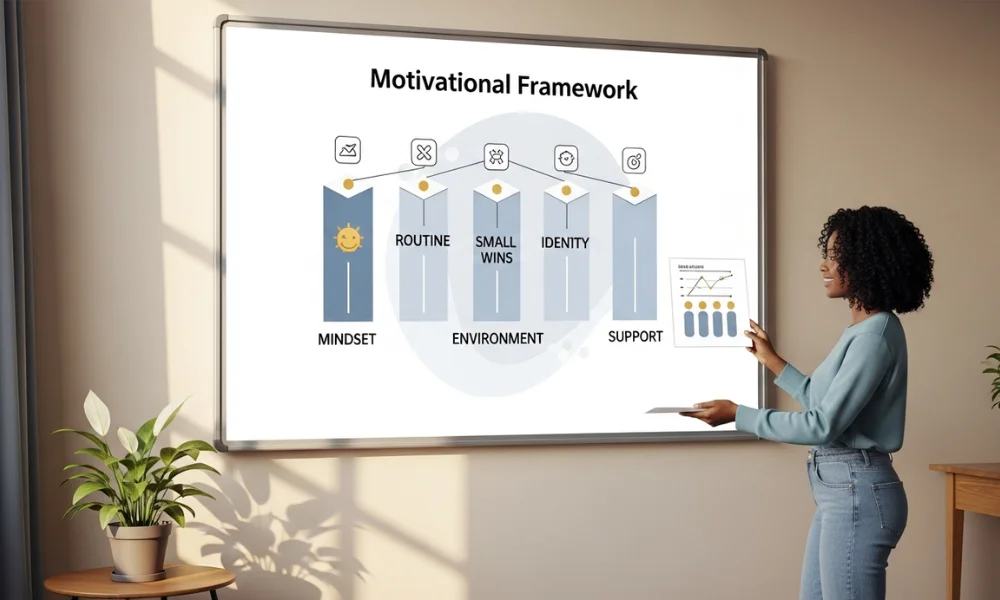
Although small, each part supports your motivation from a different angle. Therefore, you create progress even when emotions fluctuate. Use this as your baseline structure. It helps you reduce decision fatigue and protect your energy. And as a result, you begin moving forward with more consistency.
How Small Wins Help You Stay Motivated After Career Setback
Small wins rebuild confidence faster than major goals. But many professionals chase big outcomes too soon and feel discouraged. So, focusing on tiny steps keeps motivation alive during uncertainty. Your brain releases dopamine each time you complete a simple task.
Yet, competitors rarely explain how powerful this is for recovering momentum. Therefore, start each day with one task you can finish in under ten minutes.
Why Identity Shifts Help You Stay Motivated After Career Setback
Motivation grows stronger when tied to identity, not achievements. However, most advice focuses on goals alone. So, shifting your self-view becomes a key part of long-term progress. Instead of saying “I failed,” say “I’m someone rebuilding my career with intention.” This small shift reduces shame and increases action. And with repetition, your mindset becomes more resilient.
How Environment Design Helps You Stay Motivated After Career Setback
Your environment quietly shapes your behavior every day. Yet, competitor articles rarely address this factor, even though it’s crucial for recovering motivation. So, adjusting your space gives you a major advantage. Remove items that remind you of failure and add cues that signal growth. Even simple changes improve focus.
Consequently, your mind begins associating your environment with new progress. A supportive space reduces mental friction. As a result, motivation becomes easier to maintain. And soon, productive habits feel natural again.
Situation Based Ways to Stay Motivated After Career Setback
Career setbacks affect everyone differently. Yet, most guides use the same advice for every scenario. So, these tailored strategies help you respond with clarity and confidence. Your emotions change based on what happened. However, your motivation returns faster when your actions match your specific situation. Therefore, knowing which strategy fits your moment matters.
How to Stay Motivated When You Lose a Job
Job loss creates sudden uncertainty. Yet, the root issue is often shock, not lack of skill. So, start rebuilding by grounding yourself in simple routines. Set one financial priority, one job search habit, and one self-care action each day. Although tiny, these steps restore control. Consequently, your emotional stability improves.
How to Stay Motivated After Missing a Promotion
Being passed over feels personal. However, it often reveals misalignment rather than failure. So, use this moment to clarify what you truly want next. Ask leaders for specific skill gaps and turn them into short-term goals. Although uncomfortable, this creates direction. Therefore, your motivation becomes purpose-driven instead of reactive.
How to Stay Motivated When a Project Fails
Project failure damages trust in your abilities. Yet, it also exposes systems that no longer work. So, review what happened without judgment. Break the failure into controllable parts. Then choose one part to improve each week. Although slow, this method creates lasting skill growth.
Daily Systems That Help You Stay Motivated After Career Setback
Motivation grows when your days feel structured. Yet, many people wait for inspiration to return on its own. So, building daily systems keeps you moving even when emotions shift These systems reduce mental friction and increase clarity. Although small, they guide your next steps. Therefore, they help you rebuild consistency faster.
How a Morning Routine Helps You Stay Motivated
Morning routines set the tone for your day. However, you don’t need long rituals to see results. So, choose three simple habits you can repeat daily. Start with movement, one written intention, and one small win. Although brief, these actions activate your focus. Consequently, you feel more prepared for challenges.
Why Midday Check-Ins Help You Stay Motivated After Career Setback
Midday slumps make people lose direction. Yet, a short check-in resets your intentions quickly. So, assess what’s working and what needs adjusting. Write one sentence about your progress so far. Although small, this reflection reduces stress and boosts clarity. Therefore, motivation stays present throughout the day.
How Evening Reflection Helps You Stay Motivated After Career Setback
Evening reflections help you close the day with purpose. But many skip this step and lose track of their progress. So, use a simple three-question journal format. Ask: “What worked?”, “What didn’t?”, and “What’s one win for tomorrow?” Although quick, this reset strengthens long-term resilience. Consequently, your mind stays focused on improvement.
Reflection builds confidence. Soon, progress feels steady. And motivation becomes easier to maintain.
Confidence-Building Habits That Help You Stay Motivated
Confidence often drops faster than motivation. Yet, rebuilding it creates the foundation you need to move forward. So, use these habits to restore your inner strength. These steps help you reconnect with your abilities. Although simple, they improve emotional stability. Therefore, your confidence becomes more reliable day by day.
How Strength Tracking Helps You Stay Motivated After Career Setback
List three strengths each morning to remind yourself of your value. However, make them specific and tied to real actions. So, your brain links them to evidence. This reduces self-doubt and increases clarity. Although quick, it builds a stronger identity. Consequently, you start making choices with more certainty.
How Emotional Regulation Helps You Stay Motivated After Career Setback
Setbacks create emotional spikes that drain energy. Yet, regulating them helps you stay steady. So, use slow breathing or grounding techniques to calm your system. These methods lower stress responses. Although subtle, they improve focus and decision-making. Therefore, your motivation lasts longer through uncertainty.
How Self-Compassion Helps You Stay Motivated After Career Setback
Self-criticism slows recovery more than the setback itself. However, compassion speeds it up. So, replace harsh thoughts with supportive statements. Speak to yourself the way you would speak to someone you respect. Although awkward at first, it reduces shame. Consequently, your internal motivation grows.
Support Systems That Help You Stay Motivated
Support systems make recovery faster and smoother. Yet, many people try to handle setbacks alone. So, reaching out becomes a crucial part of rebuilding motivation. Healthy support gives you clarity and reduces overwhelm. Although simple, shared encouragement boosts confidence. Therefore, your progress becomes more sustainable.
How Professional Guidance Helps You Stay Motivated
Career coaches and mentors provide direction when everything feels unclear. However, their value grows even more after a setback. So, use their insight to shorten your recovery period. They help you identify blind spots and new opportunities. Although feedback can be uncomfortable, it fuels growth. Consequently, you move forward with a stronger plan.

Guidance removes guesswork. Soon, your decisions feel sharper. And your confidence rises again.
How Community Support Helps You Stay Motivated
Community support reduces isolation, which is one of the biggest motivation killers. Yet, many professionals hesitate to share their struggles. So, joining groups can shift your mindset. Hearing similar stories normalizes your experience. Although vulnerable, connection rebuilds emotional strength. Therefore, your motivation becomes more stable.
Community creates accountability. Soon, you feel less alone. And your actions become more consistent.
How Accountability Partners Help You Stay Motivated After Career Setback
An accountability partner keeps you focused when discipline feels weak. However, choose someone reliable and encouraging. So, schedule regular check-ins to track progress. These check-ins improve follow-through. Although brief, they create healthy pressure. Consequently, your goals stay active instead of fading.
Accountability strengthens commitment. Soon, excuses lose power. And your motivation grows week after week. Additionally, if your goal involves career growth, this guide on how to land an internship and boost your resume can help you turn consistent effort into real opportunities.
Final Thoughts on How to Stay Motivated After Career Setback
To stay motivated after a career setback, you must recognize that progress returns through steady action, not sudden breakthroughs. Yet, each small choice you make strengthens your confidence. So, your future becomes easier to rebuild. Setbacks can shake your identity and disrupt your routine.
However, they also reveal new opportunities and untapped strengths. Therefore, staying open to growth helps you rise stronger than before. Your motivation will return with structure, support, and patience. Soon, clarity replaces uncertainty. And you begin moving forward with purpose again—especially when you prepare for the next step in your career, such as learning how to negotiate your first salary offer with confidence and clarity.
FAQ Section
How do I rebuild motivation after losing a job?
You can rebuild motivation by creating simple routines that restore structure. Although the process feels slow, small daily wins help your confidence return. Eventually, these habits make your job search more focused and less overwhelming.
What is the most effective way to bounce back from setbacks in my career?
The most effective method is breaking your recovery into manageable steps. Additionally, learning from your experience improves long-term resilience. Over time, this makes you stronger and more adaptable in future challenges.
How can I set new goals after a career failure?
Start by choosing goals that are smaller and easier to achieve. Because these wins build momentum, you regain clarity faster. As your confidence grows, you can expand into larger goals with more certainty.
What daily habits improve motivation during tough career moments?
Daily habits like movement, reflection, and short planning sessions make a big difference. Even though they seem small, they stabilize your mood and energy. Soon, these habits form a routine that supports long-term progress.
How do I maintain a positive mindset after a major setback?
A positive mindset grows through awareness and environment design. Yet, removing negative triggers helps even more. Consequently, you think more clearly and stay open to new opportunities.