As we approach 2025, the workplace is evolving rapidly with technology playing an ever-growing role. However, while technical skills are still crucial, soft skills employers value in 2025 are becoming increasingly important. These skills, such as effective communication, emotional intelligence, and teamwork, are the differentiators that set candidates apart in a competitive job market.
In fact, as automation and AI continue to take over repetitive tasks, the human touch will be the driving force behind business success. Therefore, mastering soft skills will give professionals the edge they need to thrive. By focusing on these core abilities, you can future-proof your career and position yourself as an invaluable asset to employers in the years to come.
The 10 Most Important Soft Skills Employers Value in 2025
When employers evaluate potential candidates, they prioritize a range of essential soft skills. These abilities help individuals adapt, collaborate, and contribute effectively in a dynamic work environment. Below are the top 10 soft skills employers value in 2025:
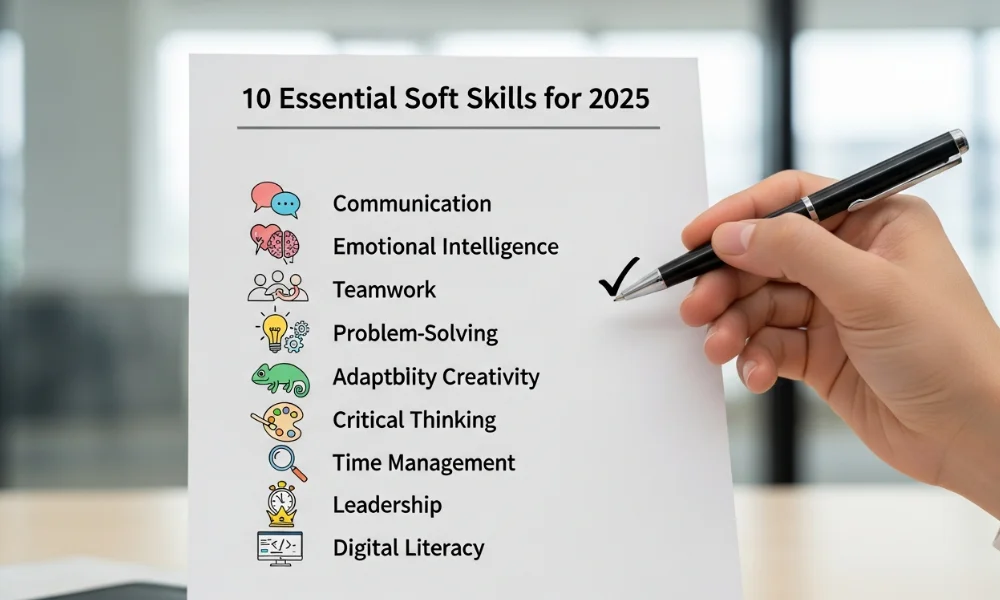
1. Communication Skills for the Workplace: Soft Skills Employers Value in 2025
First and foremost, clear communication remains essential. In 2025, employers seek professionals who can express ideas concisely. Whether written or verbal, communication skills are crucial for effective collaboration and decision-making in teams.
2. Emotional Intelligence Job Success: Soft Skills Employers Value in 2025
Moreover, emotional intelligence (EQ) is critical for navigating workplace dynamics. Professionals with high EQ foster positive relationships and handle stress with ease. Understanding emotions and motivations is vital for both leadership and teamwork.
3. Teamwork Skills in Soft Skills Employers Value in 2025
Additionally, as work environments become more collaborative, teamwork skills are in high demand. Employers want individuals who contribute ideas, support colleagues, and work well within diverse teams. Collaboration is key to achieving organizational goals.
4. Problem-Solving Abilities in Soft Skills Employers Value in 2025
Furthermore, problem-solving remains one of the top skills employers search for in candidates. Professionals who approach challenges creatively can find innovative solutions quickly. Strong problem-solving abilities contribute to both individual and team success.
5. Adaptability and Flexibility in Soft Skills Employers Value in 2025
In today’s fast-paced world, adaptability is essential. Employers want employees who can pivot when necessary and embrace change with a positive attitude. Flexibility allows individuals to thrive in both structured and evolving environments.
6. Time Management Skills in Soft Skills Employers Value in 2025
Likewise, efficient time management is a skill that many professionals seek to master. Employers value individuals who can prioritize tasks, meet deadlines, and manage workloads effectively. Effective time management helps enhance productivity and reduces stress.
7. Conflict Resolution Skills
In addition, conflict resolution is a vital skill in every workplace. Employers need employees who can mediate disputes and find compromises. Conflict resolution promotes harmony and drives team success in challenging situations.
8. Leadership Skills
Similarly, leadership skills are crucial even for non-managerial roles. Employers look for candidates who can inspire and motivate others. Effective leaders build strong teams, encourage collaboration, and drive the overall success of the organization.
9. Creativity and Innovation
Moreover, in a world where ideas drive growth, creativity and innovation are highly sought after. Employers value professionals who can think outside the box and bring fresh ideas to the table. Creativity fosters progress and drives competitive advantage.
10. Critical Thinking Skills
Lastly, critical thinking involves analyzing situations and making informed decisions. Professionals with strong critical thinking skills can assess problems and identify effective solutions. This ability is crucial in complex and fast-moving work environments.
How to Develop These Soft Skills for Career Success
Now that we’ve covered the most sought-after soft skills, it’s important to understand how you can develop them. Fortunately, these skills can be cultivated through practice, awareness, and the right mindset. Below are practical strategies to help you develop the soft skills employers value in 2025.
1. Enhancing Communication Skills for the Workplace
To begin with, improving your communication skills starts with active listening. Pay close attention to what others say, ensuring you fully understand their message before responding. Moreover, practicing clear and concise language will help convey your ideas effectively. Whether it’s presenting, emailing, or participating in meetings, always tailor your communication style to your audience.
Additionally, engaging in public speaking opportunities or taking a course on effective communication can provide further practice. Through consistent effort, your ability to communicate with confidence will improve, making you more valuable to employers.
2. Building Emotional Intelligence for Job Success
In order to develop emotional intelligence, start by becoming more self-aware. Recognizing your emotions and how they affect your reactions is the first step. Also, learning to manage your emotions effectively in high-pressure situations will help you maintain professionalism.
Furthermore, empathy is crucial to improving emotional intelligence. By putting yourself in others’ shoes, you can better understand their feelings and perspectives. This not only strengthens relationships but also improves teamwork and collaboration, key elements of emotional intelligence.
3. Mastering Teamwork Skills
To strengthen your teamwork abilities, focus on being a supportive and dependable team member. This means listening to colleagues, offering constructive feedback, and stepping in when help is needed. Additionally, learning to navigate conflicts and maintaining a positive attitude in challenging situations will make you a better collaborator.
Another way to develop your teamwork skills is by participating in group projects. This will allow you to practice working with diverse individuals and learn how to align everyone’s strengths toward a common goal.
4. Sharpening Problem-Solving Abilities
Sharpening your problem-solving abilities starts with cultivating a critical mindset. Start by breaking problems down into smaller, manageable parts. This allows you to identify the root cause and potential solutions more easily. Additionally, seeking feedback from others can offer new perspectives on how to approach challenges.
To enhance problem-solving further, challenge yourself with tasks that require innovative thinking. Regularly brainstorming solutions for different scenarios will help you become more comfortable with complex issues.
5. Developing Adaptability and Flexibility
Adaptability is a skill that can be built by embracing change with an open mind. Start by being open to new ideas, tools, and processes, especially in a fast-evolving work environment. Moreover, take on tasks outside your typical responsibilities to enhance your flexibility. This will make you more versatile and valuable in the workplace.
By stepping out of your comfort zone and learning from each experience, you will become more adaptable. In turn, employers will appreciate your ability to adjust to new challenges with confidence. Additionally, if you want to strengthen your career profile even more, read this guide on how to land an internship and boost your resume to position yourself as a strong candidate.
Why These Soft Skills Are Crucial for Employers in 2025
As the future of work continues to evolve, the importance of soft skills employers value in 2025 cannot be overstated. These skills are crucial not just for personal success, but for the success of the organization as a whole. Let’s dive into why these soft skills are indispensable for employers and how they contribute to a thriving work environment.
1. Communication Skills: The Foundation of Success
Firstly, communication is the backbone of any successful organization. As businesses become more global, employers increasingly prioritize candidates who can effectively interact with diverse teams and clients. Strong communication skills not only facilitate clear exchanges of ideas but also improve collaboration, leading to better outcomes.
Additionally, in a world where remote work is becoming the norm, effective communication is key to maintaining connection and productivity across virtual teams. The ability to articulate ideas, share feedback, and engage in meaningful conversations will be essential for navigating the challenges of 2025.
2. Emotional Intelligence: Essential for Team Cohesion
Moreover, emotional intelligence (EQ) plays a crucial role in team cohesion and leadership. Professionals with high EQ are better equipped to handle workplace conflicts, reduce stress, and motivate others. By understanding the emotions of themselves and others, they create a positive work atmosphere that enhances productivity.
Furthermore, emotional intelligence is essential for leadership roles. Leaders who demonstrate high EQ can inspire their teams, foster trust, and ensure that all members feel heard and valued. This builds loyalty and drives long-term success for the organization.
3. Teamwork Skills: Driving Innovation and Collaboration
In today’s collaborative work environments, teamwork skills are more important than ever. Employers are seeking individuals who can collaborate effectively across departments, geographies, and cultures. The ability to work harmoniously with others, regardless of differences, contributes to a unified team vision.
As remote work increases, collaboration tools and communication platforms are making teamwork easier than before. However, without the necessary interpersonal skills, even the most advanced technology can’t create synergy. In fact, professionals with strong teamwork skills can navigate the complexities of working with diverse, virtual teams more smoothly.
4. Problem-Solving: Key to Overcoming Challenges
Furthermore, problem-solving skills are a huge asset to employers in 2025. As businesses face an ever-changing landscape, the ability to solve unexpected challenges is essential. Companies need professionals who can think critically, analyze problems, and implement innovative solutions quickly.

Problem-solvers also bring new perspectives to the table, helping organizations stay ahead of competitors. By solving problems efficiently and creatively, employees can contribute to growth, development, and adaptability within their teams and the larger organization.
5. Adaptability: Thriving in a Dynamic Work Environment
Conclusion
Finally, soft skills employers value in 2025 will be pivotal to career success as the job market continues to evolve. While technical expertise remains important, it’s the ability to communicate effectively, work well in teams, and adapt to change that will truly set candidates apart. These are the skills that employers will be looking for in new hires, and they will continue to shape the workplace.
To stay ahead in the competitive landscape, it’s essential to focus on developing these key soft skills. Whether you’re enhancing communication, improving emotional intelligence, or refining your teamwork abilities, continuous self-improvement is the key to standing out in 2025. By mastering these essential skills, you’ll be equipped to thrive in any professional environment.
FAQ: Soft Skills Employers Value in 2025
What are soft skills, and why are they important for employers in 2025?
Soft skills are personal attributes that improve interactions with others. They are essential as workplaces evolve, and employers seek adaptability and collaboration.
How can I improve my communication skills for the workplace?
Practice active listening and be clear and concise. Additionally, take part in public speaking or writing courses for more experience.
Why is emotional intelligence so important in the workplace?
Emotional intelligence helps you understand and manage emotions. It fosters better relationships, teamwork, and leadership, especially in challenging situations.
How can I develop my teamwork skills in a remote work setting?
Use communication tools effectively and stay engaged with colleagues. Practice patience and contribute to discussions for better collaboration.
What are some effective ways to improve my problem-solving abilities?
Break problems into smaller tasks and seek feedback. Regularly challenge yourself to come up with creative solutions to complex issues.
How can I demonstrate my soft skills during a job interview?
Use specific examples to show your soft skills in action. The STAR method (Situation, Task, Action, Result) helps structure your answers clearly.
Can soft skills help me advance in my career?
Yes, soft skills are crucial for advancement. They build strong relationships and demonstrate your leadership, adaptability, and emotional intelligence.
Are soft skills more important than technical skills in 2025?
Both are essential, but soft skills will be increasingly valued in 2025. They enable professionals to thrive in collaborative, fast-paced work environments.