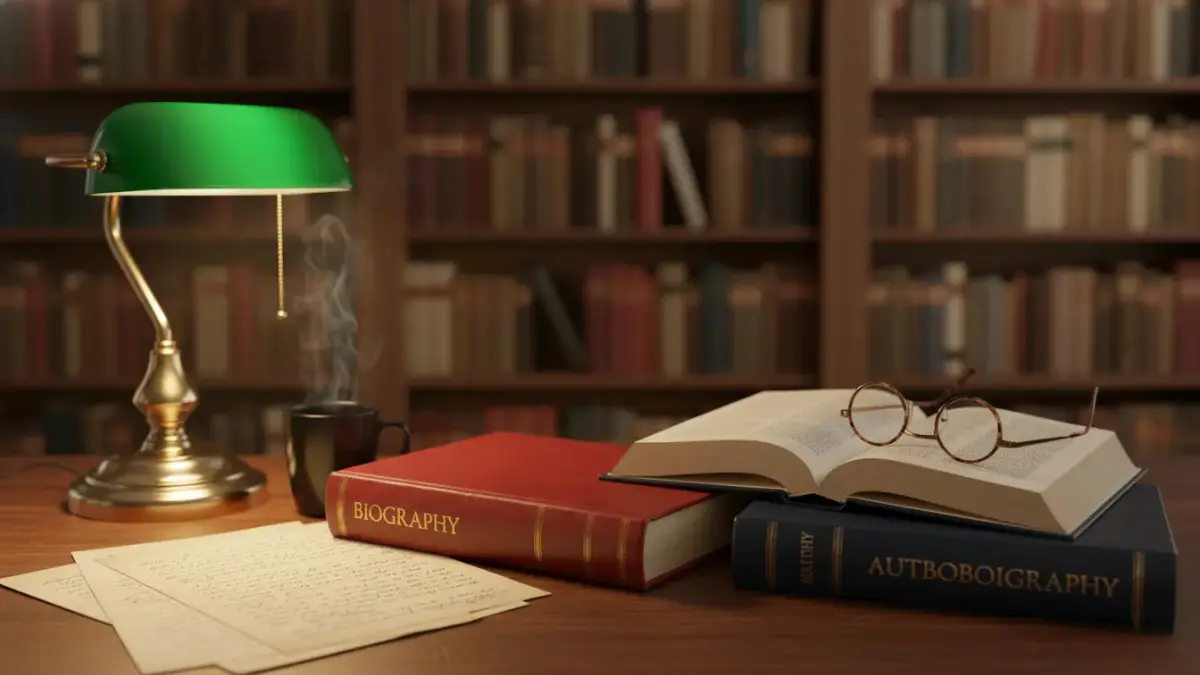
Biography vs Autobiography are two forms of non-fiction writing that turn ordinary lives into unforgettable stories. A biography is written by another person, while an autobiography is a self-written life story. Both reveal how personal experiences shape the way life is told.
When I first wrote my autobiography, turning memories into words felt strange yet meaningful. That moment showed how life writing uncovers emotion and truth. Writing your story isn’t just art it’s reflection and self-discovery.
Key Differences Between Biography and Autobiography
When comparing both, the biggest takeaway is how each reveals a life’s truth from a different angle. Both belong to non-fiction life story genres, yet their voices and intentions differ deeply. Let’s unpack what sets them apart in style, purpose, and perspective.
Who Tells the Story
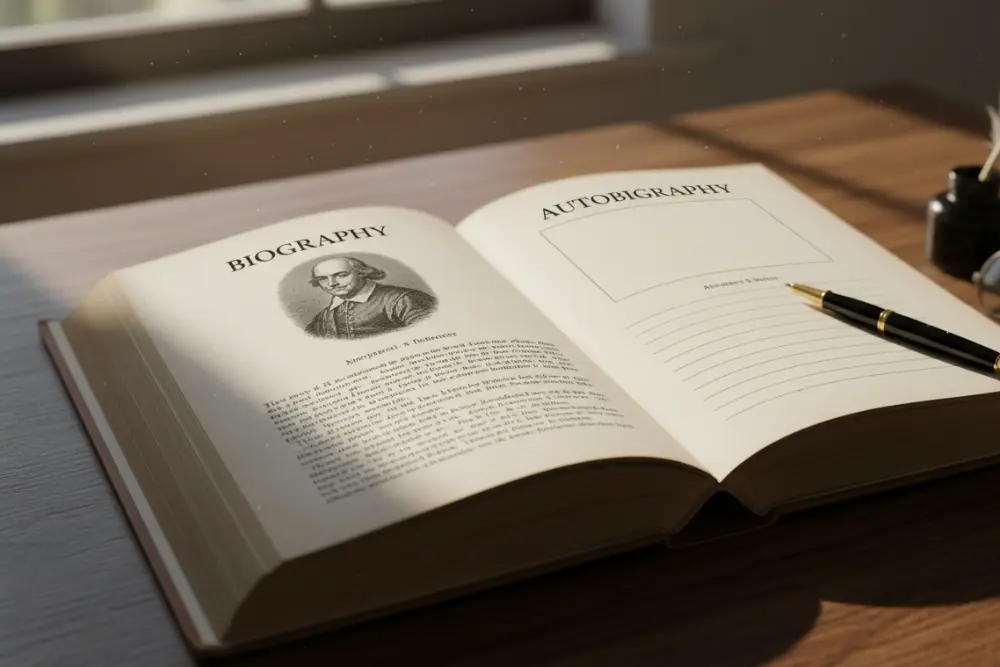
A biography recounts a person’s life through another’s eyes, while an autobiography is self-written. That authorship shift creates emotional authenticity and personal depth.
Key Points:
-
Biography is written by another person.
-
Example: “Steve Jobs” by Walter Isaacson – Jobs’ life told by a biographer.
-
-
Autobiography is written by the individual themselves.
-
Example: “Becoming” by Michelle Obama – her life story in her own words.
-
-
Perspective affects emotional depth and authenticity.
The Writing Perspective
Autobiographies reflect first-person narration, using “I” and “me” for intimacy. Biographies, written in third person, add distance and factual balance. This first person vs third person contrast defines how readers connect emotionally.
Key Points:
-
Autobiography uses first-person (“I”, “me”) for closeness.
-
Example: “The Story of My Life” by Helen Keller, readers experience her challenges firsthand.
-
-
Biography uses third-person narration for objectivity.
-
Example: “Alexander Hamilton” by Ron Chernow, historical figure analyzed objectively.
-
-
The choice of perspective shapes reader connection.
If you’re interested in sharing your life story, check out our step-by-step guide on how to write an autobiography for practical tips and inspiration.
Purpose and Intent
A biography documents truth and achievements with accuracy and care. An autobiography focuses on reflection, emotion, and growth through lived experiences.
Key Points:
-
Biography emphasizes facts, achievements, and accuracy.
-
Example: “The Wright Brothers” by David McCullough, highlights accomplishments and history.
-
-
Autobiography emphasizes personal reflection and emotion.
-
Example: “The Diary of Anne Frank”, personal experiences during wartime.
-
-
Each genre serves a different storytelling intention.
Tone and Style
Derived from auto (self), bio (life), graph (writing), the literary format of an autobiography feels introspective and human. Biographies merge storytelling with evidence for credibility.
Key Points:
-
Autobiographies are introspective and personal.
-
Example: “I Know Why the Caged Bird Sings” by Maya Angelou, emotional self-reflection.
-
-
Biographies blend storytelling with factual evidence.
-
Example: “Einstein: His Life and Universe” by Walter Isaacson, merges life story with scientific achievement.
-
-
Tone and style guide reader perception and engagement.
Who It’s About
Biographies often feature significant figures, celebrities, and historical people. Autobiographical writing proves anyone’s life story deserves to be told.
Key Points:
-
Biographies usually cover well-known or historical figures.
-
Example: “Steve Jobs” by Walter Isaacson, influential tech leader.
-
-
Autobiographies can feature anyone with a meaningful story.
-
Example: “Educated” by Tara Westover, personal journey of growth and education.
-
-
Life stories are valuable regardless of fame or status.
Similarities Between Biography and Autobiography
At their core, biography vs autobiography are two sides of the same coin both belong to the rich world of non-fiction life writing. Whether it’s an author capturing someone else’s journey or a person reflecting on their own, both aim to record real lives with honesty, structure, and purpose.
Shared Purpose: Truth and Learning
Both genres serve one universal goal to inform and inspire. A biography gives readers factual depth, while an autobiography brings emotional truth. Yet, both rely on the same foundation: research, memory, and context.
Structure and Sequence
No matter who’s writing, both follow a chronological order from early life to major milestones. This linear flow helps readers trace growth, failure, and redemption over time. In every type of life writing, from memoir vs autobiography to historical accounts, that timeline grounds the narrative in reality.
Authenticity and Human Experience
Both forms depend on accuracy and credibility key to E-E-A-T. A writer builds expertise through detail, authority through evidence, and trust through honesty. Whether in first person or third person biography, readers can sense when the story feels real.
Educational and Cultural Value
In classrooms, libraries, and bookshops, both share one mission: to teach through experience. They bridge generations, linking significant figures, scientists, and artists to the readers of today.
| Similarity | Biography Example | Autobiography Example | Explanation |
|---|---|---|---|
| Teaches Life Lessons | “Alexander Hamilton” by Ron Chernow | “Educated” by Tara Westover | Both show readers challenges and growth, teaching resilience and determination. |
| Chronological Life Story | “The Wright Brothers” by David McCullough | “The Diary of a Young Girl” by Anne Frank | Both follow a life’s timeline to help readers see development over time. |
| Cultural/Historical Context | “Einstein: His Life and Universe” by Walter Isaacson | “Becoming” by Michelle Obama | Both highlight the environment and era shaping the person’s life. |
| Emotional Connection | “Steve Jobs” by Walter Isaacson | “I Know Why the Caged Bird Sings” by Maya Angelou | Both allow readers to feel the subject’s or author’s personal struggles and triumphs. |
| Inspires Readers | “Leonardo da Vinci” by Walter Isaacson | “Long Walk to Freedom” by Nelson Mandela | Both inspire through the achievements, perseverance, and lessons of life. |
Biography vs Autobiography: Real-Life Examples
Sometimes the clearest way to understand biography vs autobiography is to see them in action. Famous names, familiar voices, and unforgettable lessons each story adds proof that life writing changes how we see the world.

Classic Biographies: Lives Told by Others
Biographies capture significant figures through careful research, blending facts with human stories. They’re written in third person, balancing accuracy with inspiration.
- “Steve Jobs” by Walter Isaacson a modern biography blending innovation, genius, and imperfection
- “Alexander Hamilton” by Ron Chernow the story that fueled a Broadway legacy
- “The Wright Brothers” by David McCullough an ode to invention and persistence
Each shows the biography definition in action: one person telling another’s life story with precision and depth.
Famous Autobiographies: Stories Told from Within
In contrast, autobiographies are the self-written accounts of people who dared to tell their truth. They’re first-person narratives raw, emotional, and often healing to write.
- “The Diary of Anne Frank” a memoir vs an autobiography classic of courage and hope
- “Becoming” by Michelle Obama a modern reflection on identity, purpose, and growth
- “The Story of My Life” by Helen Keller a reminder of resilience through adversity
Each one proves the autobiography definition: auto (self), bio (life), graph (writing) a person’s truth told in their own words.
What These Examples Teach Us
Whether first person or third-person biography, both genres offer lessons far beyond literature. They reveal how storytelling builds expertise, authority, and trust in the foundation of E-E-A-T. Biographies inform; autobiographies connect, both turn personal moments into shared meaning.
Why Biography and Autobiography Matter in Modern Writing

In today’s fast-scrolling world, biography vs autobiography reminds us why real stories still matter. They bring authenticity back to non-fiction writing, filled with truth, context, and emotion. These narratives make us pause, reflect, and connect beyond the surface.
Biographies show life through others’ eyes, while autobiographies reveal it from within. This blend of life story genres builds empathy and understanding across readers. In classrooms and digital spaces, they preserve identity, emotion, and reflection.
Final Thoughts: Biography vs Autobiography: Two Voices, One Truth
At its core, biography vs autobiography is more than a writing choice it’s a mirror of human connection. One offers an outside view of a life story, while the other opens it from within. Both celebrate truth, memory, and the beauty of non-fiction storytelling that invites readers to see themselves on every page.
Whether it’s a memoir vs an autobiography or a detailed biography, each carries its writer’s courage and insight. These life story genres prove that honesty matters more than perfection. Maybe your next great story is waiting to be written one that inspires others to remember, reflect, and begin their own.
For more insights into influential leaders and their journeys, explore our Business Biographies: Transformative Stories That Drive Success collection.
FAQs
What’s the main difference?
A biography is written by someone else; an autobiography is self-written.
How does a memoir differ?
A memoir focuses on key memories, while an autobiography covers the full life.
Which uses first or third person?
Autobiographies use first person; biographies use third person.
Why are they still popular?
Because readers crave truth, real stories never lose power.
How can I start writing mine?
Start with your life story, be honest, and let your experiences lead the words.