
Hemiparesis is weakness affecting one side of the body, and it most often appears suddenly after a stroke, when part of the brain is damaged and can no longer send full signals to the muscles. The question families usually ask is simple: what has happened, and how much strength can come back? The short answer is that the outlook varies widely, because it depends on the cause and the extent of the damage, but rehabilitation, physiotherapy and occupational therapy help many people regain a great deal of movement, especially when started early and practised regularly.
Key takeaways
- Hemiparesis is weakness on one side of the body, not total paralysis.
- Stroke is the most common cause, but brain injury and other conditions can cause it too.
- It often affects the arm, leg and face on the same side.
- Recovery is usually fastest in the first months, but progress can continue longer.
- Physiotherapy and occupational therapy are the core of treatment.
- Sudden one-sided weakness is an emergency: call for help at once.
What hemiparesis is
Hemiparesis means partial weakness on one side of the body. The word breaks down simply: hemi means half, and paresis means weakness. It differs from hemiplegia, which is complete paralysis on one side. A person with hemiparesis can usually move the affected arm or leg a little, but the movement is weak, clumsy or slow, and the limb tires quickly.
The cause lies in the brain or, less often, the spinal cord. Movement is controlled by signals that travel from the brain to the muscles, and when the part of the brain that controls one side of the body is damaged, the signals weaken. Because the nerve pathways cross over, damage on the left side of the brain usually weakens the right side of the body, and vice versa.
The pattern varies from person to person. Some people have mild weakness in the hand only, while others struggle to lift the whole arm or to walk. The face may droop on the affected side, speech may slur, and the leg may drag. Some people also notice numbness, tingling or a heavy feeling in the weak limb, and the muscles may feel stiff rather than floppy. The NHS page on stroke explains how damage to the brain can affect movement, speech and daily life.
What causes hemiparesis
Stroke is by far the most common cause. A stroke happens when the blood supply to part of the brain is cut off, either by a clot blocking an artery or by bleeding from a burst blood vessel. Without blood, brain cells in that area are damaged within minutes, and the functions controlled by that area, including movement on one side, are affected.
A transient ischaemic attack, sometimes called a mini-stroke, can cause temporary hemiparesis that fades within a day. It is caused by a brief blockage that clears on its own, and although the symptoms pass, it is a warning that a full stroke may follow. Anyone who has these symptoms, even briefly, needs urgent medical assessment.
Brain injury can cause hemiparesis too. A serious blow to the head, a fall, or a road accident can damage the motor areas of the brain or the pathways that carry movement signals. A brain tumour can press on those same areas and cause weakness that worsens gradually rather than suddenly. Infections of the brain, such as encephalitis, and inflammation of the brain and spinal cord, such as multiple sclerosis, can also damage the pathways and cause one-sided weakness.
In children, hemiparesis sometimes follows a stroke around birth or is part of cerebral palsy, a group of conditions affecting movement that begins in early life. The principles of rehabilitation are similar at any age: use the weak side as much as possible and practise often.
Symptoms and how it is diagnosed
The main symptom is weakness on one side. The arm may feel heavy and hard to lift, the hand may struggle to grip, and the leg may feel unsteady or drag when walking. The face may droop on the same side, and the smile may look uneven. Some people find it hard to swallow or to speak clearly, especially when the stroke affects the areas that control the mouth and tongue.
Other symptoms often travel with the weakness. Balance may suffer, because the weak leg cannot support the body reliably. The affected side may feel numb or tingly. Muscles may become stiff and tight, a problem called spasticity, which can make movement harder. Tiredness is common too, because everyday tasks take far more effort than before.
Diagnosis starts with a medical examination. A doctor will test the strength of the arms and legs, check reflexes, sensation and coordination, and look at the face and speech. Brain imaging is usually needed to find the cause: a CT scan can show bleeding in the brain, while an MRI scan gives a clearer picture of a stroke, a tumour or inflammation.
Acting fast matters more than anything else when weakness appears suddenly. Sudden weakness on one side of the body, especially with a drooping face or slurred speech, is a sign of a stroke, and treatment works best when given quickly. In Britain, the FAST test is widely taught: face drooping, arm weakness, speech difficulty, and time to call the emergency services. Support at home during recovery matters too, and our guide to non-medical home care explains the kinds of everyday help available when health needs extra attention.
Treatment and rehabilitation
Treatment has two parts: dealing with the cause, and rebuilding movement. After a stroke, treatment may include medicines to prevent clots, to lower blood pressure or cholesterol, and to reduce the chance of another stroke. A brain tumour may need surgery, while infections need their own medicines.
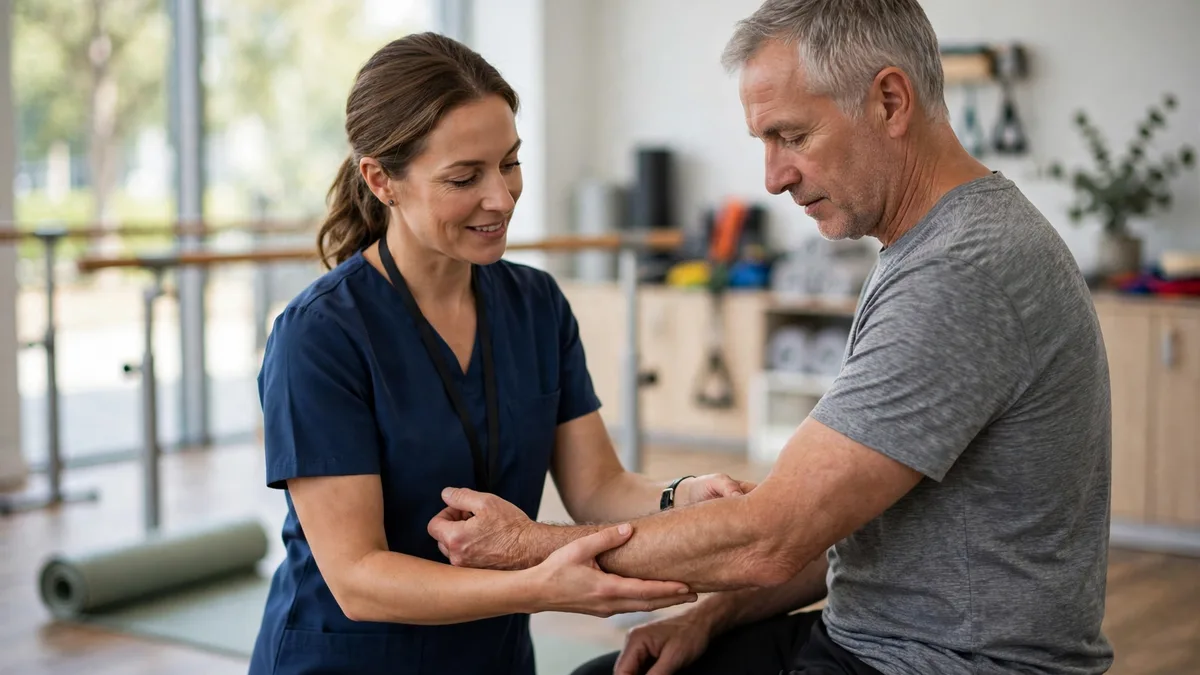
Physiotherapy is the backbone of recovery. A physiotherapist helps the person relearn movements, starting with sitting, standing and walking, and then building towards finer skills such as reaching and gripping. Exercises stretch tight muscles, strengthen weak ones, and retrain balance.
Occupational therapy focuses on daily life: dressing, washing, cooking, writing and returning to work or hobbies. An occupational therapist may suggest equipment such as a walking stick, a raised toilet seat, or kitchen tools with larger handles, and may advise on changes at home such as grab rails and ramps. The aim is independence, and small changes can make a large difference to what a person can do alone.
Speech and language therapy helps when speech, understanding or swallowing are affected. Diet and weight matter during recovery as well, and our guide to gout symptoms is a reminder that diet, weight and long-term health are closely connected. Drinking enough water through the day supports general health too, and our guide to the best water bottle covers bottles that make it easier to carry water with you.
| Area affected | Typical difficulty | Rehabilitation focus | Helpful equipment |
|---|---|---|---|
| Arm and hand | Weak grip, hard to lift | Reaching, gripping, stretching | Large-handle utensils, splints |
| Leg and foot | Dragging foot, poor balance | Walking, balance, strengthening | Walking stick, ankle support |
| Face and mouth | Drooping, slurred speech | Facial exercises, speech therapy | Communication aids |
| Swallowing | Choking, coughing when eating | Swallowing exercises, diet advice | Thickened fluids, adapted cups |
| Daily tasks | Dressing, washing, cooking | Practising tasks, home changes | Grab rails, raised seats |

Recovery and living with hemiparesis
Recovery is usually fastest in the first weeks and months after the cause, when the brain is most able to adapt. This process, called neuroplasticity, lets healthy parts of the brain take over some of the work of damaged areas. The more a movement is practised, the stronger those new pathways become. That is why therapists urge people to use the weak side as much as possible, even when it is slow and frustrating.
Progress does not stop after the first few months. Many people keep improving for a year or more, especially if they keep practising. The pace varies: younger people and those with milder weakness often recover more, while a larger area of damage means a longer road.
Daily life needs practical changes. Clothes with zips and Velcro fastenings are easier than buttons. A shower chair, a non-slip mat and grab rails make washing safer. Cooking can be adapted with one-handed chopping boards, electric can openers and stable bowls. Driving may need assessment and a modified vehicle, and returning to work may need a phased return or a changed role.
The emotional side deserves attention too. Losing strength and independence is distressing, and low mood and anxiety are common after a stroke. Talking with family, joining a stroke support group, and asking the doctor about mood can help. Carers need support as well, since looking after someone with hemiparesis can be tiring and isolating.
A checklist for recovery and daily life
- Use the weak side as much as possible, every day.
- Keep up prescribed exercises, even when progress feels slow.
- Attend physiotherapy, occupational therapy and speech therapy sessions.
- Make the home safer with grab rails, non-slip mats and good lighting.
- Take prescribed medicines exactly as directed.
- Watch for signs of another stroke and seek help at once.
- Ask for help with mood, and join a support group if it appeals.
- Arrange support for carers as well as for the person recovering.
Frequently asked questions
What is hemiparesis?
Hemiparesis is weakness affecting one side of the body. It is caused by damage to the brain or spinal cord that weakens the signals sent to the muscles. It differs from hemiplegia, which is complete paralysis on one side.
What causes hemiparesis?
Stroke is the most common cause, but brain injury, brain tumours, infections such as encephalitis, and conditions such as multiple sclerosis can also cause it. In children it sometimes follows a stroke around birth or is part of cerebral palsy.
Can hemiparesis be cured?
There is no single cure, but many people regain a great deal of strength through rehabilitation. Recovery depends on the cause and the extent of the damage, and it is usually fastest in the first months, though progress can continue for a year or more.
How is hemiparesis treated?
Treatment deals with the cause, such as medicines after a stroke, and rebuilds movement through physiotherapy, occupational therapy and speech therapy. Equipment and home changes help with independence, and regular practice is the key to improvement.
What is the difference between hemiparesis and hemiplegia?
Hemiparesis is partial weakness on one side, where some movement remains. Hemiplegia is complete paralysis on one side, where the limb cannot be moved at all. Both are caused by damage to the brain or spinal cord.
When should I seek emergency help for one-sided weakness?
At once. Sudden weakness on one side of the body, especially with a drooping face or slurred speech, is a sign of a stroke. Call the emergency services immediately, because treatment works best when given quickly.
The bottom line
Hemiparesis changes daily life in a real and often sudden way, but it is not the end of movement. The brain can adapt, muscles can strengthen, and with steady rehabilitation many people regain skills they thought were lost. The most important steps are acting fast when weakness appears, starting rehabilitation early, and keeping up the practice long after the first improvements. Support for the person and for their carers makes the long road easier to walk.
Disclaimer: This article is for general information only and is not medical advice. It cannot diagnose or treat any condition. Sudden weakness on one side of the body, a drooping face or slurred speech may be a stroke: call the emergency services at once. If you are living with hemiparesis, follow the advice of your own doctors and therapists.