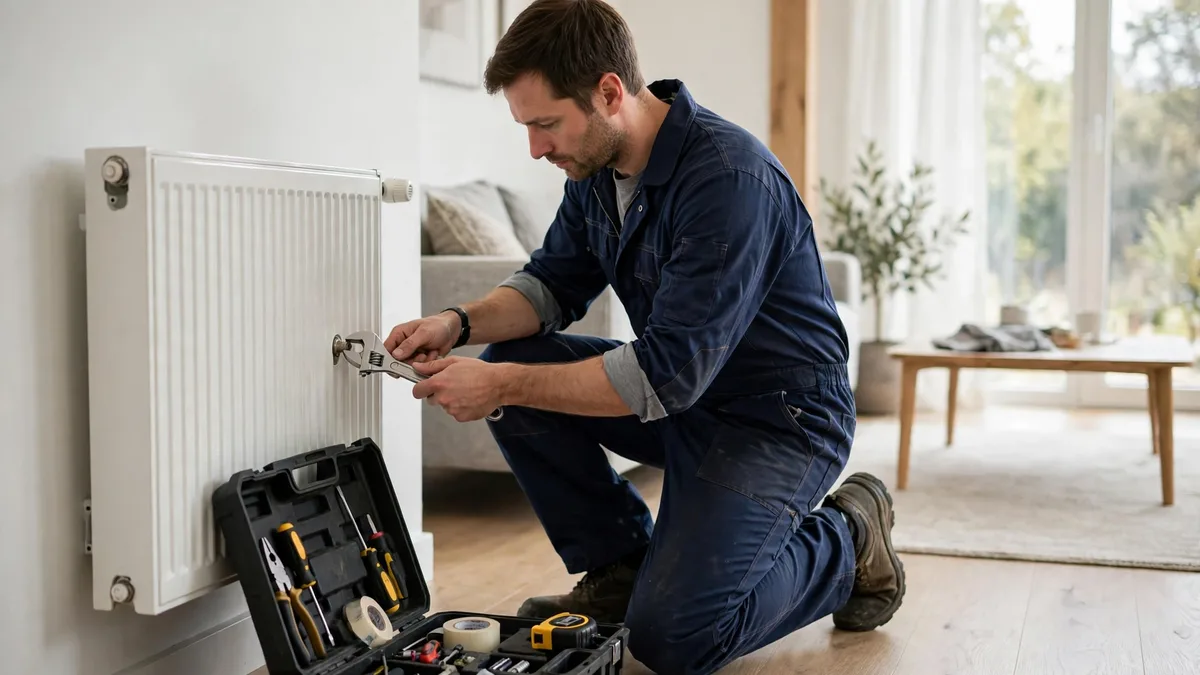

Heating repair is one of those household jobs that suddenly matters most on the coldest evening of the year, when the radiators are lukewarm and the boiler has gone quiet. The question most homeowners ask is simple: what has gone wrong, and can it be fixed without calling someone out? The short answer is that many heating faults are simple, such as low boiler pressure, trapped air in radiators, or a thermostat set wrong, while anything involving gas or a leak inside the boiler needs a qualified professional at once.
Key takeaways
- Heating repair often starts with simple checks: pressure, thermostat and valves.
- Cold radiators at the top usually mean trapped air that can be bled out.
- Low boiler pressure often stops a boiler starting.
- Never work on gas parts yourself; gas work is for registered professionals.
- Regular servicing keeps a heating system efficient.
- Know when to stop: leaks, smells and repeated faults need an expert.
How a home heating system works
Most homes in Britain use a central heating system built around a boiler, a pump, pipes and radiators. The boiler heats water, the pump pushes that hot water around the radiators, and each radiator gives off heat into the room. A thermostat tells the boiler when the house has reached the chosen temperature, and radiator valves let you turn individual radiators up or down.
There are several kinds of boiler. A combi boiler heats water on demand and has no storage tank, which makes it compact. A system boiler works with a separate hot water cylinder, while a conventional boiler uses both a cylinder and a cold water tank, usually in the loft. Knowing which type you have helps when describing a fault.
Other homes use electric heaters, storage heaters and heat pumps, each with its own common faults. The Wikipedia page on central heating gives a clear overview of how these systems are arranged.
Before doing any checks, notice the symptoms properly. Is the heating off everywhere, or only in some rooms? Is the hot water still working? Is the boiler showing an error code or nothing at all? Are the radiators cold at the top, cold at the bottom, or cold all over? The pattern tells a story, and it is also what a heating engineer will ask about first.
Common heating faults and what causes them
Cold radiators are the most common complaint. When a radiator is cold at the top and warm at the bottom, air is trapped inside, stopping the hot water from filling it. This is fixed by bleeding the radiator. When a radiator is cold at the bottom and warm at the top, sludge, a build-up of rust and debris, has settled inside, and that may need a system flush by a professional.
A boiler that will not start often comes down to pressure. Combi and system boilers need the pressure gauge to sit in a healthy range, usually marked in green, and if the pressure has dropped too low the boiler will lock out for safety. Pressure can fall after radiators have been bled or after a small leak. Topping it up through the filling loop is a routine homeowner job, but pressure that keeps falling points to a leak and needs investigation.
Thermostat trouble is another frequent cause. A thermostat in a cold hallway, near a draughty door, or behind a curtain can misread the temperature of the house and switch the heating off too early. Dead batteries in a wireless thermostat, a timer set to the wrong programme, or a thermostat knocked to a low setting all produce the same result: a house that never warms up.
Strange noises are worth listening to. Banging or knocking can come from pipes expanding as they heat, from trapped air, or from scale in a hard-water area. Gurgling usually means air in the system. A boiler that kettles, making a sound like a kettle coming to the boil, often has limescale on its heat exchanger. A new noise that grows louder deserves attention before it becomes a breakdown.
Safe checks you can do yourself
Start with the thermostat and the timer. Check that the thermostat is set to a sensible temperature, that the timer programme is active, and that any wireless thermostat has fresh batteries. Make sure the thermostat is not covered by a curtain or warmed by a nearby lamp.
Next, look at the boiler pressure gauge. If the needle sits below the marked range, top the pressure up using the filling loop, following the boiler manual. If the boiler shows an error code, look it up in the manual, and try the reset button once. If the same fault returns after a reset, leave it and call a professional.
Bleeding a radiator is straightforward. With the heating off and the radiator cool, hold a cloth under the bleed valve at the top corner and turn the key slowly until air hisses out, then close the valve as soon as water appears. Work through the radiators one at a time, and check the boiler pressure afterwards, since bleeding lets pressure fall.
Check the radiator valves too. Thermostatic radiator valves can stick shut after a summer of not being used. Removing the head and pressing the pin gently can free it. A radiator that is cold all over while its neighbours are warm often has a valve problem rather than a boiler problem.
Finally, check the basics around the house. Make sure the gas supply is on, that the boiler has power, and that no fuse has tripped. If the boiler is in a cold spot such as a garage, check that the condensate pipe, the plastic pipe carrying waste water outside, has not frozen. Our guide to heat pump repair covers a different kind of system, and the same habit of checking the simple things first applies there too.
When to call a professional
Some jobs belong to a professional, full stop. Anything involving gas, such as a gas leak, a faulty gas valve, or work inside the boiler casing, must be done by an engineer on the Gas Safe Register. The same applies to a boiler that keeps locking out or any sign of scorching or soot around the appliance. If you smell gas, open windows, do not switch lights or appliances on or off, leave the property, and call the gas emergency number from outside.
Water leaks also call for an expert. A small drip from a radiator valve can often be tightened, but a leak from the boiler itself, from a pipe joint inside a wall, or from a cylinder needs a professional, because water damage spreads quickly. Repeated pressure loss, radiators that need bleeding every few days, and rust-coloured water all suggest a deeper problem, such as corrosion inside the system.
Age matters when deciding between repair and replacement. A boiler that is well looked after can last a decade or more, but one that breaks down repeatedly, needs expensive parts, or heats the house unevenly may be nearing the end of its life. A professional can advise honestly on whether a repair is worth it. Cooling faults follow a similar logic, and our guide to air conditioning repair services explains how engineers approach a system that has stopped working in summer.
Choosing the right engineer is part of the job. Check that a gas engineer is Gas Safe registered and ask for the registration number. Get the fault, the work and the charge explained in plain words before the work starts, and ask for a written record of what was done.
| Symptom | Likely cause | Safe check at home | Call a professional when |
|---|---|---|---|
| Radiator cold at the top | Trapped air | Bleed the radiator | It keeps needing bleeding |
| Radiator cold at the bottom | Sludge build-up | Check valves are open | A flush is needed |
| Boiler will not start | Low pressure | Top up pressure, reset once | Pressure keeps falling |
| House never warms up | Thermostat or timer fault | Check settings and batteries | Thermostat needs replacing |
| Banging or gurgling | Air, scale or loose pipes | Bleed radiators | Noise is loud or worsening |
| Smell of gas or soot marks | Gas leak or poor combustion | Leave the property at once | Always, immediately |

Keeping your heating healthy
Prevention is cheaper than repair. A yearly boiler service keeps the appliance clean, checks the flue and safety devices, and catches wear before it becomes a breakdown.
Bleeding radiators once a year, before the heating season starts, keeps them working evenly. Running the heating briefly during the summer stops valves sticking. Our guide to radiator repair near me explains what to look for when a single radiator misbehaves while the rest of the system works.
A checklist before you call for help
- Check the thermostat setting, timer programme and batteries.
- Look at the boiler pressure gauge and top it up if it is low.
- Try the reset button once, and note any error code shown.
- Bleed radiators that are cold at the top, then recheck pressure.
- Check radiator valves are open and not stuck shut.
- Make sure the gas supply and the boiler power are on.
- Note which radiators work and which do not, and any noises.
- Stop and call a professional for gas smells, leaks or repeated faults.
Frequently asked questions
Why is my heating on but the radiators are cold?
The most common reasons are low boiler pressure, a thermostat or timer set wrong, a pump that has stopped circulating water, or air trapped in the radiators. Work through the checks in order, starting with the thermostat and the pressure gauge.
How do I bleed a radiator?
Turn the heating off and let the radiator cool. Hold a cloth under the bleed valve at the top corner, turn the radiator key slowly until air hisses out, and close the valve as soon as water appears. Check the boiler pressure afterwards, since bleeding lets pressure fall.
What should boiler pressure be?
Most combi and system boilers show a healthy range on the pressure gauge, often marked in green, and the needle should sit inside it when the system is cold. If the pressure is below the range, top it up through the filling loop. Pressure that keeps falling suggests a leak and needs a professional.
How often should a boiler be serviced?
Once a year is the usual advice. A yearly service keeps the boiler clean and efficient, checks the safety devices and the flue, and catches wear before it becomes a breakdown. Late summer or early autumn is a good time to book it.
Is it safe to repair a boiler myself?
Simple checks such as the thermostat, pressure and bleeding radiators are fine for a homeowner. Anything inside the boiler casing or involving gas belongs to a Gas Safe registered engineer. Never remove the boiler cover or work on gas parts yourself.
When should I replace a boiler instead of repairing it?
Consider replacement when a boiler breaks down often, needs expensive parts, or heats the house unevenly. A professional can compare the cost of the repair with the benefit of a new boiler, and a second opinion is sensible for a large repair.
The bottom line
Heating repair is usually less frightening than it first looks. Most faults come down to a handful of causes, and the simple checks, thermostat, pressure, bleeding and valves, solve a surprising number of them. The skill is knowing where the safe homeowner checks end and professional work begins. Keep the system serviced, listen for changes, and call an engineer early when something does not add up.
Safety disclaimer: This article is for general information only. Never work on gas pipework or inside a boiler casing, and never ignore a smell of gas or soot marks. If you smell gas, leave the property and call the gas emergency number from outside.