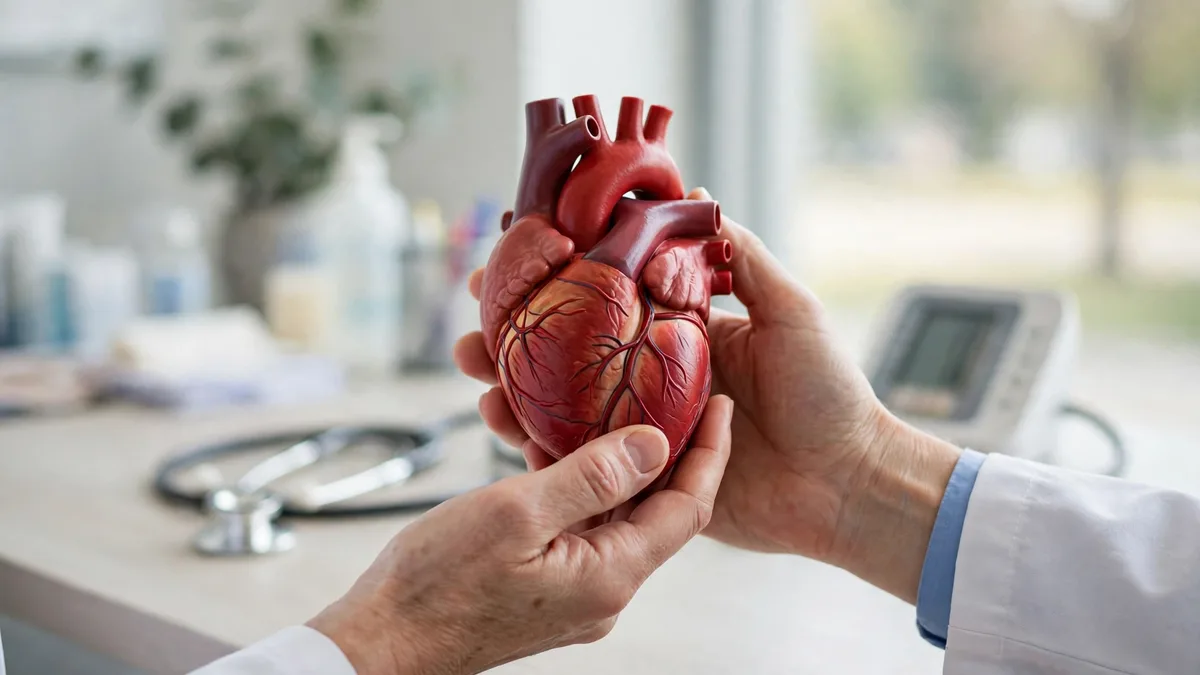

Heart disease is an umbrella term for several conditions that affect the heart and the blood vessels around it, and it is one of the most common causes of death in Britain and worldwide. The question most people ask is simple: how do you know if you are at risk, and what can you do about it? The short answer is that the most common form, coronary heart disease, develops slowly as fatty deposits narrow the arteries, and the best protection is knowing the warning signs, keeping blood pressure and cholesterol in check, staying active, and not smoking.
Key takeaways
- Heart disease covers several conditions, and coronary heart disease is the most common.
- Fatty deposits narrowing the arteries, known as atherosclerosis, drive most cases.
- Chest pain, breathlessness and pain in the arm, neck or jaw are key warning signs.
- Smoking, high blood pressure, high cholesterol, diabetes and inactivity raise the risk.
- Many cases develop without obvious symptoms, so regular checks matter.
- Healthy eating, activity, stopping smoking and prescribed treatment all help.
What heart disease means
Heart disease is not a single illness. The term covers coronary heart disease, heart failure, heart valve disease, abnormal heart rhythms and conditions that affect the heart muscle itself. What they share is that something has gone wrong with the way the heart pumps blood or the way blood reaches it.
The heart is a muscle that needs its own steady supply of oxygen-rich blood. That supply arrives through the coronary arteries, which wrap around the outside of the heart. When those arteries stay clear and flexible, the heart works well. When they narrow or stiffen, the heart muscle gets less oxygen than it needs, especially during effort or stress. That mismatch is what causes most of the symptoms people associate with heart trouble.
The narrowing usually happens gradually. Fatty substances in the blood settle on the inner walls of the arteries and form deposits called atheroma. Over time the artery walls thicken and harden, a process called atherosclerosis, and the space inside the artery shrinks. The NHS page on coronary heart disease explains how this build-up develops and why it matters.
It is worth knowing that heart disease is not only a problem of older age. The process of atherosclerosis can begin decades before symptoms appear, which is why habits in middle age matter so much. Men tend to develop coronary heart disease earlier than women, while the risk for women rises after the menopause.
The main types of heart disease
Coronary heart disease is the best known type. It happens when the coronary arteries narrow because of atheroma, reducing blood flow to the heart muscle. It can cause angina, chest pain brought on by exertion, and it raises the risk of a heart attack, which happens when an artery becomes blocked.
Heart failure is a different problem. It does not mean the heart has stopped; it means the heart is not pumping blood around the body as well as it should. It can follow a heart attack or long-standing high blood pressure. People with heart failure often feel breathless, tire easily, and notice swelling in the ankles and legs.
Heart valve disease affects the valves that keep blood flowing in the right direction through the heart. A valve can narrow, so blood struggles to pass through, or leak, so blood flows backwards. Valve problems can be present from birth or develop later in life, sometimes after an infection or as the valve wears with age.
Abnormal heart rhythms, known as arrhythmias, are another group. The heart may beat too fast, too slowly, or irregularly. Atrial fibrillation is the most common arrhythmia, and it raises the risk of stroke because blood can pool and form clots in the heart. Some arrhythmias are harmless, while others need treatment to steady the rhythm.
Warning signs worth knowing
The most common symptom of coronary heart disease is chest pain, known as angina. It often feels like a heaviness, tightness or squeezing in the centre of the chest, and it may spread to the arms, neck, jaw, back or stomach. Angina usually comes on during physical effort or emotional stress and eases within a few minutes of resting.
Breathlessness is another important sign. Feeling short of breath during ordinary activity, such as walking on flat ground or climbing a flight of stairs, can point to the heart struggling. Waking at night feeling breathless, or needing extra pillows to breathe comfortably, can be a sign of heart failure.
A heart attack often, though not always, announces itself with severe chest pain that does not ease, sweating, feeling sick, and a sense of dread. The pain may spread to the left arm, or to both arms, the neck, jaw or back. Some people, especially older people and people with diabetes, have a heart attack with milder symptoms. If a heart attack is suspected, call the emergency services at once, because early treatment limits damage to the heart muscle.
Other signs can be subtler. Unusual tiredness, swollen ankles, a persistent cough, and a heartbeat that feels fluttery or irregular can all be linked to heart problems. None of these proves heart disease on its own, but a new or worsening pattern deserves a conversation with a doctor.
What raises the risk
Smoking is one of the strongest risk factors. It damages the lining of the arteries, reduces the oxygen in the blood, and raises blood pressure and heart rate. The benefit of stopping starts quickly, and the risk falls steadily over the years after quitting.
High blood pressure puts extra strain on the heart and the artery walls, and it often has no symptoms, so many people only discover it at a routine check. High cholesterol has a similar quiet effect: too much of the fatty substance in the blood feeds the deposits that narrow the arteries. Diabetes damages blood vessels over time, particularly when blood sugar stays high.
Weight and activity matter as well. Carrying excess weight, especially around the waist, raises blood pressure, cholesterol and the chance of diabetes. Regular physical activity strengthens the heart, helps control weight and blood pressure, and improves cholesterol levels. A diet high in saturated fat, salt and sugar, combined with heavy drinking, adds to the load. Our guide to gout symptoms is a reminder that diet, weight and long-term health are closely connected, and the same habits that strain the joints can strain the heart.
| Type | What happens | Typical symptoms | Common treatment |
|---|---|---|---|
| Coronary heart disease | Arteries narrow from fatty deposits | Chest pain, breathlessness | Lifestyle change, medicines, stents |
| Heart failure | Heart pumps less effectively | Breathlessness, swollen ankles | Medicines, fluid and salt advice |
| Heart valve disease | A valve narrows or leaks | Breathlessness, fainting, chest pain | Monitoring, valve repair or replacement |
| Arrhythmia | Heartbeat is too fast, slow or irregular | Palpitations, dizziness, fainting | Medicines, pacemaker, ablation |
| Cardiomyopathy | Heart muscle thickens or stretches | Breathlessness, tiredness, fainting | Medicines, devices, family screening |

How heart disease is diagnosed and treated
Diagnosis usually starts with a conversation and a physical examination. A doctor will ask about symptoms, family history, smoking, diet and activity, and will check blood pressure and listen to the heart. Blood tests can measure cholesterol and blood sugar, and an electrocardiogram, known as an ECG, records the electrical activity of the heart.
Further tests depend on what the first checks suggest. An echocardiogram uses sound waves to show how well the heart pumps and whether the valves work properly. An exercise test records the heart while walking on a treadmill, which can reveal problems that only appear under effort.
Treatment aims to ease symptoms, slow the disease, and reduce the chance of a heart attack or stroke. Lifestyle changes sit at the centre: stopping smoking, eating a balanced diet, moving more, keeping weight in a healthy range and cutting back on alcohol. Medicines often follow, including statins to lower cholesterol, blood pressure medicines, and antiplatelet drugs that make clots less likely. Drinking enough water through the day supports general health too, and our guide to the best water bottle covers bottles that make it easier to carry water with you.
Some people need a procedure. A stent is a small tube placed in a narrowed artery to hold it open. Bypass surgery reroutes blood around a blocked artery using a blood vessel taken from elsewhere in the body. After a heart attack, cardiac rehabilitation, a structured programme of exercise, education and support, helps people recover confidence and reduce the risk of another event. Support at home matters during recovery too, and our guide to non-medical home care explains the kinds of everyday help available when health needs extra attention.
A checklist for protecting your heart
- Know your numbers: ask for blood pressure, cholesterol and blood sugar checks.
- Do not smoke, and ask for help to stop if you do.
- Move every day, aiming for regular moderate activity across the week.
- Eat plenty of vegetables, fruit and wholegrains, and cut back on salt and saturated fat.
- Keep weight in a healthy range, especially around the waist.
- Drink alcohol only in moderation, or not at all.
- Take prescribed heart medicines exactly as directed.
- Seek urgent help for chest pain, severe breathlessness or fainting.
Frequently asked questions
What is heart disease?
Heart disease is an umbrella term for conditions that affect the heart and blood vessels, including coronary heart disease, heart failure, valve disease and abnormal rhythms. Coronary heart disease, caused by fatty deposits narrowing the arteries, is the most common type.
What are the first signs of heart disease?
The first signs are often chest pain or tightness during effort, breathlessness during ordinary activity, unusual tiredness, or pain spreading to the arm, neck or jaw. Some people have no symptoms at all until a heart attack, which is why blood pressure and cholesterol checks matter.
Can heart disease be cured?
Coronary heart disease cannot usually be cured, but it can be managed. Lifestyle changes and medicines can slow it down, ease symptoms and reduce the chance of a heart attack. Procedures such as stents or bypass surgery can restore blood flow where an artery is badly narrowed.
What causes heart disease?
The main cause is atherosclerosis, the build-up of fatty deposits on artery walls. Smoking, high blood pressure, high cholesterol, diabetes, inactivity, excess weight and a poor diet all raise the risk, and family history and age add to it.
How can I reduce my risk of heart disease?
Stop smoking, eat a balanced diet, stay active, keep weight in a healthy range, limit alcohol, and have blood pressure and cholesterol checked regularly. If a doctor prescribes medicines for blood pressure or cholesterol, taking them as directed is one of the most effective steps.
When should I see a doctor about my heart?
See a doctor promptly for new chest pain, breathlessness, fainting or swollen ankles. Call the emergency services at once for severe chest pain that does not ease, especially with sweating or sickness, as this may be a heart attack.
The bottom line
Heart disease is common, serious and often slow to show itself, but it is also one of the conditions where everyday action makes the biggest difference. Knowing the warning signs, understanding your own risk factors, and making steady changes to smoking, diet, activity and weight can protect the heart for years. If anything in this article sounds familiar, a check with your doctor is the sensible next step.
Disclaimer: This article is for general information only and is not medical advice. It cannot diagnose or treat any condition. If you are concerned about your heart or have symptoms such as chest pain or breathlessness, seek medical advice promptly, and call the emergency services if you think you may be having a heart attack.