
Firewood is simply wood cut and prepared for burning, and the question most people ask about it is a practical one: how do you tell good firewood from wood that will smoke, hiss and leave your stove choked with soot? The short answer is dryness, because well-seasoned firewood has twenty per cent moisture or less, burns hot and clean, and lights easily, while wet wood wastes most of its energy boiling off water and leaves heavy deposits in the flue. Choose the right species, season it properly and store it off the ground, and the rest follows.
This guide covers hardwood and softwood, seasoning times, how to test whether wood is ready, the best way to stack and store it, and the safety habits that keep a wood fire pleasant rather than hazardous.
Key takeaways
- Seasoned firewood has twenty per cent moisture or less, and it burns hotter and cleaner than wet wood.
- Hardwoods such as oak and ash burn longer and hotter; softwoods such as pine light easily but burn fast.
- Split wood seasons far faster than whole rounds, so split it soon after cutting.
- Most split wood needs at least six months to a year of seasoning, and dense hardwoods can take up to two years.
- Store firewood off the ground, with the top covered and the sides open to the air.
- Never burn treated, painted or glued wood, and keep your chimney swept and inspected.
What firewood is
Firewood is any wood that has been cut, split and dried for use as fuel, whether in an open fire, a wood-burning stove or an outdoor fire pit. It can be bought ready-seasoned from a supplier, or cut and seasoned at home from felled trees and prunings. The Wikipedia page on firewood describes the two main classes, hardwood and softwood, and the standard measure of a cord, which is 128 cubic feet of stacked wood.
The single most important quality of firewood is how dry it is. Freshly cut wood, known as green wood, can hold half its weight in water, and burning it is a poor bargain: much of the heat goes into boiling the water away, the fire smoulders, and the smoke leaves tarry deposits, known as creosote, in the chimney. Seasoned wood, by contrast, has been dried until its moisture content is around twenty per cent or less, and it catches quickly, burns hot and leaves far less residue.
Buying firewood is therefore mostly a question of trust and testing. A reputable supplier will sell wood that has been split and stacked for months, and will be able to tell you which species you are getting. A moisture meter, pressed into the freshly split face of a log, gives a reading in seconds and is the cheapest way to settle an argument about whether a delivery is truly seasoned.
Hardwood or softwood
| Wood | Type | Burn | Best use |
|---|---|---|---|
| Oak | Hardwood | Slow, hot, long-lasting | Overnight burns and steady heat |
| Ash | Hardwood | Steady, even, easy to split | All-round stove wood |
| Beech | Hardwood | Hot and bright | Open fires and stoves |
| Birch | Hardwood | Quick, bright, pleasant smell | Kindling and quick heat |
| Pine | Softwood | Fast, crackly, resinous | Kindling and outdoor fires |
| Spruce | Softwood | Fast, light, sparky | Kindling and campfires |
Hardwoods come from broadleaved trees such as oak, ash and beech, and they are dense, heavy and slow-burning. A hardwood log gives steady heat over a long period, which is why oak is the classic choice for an overnight burn: a few large logs banked down will still be giving off heat in the morning. Ash has a useful reputation for burning well even when it is not fully seasoned, although it still burns far better when it is dry.
Softwoods come from conifers such as pine, spruce and fir, and they are lighter, quicker to light and quicker to burn out. They are excellent for kindling and for getting a fire going, and they suit outdoor fires and campfires, where a fast, bright flame is the point. Their drawback is that they burn through quickly, so a stove fed only on softwood needs constant attention, and unseasoned softwood can leave more deposits in the flue.
The best approach for most households is a mix: softwood kindling to start the fire, and hardwood logs to keep it going. If you cut your own wood, learn to identify the species before you stack it, since a pile of mixed logs burns unevenly. And whatever you burn, keep it clean: never burn treated timber, painted wood, plywood, chipboard or household rubbish, since these can release harmful fumes and damage the stove and flue.

How to season firewood
Seasoning is simply drying, and it starts the day the wood is split. Splitting exposes the damp interior of the log to the air, which is why split wood seasons far faster than whole rounds. A round log can sit for a year and still be wet in the middle, while the same wood split into pieces can be ready in a single summer. If you buy logs in the round, split them as soon as you can.
As a rule of thumb, most split wood needs at least six months to a year of seasoning, and dense hardwoods such as oak can take up to two years. The exact time depends on the species, the size of the pieces, the climate and how the wood is stacked. Small pieces in a sunny, breezy spot will dry far faster than large pieces in a damp corner, so the stack matters as much as the calendar.
You can tell wood is seasoned without a meter, although a meter is more reliable. Seasoned logs feel light for their size, and the ends show cracks radiating from the centre. The bark loosens and may fall off, and two pieces knocked together make a sharp, hollow sound rather than a dull thud. Freshly split seasoned wood smells dry and woody, while green wood smells sappy and damp. If a log hisses or bubbles at the ends when it goes on the fire, it is not ready, whatever the calendar says.
How to stack and store firewood
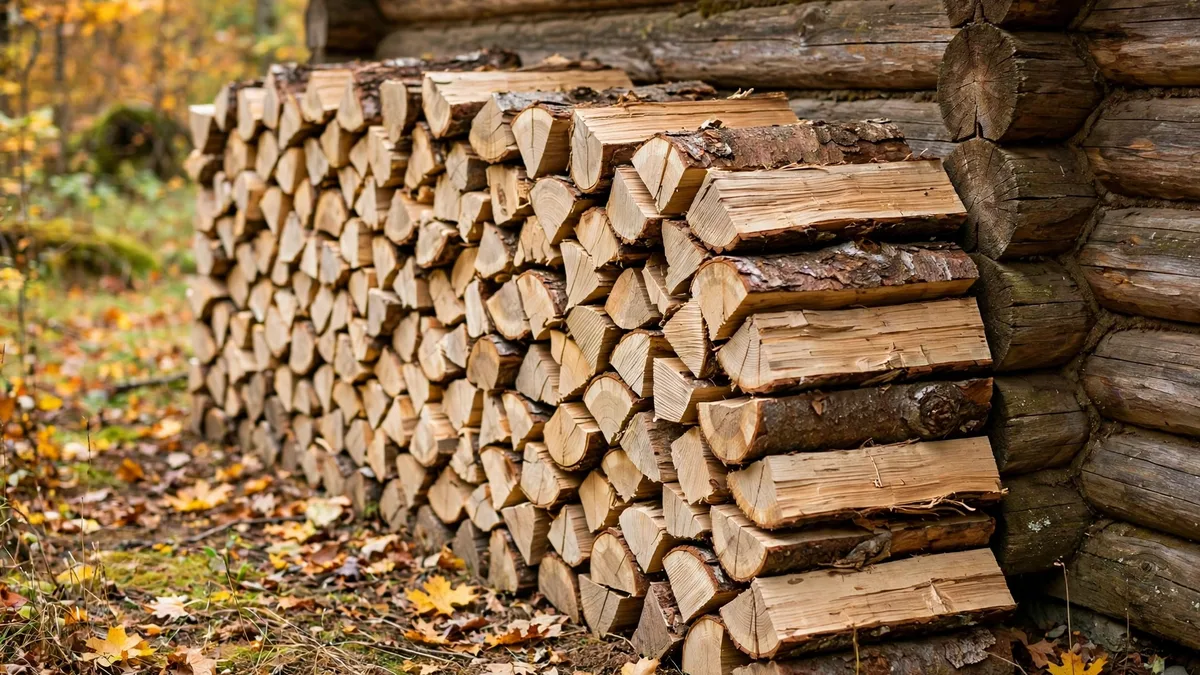
Good storage is half of seasoning. Stack the wood off the ground on pallets, rails or a purpose-built rack, so that air can move underneath and damp cannot wick up into the bottom layer. Stack the rows in a single line where possible, with small gaps between the pieces, and keep the stack in a sunny, breezy spot rather than against a damp wall.
Cover the top of the stack to keep rain off, but leave the sides open. A tarpaulin draped over the whole pile traps moisture underneath and slows drying, while a simple roof or a sheet weighted down over the top alone keeps the rain off and lets the wind do its work. The cut ends should face the prevailing wind where possible, since that is where most of the moisture escapes.
Keep the main store away from the house, since a large woodpile can shelter insects and hold damp against a wall. Bring a day or two of wood indoors at a time, and stack it in a log basket or beside the stove, where it will warm and dry further before burning. If you burn wood on camping trips, our guides to the best camping stoves and the best camping lanterns cover the rest of the kit, and the best places to go camping in Texas is a good starting point for a trip.
A checklist for buying firewood
- Ask which species you are getting, and whether it is hardwood, softwood or a mix.
- Check that the wood is split, not in whole rounds, so it can finish seasoning.
- Test a freshly split face with a moisture meter: look for twenty per cent or less.
- Look for cracked ends, loose bark and light weight, all signs of seasoned wood.
- Ask how long the wood has been split and stacked, and when it was cut.
- Buy in good time: order spring wood for the following winter, not in November.
- Store it off the ground, top covered and sides open, as soon as it arrives.
- Keep a small indoor supply by the stove, and refill it every day or two.
Frequently asked questions
How long does firewood take to season?
Most split wood needs at least six months to a year, and dense hardwoods such as oak can take up to two years. The time depends on the species, the size of the pieces and how the wood is stacked, so test with a moisture meter rather than trusting the calendar alone.
Is hardwood or softwood better for firewood?
Hardwood burns longer and hotter, so it suits stoves and overnight burns, while softwood lights easily and burns fast, so it suits kindling and outdoor fires. Most households do best with a mix: softwood to start the fire, hardwood to keep it going.
How can I tell if firewood is seasoned?
Seasoned logs feel light, show cracks at the ends, have loose bark, and make a sharp sound when knocked together. A moisture meter pressed into a freshly split face is the most reliable test, and should read twenty per cent or less.
Can I burn wood that is still wet?
You can, but you should not. Wet wood burns cool, smokes heavily, leaves creosote in the chimney and gives out far less heat. It also makes lighting a fire much harder, and the deposits it leaves increase the risk of a chimney fire.
How much firewood is a cord?
A cord is the standard measure in the United States: a stack of wood measuring 128 cubic feet, usually four feet high, four feet deep and eight feet long. Firewood is also sold by weight or by smaller stacked measures, so check what your supplier means before you order.
Where should I store firewood?
Store it outdoors, off the ground, with the top covered and the sides open to the air, in a sunny and breezy spot. Keep the main pile away from the house, and bring only a day or two of wood indoors at a time.
The bottom line
Good firewood is not a mystery: it is dry wood, split in good time, stacked where the wind can reach it, and burned in a stove or fireplace that is kept clean. Hardwood gives the long, steady heat that a winter evening needs, softwood gives the quick flame that starts it, and a moisture meter tells you the truth about a delivery in seconds. Season your own wood a year ahead, buy from a supplier you trust, and store it properly, and the fire will look after itself.
Fire safety matters as much as the wood itself. Keep your chimney swept and inspected regularly, never leave a fire unattended, keep a fire guard in place if children or pets are nearby, and fit working smoke and carbon monoxide alarms in your home. Never burn treated, painted or glued wood, and if a chimney fire is suspected, call the fire service rather than trying to deal with it yourself.