
Guava fruit is one of the most fragrant fruits you can buy, with a sweet, musky perfume that fills a room before you even cut it open. The question most shoppers ask is simple: how do you choose a good one, and what do you do with it once it is home? The short answer is to pick a fruit that feels heavy for its size, gives slightly under gentle pressure and smells sweet at the stem end, then eat it fresh, sliced into salads, or blended into juice. Guava rewards a little patience, because a fruit bought firm will ripen on the counter in a few days.
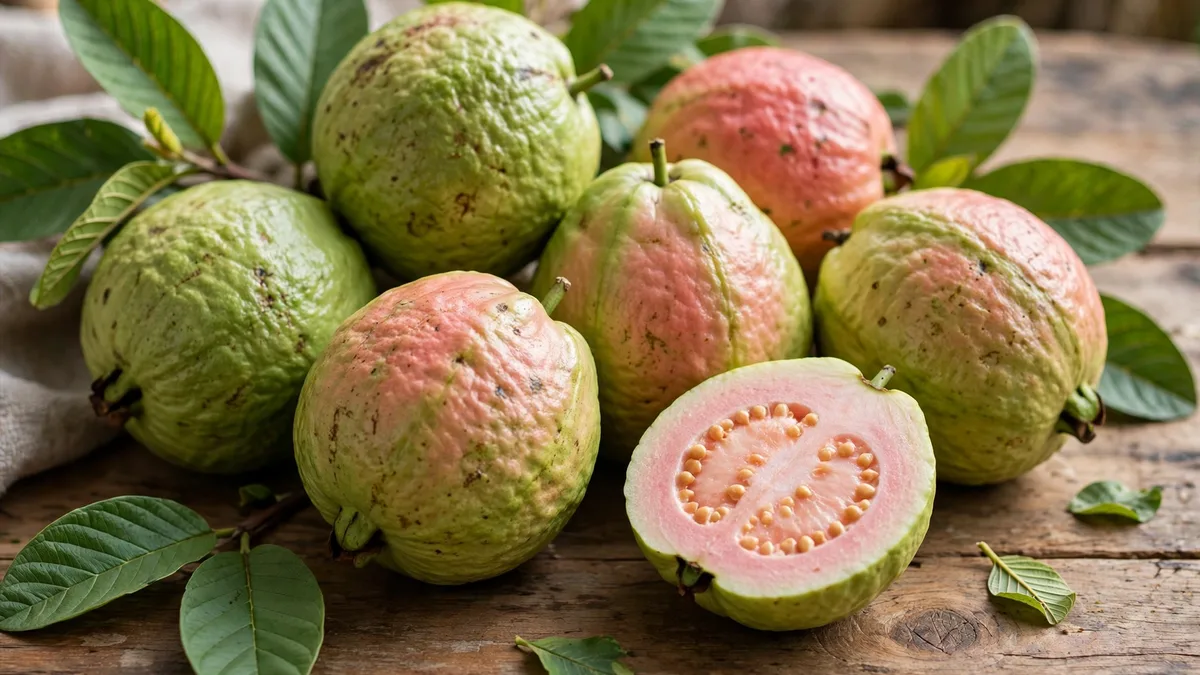
The guava is the fruit of a small tropical tree, Psidium guajava, which grows across Central and South America, the Caribbean, South Asia and other warm regions. The Wikipedia page on guava describes the tree and its fruit, including the many cultivars grown for eating fresh or for processing. The fruit itself is round or pear-shaped, with a thin skin that turns from green to yellow-green as it ripens, and soft flesh that ranges from white to deep pink, studded with small, hard seeds.
Key takeaways
- Guava fruit is sweet and fragrant, with flesh that ranges from white to deep pink.
- Choose a fruit that feels heavy, gives slightly when pressed and smells sweet.
- Firm guavas ripen on the counter in a few days; ripe ones keep in the fridge.
- The skin and flesh are edible, but the small seeds are hard and best spat out.
- Guava is a good source of vitamin C and dietary fibre.
- Eat it fresh, in salads and salsas, or blended into juice and smoothies.
What guava fruit is
The common guava is a tropical fruit with a distinctive flavour that sits somewhere between pear, strawberry and citrus, with a musky note all of its own. The flesh is soft and juicy when ripe, and the aroma is strong enough that a single fruit can scent a kitchen. In the regions where it grows, guava is an everyday fruit, eaten out of hand, sold by street vendors and turned into juices, jams and pastries.
The tree is a hardy evergreen that can grow in a wide range of soils and climates, provided frost stays away. It bears fruit within a few years of planting, and a single tree can produce heavily for decades. This is one reason guava is so common in home gardens across the tropics, where it is often the first fruit tree a family plants. The leaves are also used in traditional teas in some cultures, though the fruit is what most people know.
The main varieties of guava
Guavas fall into two broad groups by flesh colour: white and pink. White guavas are usually milder and sweeter, with pale cream flesh and a gentle flavour that suits eating fresh. Pink guavas are more aromatic and slightly sharper, with flesh that ranges from pale blush to deep rose, and they are the ones most often used for juice and nectar. Within each group there are many named cultivars, bred for size, seed count, sweetness or shelf life.
Among the best known are the apple guava, a round fruit with white flesh that is widely sold fresh, and the pink or red guava, prized for its colour and fragrance. Strawberry guava is a smaller relative with a deep red skin and a sharper, berry-like flavour, while pineapple guava, also known as feijoa, is a different species with a similar name and a flavour of its own. When you shop, the variety matters less than the ripeness: a ripe fruit of any variety will be fragrant and yielding, while an unripe one will be hard and sour.
| Variety | Flesh | Flavour | Best use |
|---|---|---|---|
| Apple guava | White to cream | Mild and sweet | Eating fresh |
| Pink guava | Pale pink to rose | Fragrant, slightly sharp | Juice and nectar |
| Red guava | Deep pink | Rich and aromatic | Juice, jam and fresh eating |
| Strawberry guava | White to pink | Sharp and berry-like | Eating fresh, jellies |
| Pineapple guava | Pale and grainy | Tart with pineapple notes | Eating fresh, salads |
| Seedless guava | White or pink | Mild and sweet | Eating fresh, children |

Guava nutrition and health
Guava is valued as much for its nutrition as for its flavour. It is notably rich in vitamin C, with a single fruit providing a large share of the amount an adult needs in a day, and it is a good source of dietary fibre, which supports digestion. The fruit also provides potassium, small amounts of other vitamins and minerals, and plant compounds called polyphenols, which are the same group of compounds that give many fruits their colour and their antioxidant activity.
The pink-fleshed varieties carry an extra note: their colour comes from lycopene, the pigment that also colours tomatoes and watermelon. The seeds are edible, though hard, and they contain fibre and a little oil. Guava leaves have a long history of use in traditional medicine in the regions where the tree grows, and modern research has looked at leaf extracts for a range of uses, though the fruit itself is the part with the clearest place in an everyday diet.
As with any fruit, guava is best eaten as part of a varied diet rather than treated as a remedy. It is naturally sweet, so people watching their sugar intake should enjoy it in ordinary portions, and the seeds can be a problem for anyone with dental work or a sensitive gut.
How to choose, ripen and store guava
Choosing a guava is a matter of weight, touch and smell. Pick the fruit up: it should feel heavy for its size, which suggests juicy flesh. Press it gently near the stem end: a ripe fruit gives slightly, while an unripe one stays rock hard and a fruit that is too soft or bruised is past its best. Smell it too. A ripe guava has a sweet, musky perfume at the stem; a fruit with no scent at all is not yet ready.
Look at the skin as well. A ripe guava turns from bright green to a softer yellow-green, sometimes with a pink blush, and the skin may show a few small blemishes that do not matter. Avoid fruit with large dark patches, cuts or a sour or fermented smell. If the only fruit on sale is firm, buy it anyway and ripen it at home: leave it on the counter at room temperature, where it should soften within two to four days. A paper bag speeds the process, and adding a banana or an apple to the bag helps further, because those fruits release a gas that encourages ripening.
Once ripe, guava keeps in the fridge for three to five days, though the flavour is best at room temperature, so take it out half an hour before eating. Cut guava should be covered and eaten within a day. For longer keeping, the pulp freezes well: scoop out the flesh, freeze it in portions, and use it later for juice, smoothies or cooking. Dried guava, sold as fruit leather or dried slices, is another way to enjoy the flavour out of season.
How to eat guava
The simplest way to eat a guava is also the best. Wash it, cut it into wedges, and eat it skin and all, spitting out the hard seeds or swallowing the soft ones as you prefer. Some people sprinkle the wedges with a little salt or chilli powder, a habit common in South Asia and Latin America that sharpens the sweetness. The skin is thin and edible, so there is no need to peel it, though you can if you prefer a smoother bite.
Guava also works well in the kitchen. Slice it into fruit salads, where its perfume lifts milder fruits, or dice it into a salsa with red onion, lime and coriander to serve with grilled fish or chicken. Blend it with water, a squeeze of lime and a little honey for a fresh juice, or add it to smoothies with banana and yoghurt. For a picnic, whole guavas travel well in a basket, and our guide to the best picnic recipes has ideas for packing fruit that stays fresh outdoors. A glass of water alongside is always a good idea with a fibre-rich fruit, and our guide to the best water bottle covers bottles that keep drinks cool on a warm day.
Cooked guava has a different charm. Simmered with sugar it makes a thick paste, known as guava cheese in the Caribbean and goiabada in Brazil, which is served in slices with cheese as a dessert. The pulp also makes excellent jam, jelly and ice cream, and it is a classic filling for pastries in Cuba and Puerto Rico. If you are experimenting with coffee alongside a guava dessert, our guide to medium ground coffee explains a grind that suits most home brewing methods.
A checklist for buying and eating guava
- Choose fruit that feels heavy for its size and smells sweet at the stem end.
- Press gently: ripe guava gives slightly; rock hard means unripe, very soft means overripe.
- Look for yellow-green skin with a pink blush, and avoid large dark patches or cuts.
- Ripen firm fruit on the counter, in a paper bag with a banana if you are in a hurry.
- Keep ripe guavas in the fridge and eat them within a few days.
- Wash before eating, cut into wedges, and eat the skin and flesh, seeds aside.
- Freeze spare pulp in portions for juice, smoothies and cooking.
Frequently asked questions
Can you eat guava skin?
Yes. The skin of a guava is thin and edible, so most people eat the fruit whole after washing it. Peeling is a matter of taste: it gives a smoother bite, but the skin holds fibre and some of the fruit’s nutrients.
Can you eat guava seeds?
The seeds are edible but very hard, so most people spit them out. Swallowing a few soft seeds is harmless, but chewing the hard ones can be uncomfortable, and people with dental work or a sensitive gut usually avoid them.
How do you know when a guava is ripe?
A ripe guava feels heavy, gives slightly under gentle pressure and smells sweet and musky at the stem end. The skin turns from bright green to yellow-green, sometimes with a pink blush, as the fruit ripens.
How long does guava take to ripen?
A firm guava left on the counter at room temperature usually softens within two to four days. Putting it in a paper bag, especially with a banana or an apple, speeds ripening by a day or so.
Is guava good for you?
Guava is a wholesome fruit: it is rich in vitamin C, a good source of dietary fibre, and provides potassium and plant compounds. Like any fruit, it is best enjoyed as part of a varied diet rather than eaten in large amounts on its own.
What is the difference between white and pink guava?
White guava has pale flesh and a milder, sweeter flavour, while pink guava has blush to rose-coloured flesh and a more aromatic, slightly sharper taste. Pink guava is often used for juice, while white guava is more often eaten fresh. Pink varieties get their colour from lycopene, the pigment also found in tomatoes.
The bottom line
Guava fruit is a fragrant, sweet tropical fruit that is easy to enjoy once you know how to pick it. Choose a heavy fruit that gives slightly and smells sweet, ripen firm fruit on the counter, and eat it fresh, in salads or blended into juice. White varieties are milder and pink varieties more aromatic, but ripeness matters more than variety.