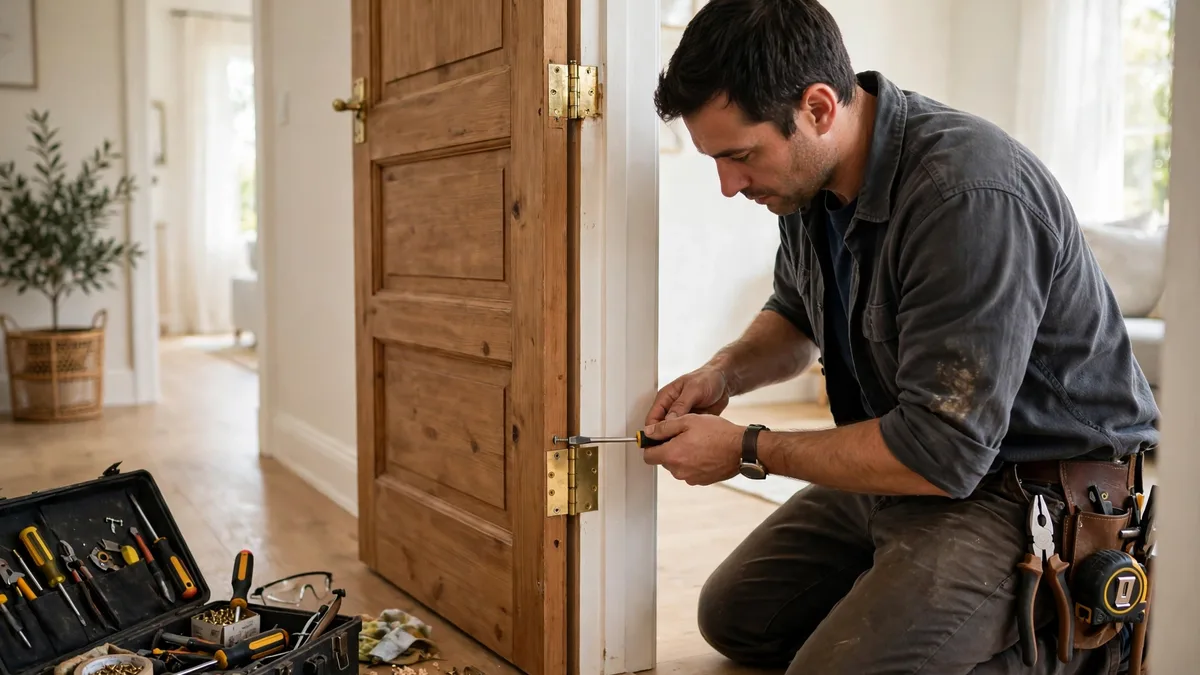

Door repair near me is one of those searches people make in a hurry, usually because a door has started sticking, squeaking, or refusing to close at all. The good news is that most door problems are small: a loose hinge, a swollen edge, a worn latch, or a frame that has shifted slightly. This guide explains what door repair covers, how to find a reliable local repairer, and what to check yourself first.
A door is a simple machine made of a panel, a frame, hinges, a handle and a lock, and it only works well when all of those parts line up. When one part moves out of place, the whole door complains. Understanding which part is at fault is the first step, whether you fix it yourself or call someone in.
Key takeaways
- Most door problems come from hinges, latches, frames or swelling, not from the door panel itself.
- A sticking door is often caused by damp, heat or a frame that has shifted.
- Simple checks, such as tightening hinge screws, solve many common faults.
- Local repairers are usually found through reviews, recommendations and trade listings.
- Ask for a written quote, a timescale and a guarantee before work starts.
- Call a professional for structural damage, security faults and glazed doors.
What door repair covers
Door repair covers everything that keeps a door opening, closing and locking as it should. That includes hinges that have worked loose, handles and locks that no longer turn smoothly, frames that have warped or cracked, panels that have swollen or split, and draught seals that have worn thin. It also covers sliding doors that jump their tracks, bifold doors that sag, and garage doors with broken springs or cables, although garage doors are often handled by specialists.
A door is a hinged or sliding barrier, usually made of wood, metal, glass or composite materials, that lets people pass between rooms or between inside and outside. The Wikipedia page on doors describes the main types, from panelled and flush doors to sliding, folding and revolving doors, and the hardware that holds them together. Knowing which type you have helps a repairer bring the right parts.
Common door problems and what causes them
A door that sticks is the most common complaint, and it usually has a simple cause. Wood swells in damp weather, so a door that fitted neatly in winter can rub against its frame in a humid summer. A frame can also shift as a house settles, or as screws work loose over years of use. The fix may be as small as tightening a hinge or planing a millimetre off an edge.
Squeaking hinges are usually dry or dusty. A drop of light oil on the hinge pin often silences them, although a hinge that is bent or rusted through will need replacing. A latch that misses its strike plate is another frequent fault: the door closes but does not catch, or it needs a lift or a shove to engage. That usually means the door has dropped slightly on its hinges, and the strike plate or the hinges need adjusting.
Draughts around a door point to worn seals or a gap under the door. A draughty front door wastes heat and lets in noise, and it is often fixed with a new brush strip or a threshold seal. Cracks, splits and holes in a panel are usually cosmetic, but a split near a hinge or a lock can weaken the door, and a glazed door with a cracked pane should be treated as urgent, since broken glass is a safety risk.
Common problems at a glance
| Problem | Likely cause | Usual fix |
|---|---|---|
| Door sticks or rubs | Swollen wood, shifted frame, loose hinges | Tighten hinges, plane the edge, realign the frame |
| Squeaking hinges | Dry or rusted hinge pins | Oil the pins, or replace the hinge |
| Latch misses the strike plate | Door has dropped on its hinges | Adjust hinges or move the strike plate |
| Draughts around the door | Worn seals, gap under the door | Fit a brush strip or threshold seal |
| Handle or lock is stiff | Worn mechanism, dirt, misalignment | Clean and lubricate, or replace the lock |

How to find door repair near you
Start with people you trust. A neighbour, a friend or a local community group will often know a reliable repairer, and a personal recommendation is worth more than any advert. If no one can recommend someone, look at local trade listings and review sites, and read the recent reviews rather than the overall score. A repairer with a run of detailed, recent reviews is a safer bet than one with a handful of vague ones.
Check the basics before you call. A reputable repairer should be easy to contact, willing to give a rough idea of cost, and happy to explain what the job involves. Ask whether they carry common parts, such as hinges, handles and locks, and whether they charge for a visit if you decide not to go ahead. A short phone call will tell you a lot: a repairer who asks good questions about the door is more likely to fix it properly.
For front doors and locks, security matters as much as carpentry. A repairer who works on external doors should understand locks and security standards, and should be able to advise whether a lock needs repair or replacement. If your door is the main entrance to your home, treat any fault that stops it locking properly as urgent, and do not leave the house unsecured overnight.
What to ask before you book
Ask for a written quote that separates labour from parts, so you can see what you are paying for. Ask how long the job will take, whether the repairer will tidy up afterwards, and whether the work comes with a guarantee. A short guarantee on labour is normal, and parts usually carry the manufacturer’s own warranty.
Ask what happens if the repair uncovers a bigger problem, such as a rotten frame or a cracked lintel above the door. A good repairer will explain the options and the extra cost before going ahead, rather than pressing on and presenting a surprise bill. It also helps to take a photograph of the problem and send it before the visit, so the repairer can bring the right parts and give a more accurate estimate.
If the door is old or unusual, say so when you book. A Victorian panelled door, a sliding barn door or a fire door each need different handling, and a repairer who knows the type will work faster and do a better job. Our guide to how to polish wood furniture covers care for the timber itself, which is useful once the mechanical fix is done.
Simple checks you can do first
Before you call anyone, spend ten minutes checking the obvious. Tighten the screws on each hinge with a screwdriver, starting with the top hinge, which carries most of the weight. If a screw turns without gripping, the hole is worn: a wooden matchstick or a small piece of dowel pushed into the hole with wood glue can give the screw something to bite into.
Check the gap around the door. It should be even on all sides. If the gap is wider at the top than at the bottom, the door has dropped, and the hinges are the likely cause. If the door rubs in one spot, mark the spot with a pencil, then look for paint or varnish that has been worn away: that is where the door is catching.
Sketching the problem can help, whether you are explaining it to a repairer or working out the fix yourself, and our guide to keeping a sketchbook is a good place to start if you like to plan jobs on paper. And if the door is beyond repair, think about what happens to the old one: our guide to the recycling bin explains how to sort household waste, including timber and metal fittings.
A checklist before you call a repairer
- Note the problem clearly: sticking, squeaking, not latching, draughty, or damaged.
- Check whether it is an internal door, a front door, a sliding door or a garage door.
- Tighten the hinge screws and check whether the problem improves.
- Look at the gap around the door and note where it rubs or catches.
- Take a clear photograph of the door, the hinges and the lock.
- Ask neighbours or friends for a recommendation before searching online.
- Get a written quote that separates labour from parts.
- Ask about a guarantee on the work and what it covers.
Frequently asked questions
How much does door repair cost?
The cost depends on the problem, the type of door and where you live, so no single figure covers every job. A simple hinge adjustment or a new handle is usually a small job, while a new frame, a replacement lock or a glazed panel costs more. Ask for a written quote before work starts, and be wary of any repairer who will not put a price in writing.
Can I fix a sticking door myself?
Often, yes. Tightening the hinge screws, oiling the hinges and checking where the door rubs will solve many sticking doors. If the door needs planing, work slowly and take off only a little at a time, then seal the raw edge with paint or varnish so it does not absorb damp and swell again.
Why does my door stick in summer but not in winter?
Wood absorbs moisture from humid air and swells, so a door that fits in dry winter air can rub in a damp summer. The swelling usually reverses when the air dries out. If the door sticks all year round, the frame has probably shifted or the hinges have worked loose, and the door needs realigning.
When should I replace a door instead of repairing it?
Replace the door when the panel is badly split, the frame is rotten, the door no longer fits its opening, or repairs would cost nearly as much as a new door. A front door that cannot be made secure should also be replaced rather than patched. A repairer can advise honestly on whether repair or replacement makes more sense.
How do I find a reliable door repairer near me?
Start with personal recommendations from neighbours and friends, then check local trade listings and recent reviews. Look for a repairer who asks good questions about the door, gives a written quote, and offers a guarantee on the work. Avoid anyone who demands full payment before the job begins.
Is a door that will not lock an emergency?
Yes, if it is an external door. A front or back door that will not lock leaves your home unsecured, so treat it as urgent and call a repairer or a locksmith the same day. Do not leave the house empty until the door can be locked, and ask the repairer about a temporary way to secure it.
The bottom line
Most door problems are small and fixable: a loose hinge, a dry pin, a dropped door, or a worn seal. A few simple checks will often solve the problem, and when they do not, a local repairer with good reviews and a written quote is the safest next step. Describe the problem clearly, ask about cost and guarantee before work starts, and treat any fault that stops an external door locking as urgent.
Take care with tools and heavy doors: a door can be heavy enough to injure fingers or feet if it slips, and glazed doors can shatter. If you are unsure about a repair, or the door is damaged near a hinge or a lock, ask a professional rather than forcing the job.