
Meralgia paresthetica is a condition that causes tingling, numbness and burning pain in the outer thigh. It happens when the lateral femoral cutaneous nerve, the nerve that gives feeling to the skin of the upper leg, is squeezed or trapped, usually where it passes under a ligament at the front of the hip. The symptoms are purely sensory: the nerve carries no signals to the muscles, so the leg does not become weak. In many cases the problem eases once the pressure on the nerve is removed, by loosening tight clothing or losing weight.
Key takeaways
- Meralgia paresthetica is compression of the lateral femoral cutaneous nerve, a sensory nerve of the outer thigh.
- Symptoms are tingling, numbness and burning pain on the outer thigh, usually on one side only.
- Common causes are tight clothing, extra weight, pregnancy, a heavy tool belt and diabetes.
- The leg does not become weak, because the nerve carries feeling only, not muscle signals.
- Most cases improve once the pressure is removed, with looser clothing and simple self-care.
- See a doctor if symptoms persist, spread, or come with weakness or pain elsewhere.
What is meralgia paresthetica?
Meralgia paresthetica, also called lateral femoral cutaneous nerve entrapment and sometimes Bernhardt-Roth syndrome, is a specific instance of nerve entrapment. The nerve involved, the lateral femoral cutaneous nerve, comes from the lumbar plexus in the lower back, carrying fibres from the second and third lumbar nerves, and it runs through the pelvis and groin to supply feeling to the skin of the outer thigh. In most people it passes under the inguinal ligament, the band of tissue at the front of the hip, without any trouble. In meralgia paresthetica it becomes trapped there. Because the nerve is purely sensory, the symptoms are also purely sensory: the skin of the outer thigh feels strange or painful, while the muscles of the leg work normally. Meralgia paraesthetica is not caused by an injury to the thigh itself, which is why the thigh can look normal while feeling numb or burning. It is most common in middle-aged adults.
Symptoms of meralgia paresthetica
Symptoms affect the outer part of the thigh, called the lateral thigh, and they are usually felt on one side only: about three in four cases affect a single leg. The most common symptom is a burning pain, or abnormal sensations, on the front and outer surface of the thigh, often extending from just below the hip to just above the knee. Many people describe tingling or pins and needles, numbness, or a patch of skin that feels different from the rest of the leg. The area can become unusually sensitive, so that even a light touch, a waistband or a bedsheet feels painful. Some people notice the symptoms most when standing or walking, and find they ease when sitting down. The pain is not the same as sciatica: it stays in the thigh and does not shoot down the leg, and it comes without weakness, since the nerve has no motor function.
What causes meralgia paresthetica?
Anything that squeezes the lateral femoral cutaneous nerve, or injures it, can cause meralgia paresthetica. The most common causes are everyday ones. Tight clothing at the waist, such as a tight belt, tight jeans or a corset, presses directly on the nerve where it passes under the inguinal ligament. Extra weight has the same effect from the inside, by increasing pressure in the abdomen and at the groin. Pregnancy is a common cause for the same reason: a growing belly puts added pressure on the groin, and symptoms often ease after the baby is born. People who wear a heavy tool belt for work can develop the condition, and fluid collecting in the abdomen, known as ascites, also raises the pressure on the nerve.
Less often, the nerve is injured rather than squeezed. Diabetes can damage the nerve, and it can be harmed by a seat belt injury in a car accident, by trauma to the hip, or by surgery near the groin. Scar tissue from an earlier injury or operation can trap it. Rarely, a tumour or cyst pressing on the nerve is the cause. The table below sets out the main causes.
| Cause | How it affects the nerve | Who it tends to affect |
|---|---|---|
| Tight clothing and belts | Presses on the nerve at the groin | Anyone wearing tight waistbands |
| Extra weight or weight gain | Raises pressure in the abdomen and groin | Adults who are overweight |
| Pregnancy | A growing belly presses on the groin | People in later pregnancy |
| Heavy tool belt | Weight hangs on the hips all day | Builders and tradespeople |
| Diabetes | Damages the nerve itself | People with diabetes |
| Injury or surgery | Direct damage or scar tissue | After accidents or hip surgery |

How meralgia paresthetica is diagnosed
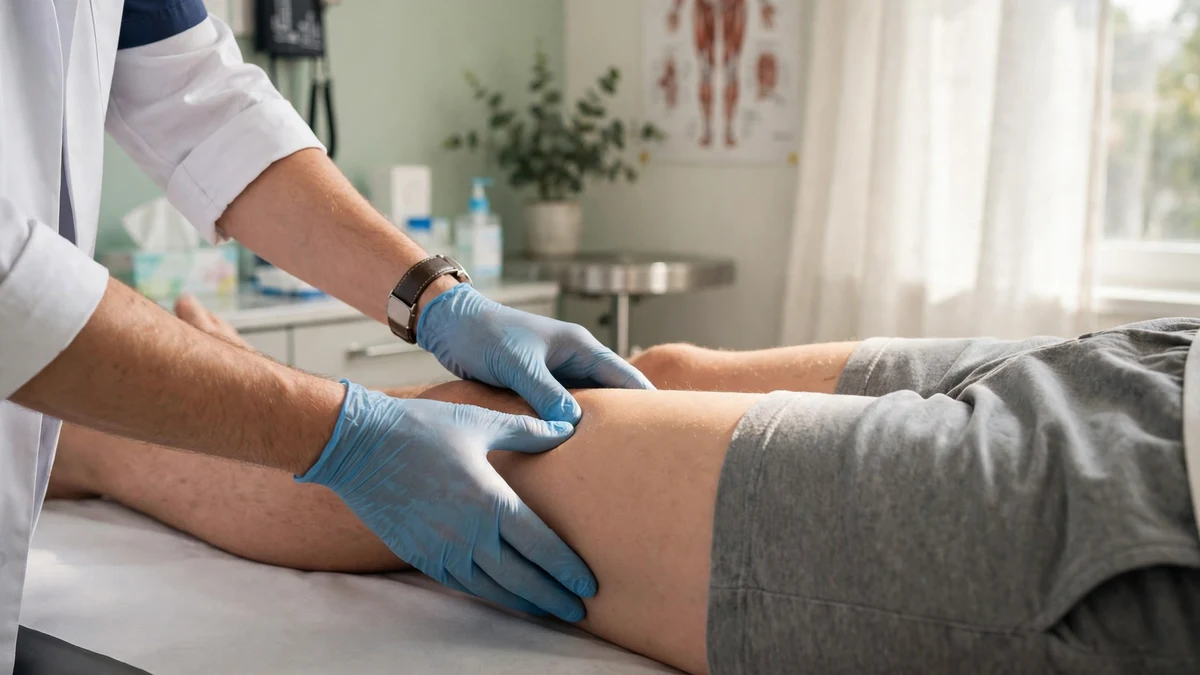
Diagnosis usually starts with a description of the symptoms and a physical examination. A doctor will ask where the tingling or pain is felt, what makes it worse and what eases it, and will check the feeling in the outer thigh, comparing the two legs. The pattern is distinctive: numbness or burning confined to the outer thigh, without weakness and without pain below the knee, points strongly towards meralgia paresthetica. If the picture is less clear, the doctor may arrange further tests. Nerve conduction studies can measure how well the nerve is working, and an ultrasound or MRI scan can show whether something is pressing on it. A diagnostic nerve block, in which a small amount of local anaesthetic is injected near the nerve, can confirm the diagnosis if the symptoms disappear for a while. Imaging also rules out other causes, such as a problem in the lower back or hip.
Treatment and self-care
Most cases improve with conservative treatment, which means removing the cause and giving the nerve time to recover. The first step is to take the pressure off the nerve. Wear looser clothing, especially at the waist, and avoid carrying heavy items on a belt. If extra weight is a factor, losing weight gradually reduces the pressure on the nerve. People whose work involves a heavy tool belt can try a harness that takes the load off the hips, or take the belt off during breaks. During pregnancy, symptoms usually ease after delivery. Avoid activities that press on the front of the hip.
For the pain itself, simple measures often help. Over-the-counter pain relief may ease the burning, and a pharmacist can advise on what is suitable. Some people find that gentle stretching and keeping active help. Physiotherapy can help with posture and the muscles around the hip, and it is worth asking a doctor for a referral if the symptoms persist. If conservative measures do not help, a doctor may offer a corticosteroid injection near the nerve to reduce inflammation, which can bring relief for weeks or months. Surgery is rarely needed. It is considered only when symptoms are severe and have not improved with other treatment, and it involves either freeing the trapped nerve or, in some cases, cutting it, which leaves the outer thigh permanently numb. Most people recover without an operation, though it can take weeks or months.
When to seek medical advice
See a doctor if the symptoms do not improve after a few weeks of looser clothing and self-care, or if they keep coming back. Seek advice sooner if the numbness spreads, if the pain becomes severe, or if you develop weakness in the leg, since weakness is not a feature of meralgia paresthetica and suggests a different cause. Also see a doctor if you have diabetes and develop new numbness or pain in the leg. Sudden severe pain, a leg that becomes pale, cold or swollen, or symptoms after an accident should be checked urgently. If you are pregnant and the symptoms are troublesome, mention them at your next antenatal appointment.
A checklist for meralgia paresthetica
- Loosen tight belts, waistbands and jeans that press on the front of the hip.
- Note when symptoms appear: standing, walking, tight clothing or a heavy belt.
- Take the weight off your hips at work: use a harness or take a tool belt off during breaks.
- Work towards a healthy weight gradually, with advice from a doctor.
- Keep active with gentle movement, but rest when standing or walking brings the symptoms on.
- Ask a pharmacist about suitable over-the-counter pain relief for the burning.
- See a doctor if symptoms last more than a few weeks, spread, or come with weakness.
- Do not treat a new or changing numbness at home without a diagnosis.
Frequently asked questions
What does meralgia paresthetica feel like?
It feels like tingling, numbness or a burning pain on the outer side of the thigh, usually on one leg only. The area can become very sensitive, so that even a light touch or a waistband feels painful. The symptoms are felt in the skin, not the muscles, so the leg does not feel weak. Many people notice them most when standing or walking, and find they ease when sitting.
Is meralgia paresthetica serious?
It is not usually serious, and it does not damage the muscles of the leg. Most cases improve once the pressure on the nerve is removed. It should still be checked by a doctor, because other conditions can cause similar symptoms. Weakness, spreading numbness or severe pain are reasons to seek advice promptly.
What causes meralgia paresthetica?
It is caused by compression or injury to the lateral femoral cutaneous nerve, which supplies feeling to the outer thigh. Common causes are tight clothing, extra weight, pregnancy, a heavy tool belt and diabetes. It can also follow an injury, a seat belt injury in a car accident, or surgery near the groin. Rarely, a tumour or cyst pressing on the nerve is the cause.
Does meralgia paresthetica go away on its own?
Often, yes, once the cause is removed. Looser clothing, gradual weight loss, changing a work habit or, in pregnancy, giving birth, can all allow the nerve to recover. Recovery can take weeks or months, and the symptoms can return if the original cause comes back. If symptoms persist for more than a few weeks despite self-care, a doctor can advise on further treatment.
How is meralgia paresthetica treated?
Treatment starts with removing the pressure on the nerve: looser clothing, weight loss where needed, and changes to work habits. Over-the-counter pain relief may help, and physiotherapy can help with posture and the hip muscles. If that is not enough, a doctor may offer a corticosteroid injection near the nerve. Surgery is rarely needed.
Can exercise make meralgia paresthetica worse?
It depends on the exercise. Activities that press on the front of the hip or involve prolonged standing can aggravate the symptoms, while gentle movement and stretching often help. If an activity brings the tingling on, take a break and try something else. A physiotherapist can suggest exercises that do not put pressure on the nerve.
The bottom line
Meralgia paresthetica is a trapped nerve in the outer thigh, not a damaged muscle, and that is why it causes tingling, numbness and burning pain without weakness. Most cases improve once the pressure is removed, by loosening tight clothing, losing weight gradually or changing a work habit that presses on the hip. If symptoms persist, spread or come with weakness, see a doctor for a proper diagnosis. For more health reading, see our guide to lipoma, our guide to HG pregnancy complications, and our guide to finding an emergency dentist.
This article is for general information only and is not a substitute for medical advice. If you have tingling, numbness or pain in your thigh that persists, spreads or comes with weakness, speak to your doctor or another qualified healthcare professional.