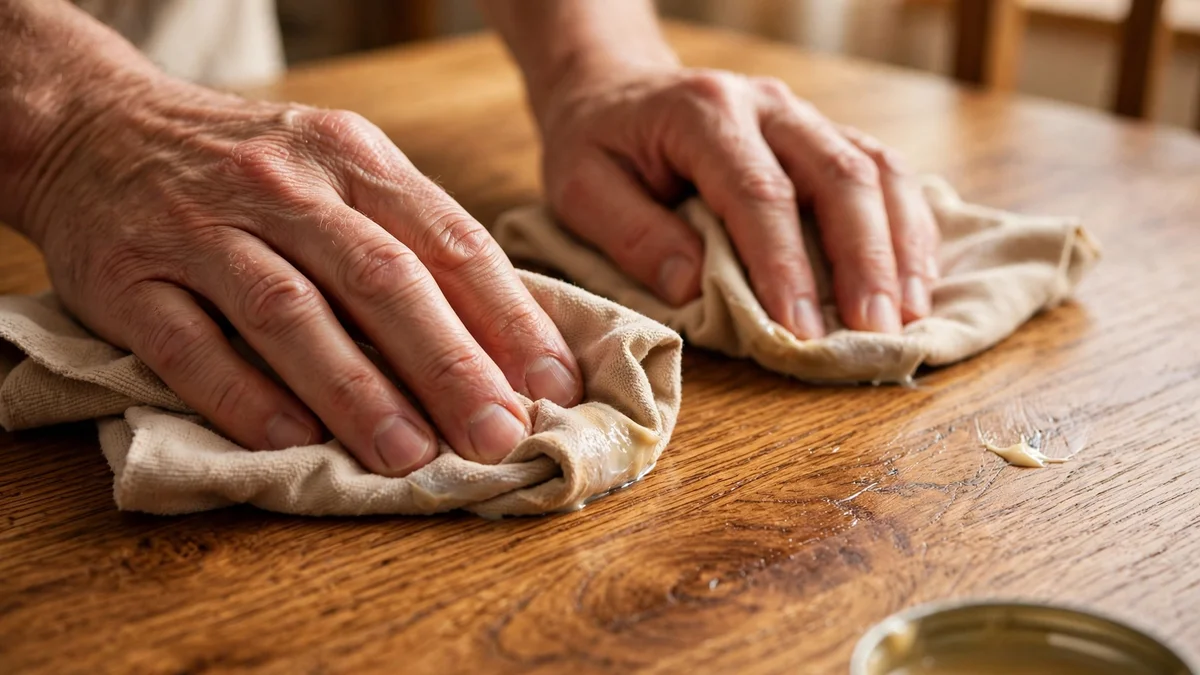

Learning how to polish wood furniture properly is one of the simplest ways to keep a table, a chair or a chest of drawers looking its best. A good polish feeds the finish, lifts dullness and protects the surface from everyday wear. This guide explains which products suit which finishes, the step-by-step method to follow, and the mistakes that can leave a sticky film or a cloudy haze instead of a shine.
Polishing is not the same as refinishing. Refinishing strips the old surface away and starts again, while polishing works with the finish that is already there, cleaning it and adding a thin protective layer. That distinction matters, because the right product depends on the finish. A wax polish suits a waxed or oiled surface, an oil suits bare or oiled wood, and a spray polish suits a hard lacquer or varnish. Using the wrong one is how most polishing problems start.
Key takeaways
- Polishing works with the existing finish; it does not strip or replace it.
- Match the product to the finish: wax for waxed wood, oil for oiled wood, spray for lacquer.
- Always test a new product on a hidden spot first.
- Work with the grain, use a little product, and buff with a clean, soft cloth.
- Polish every few months, not every week, to avoid build-up.
- Never use silicone sprays on a piece you may one day want refinished.
Know your finish before you polish
The finish is the clear or coloured layer that sits on top of the wood, and it decides what you can safely use. A hard, glossy finish that feels like a thin sheet of plastic is usually lacquer or polyurethane varnish, and it is the most forgiving: it can be cleaned and polished with most products. A softer, warmer finish that shows the grain clearly may be oil or wax, and it needs products that feed it rather than coat it.
There is a simple way to tell them apart. Put a drop of water on a hidden spot: if it beads up and sits on the surface, the finish is probably a hard lacquer or varnish. If it soaks in slowly and darkens the wood, the finish is probably oil or wax, or the wood may be unfinished. A cloth dampened with a little white spirit will soften shellac or wax on a hidden corner, which also calls for a gentle touch.
Age matters too. Antique furniture often has a shellac or wax finish that is easily damaged by water, alcohol and modern sprays. An old family piece deserves a cautious approach: test everything first and consider asking a restorer before trying anything new. Modern mass-produced furniture is usually more robust, but the test-first rule still applies.
Choosing the right polish
Beeswax polish is the traditional choice for waxed and antique wood. It is usually sold as a paste or a cream, and it gives a soft, warm shine while feeding the surface. Apply it thinly, leave it to haze, then buff it off with a clean cloth. It does not suit hard lacquer, where it can look cloudy, and it needs reapplying every few months.
Oil finishes, such as Danish oil or tung oil, are used on oiled wood and on bare wood that needs feeding. They soak into the grain rather than sitting on top, and they are applied with a cloth, left to penetrate, then wiped off so no excess remains. Oil is a poor choice for a lacquered surface, where it cannot soak in and will stay greasy. Cloths soaked in drying oils can heat up as they dry, so lay them flat outdoors or soak them in water before disposal.
Spray polishes are the quickest option for modern lacquered furniture. They clean light dust and add a thin shine, and they are convenient for a weekly dust rather than a deep polish. The drawback is build-up: used too often, they leave a film that dulls the surface, and silicone sprays can stop a future refinish from taking. For a piece you may one day want restored, avoid silicone sprays entirely.

How to polish wood furniture step by step
Start by dusting. Use a soft, dry cloth or a feather duster to remove loose dust, working with the grain and getting into corners and carvings. Then clean with a cloth barely dampened with water and a drop of mild soap, wrung out until almost dry. Wipe with the grain, then dry the surface at once with a second cloth. Never soak the wood, and never leave water standing on it.
Next, test your chosen polish on a hidden spot, such as the underside of a tabletop or the inside of a leg. Apply a small amount, wait a few minutes, and check for any change in colour, clouding or stickiness. If the test looks good, apply the polish thinly over one section at a time, rubbing with the grain using a soft cloth. Less is more: a thin, even layer buffs to a better shine than a thick one, and it does not leave a sticky residue.
Let the polish haze for the time the product suggests, usually a few minutes, then buff it off with a clean, dry cloth, again working with the grain. Turn the cloth often so you are always buffing with a clean side. Check the surface in raking light for missed patches or streaks. If one area looks dull, repeat the polish on that section only, rather than recoating the whole piece.
Polishes compared
Each type of polish suits a different finish and a different job. The table below compares the main options.
| Polish | Best for | Shine | How often |
|---|---|---|---|
| Beeswax paste | Waxed and antique wood | Soft, warm glow | Every few months |
| Danish oil | Oiled and bare wood | Low sheen, natural grain | When the wood looks dry |
| Tung oil | Oiled wood, hardwearing tops | Low sheen, durable | Once or twice a year |
| Spray polish | Modern lacquered furniture | Quick, light shine | Weekly dusting at most |
| Cream polish | General use on sealed wood | Medium shine | Every few months |
| Homemade oil mix | Not recommended | Unpredictable | Avoid |
Mistakes to avoid when polishing wood furniture
The most common mistake is using too much product. A thick layer of wax or oil does not buff out cleanly; it stays tacky, attracts dust and looks worse than before. Use less, and buff thoroughly with a clean cloth. If a surface has already gone sticky, wipe it with a barely damp cloth, dry it, and start again with a thinner coat.
Polishing too often is the second mistake. Weekly polishing builds up layers that dull the surface and trap dust, and the piece ends up looking cloudy rather than bright. Most furniture needs a proper polish only every few months, with a simple dusting in between. The third mistake is polishing over dirt: grit under the cloth acts like sandpaper, so always dust and clean first. Finally, never use household cleaners, vinegar mixtures or abrasive pads on wood: they can strip the finish or scratch the surface.
Caring for polished wood day to day
Daily care is simple and it matters more than the polish itself. Dust with a soft, dry cloth, and wipe up spills at once, since water left on wood can leave white rings or dark stains. Use coasters under glasses and mats under hot dishes, since heat and moisture mark a polished surface fastest. Keep furniture out of direct sunlight, which fades the wood and dries the finish, and away from radiators, which do the same.
Seasonal changes affect wood too. Central heating dries the air in winter, and wood can shrink slightly, opening small gaps at joints. A room humidifier can help, though it is not a substitute for sensible placement. If a white ring appears from a hot mug, it is often in the finish rather than the wood, and it can sometimes be eased with a little warmth and a soft cloth, but deep marks and stains are a job for a restorer rather than a home remedy.
A checklist for polishing wood furniture
Follow these steps in order, and the shine will take care of itself.
- Identify the finish first: test with a drop of water on a hidden spot.
- Dust the piece thoroughly, working with the grain.
- Clean with a barely damp cloth and mild soap, then dry at once.
- Test the polish on a hidden area and wait a few minutes.
- Apply a thin layer with the grain, one section at a time.
- Let it haze, then buff with a clean, dry cloth.
- Check the surface in raking light and touch up dull patches only.
- Polish every few months, and dust in between rather than repolishing.
- Keep silicone sprays away from any piece you may one day refinish.
Frequently asked questions
How often should I polish wood furniture?
Most pieces need a proper polish only every few months, with a simple dusting in between. Polishing weekly builds up layers that dull the surface and attract dust. Oiled wood is the exception: it may need feeding when it looks dry, usually once or twice a year.
Can I use olive oil to polish wood furniture?
It is not a good idea. Cooking oils do not dry or harden, so they stay greasy, attract dust and can turn rancid, leaving a smell and a sticky surface. Use a product made for wood, such as beeswax polish or tung oil, and test it first. For background on traditional finishes, see Wikipedia’s overview of wood finishing.
What is the best polish for antique wood furniture?
Beeswax polish is the usual choice for antique wood, because it suits the wax and shellac finishes that old pieces often carry, and it gives a soft, warm shine. Apply it thinly, let it haze, and buff with a clean cloth. Avoid water, modern sprays and silicone products on antiques, and consider asking a restorer before trying anything new on a valuable piece.
How do I remove white rings from polished wood?
White rings usually sit in the finish rather than the wood, and they come from heat or moisture. A gentle approach is to rub the mark lightly with a soft cloth and a little beeswax polish, working with the grain. If the mark does not fade, or the finish feels damaged, stop and ask a restorer, since aggressive rubbing can make the damage worse.
Should I polish with or against the grain?
Always work with the grain, in the direction the wood fibres run. Polishing across the grain can leave visible streaks. The same rule applies to dusting, cleaning and buffing.
Can I polish wood furniture that has a lacquer finish?
Yes, but use a product made for hard finishes, such as a spray or cream polish, and use it sparingly. Wax and oil cannot soak into lacquer, so they sit on the surface and can look cloudy. Dust first, clean with a barely damp cloth, and buff well. Avoid silicone sprays if the piece may one day need refinishing.
The bottom line
Polishing wood furniture is a small job with an outsized reward. Identify the finish, test first, use a thin layer of the right product, work with the grain, and buff with a clean cloth. Polish every few months rather than every week, and keep the piece out of sun, away from radiators, and protected from hot mugs and wet glasses. Done that way, a table or a chair will keep its shine for years. For more on looking after the home, read our guide to how to clean cork flooring, our article on how to clean soapstone countertops, and our guide to wood pellets import in the UK.