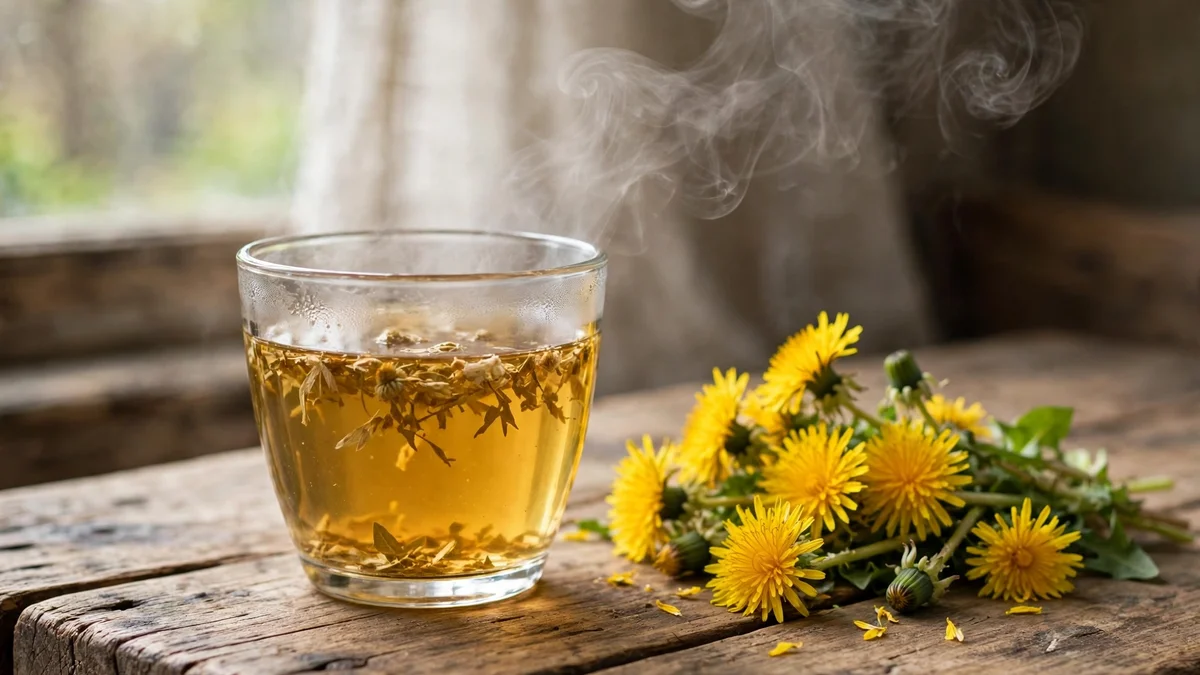

Dandelion tea is a caffeine-free herbal drink made by steeping the roots or leaves of the dandelion plant in hot water. If you have only ever thought of dandelions as garden weeds, it may surprise you that the same plant has been brewed as a drink for centuries, and that its roots are still roasted as a coffee substitute in some places. The tea itself is mild, earthy and slightly bitter, and it is drunk as a pleasant hot drink rather than as a medicine.
That last point matters, because dandelion tea is often sold with large claims attached to it. This guide keeps to what is actually known: what the tea is, how the root and leaf versions differ, how to brew a cup properly, who should take care before drinking it, and how to tell a sensible claim from an exaggerated one.
Key takeaways
- Dandelion tea is a caffeine-free herbal brew made from dandelion root or leaf.
- Root tea tastes earthy and roasted; leaf tea is lighter, greener and more bitter.
- It has a long history as a traditional drink, not as a proven treatment.
- Most people can drink it in moderation, but some should take care.
- People allergic to plants in the daisy family should be cautious.
- Buy from a reputable source, and never gather plants from sprayed or roadside ground.
What dandelion tea actually is
The dandelion is Taraxacum officinale, a plant most people recognise by its bright yellow flowers and fluffy seed heads. Every part of it is edible, and the root and the leaf are the two parts used for tea. They make different drinks. Leaf tea is made from dried leaves steeped in hot water, and it tastes green, grassy and mildly bitter, a little like a light green tea. Root tea is made from dried, chopped root, and it is darker, earthier and more rounded, especially if the root has been roasted, which gives it a flavour some people compare to coffee.
Dandelion tea is not a true tea, in the sense that it contains no leaves from the tea plant, Camellia sinensis. It is an herbal infusion, or tisane, and it contains no caffeine. That is one reason people reach for it in the evening, or when they want a hot drink without the lift of caffeine. It is sold as loose leaf, as tea bags, and as roasted root pieces for brewing, and it is also easy to make at home from dried root or leaf bought from a reputable supplier.
The plant’s history as a drink is long. Dandelion has been used in traditional herbal practice in Europe and Asia for centuries, and roasted dandelion root was widely drunk as a coffee substitute when coffee was scarce or expensive. That history is interesting, but it is not proof of medical benefit. Traditional use tells us that people found the drink pleasant and harmless in ordinary amounts; it does not tell us that it treats disease.
What people say it does, and what is actually known
Dandelion tea is most often described as a natural diuretic, meaning it may increase urine output, and as a digestive aid. The leaf is traditionally taken to encourage urination, and the root is traditionally taken to support digestion and appetite. These uses come from herbal tradition, and there is some laboratory and animal research on dandelion extracts, but there is very little good-quality human evidence that drinking the tea produces these effects in a meaningful way. A cup of tea is also a weak preparation compared with the concentrated extracts used in most studies, so results from a laboratory do not translate neatly to a mug on your kitchen table.

You will also see claims that dandelion tea detoxes the liver, cleanses the blood, burns fat or fights disease. These should be treated with care. The liver and kidneys already remove waste from the body, and no tea has been shown to improve on that process. Weight loss claims are equally weak: dandelion tea has almost no calories, so swapping it for a sugary drink may help a diet, but the tea itself does not burn fat. When a product page promises cures, that is a sign to look for evidence rather than to buy more.
What can be said fairly is that dandelion tea is a pleasant, caffeine-free hot drink with a long history of use, that it may have a mild diuretic effect, and that it contains plant compounds also found in many other leafy greens. That is a modest description, but it is an honest one, and it is enough reason to enjoy a cup without expecting it to do the work of medicine.
How to brew dandelion tea
Brewing dandelion tea is simple, and the method depends on which part of the plant you are using. For leaf tea, use about a teaspoon of dried leaf per cup, pour over freshly boiled water, cover and leave it for five to ten minutes, then strain. For root tea, the root is tougher, so it benefits from simmering: add a teaspoon or two of dried, chopped root to a small pan of water, bring it to a gentle simmer for ten minutes, then strain. Roasted root can be brewed in the same way, and it gives a darker, more coffee-like cup.
Flavour is a matter of taste. Leaf tea is bitter, and a little honey or a squeeze of lemon softens it. Root tea is earthier and often needs nothing at all, though milk suits the roasted version. Both can be drunk hot or cooled and poured over ice. If you are making tea from a plant you gathered yourself, be certain of the identification, wash the material well, and only gather from ground you know has not been sprayed with weedkiller or fertiliser, and is away from roads and dog-walking routes. For most people, buying dried root or leaf from a reputable supplier is the safer and simpler choice.
As for how much to drink, there is no official guidance, and moderation is the sensible rule. One or two cups a day is a reasonable amount for most healthy adults, and drinking far more than that every day is unnecessary. If you are drinking it for a specific reason, such as hoping for a diuretic effect, remember that plain water and ordinary habits matter more, and that a tea is not a substitute for medical care.
Who should take care
Most healthy adults can drink dandelion tea in moderation without trouble, but a few groups should take care. The most important is anyone allergic to plants in the daisy family, which includes ragweed, chrysanthemums, marigolds and chamomile. Dandelion belongs to the same family, and people with those allergies can react to it, sometimes with a rash or mouth irritation. If you know you react to ragweed or chamomile, try dandelion tea cautiously or not at all.
Dandelion may also interact with some medicines. Because it can act as a mild diuretic, it may add to the effect of water tablets, and it may affect blood sugar and blood pressure medicines. It can also interact with lithium and with some antibiotics. The risk from a cup or two of weak tea is low, but it is real enough that anyone taking regular medication, and anyone who is pregnant or breastfeeding, should ask a clinician or pharmacist before making dandelion tea a daily habit. That is not a reason to be alarmed; it is the same advice that applies to most herbal products.
| Version | Flavour | Best for |
|---|---|---|
| Leaf tea | Light, green, mildly bitter | A gentle evening drink |
| Root tea | Earthy, rounded, mild | A warming daytime cup |
| Roasted root tea | Dark, toasty, coffee-like | A coffee substitute |
| Tea bags | Varies by blend | Quick, everyday brewing |
| Loose leaf | Fresher, more control | Adjusting strength to taste |
| Iced dandelion tea | Light, refreshing | Warm weather, with lemon |
Your dandelion tea checklist
Use this list to enjoy dandelion tea safely and get the best cup from it.
- Choose root tea for an earthy cup, leaf tea for a lighter, greener one.
- Buy dried root or leaf from a reputable supplier, not an unknown seller.
- Steep leaf for five to ten minutes; simmer root gently for ten minutes.
- Start with one cup a day and see how you feel before drinking more.
- Add honey or lemon to leaf tea if the bitterness puts you off.
- Be cautious if you are allergic to ragweed, chamomile or other daisy-family plants.
- Ask a clinician or pharmacist first if you take regular medication.
- Ask a clinician first if you are pregnant or breastfeeding.
- Never gather from sprayed ground, roadsides or dog-walking routes.
- Treat cure claims with suspicion, and enjoy the tea as a drink, not a treatment.
Frequently asked questions
What is dandelion tea?
Dandelion tea is a caffeine-free herbal infusion made by steeping the roots or leaves of the dandelion plant, Taraxacum officinale, in hot water. Root tea tastes earthy and rounded, while leaf tea is lighter, greener and more bitter.
Is dandelion tea good for you?
It is a pleasant, low-calorie, caffeine-free drink with a long history of use, and it may have a mild diuretic effect. There is little good human evidence for the larger health claims often made for it, so it is best enjoyed as a drink rather than relied on as a treatment.
Does dandelion tea contain caffeine?
No. Dandelion tea is an herbal infusion, not a true tea, and it contains no caffeine. That makes it a common choice for evenings or for people who want to avoid caffeine.
How do you make dandelion tea?
For leaf tea, steep about a teaspoon of dried leaf per cup in freshly boiled water for five to ten minutes, then strain. For root tea, simmer a teaspoon or two of dried root in water for about ten minutes, then strain. Honey or lemon can soften the bitterness of the leaf version.
Can anyone drink dandelion tea?
Most healthy adults can drink it in moderation. People allergic to plants in the daisy family, such as ragweed or chamomile, should be cautious, and anyone taking regular medication, or who is pregnant or breastfeeding, should ask a clinician or pharmacist first.
Where does dandelion tea come from?
Dandelion has been brewed in Europe and Asia for centuries, and roasted dandelion root was widely used as a coffee substitute when coffee was scarce or expensive. Today it is sold as loose leaf, tea bags and roasted root pieces by herbal suppliers and health food shops.
The bottom line
Dandelion tea is a simple pleasure: a caffeine-free, earthy brew with a long history and a modest list of honest virtues. It is not a detox, a cure or a shortcut to health, and the grand claims on some packets should be read with a raised eyebrow. Brewed well, from a reputable source, and drunk in moderation, it is a pleasant drink in its own right, and that is reason enough to try it. For more warm drinks to explore, see our guide to yerba mate, our guide to how to make iced matcha, and our guide to how to make banana chips.
Dandelion tea is a drink, not a medicine. If you take regular medication, are pregnant or breastfeeding, or have allergies to daisy-family plants, ask a clinician or pharmacist before drinking it regularly.