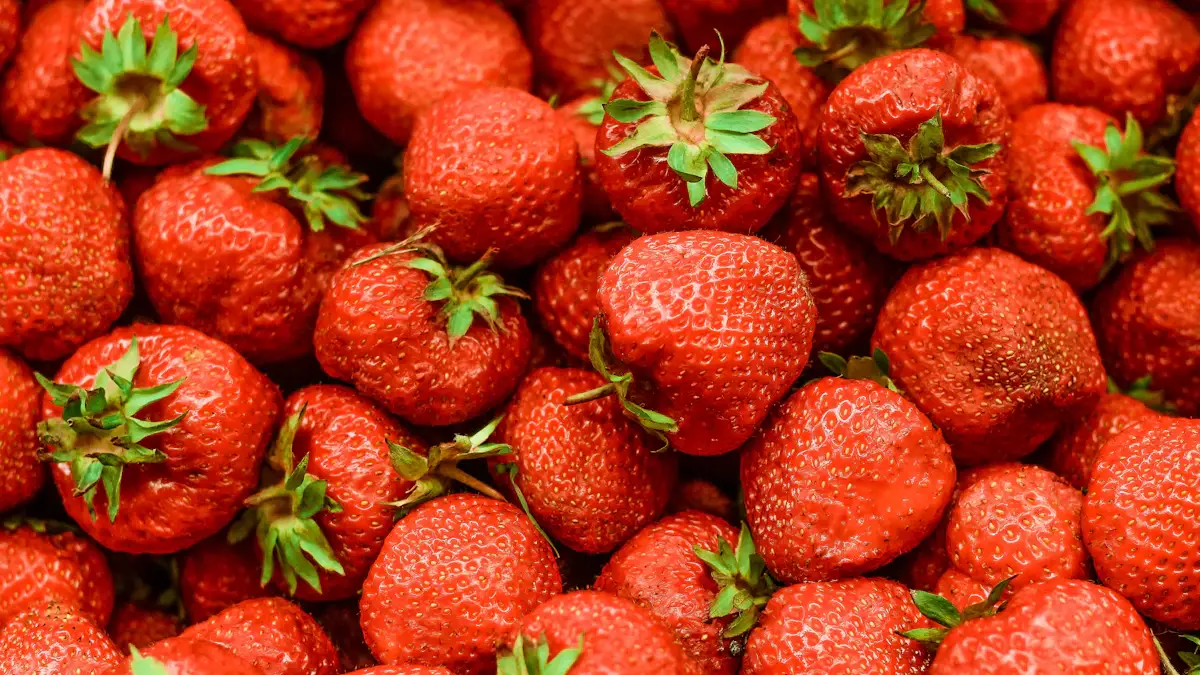

Chocolate covered strawberries are one of the simplest impressive desserts you can make at home: fresh berries dipped in melted chocolate, left to set, and served the same day. The method takes about half an hour, needs no special equipment beyond a bowl and a baking tray, and the result looks like something from a patisserie. The secret is not skill but preparation: dry berries, good chocolate, and a cool place to set.
This guide covers choosing the berries and the chocolate, melting the chocolate without seizing it, dipping cleanly, decorating simply, and storing the finished strawberries so they stay glossy and fresh. It also covers the food-safety basics, including refrigeration and how long the strawberries keep.
Key takeaways
- Choose large, ripe, unblemished strawberries with their green tops still attached.
- The berries must be completely dry before dipping, or the chocolate will not stick.
- Good-quality chocolate melts more smoothly and sets with a better shine.
- Melt chocolate gently, in short bursts, and never let water touch it.
- Dip by the stem, let the excess drip off, and set the berries on baking paper.
- Store finished strawberries in the fridge and eat them within two days.
Choosing the strawberries
The berries decide the result more than the chocolate does. Choose large, ripe strawberries with a deep red colour all the way to the stem, a sweet smell, and firm flesh that gives slightly when pressed. The green leafy tops should still be attached, because they give you something to hold while you dip, and they look far better on the finished strawberry than a bare stalk.
Size matters because a large berry is easier to dip and gives a better ratio of fruit to chocolate. Avoid berries that are soft, bruised, mouldy or wet, and avoid any with the tops already removed. Buy the berries on the day you plan to dip them if you can. Rinse them gently just before you start, and dry them thoroughly with a clean tea towel or kitchen paper, including the crevices under the leaves.
Choosing the chocolate
Almost any chocolate can be used, but the type changes the result. Dark chocolate, with around 60 to 70 per cent cocoa, is the classic choice: its slight bitterness balances the sweetness of the berry, it melts smoothly, and it sets with a firm snap. Milk chocolate is sweeter and softer, which suits children and anyone who prefers a gentler flavour, but it sets more softly. White chocolate is the sweetest of the three and is best used as a decoration — a drizzle over dark chocolate — rather than as the main coating.
Quality matters more than brand. A chocolate made for eating, with cocoa butter listed among the first ingredients, melts into a smooth, fluid coating. A cheap compound chocolate made with vegetable fat can taste waxy and sets with a dull finish. You do not need a professional couverture, but you do need a chocolate you would happily eat on its own.
How much chocolate do you need
A rough guide is about 200 grams of chocolate for a punnet of about 500 grams of strawberries, which is roughly twenty large berries. That leaves enough for a generous coating on each berry and a little extra for drizzling. If you plan to decorate with a second chocolate, allow about 50 grams more.

Melting the chocolate
The safest method at home is the microwave. Put the chopped chocolate in a dry, microwave-safe bowl and heat it in bursts of twenty seconds, stirring well between each burst. The chocolate will keep its shape even when it is mostly melted, so stir rather than trusting your eyes: the residual heat finishes the job. Stop while a few small pieces remain, and stir until they disappear. The whole process usually takes about a minute.
The other method is a bain-marie: a heatproof bowl set over a pan of barely simmering water, with the bottom of the bowl clear of the water. Stir the chocolate until it melts, then lift the bowl off the pan. Whichever method you use, the rule is the same: water is the enemy. Even a single drop of water in melted chocolate makes it seize into a stiff, grainy paste that cannot be rescued for dipping.
Dipping the strawberries
Line a baking tray with baking paper before you start, and have it within reach. Hold a strawberry by its green top, dip it into the chocolate, and roll it gently so the chocolate reaches just below the leaves. Lift it out, hold it over the bowl for a few seconds, and let the excess drip back. A gentle twirl helps the coating settle into an even layer, and scraping the bottom of the berry lightly against the rim of the bowl stops a pool of chocolate forming underneath.
Place each dipped berry on the baking paper with space around it, and leave it alone. The chocolate begins to set within a few minutes at room temperature, and the berries are usually firm enough to move within fifteen to twenty minutes. Do not put them in the fridge to speed the setting: rapid cooling can make the chocolate bloom, leaving white streaks or spots on the surface.
Decorating simply
Decoration should be kept simple, because the berries already look good. The easiest finish is a drizzle of a second chocolate: melt a small amount of white or milk chocolate, put it in a small piping bag or a sandwich bag with a corner snipped off, and draw thin lines back and forth across the set berries. A sprinkle of finely chopped nuts, desiccated coconut or freeze-dried raspberry pieces, added while the chocolate is still wet, gives texture and colour.
More elaborate decoration — gold leaf, crushed biscuits, coloured sprinkles — is a matter of taste, but restraint usually wins. Two colours and one texture are enough. If you are making the berries for a gift, pack them in a single layer in a box lined with baking paper, and do not stack them.
Storing and serving
Chocolate covered strawberries are best eaten on the day they are made, when the berry is firm and the chocolate has a clean snap. They can be kept in the fridge for up to two days, stored in a single layer in a covered container lined with kitchen paper, which absorbs the moisture the berries release. Bring them back to room temperature for about twenty minutes before serving, so the berry is not cold and the chocolate is not too hard.
Do not freeze chocolate covered strawberries. Freezing makes the berries soft and watery when they thaw, and the chocolate cracks and peels away. They are also best served the same day if the room is warm: chocolate softens above about twenty-four degrees, and a warm room can make the coating lose its shine.
| Chocolate | Flavour | Sets | Best use | Watch out for |
|---|---|---|---|---|
| Dark, 60 to 70 per cent | Rich, slightly bitter | Firm, glossy snap | Classic coating | Overheating makes it bitter |
| Milk | Sweet, creamy | Soft, less glossy | Children and sweet tooths | Softens quickly in warmth |
| White | Very sweet | Soft | Drizzle and decoration | Seizes easily, burns quickly |
| Compound | Sweet, waxy | Hard, dull | Budget decorating | Poor flavour and finish |
Common problems and how to fix them
The most common problem is chocolate that will not stick, and the cause is almost always moisture. A berry that is even slightly damp repels the coating, leaving bare patches. Dry the berries thoroughly, including under the leaves, and do not dip a berry straight from the fridge: condensation forms on cold fruit as soon as it meets warm air. Let refrigerated berries come to room temperature and dry them again before dipping.
The second problem is seized chocolate, caused by water or by overheating. If the chocolate has seized, it cannot be used for dipping, but it is not wasted: stir in a little warm cream and use it as a sauce, or use it in baking. The third problem is blooming, the white streaks that appear when chocolate is cooled too quickly or stored in a warm place.
When to make them
Chocolate covered strawberries suit almost any celebration: birthdays, anniversaries, Valentine’s Day, Mother’s Day, and summer parties. They also work as a simple dessert after a meal, served on their own or beside a glass of sparkling wine.
One caution: strawberries are one of the more common food allergens, and chocolate contains milk in most milk and white varieties. If you are making the berries for other people, ask about allergies first, and keep the finished berries away from nuts if anyone in the group has a nut allergy.
Your chocolate covered strawberries checklist
- Buy large, ripe, unblemished strawberries with their green tops attached.
- Rinse the berries gently and dry them completely, including under the leaves.
- Choose a good eating chocolate, and chop it finely before melting.
- Line a baking tray with baking paper before you start dipping.
- Melt the chocolate gently, in short bursts, stirring between each one.
- Keep water away from the chocolate at every stage.
- Dip by the stem, let the excess drip off, and set each berry on baking paper.
- Let the berries set at cool room temperature, not in the fridge.
- Decorate simply: a drizzle and one sprinkle are enough.
- Store in the fridge in a single layer and eat within two days.
Frequently asked questions
How long do chocolate covered strawberries last?
They are best eaten on the day they are made, and they keep in the fridge for up to two days. Store them in a single layer in a covered container lined with kitchen paper, and bring them to room temperature for about twenty minutes before serving.
Can I freeze chocolate covered strawberries?
No. Freezing makes the berries soft and watery when they thaw, and the chocolate cracks and peels away. Make them fresh, and eat them within two days.
Why is my chocolate not sticking to the strawberries?
Usually because the berries are wet or cold. Dry them completely, including under the leaves, and let refrigerated berries come to room temperature and dry them again before dipping.
What is the best chocolate for chocolate covered strawberries?
Dark chocolate with around 60 to 70 per cent cocoa is the classic choice: it balances the sweetness of the berry and sets with a firm, glossy snap. Milk chocolate is sweeter and softer; white chocolate is best as a drizzle.
Can I make chocolate covered strawberries the day before?
Yes, if you store them properly in the fridge in a single layer. They will not be quite as firm or glossy as on the day they are made, so the same day is better when you can manage it.
Why has my chocolate gone white and streaky?
That is blooming, caused by cooling the chocolate too quickly or storing it somewhere warm. Bloomed chocolate is safe to eat and tastes the same, but it looks dull. Keep the finished berries cool and dry rather than cold.
The bottom line
Chocolate covered strawberries are a simple pleasure done well: good berries, good chocolate, dry hands and a little patience. Choose large, ripe strawberries, melt the chocolate gently and keep water away from it, dip by the stem, and let the berries set at room temperature. Eat them the same day if you can, and within two days at most. If you are planning a celebration spread, our guide to the best single-serve coffee maker covers a quick brew for guests, our guide to the best dog breeds for families covers a companion for the party, and our guide to the best breakfast food covers the morning after.
Safety note: store finished strawberries in the fridge and eat them within two days. Check for allergies before serving to others, especially strawberry and nut allergies, and keep the berries away from nuts if anyone in the group is allergic.