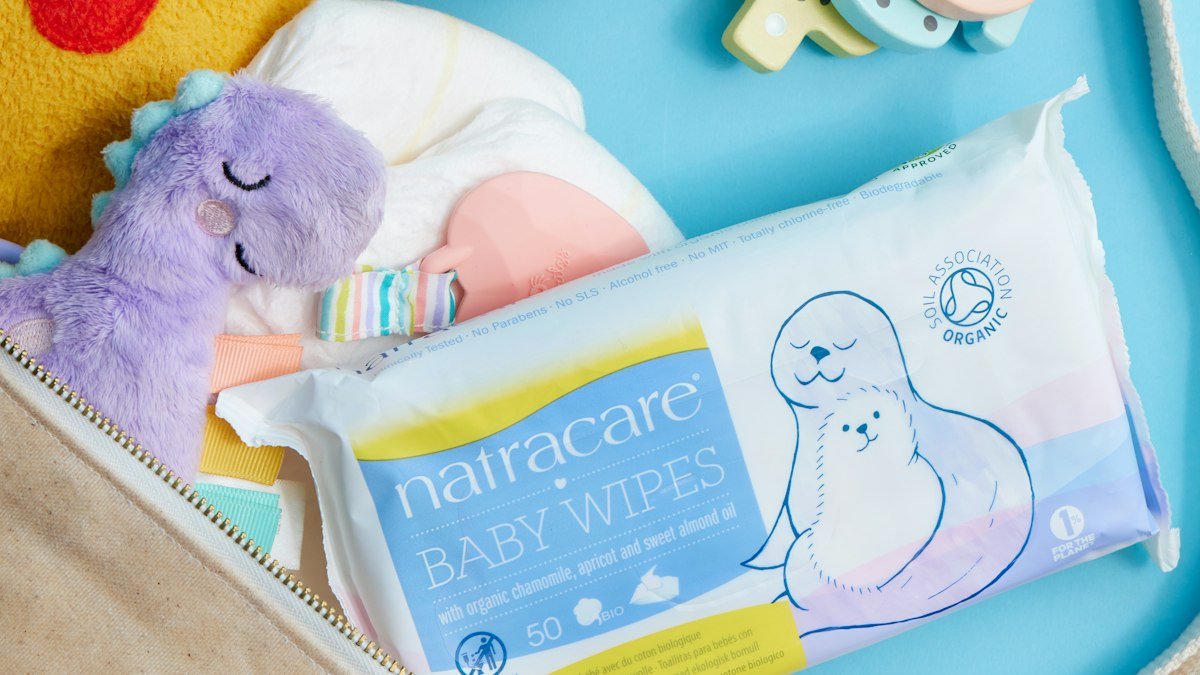

The best baby wipes are mostly water, fragrance-free and gentle enough for daily use on newborn skin, and the best baby wipes in 2027 are the ones that clean well without leaving a baby’s bottom red or sore. What are the best baby wipes? They are plain, water-based wipes with a short ingredient list, strong enough to clean a messy nappy in one or two passes, and kind enough to use ten times a day.
A baby goes through thousands of nappy changes in the first year, so the wipe you choose is the product that touches your baby’s skin more than any other. That is why the ingredient list matters more than the packet design: fewer ingredients, no fragrance and no alcohol are the marks of a wipe made for sensitive skin.
Key takeaways
- The best baby wipes are water-based and fragrance-free, with a short ingredient list you can read.
- For newborns, plain water and cotton wool are the gentlest option in the first weeks, with wipes for outings.
- Choose a wipe that is strong when wet, so one or two wipes do the job of four.
- Change nappies often, pat skin dry, and leave nappy-free time to help prevent rash.
- Store wipes upside down with the lid shut, and keep the packet out of reach once your baby can grab.
Water-based wipes: the simplest starting point
A water-based wipe is mostly purified water with a tiny amount of gentle cleanser, and it is the closest thing to washing with water and cotton wool that comes in a packet. Most are labelled 99 per cent water, which sounds like a marketing line but is a useful guide: the fewer added ingredients, the less there is to irritate a baby’s skin.
These wipes suit newborns best, and they are the natural choice for the first months, when skin is at its thinnest and most reactive. The trade-off is cleaning power on a heavy nappy: a water-based wipe may need two passes where a textured wipe manages one, so keep a second packet in the changing bag rather than a stronger wipe.
Best for: newborns and the first months — a water-based wipe with a short ingredient list and no fragrance.
Fragrance-free sensitive wipes: for skin that reacts
If your baby’s skin reddens easily, a wipe made for sensitive skin is the next step up from a water-based wipe. These are tested for sensitive skin, free of fragrance and alcohol, and often carry a dermatology or allergy-friendly label, which means they have been checked against common irritants.
Read the label rather than the front of the packet. A wipe can call itself gentle or natural and still contain fragrance or a preservative that bothers some babies, so look for the words fragrance-free rather than unscented, and check the ingredient list for perfume, alcohol and methylisothiazolinone, a preservative linked to skin reactions in sensitive babies.
Best for: babies with red or reactive skin — a fragrance-free sensitive wipe, tested for sensitive skin.
Textured wipes: for the messiest changes
A textured wipe has a lightly raised or quilted surface that grips mess instead of sliding over it, and it is the wipe for the changes that a plain wipe struggles with. One textured wipe can do the work of three flat ones, which matters at three in the morning when you are changing a nappy with one hand and holding a wriggling baby with the other.
The texture is usually made from the same plant-based fibres as a flat wipe, so it is no harsher on skin, but check that the wipe stays strong when wet and does not tear or shed fibres. A wipe that falls apart leaves bits on the skin that need a second wipe to remove, which defeats the point.
Best for: heavy nappy changes and weaning mess — a textured wipe that cleans in one pass and stays strong when wet.
Biodegradable and plastic-free wipes: the greener choice
Most wipes are made from plant fibres, but some contain plastic, which is why they do not break down in landfill and should never be flushed, even when the packet says flushable. A biodegradable wipe uses plant-based fibres that break down in compost or landfill, and a plastic-free wipe contains no synthetic fibres at all.
The honest trade-off is strength and cost. Plant-fibre wipes can tear more easily than plastic-blend wipes, and they usually cost more per packet, so some families use them at home and keep a cheaper packet in the car. Whatever you choose, bin every wipe after use: flushing wipes blocks drains and sewers, and no wipe is truly flushable in practice.
Best for: families cutting plastic waste — a biodegradable, plastic-free wipe, binned after every use, never flushed.
Pocket packs and travel wipes: the changing-bag essential
A pocket pack holds twenty or so wipes in a slim resealable packet that fits in a coat pocket, a car door or a small changing bag, and it is the wipe for days out. It weighs almost nothing, it does not dry out if the seal is shut, and it saves you carrying a full-size pack for a short trip.
The small pack is not a replacement for the big one at home, because the cost per wipe is higher and the packet runs out fast on a messy day. Keep one in the car, one in the pushchair basket and one in your coat, and refill them from the large pack at home so you are never caught short.
Best for: days out and the changing bag — a slim pocket pack that fits a coat pocket and stays sealed.
Nappy rash: prevention and care
Nappy rash is common, and it is usually caused by wetness sitting against the skin rather than by any one wipe. The best prevention is frequent changes: check the nappy often, change it as soon as it is wet or soiled, and clean gently from front to back with a wipe or with water and cotton wool. Pat the skin dry rather than rubbing, and give your baby nappy-free time on a towel each day so air can reach the skin.
If a rash appears, a thin layer of barrier cream at each change usually helps, and plain water and cotton wool are gentler than wipes until the skin settles. See your GP or health visitor if the rash does not improve in a few days, if the skin is broken or bleeding, if there are blisters or spots that spread, or if your baby has a temperature. Do not use wipes with fragrance or alcohol on broken skin, and do not use talcum powder.
Hand hygiene matters too. Wash your hands before and after every change, and keep the changing mat clean. A wipe is not a substitute for handwashing, and a clean changing routine protects both you and your baby from the germs that cause tummy upsets.

| Family need | Best type | Watch out for | Best for |
|---|---|---|---|
| Newborn, first weeks | Water-based wipe | Added fragrance or alcohol | Thin, reactive skin |
| Red or reactive skin | Fragrance-free sensitive wipe | Hidden perfume in unscented wipes | Sensitive and eczema-prone skin |
| Messy nappy changes | Textured wipe | Wipes that tear when wet | Cleaning in one pass |
| Cutting plastic waste | Biodegradable wipe | Higher cost, weaker fibres | Greener changing routine |
| Days out and travel | Pocket pack | Higher cost per wipe | Coat pocket and car |
| Weaning mess and sticky hands | Large textured wipe | Fragrance on broken skin | Mealtimes and outings |
How to choose: a quick checklist
- Choose a water-based, fragrance-free wipe with a short ingredient list for daily use.
- Use plain water and cotton wool for newborns in the first weeks, and wipes when you are out.
- Check the wipe stays strong when wet, and does not tear or shed fibres on the skin.
- Change nappies often, clean front to back, pat dry, and give nappy-free time each day.
- Store wipes upside down with the lid shut so the top wipe stays damp, and seal pocket packs after use.
- Bin every wipe after use, and never flush wipes, even if the packet says flushable.
- See your GP or health visitor if a rash does not improve in a few days or the skin is broken.
When the changing bag is packed and you are heading out, the guide to the best baby toys covers a toy to keep a baby happy in the pushchair, and the roundup of the best 1-year-old gifts covers presents for a baby moving into the toddler years. The guide to the best soups for winter covers warming food for the adults once the weaning mess is cleared away.
Frequently asked questions
What are the best baby wipes in 2027?
The best baby wipes in 2027 are water-based and fragrance-free, with a short ingredient list, strong enough to clean a messy nappy in one or two passes. For newborns, plain water and cotton wool are the gentlest option in the first weeks, with wipes for outings. For reactive skin, choose a wipe tested for sensitive skin.
Are baby wipes safe for newborns?
Baby wipes are safe for most newborns, but plain water and cotton wool are gentler in the first few weeks, when skin is at its thinnest. If you use wipes on a newborn, choose a water-based, fragrance-free wipe, and switch to water and cotton wool if the skin reddens. Avoid wipes with fragrance or alcohol on a newborn.
Can I flush baby wipes?
No, you should never flush baby wipes, even when the packet says flushable. Wipes do not break down in water the way toilet paper does, and they block drains and sewers. Bin every wipe after use, and choose a biodegradable wipe if you want a greener option that breaks down in landfill.
How do I stop nappy rash?
Change nappies often, clean gently from front to back, pat the skin dry rather than rubbing, and give your baby nappy-free time on a towel each day. A thin layer of barrier cream at each change helps protect the skin. If a rash does not improve in a few days, or the skin is broken, see your GP or health visitor.
What ingredients should I avoid in baby wipes?
Avoid fragrance, perfume and alcohol in baby wipes, and be wary of preservatives such as methylisothiazolinone, which can irritate sensitive skin. Look for the words fragrance-free rather than unscented, and read the ingredient list: the shorter it is, the less there is to react to. When in doubt, choose a water-based wipe.
How should I store baby wipes?
Store wipes upside down with the lid shut, so the top wipe stays damp and the packet does not dry out. Keep the packet in a cool place out of direct sun, seal pocket packs after every use, and keep wipes out of reach once your baby can grab the packet. Throw away a packet that has dried out rather than adding water to it.
The bottom line
The best baby wipes in 2027 are water-based, fragrance-free and strong when wet, chosen from a short ingredient list and used with frequent changes and nappy-free time. Start with plain water and cotton wool for a newborn, move to wipes for outings, and step up to a sensitive or textured wipe when your baby’s skin or the mess demands it.
A quick safety note: never flush wipes, never use fragranced wipes on broken skin, and keep wipe packets out of reach once your baby can grab. If a rash does not improve in a few days, if the skin is broken or bleeding, or if your baby has a temperature, seek medical advice promptly.