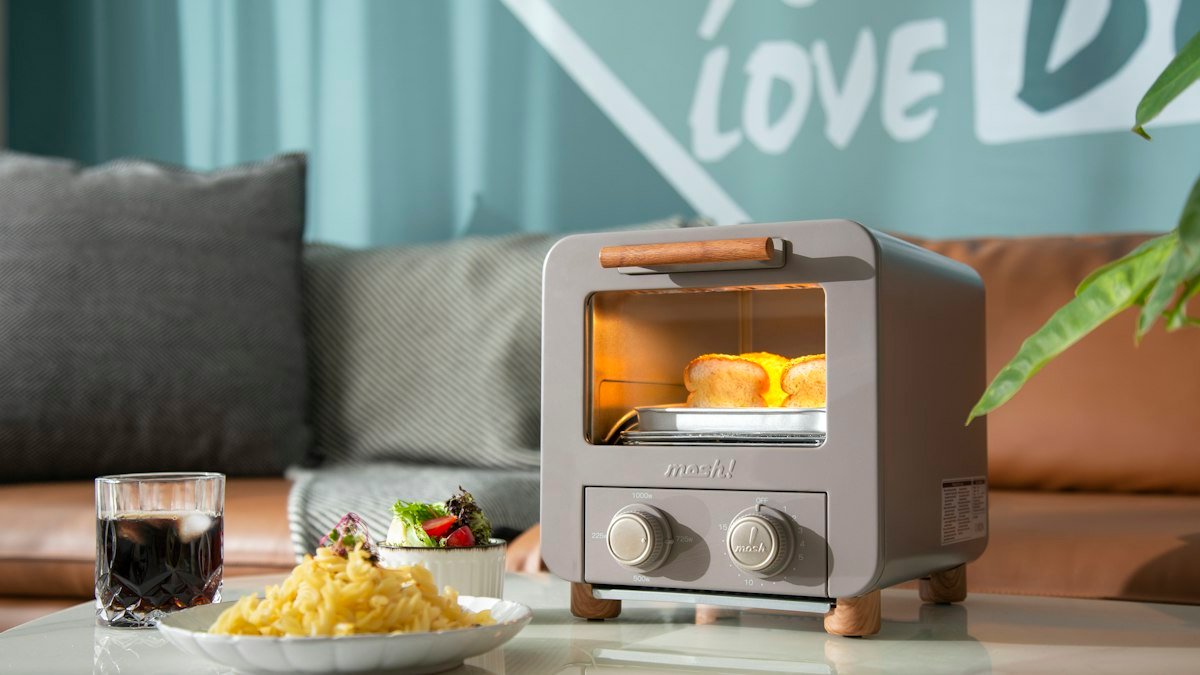
The best toaster oven in 2027 is a compact countertop oven that toasts, bakes and reheats evenly without heating the whole kitchen. For most homes, that means a well-built model from a known brand such as Sage, Ninja or Breville, big enough for four slices of toast or a small baking tray, with clear temperature and timer controls.
A toaster oven sits between a pop-up toaster and a full oven. It does everything a toaster does, and then a good deal more: it bakes small batches, roasts vegetables, reheats leftovers without making them soggy, and warms pastries properly. This guide explains the sizes, the settings, and the models worth your counter space.
Key takeaways
- The best toaster oven for most homes is a compact model that fits four slices of toast or a small tray.
- Convection fans and clear temperature controls matter more than preset buttons.
- Measure your counter and your baking tray before you buy — size is the most common regret.
- A removable crumb tray and a non-stick interior make cleaning far easier.
- Pick the oven for the jobs you do weekly, not for the ones you imagine doing once a year.
How to choose a toaster oven
Start with size, and be honest about it. A small toaster oven takes four slices of toast or a single small tray, and it fits under most kitchen cupboards. A large one takes a whole pizza or a chicken, but it needs a wide stretch of counter and headroom above it. Measure the space, including the height, before you fall for a big model.
Then think about what you will cook. If you mainly want toast and reheated pastries, a simple model with toast, bake and grill settings is enough. If you want to roast vegetables, bake small batches of biscuits or cook a frozen pizza, look for a model with a convection fan and a temperature range that reaches high enough for baking.
Controls matter more than they look. A clear temperature dial and a timer you can read at a glance beat a row of tiny preset buttons. Digital controls look smart, but a simple dial is easier to use with wet hands and does not need a manual to understand.
Best for: small households and flat kitchens — a compact oven that toasts, bakes and reheats without taking over the counter.
Toaster oven or pop-up toaster?
A pop-up toaster does one thing, and it does it fast. It browns bread in a couple of minutes, takes up little space, and costs less. If toast is all you want, a pop-up toaster is the better buy, and it will brown more evenly than most toaster ovens.
A toaster oven is slower at toast but far more useful overall. It bakes, roasts, grills and reheats, and it handles food a pop-up toaster cannot touch: open sandwiches, cheese on toast, small pizzas, baked potatoes and reheated leftovers. For a small household, it can stand in for a full oven on most days.
Many kitchens end up with both, and that is a sensible answer. The pop-up toaster handles the morning rush, while the toaster oven takes on lunch and dinner jobs. If you only have room for one, choose by the food you cook most, not by the appliance you like the look of.
Best for: toast alone — a pop-up toaster; toast plus baking, roasting and reheating — a toaster oven.
What the settings really do
Toast mode runs the top and bottom elements together to brown both sides of the bread. Bake mode uses the bottom element more, with gentler top heat, which suits cakes, biscuits and small trays of food. Grill mode runs the top element alone, which is right for cheese on toast, browning a dish, or finishing a meal.
A convection fan moves hot air around the cavity, and it makes a real difference. Food cooks more evenly, bakes brown better, and cooking times drop a little. Not every toaster oven has a fan, and the ones that do tend to cost more, but the fan is the single feature most worth paying for.
Temperature control is the other feature that matters. A toaster oven that holds a steady temperature bakes properly; one that swings hot and cold will burn the edges and leave the middle raw. Look for a model with a clear temperature scale and a timer that rings when it finishes.
Best for: everyday cooking — a model with toast, bake and grill modes, a convection fan and a readable temperature dial.
| Oven type | Best for | Strength | Watch out for |
|---|---|---|---|
| Compact countertop | Toast and reheating | Small and quick to heat | Too small for a pizza |
| Mid-size convection | Most households | Bakes and roasts evenly | Needs counter space |
| Large family | Pizzas and whole meals | Fits a full tray | Heavy and wide |
| Air-fryer combo | Crisp food, less oil | Two machines in one | Costs more, more to learn |
| Simple dial model | Straightforward use | Easy controls, fair price | No fan on most models |
Sage and Breville
Sage, sold as Breville outside Britain, makes some of the most capable toaster ovens available. Its Smart Oven range is the best-known example: a well-built countertop oven with a convection fan, a clear digital display, and a set of presets that actually work, from toast and bake to roast and reheat.
What sets Sage apart is the attention to even heat. The ovens use heating elements above and below, with a fan to move the air, and the result is food that browns evenly rather than scorching at the edges. The interiors are non-stick and wipe clean, and the crumb tray slides out from the front.
Sage ovens cost more than basic models, and they are bigger too, so measure before you buy. For a household that will use a toaster oven daily, the extra money buys even cooking and a machine that lasts.
Best for: daily use and serious small-batch baking — even heat and a fan that earns its keep.
Ninja
Ninja has become a familiar name in British kitchens, and its countertop ovens are built around one idea: doing more with less space. Many Ninja models combine a toaster oven with an air fryer, so the same machine toasts, bakes, roasts and crisps food with hot air.
The air-fryer function is the draw. It crisps chips, chicken and vegetables with far less oil than frying, and it does it faster than a full oven. The toaster oven side handles toast, baking and reheating, so the machine covers most of what a small household cooks.
Ninja ovens are tall rather than wide, which helps on a crowded counter, but they still need headroom above them. The controls are digital and take a little learning, though the presets cover the common jobs well.
Best for: crisp food and small kitchens — an oven and an air fryer in one tall, compact box.

Dualit and the simple classics
Dualit makes toaster ovens in the same spirit as its toasters: solidly built, simple to use, and made to last. A Dualit toaster oven has a manual dial, a timer, and a sturdy metal body, with no screen and no presets to learn. It toasts, bakes and grills, and it does so without fuss.
The appeal is durability and repair. Like the brand’s toasters, Dualit ovens are built with replaceable parts, which is rare among countertop appliances. If you want a machine you can keep for years rather than replace, that matters.
Simple ovens have limits. They rarely have a convection fan, and their temperature control is less precise than a digital model. For toast, reheating and simple baking, that is fine. For careful baking, a fan model does better.
Best for: straightforward cooking and long life — a simple oven built to be kept, not replaced.
What a toaster oven cooks best
Toast is the obvious job, and a toaster oven does it well enough, though slower than a pop-up toaster. Cheese on toast, open sandwiches and bruschetta are where it pulls ahead: the grill browns the top while the bread stays crisp underneath.
Small-batch baking is the next job. Biscuits, scones, muffins and small cakes all bake well in a toaster oven, and the small cavity heats up in minutes rather than the quarter of an hour a full oven needs. Frozen pizza, reheated leftovers and roast vegetables are all straightforward too.
What it does less well is large or delicate work. A whole chicken or a large roast needs a full oven, and delicate cakes can suffer from uneven heat in a small cavity. Use the toaster oven for small jobs, and the big oven for the rest.
Best for: small households — toast, cheese on toast, small bakes, reheated meals and frozen pizza.
How to buy well: a checklist
A toaster oven is a bigger purchase than a toaster, and it takes up real counter space, so choose with care. Measure twice, and think about the meals you actually cook.
- Measure the space: width, depth and height above the oven, with room for hot air to escape.
- Check the tray size: it should fit four slices of toast or the tray you already own.
- Look for a convection fan: it evens out the heat and improves baking.
- Check the crumb tray: it should slide out easily for cleaning.
- Read the temperature range: it should go low enough for warming and high enough for baking.
- Look for a non-stick interior: it wipes clean in seconds after a spill.
For the toast side of the morning, the guide to the best toaster covers pop-up models in full. For coffee to go with it, the roundup of the best Keurig coffee maker is a useful next read, and the list of the best pizza deals suits a Friday night in.
Frequently asked questions
What is the best toaster oven in 2027?
For most homes, a mid-size convection model from Sage, Ninja or Breville. Choose the size for your counter and your tray first, then pick the brand that fits your budget.
Is a toaster oven better than a pop-up toaster?
For toast alone, no: a pop-up toaster is faster and browns more evenly. For baking, roasting, grilling and reheating as well as toast, a toaster oven is far more useful.
Can a toaster oven replace a full oven?
For a small household, often yes. It handles toast, small bakes, roast vegetables, frozen pizza and reheated meals. Large roasts and big batches still need a full oven.
What size toaster oven should I buy?
Buy the smallest oven that fits your tray and your usual meals. A compact model suits one or two people, while a mid-size convection oven suits a family.
Do I need a convection fan?
It helps a lot with baking and roasting, because it moves hot air around the food and evens out the heat. If you mainly reheat and make toast, you can do without one.
How do I clean a toaster oven?
Unplug it and let it cool, then slide out the crumb tray and empty it. Wipe the interior with a damp cloth, and clean the tray and rack in warm soapy water. Never spray cleaner directly onto the heating elements.
The bottom line
The best toaster oven for 2027 is the one that fits your counter, your tray and your cooking. Sage leads for even heat and serious baking, Ninja for air frying and compact design, and Dualit for simple, durable machines. Measure the space, look for a fan and a readable dial, and buy the smallest oven that does the jobs you actually do. The rest is just toast.
Take care with hot surfaces: a toaster oven body, door and tray stay hot after use, so use oven gloves and let it cool before cleaning.