
Wedding venues near me is usually the first search a couple makes after getting engaged, because the venue shapes almost every other decision, from the guest list to the food. The short answer is to fix your guest count and budget first, then shortlist three or four venues of different types, visit them in person and compare what is actually included before you sign anything.
The venue is also the biggest single cost for most weddings, so choosing well matters more than choosing quickly. This guide covers the main types of venue, how to judge them, what drives the cost, which questions to ask and when to book, so you can find a place that fits your day rather than forcing your day to fit the place.
Key takeaways
- Fix your guest count and total budget before you visit any venue, since both decide which places are realistic.
- Visit three or four venues of different types, and visit at least one at the same time of day as your wedding.
- Compare what is included, not just the headline price: catering, drinks, chairs, lighting and clean-up vary widely.
- Check capacity, wet-weather cover, parking, noise limits, curfews and accessibility before you fall in love with a room.
- Book popular venues twelve to eighteen months ahead, and always read the contract before paying a deposit.
- A smaller guest list or an off-peak date is the simplest way to afford a venue you love.
Types of wedding venue
Venues come in many shapes, and each suits a different kind of celebration. Start by thinking about the atmosphere you want and the number of guests you must seat, then match the type to the day rather than the other way round.
Hotels and banquet halls
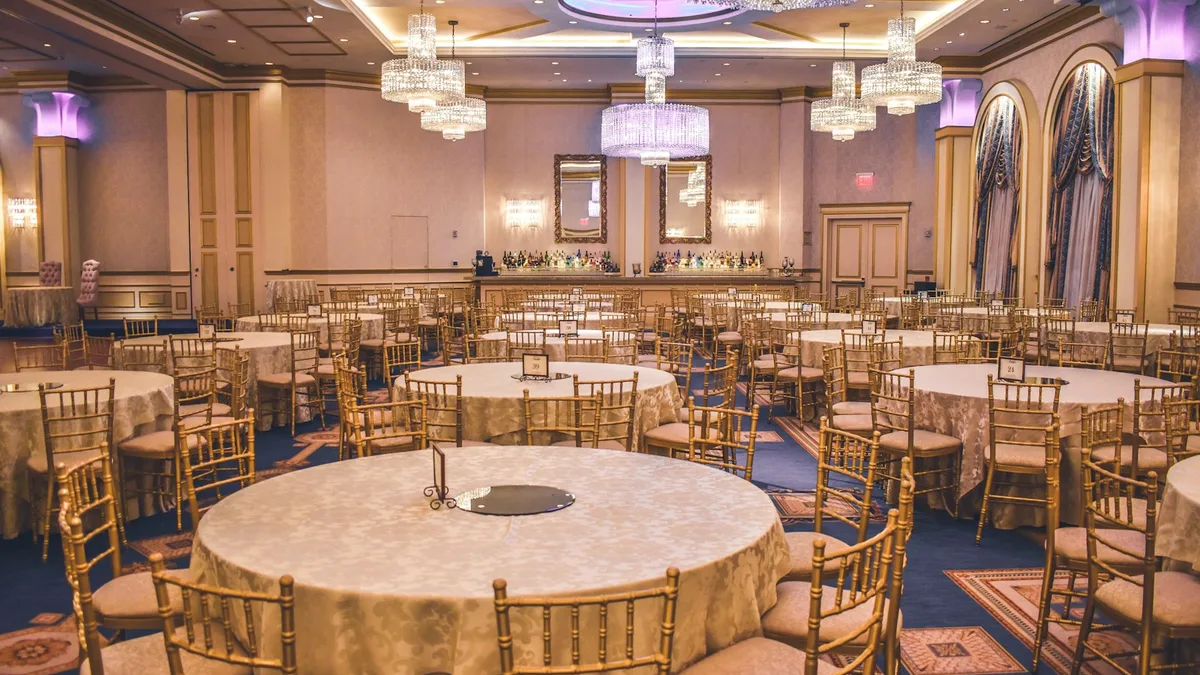
Hotels and banquet halls are the most straightforward option. They offer a large room, in-house catering, staff who run weddings every week, and bedrooms for guests who want to stay over. The trade-off is character: the room may look similar to every other wedding held there, and decoration rules can be strict. They suit large weddings where convenience matters most.
Barns, farms and country houses
Barns and country houses offer rustic charm, open space and room for an outdoor ceremony, and they photograph beautifully. Many are blank canvases, which means you can style them freely, but you may need to hire in catering, furniture, lighting and toilets. Check the wet-weather plan and the access road, since country lanes and evening rain are a real combination.
Gardens, beaches and outdoor venues
Outdoor venues promise the most memorable setting and the most risk. A garden, beach or vineyard ceremony can be wonderful in good weather, but you need a covered alternative, a plan for wind and heat, and permission for music and marquees. Ask who provides the cover, how quickly it can go up, and what happens to the price if the weather turns.
Restaurants, pubs and small venues
Smaller venues suit intimate weddings of twenty to sixty guests. A good restaurant offers excellent food without a separate caterer, and a private dining room can feel warm and personal. The limits are capacity and dancing space, so check whether the room can hold your whole party for the meal and the evening, and whether there is a separate bar area.
Churches, halls and community venues
Churches, village halls and community centres are the most affordable option and often the most flexible. A church ceremony followed by a reception in a nearby hall is a classic combination, and a hall can be dressed up surprisingly well. You will usually need to organise catering, decoration and clean-up yourself, so weigh the saving against the work involved.

How to choose the right venue
Choosing well means looking past the first impression. A beautiful room can hide a tight capacity, a strict curfew or a long list of extras, so work through the practical questions before you let your heart decide.
Capacity and layout
Ask for the capacity for a seated meal, not just the standing capacity, and check it against your guest list with room to spare. Look at the shape of the room: long narrow rooms make conversation difficult, and a dance floor tucked in a corner can split the party in two. Ask where the bar, the top table and the cake will go, and whether there is a separate space for drinks on arrival.
Location and access
Think about how guests will get there. Is there enough parking, is the venue reachable by public transport or taxi, and is there somewhere nearby for guests to stay? Check step-free access for older guests and anyone with limited mobility, and look at the route from the ceremony space to the reception room, especially if the weather turns wet.
Light, sound and curfews
Visit at the same time of day as your wedding to see the light. A room that looks bright at noon can feel dark by five, and evening light changes the photographs completely. Ask about noise limits, music curfews and the latest finishing time, since these vary widely and can cut a party short. Also ask whether other weddings or events run on the same day.
What wedding venues cost
Venue costs are hard to pin down because they vary by region, season, day of the week and what is included. The headline figure may be a room hire fee alone, or a package that includes catering, drinks, furniture, staffing and clean-up. Always ask for an itemised quote so you can compare like with like.
The biggest cost drivers are the guest count, the season and the day. Saturdays in late spring and summer are the most expensive dates, while Fridays, Sundays and winter months often cost far less. Catering is usually charged per head, so a guest list cut by twenty people can save more than any negotiation. Ask what is included and what counts as an extra, from chair covers to cake cutting, and check whether the bar is charged per head or on consumption.
Venue types compared
Each type of venue trades convenience against character and cost. This comparison should help you narrow the shortlist.
| Venue type | Best for | Usually included | Watch out for |
|---|---|---|---|
| Hotel or banquet hall | Large weddings, convenience | Catering, staff, bedrooms | Generic look, strict rules |
| Barn or country house | Rustic style, outdoor space | The space itself | Hire-in costs, weather |
| Garden or beach | Scenic ceremonies | The setting | Cover, wind, permits |
| Restaurant or pub | Small, food-led weddings | Food, drink, service | Capacity, dance space |
| Church or village hall | Low cost, flexibility | The room | Self-organised catering |
Questions to ask before you book
Take a written list to every viewing, because venues blur together after the third visit. Ask how many guests the room seats for a meal, what the wet-weather plan is, and whether the venue is exclusive to you on the day. Ask about the bar: is it included, is there a minimum spend, and can you bring your own wine for a corkage fee?
Ask about suppliers too. Some venues insist on their own caterers and photographers, while others let you bring anyone. Check the deposit, the payment schedule and the cancellation terms, and ask what happens if you need to change the date. Get every promise in writing, since a spoken assurance is worth very little if the manager changes before your wedding.
Booking timeline
Popular venues book up fast, so start early. Twelve to eighteen months ahead is normal for a Saturday in peak season, and the most sought-after places can be booked two years out. If you are flexible on the date, you can often book six to nine months ahead, and last-minute dates sometimes come with a discount.
Once you have chosen, pay the deposit, confirm the date in writing and ask for a copy of the contract to read at home. Then tell your other suppliers, so they can hold the same date. Keep a folder with every email, quote and receipt, and revisit the venue a month before the wedding to walk through the day with the coordinator.
Your wedding venue checklist
- Fix your guest count and total budget before visiting any venue.
- Shortlist three or four venues of different types and visit them all in person.
- Visit at least one venue at the same time of day as your wedding.
- Check seated capacity, layout, bar position and dance floor space.
- Confirm the wet-weather plan, parking, access and nearby accommodation.
- Ask about noise limits, music curfews and the latest finishing time.
- Get an itemised quote showing exactly what is included and what is extra.
- Ask about supplier rules, bar terms, deposits and cancellation conditions.
- Read the contract at home before paying a deposit, and keep every promise in writing.
- Revisit the venue a month before the wedding to walk through the day.
Frequently asked questions
How far in advance should I book a wedding venue?
Twelve to eighteen months ahead is normal for a popular venue on a Saturday in peak season. If you are flexible about the day or the season, six to nine months is often enough, and some venues offer discounts for dates booked at short notice.
How much does a wedding venue cost?
Costs vary widely by region, season, guest count and what is included, so there is no single figure that means much. Always ask for an itemised quote and compare venues on the total cost, including catering, drinks, furniture and clean-up, rather than the headline room hire fee.
What is included in a wedding venue package?
It depends on the venue. Hotels often include catering, staff, furniture and bedrooms, while barns and halls may include only the space. Ask for a written list of what is covered, what counts as an extra and what you must hire in yourself.
Can I bring my own caterer or alcohol?
Some venues insist on their own caterers and bar, while others allow outside suppliers or your own wine for a corkage fee. Check this before you book, since it affects both the cost and the food, and get the answer in writing.
What happens if it rains on an outdoor wedding?
Every outdoor venue should have a covered alternative, such as a marquee, a barn or an indoor room. Ask how quickly the cover can be set up, whether it costs extra, and who decides when to use it, so a shower does not become a crisis on the day.
Do I need wedding insurance for the venue?
Many venues require it, and it is worth having in any case. Wedding insurance can cover cancellation, supplier failure, damage and lost deposits, depending on the policy. Read the terms carefully and check what the venue itself requires before you buy.
The bottom line
Wedding venues near me is a search best answered slowly: fix your guest count and budget, visit a few different types of venue in person, and compare itemised quotes before you sign. The right venue is the one that fits your guests, your day and your budget without forcing compromises you will regret. For the celebrations around the day, our guide to the best tea brands covers a calming brew for the morning of the wedding, our guide to the best breakfast food has ideas for a relaxed brunch the next day, and our guide to the best dog breeds for families is worth a look if a four-legged guest is joining the household too.