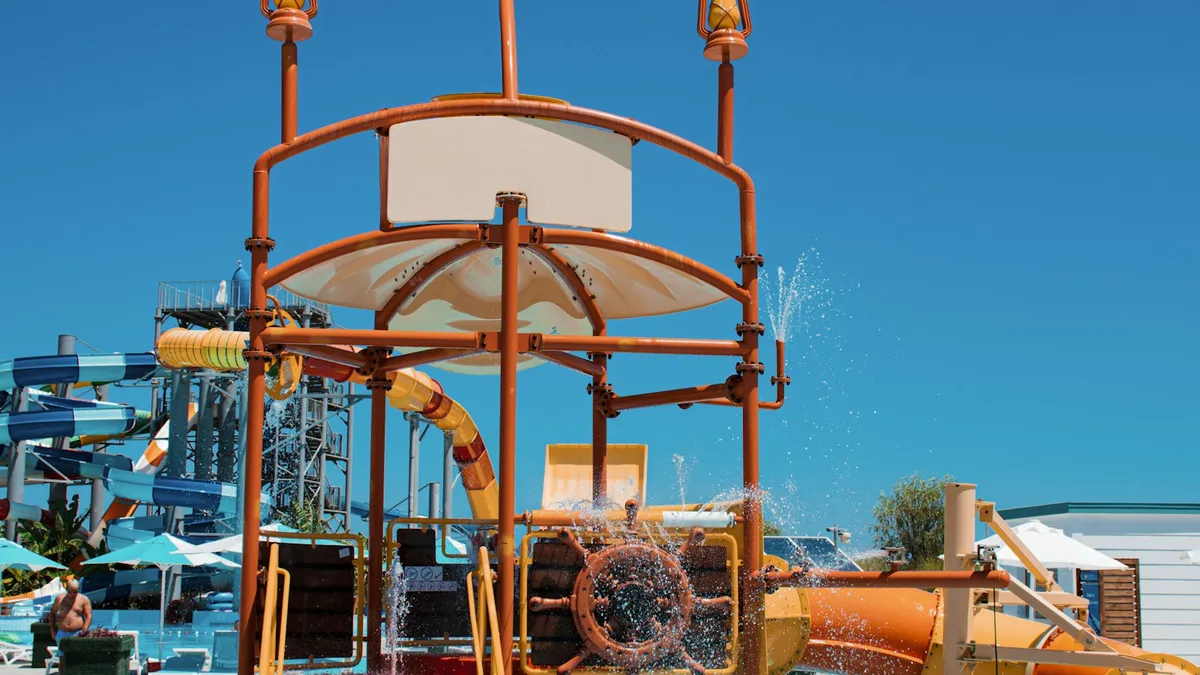

A splash pad near me is one of the most searched phrases of every hot spell, and for good reason: splash pads are the simplest way to cool children down without the cost or the worry of a swimming pool. A splash pad is a flat play area with jets, fountains and tipping buckets that spray water from the ground and from above, with no standing water to swim in. Children run through it, get soaked, and dry off in the sun, while parents watch from the edge with a towel and a drink.
This guide explains what splash pads offer, how to find one near you, what to pack, and how to keep the day safe and easy. It covers public parks, leisure centres and seasonal pop-ups, and the practical details that make the difference between a happy morning and a soggy, sunburnt one.
Key takeaways
- A splash pad is a zero-depth water play area: jets and fountains, no pool to swim in.
- Most are in public parks and are free, though some sit inside paid leisure centres.
- Check opening hours and seasonal dates before you travel, as many run only in summer.
- Pack swimwear, water shoes, towels, sun cream and plenty of drinking water.
- Supervise children at all times, even in shallow water.
- Arrive early on hot days, when the best spots and the shade fill up fast.
What a splash pad actually is
A splash pad, sometimes called a spray park or water play area, is a paved surface fitted with water features that spray, jet and pour. The water drains away through the ground, so there is no pool and no depth, which is why splash pads suit toddlers and younger children so well. Features usually include ground jets that shoot up in patterns, overhead buckets that tip and pour, spray arches to run through, and buttons or sensors that children can press to start the water themselves.
The design varies a lot from place to place. Small neighbourhood pads may have a handful of jets on a simple paved circle, while larger park installations can cover a whole playground with themed structures, slides and climbing frames alongside the water. Some are attached to playgrounds, some sit beside a cafe or picnic area, and some are part of a leisure centre with changing rooms and lockers. The common thread is that the water is shallow, the play is unstructured, and children set their own pace.
How to find a splash pad near you
The quickest way to find a splash pad is to search your local council or parks department website, which usually lists play areas, parks and water features by name and location. Council pages also tend to carry the practical details that matter: opening dates, hours, whether the pad is free, and whether there are toilets, parking and a cafe nearby. If your council does not list splash pads separately, search for “water play” or “spray park” on the same site, since the same feature is often described under different names.
Maps and search engines are the next best tool. Searching for “splash pad” with your town or postcode will usually surface the nearest options, along with photos, reviews and directions, and map apps often show splash pads as points of interest inside parks. Reviews are worth reading, not for star ratings but for the details: whether the water was running on the day, how busy it gets, whether there is shade, and whether the toilets were open. A pad that looks wonderful in a photo can be disappointing if the water only runs at set times, so check the recent comments.
Leisure centres, holiday parks and shopping centres sometimes run splash pads too, and these are worth knowing about for days when the park pads are closed. Some are indoors and open all year, which makes them useful outside the summer season, though they usually charge entry and may need booking. Ask friends and local parent groups as well: the best splash pad near you is often the one other families already use.
What to pack for a splash pad day
Packing for a splash pad is mostly about managing wet and dry. Children need swimwear or clothes you do not mind getting soaked, plus water shoes or sandals with a grip, because wet paving gets slippery and small feet get hot on sun-baked surfaces. Bring a towel each, a dry change of clothes for the journey home, and a bag that can cope with wet things, such as a mesh bag or a large zip bag that keeps the car seats dry.
Sun protection matters as much as the water itself. Apply sun cream before you arrive and reapply after the children have been in the water for a while, bring hats, and look for a pad with shade. Pack drinking water and snacks, since running through water is thirsty work and the nearest shop may be a walk away. A few extras make the day easier: a picnic blanket and a small first-aid kit with plasters for grazed knees.

Staying safe at a splash pad
The first rule is supervision. Splash pads have no lifeguards, and even shallow water needs watching, because a child can slip, fall and panic in seconds. Stay close enough to reach your child quickly, keep toddlers within arm’s reach, and agree a meeting point with older children so you always know where they are. If the pad is busy, position yourself where you can see the whole area rather than sitting with your back to the water.
Slips are the most common injury at a splash pad, so footwear matters. Water shoes or sandals with a good grip reduce falls on wet paving, and they also protect feet from hot surfaces and from anything sharp on the ground. Teach children not to run on the wettest sections, and check the surface yourself when you arrive: a pad with algae or slime on the paving is a sign the water is not being maintained well, and it is worth choosing a different spot that day.
Water hygiene is worth a thought too. Splash pad water is usually treated and recirculated, but children should be encouraged not to drink it, and nappy-wearing toddlers should wear a proper swim nappy. If your child has a stomach bug, diarrhoea or an open wound, keep them out of the water until they are fully better, and if the water looks cloudy or smells strongly, trust your instincts and leave. These are simple precautions, and they keep a fun day from turning into an unpleasant week.
Splash pads compared
Splash pads come in several shapes, and the right one depends on your children’s ages, how far you want to travel and what facilities you need. The table below sets out the main types.
| Type | Typical cost | Best ages | Facilities |
|---|---|---|---|
| Park splash pad | Usually free | Two to eight | Playground, toilets, picnic area |
| Leisure centre pad | Entry fee | All ages | Changing rooms, cafe, lockers |
| Indoor water play | Entry fee | All ages | Open all year, booked sessions |
| Holiday park pad | Included in stay | Three to ten | On-site food, seating, shade |
| Pop-up or seasonal pad | Usually free | Two to seven | Basic, check dates first |
Getting the most from your visit
Timing makes a real difference. Splash pads are busiest on hot weekend afternoons, so a weekday morning or an early evening visit usually means more shade and a calmer atmosphere for younger children. Many pads run on a timer or a sensor, so the water may switch off for a few minutes between cycles; this is normal, and pressing the button or waiting a moment usually brings it back.
A splash pad visit pairs well with a picnic, a playground session or a walk, and packing a lunch saves the cost and the queue at the nearest cafe. Bring a book or a coffee for yourself, because the best splash pad days are the unhurried ones. And take the wet clothes off before the car journey home: a towel on the seat and a dry change of clothes will save you a damp drive and a grumpy child.
Your splash pad checklist
- Check the splash pad’s opening hours and seasonal dates before you travel.
- Pack swimwear, water shoes and a dry change of clothes for each child.
- Bring a towel each, plus a bag that can hold wet clothes.
- Apply sun cream before you arrive and reapply it after water play.
- Pack drinking water, snacks and a picnic if you plan to stay a while.
- Supervise children at all times, with toddlers within arm’s reach.
- Encourage children not to drink the water, and use swim nappies for toddlers.
- Check the surface for slippery patches when you arrive.
- Arrive early on hot days to find shade and a good spot.
- Take wet clothes off before the journey home to keep the car dry.
Frequently asked questions
Are splash pads free?
Most splash pads in public parks are free to use, which is part of their appeal. Pads inside leisure centres, holiday parks and indoor water centres usually charge entry, and some need booking in advance. Check the listing for the specific pad before you travel, so there are no surprises at the gate.
What age are splash pads suitable for?
Splash pads suit toddlers through to about age eight, though older children often enjoy the bigger installations too. The zero-depth design is ideal for children who cannot swim yet, while the buttons, buckets and spray arches keep older children entertained. Always supervise young children closely, whatever their age.
Do splash pads run all year?
Most outdoor splash pads run only in the warmer months, usually from late spring to early autumn, and the water may be switched off outside those dates. Indoor splash pads and those inside leisure centres often run all year. Check the seasonal dates on the council or venue website before you set out.
What should children wear at a splash pad?
Swimwear or clothes you do not mind getting soaked, plus water shoes or grippy sandals to stop slips on wet paving. A sun hat helps, and swim nappies are essential for toddlers who still wear nappies. Bring a dry change of clothes and a towel for the journey home.
Is the water at a splash pad safe?
Splash pad water is usually treated and recirculated, and most visits are trouble-free. Children should still be encouraged not to drink the water, and you should keep children with stomach bugs or open wounds out of the water. If the water looks cloudy or the surface is slimy, choose another day.
Can I bring a dog to a splash pad?
It depends on the park. Many splash pads sit inside parks where dogs are welcome on a lead in the wider grounds, but dogs are usually not allowed in the water play area itself. Check the park’s rules before you go.
The bottom line
A splash pad near you is usually closer than you think: check your council website, search maps for water play areas, and ask other local families for their favourite. Pack swimwear, water shoes, sun cream and drinking water, supervise the children, and arrive early on hot days. The best visits are simple ones, and the children will remember the running water long after they forget the journey. Staying hydrated matters on a hot day, so see our guide to the best water bottles before you pack, and if the family dog is coming along for the park, our round-up of the best dog breeds for families is worth a read. A splash pad morning pairs well with a good breakfast first, so have a look at our guide to the best breakfast food too.