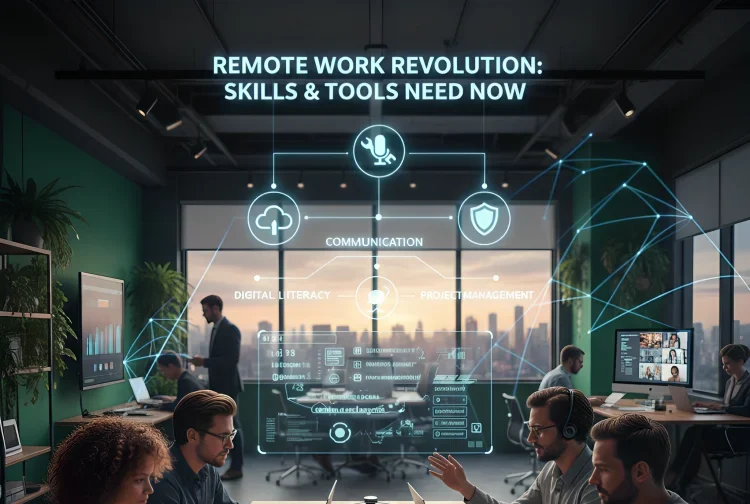
Remote Work Revolution: The Skills and Tools Every Professional Needs is no longer just a trending topic—it’s the new normal for modern careers.
Because teams are distributed, expectations are higher, and competition is global, professionals must upgrade how they communicate, manage time, and deliver results.
In this guide, you’ll learn the most valuable remote work skills and the tools that make work smoother, faster, and more reliable.
Why the remote work revolution is changing careers
Remote work has moved from “nice to have” to “must be ready for.”
As a result, companies now hire across borders, which means you’re not only competing locally anymore.
However, this is good news too: if you build the right skill set, you can access better roles, flexible schedules, and stronger work-life balance.
Moreover, remote work rewards output, not office presence. So, the professionals who communicate clearly and deliver consistently rise quickly.
Core skills every remote professional must master
Clear communication that avoids confusion
In remote work, small misunderstandings grow fast. Therefore, clarity becomes your superpower.
Write short messages, share context, and confirm next steps. Additionally, use simple formatting like bullets when decisions matter.
Even better, summarize outcomes after meetings so nobody leaves with a different interpretation.
Time management that protects deep focus
Remote work offers freedom, yet it can also blur boundaries. So, you need a system, not willpower.
Block time for deep work, and then place meetings around it. Likewise, plan tomorrow’s top three tasks before you end today.
If you do this daily, you’ll feel less scattered and more in control.
Self-leadership and accountability
When no one is watching, your habits matter more. As a result, remote work favors people who own their tasks end-to-end.
Set clear weekly goals, track your progress, and communicate early if something is stuck.
Meanwhile, avoid hiding problems. Instead, bring options and ask for quick decisions.
Digital collaboration and teamwork
Remote teams win when everyone can work together without stepping on each other’s work.
So, learn how to collaborate asynchronously: leave notes, document changes, and use shared boards properly.
Furthermore, respect time zones by using async updates instead of unnecessary meetings.
Adaptability and continuous learning
Tools change often, and workflows evolve. Therefore, flexibility is a career advantage.
Learn the basics of new platforms quickly, and then focus on applying them to real outcomes.
Over time, this mindset makes you more valuable than someone who only knows one way of working.
The essential tools that power remote productivity
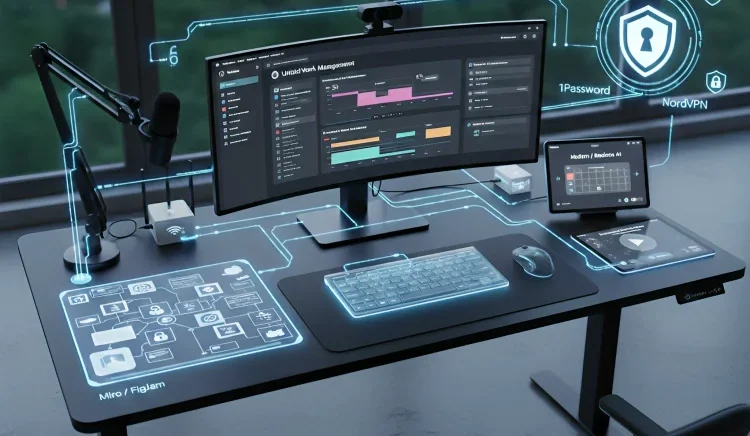
Source: Pinterest
Communication and messaging tools
A good messaging platform keeps teams aligned. However, the goal isn’t more messages—it’s fewer misunderstandings.
Use channels for topics, threads for clarity, and status updates for visibility. Additionally, set response expectations to reduce stress.
Video meetings and virtual presence
Video calls are useful, yet they can drain energy. So, treat meetings like a limited resource.
Use agendas, start on time, and end with action items. Moreover, turn meetings into decisions, not discussions that loop forever.
Project management and task tracking
If your work isn’t visible, it’s easy to be overlooked. Therefore, task tracking protects both performance and reputation.
Use boards or lists to show priorities, deadlines, and owners. Then, update progress regularly so stakeholders don’t chase you.
Consequently, you’ll spend less time explaining and more time executing.
Documentation and knowledge management
Remote teams rely on written knowledge. So, documentation is not “extra”—it’s part of the job.
Create simple pages for processes, meeting notes, and project decisions. Likewise, store templates so work becomes repeatable.
Over time, this builds trust because people can find answers without waiting.
Cloud storage and secure file sharing
Remote work requires easy access to files. However, security matters just as much.
Use organized folders, consistent naming, and permissions based on roles. Additionally, avoid sharing sensitive data through casual channels.
This approach reduces mistakes and protects your company and clients.
Cybersecurity tools and habits
Remote work increases security risks, so basics are non-negotiable.
Use strong passwords, a password manager, and multi-factor authentication. Furthermore, keep devices updated and avoid unknown downloads.
If you handle sensitive work, then a VPN and encrypted storage are smart choices too.
Automation and AI support tools
Automation saves time, especially on repetitive work. Therefore, look for tasks you repeat weekly and simplify them first.
For example, use templates, automated reminders, and AI assistants for outlines, summaries, and first drafts. Additionally, if you’re preparing for career growth, you can review common job interview questions and answers to respond confidently in remote hiring processes.
Still, review everything carefully, because quality control remains your responsibility.
Building a remote-ready workflow that feels easy
Start with a simple daily structure
A strong routine creates calm. So, begin with a quick daily plan: priorities, meetings, and focus blocks.
Then, add a short check-in message to your team if your role needs visibility.
As a result, people trust your reliability without constant updates.
Make asynchronous work your default
Async work helps teams move faster across time zones.
Instead of calling a meeting, write a clear update, include context, and ask specific questions. Moreover, attach supporting files or screenshots when helpful.
Consequently, your teammates can respond when they’re available, and progress continues.
Create boundaries to prevent burnout
Remote work can quietly expand into evenings. Therefore, set clear start and stop times.
Also, create a shutdown routine: wrap up, list tomorrow’s top tasks, and close work apps.
That way, your brain can actually rest.
Remote work soft skills that make you stand out
Professional online presence
Your tone becomes your brand. So, keep messages respectful, direct, and calm.
Even when stressed, choose clarity over emotion. Additionally, avoid long back-and-forth by proposing a solution.
Virtual networking and relationship building
Remote careers still grow through people. Therefore, build relationships intentionally.
Send appreciation messages, share credit, and schedule short check-ins with key collaborators.
Over time, this creates advocates who remember you when opportunities appear.
Cultural awareness and empathy
Global teams have different communication styles. So, stay curious instead of judging quickly.
Ask questions, confirm meaning, and keep feedback constructive.
As a result, teamwork becomes smoother and conflicts reduce naturally.
Common remote work mistakes and how to avoid them
Many professionals work hard but still struggle remotely. Usually, it’s because of avoidable habits.
First, don’t over-meet. Instead, meet only when a decision is needed.
Second, don’t stay silent when blocked. Rather, share what you tried and what you need.
Third, don’t multitask in calls. Because it reduces trust, it can damage your reputation.
Finally, don’t ignore documentation. If it isn’t written down, it often gets lost.
FAQs
What are the top skills needed for remote work success?
The most important skills include clear communication, time management, self-leadership, digital collaboration, and adaptability.
These skills help you deliver results consistently, even without in-person oversight.
Which tools are essential for working remotely?
You typically need tools for messaging, video calls, task tracking, documentation, cloud storage, and cybersecurity.
Additionally, automation and AI tools can help you work faster while keeping quality high.
How can I stay productive while working from home?
Create a daily plan, protect deep work time, and reduce distractions.
Also, set boundaries and use a shutdown routine so you avoid burnout.
How do I communicate better in a remote team?
Write clear messages with context, confirm next steps, and summarize decisions.
Moreover, favor asynchronous updates whenever possible to respect time zones.
Is remote work still growing in 2026?
Yes, remote and hybrid work remain strong across many industries, especially for digital roles.
Because global hiring continues, remote-ready professionals have a major advantage.
Conclusion
Remote Work Revolution: The Skills and Tools Every Professional Needs is your roadmap to staying competitive in a flexible, global job market.
If you master clear communication, time ownership, and async collaboration, you’ll stand out quickly. In fact, strengthening your professional behavior online is just as important as productivity—understanding modern workplace manners can make a real difference, as explained in these office etiquette tips for professionals.
Meanwhile, the right tools—messaging, task tracking, documentation, security, and automation will help you deliver faster with less stress while maintaining a polished professional image.
Ultimately, remote success is not luck. It’s a skill set you build, improve, and use every day with intention and consistency.
Learn more about Mariano Iduba here