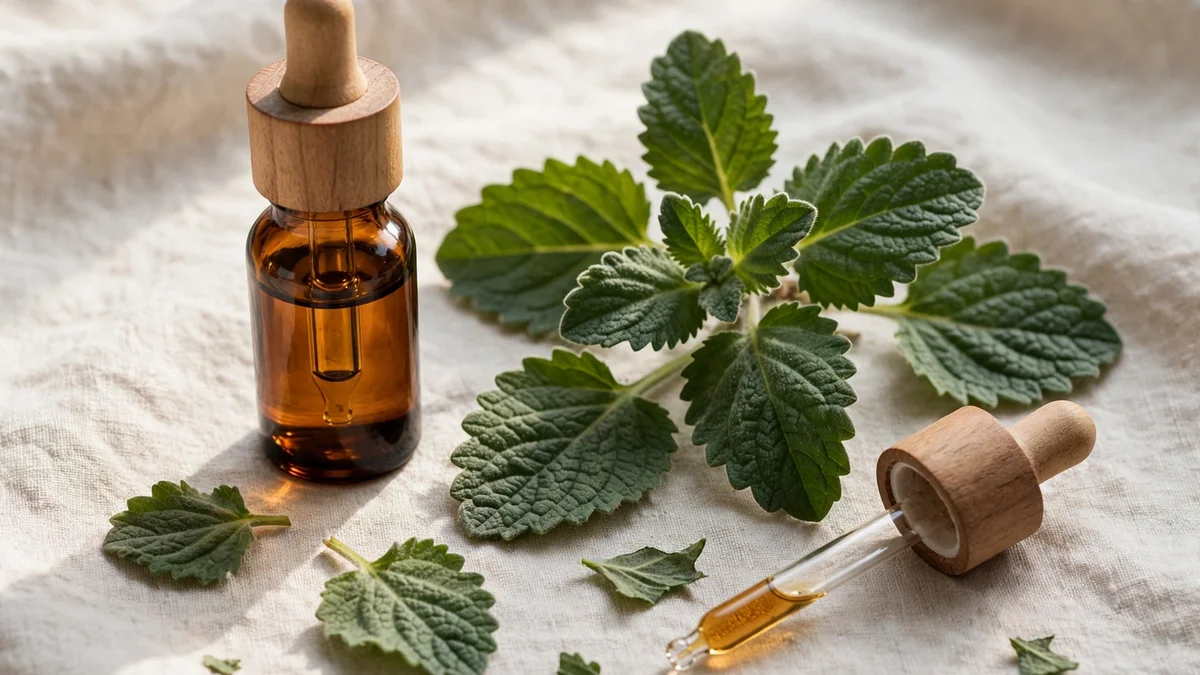

Patchouli oil is an essential oil distilled from the leaves of the patchouli plant, known for its deep, earthy scent and its long history in perfumes, skincare and home fragrance. The central question is simple: what is patchouli oil, how do people use it, and what safety steps should you follow? It is a concentrated plant oil used in small, diluted amounts for scent and skin care, and like all essential oils it needs to be handled with care.
The scent is the first thing most people notice. Patchouli has a rich, musky, woody aroma that some people love at once and others need time to appreciate. It has been used in perfumery for centuries, and it became especially popular in the 1960s and 1970s, when it was associated with hippie culture. Today it appears in modern perfumes, candles, soaps and skincare, valued for a scent that lasts far longer than most essential oils.
Key takeaways
- Patchouli oil is distilled from the leaves of the patchouli plant.
- Its scent is deep, earthy, musky and woody, and it lasts a long time.
- Always dilute patchouli oil in a carrier oil before putting it on skin.
- Do a patch test first, and stop using it if your skin reacts.
- Keep essential oils away from children and pets, and out of reach.
- Talk to a doctor before use if you are pregnant or taking medication.
Where patchouli oil comes from
Patchouli is a bushy herb in the mint family, native to tropical regions of Asia. The oil comes from the leaves, which are dried and then steam-distilled to release their aromatic compounds. The resulting oil is usually a deep amber or brown colour, thick in texture and strong in scent. Unlike many essential oils, patchouli improves with age: stored properly, its scent becomes smoother and richer over time rather than fading.
Indonesia and India are among the main sources of patchouli, and the plant is also grown in other tropical regions. The quality of the oil depends on the variety of the plant, the growing conditions and how the leaves are dried and distilled. Good patchouli oil has a full, rounded scent rather than a sharp or chemical one. When buying, look for oil sold as pure essential oil with the botanical name on the label, and buy from a supplier you trust.
What patchouli oil smells like
Describing a scent in words is never easy, but patchouli is usually called earthy, woody and musky, with a sweet, slightly smoky undertone. It is a base note in perfumery, which means it is one of the slowest scents to fade, and it is often used to anchor lighter, more fleeting scents such as citrus or floral oils. A drop goes a long way: the scent is strong, and a little is usually enough.
The association with the 1960s still colours how people feel about it. For some, patchouli brings back the incense and oils of that era, while for others it is simply a warm, grounding scent that suits autumn and winter. Modern perfumers use it in everything from high-end fragrances to everyday body care, often blended so the earthy character softens into something warm and smooth. If you are trying it for the first time, smell it diluted rather than neat, since the undiluted oil can seem overpowering.
How people use patchouli oil
The most common use is fragrance. A few drops in a diffuser fill a room with a warm, earthy scent, and patchouli blends well with oils such as lavender, cedarwood, sandalwood, bergamot and ylang ylang. It is also used in candles, room sprays and potpourri, and a drop on a cotton ball tucked into a drawer can scent clothes and linens for weeks.
In skincare and body care, patchouli oil is used diluted in a carrier oil such as jojoba, sweet almond or coconut oil, and then applied to the skin or added to a bath. It appears in soaps, lotions and balms, where it is valued for its scent and its reputed skin-soothing qualities. Some people also use it in hair care, adding a drop to shampoo or a hair oil. Whatever the use, the rule is the same: dilute it first, use a small amount, and stop if your skin reacts.
Patchouli oil in the home
Around the home, patchouli oil is mostly a fragrance. Diffusers are the simplest route: add a few drops to water in an ultrasonic diffuser, or use a reed diffuser for a slower, steadier scent. For a quick refresh, a few drops on a cloth or cotton ball placed near a radiator will release the scent as the air warms. It also works in homemade cleaning sprays, where the strong scent can mask cleaning smells, though it is the scent rather than any cleaning power that does the work.
Storage matters if you want the oil to last. Keep the bottle tightly closed, away from heat and direct sunlight, and store it upright in a cool place. Essential oils can degrade in light and heat, and patchouli is no exception, although it ages better than most. Check the scent before each use: if it smells sharp, stale or very different from when you bought it, it is time to replace the bottle.

Patchouli oil uses compared
Different uses call for different dilutions and methods, so it helps to know what fits where. The table below sums up the common uses in general terms.
| Use | How it is used | Keep in mind |
|---|---|---|
| Room fragrance | A few drops in a diffuser | Ventilate the room and take breaks |
| Perfume | Diluted and blended with other oils | A little goes a long way |
| Skincare | Diluted in a carrier oil | Patch test first, every time |
| Bath | A few drops mixed with a carrier oil | Never add neat oil to bath water |
| Hair care | A drop in shampoo or hair oil | Avoid the eyes and scalp if irritated |
| Drawers and linen | A drop on a cotton ball | Keep away from delicate fabrics |
Safety: the rules that matter
Essential oils are concentrated, and patchouli oil is no exception. Never apply it undiluted to your skin, and never take it internally. Dilution means mixing a few drops into a carrier oil before use, and the usual guidance for adults is a low dilution of around one to two per cent, which is roughly six to twelve drops per 30 millilitres of carrier oil. Always do a patch test first: apply a small amount of the diluted oil to the inside of your forearm, wait a day, and only use it more widely if there is no reaction.
Some people should be extra careful. If you are pregnant, breastfeeding, taking medication or managing a health condition, talk to a doctor before using essential oils. Children and pets are more sensitive than adults: keep oils out of their reach, never apply them to a baby’s skin, and be cautious with diffusers in small rooms where children or pets spend time. If oil gets into your eyes, rinse with plenty of water and seek medical advice, and if anyone swallows essential oil, seek medical help at once.
Buying good patchouli oil
Quality varies widely, so a little care when buying pays off. Look for a dark glass bottle, which protects the oil from light, and a label that gives the botanical name, Pogostemon cablin, the country of origin and a batch or expiry date. Pure essential oil should list a single ingredient: the oil itself. If the label mentions fragrance oil or lists several ingredients, the product is a blend rather than a pure essential oil, and it will behave differently.
Price is a rough guide but not a guarantee. Very cheap patchouli oil may be diluted or synthetic, while a fair price from a reputable supplier is a better sign. Read reviews, check whether the supplier provides testing information, and be wary of claims that sound too good to be true. Essential oils are not medicines, and no honest seller will promise that patchouli oil treats or cures a health condition.
Your patchouli oil checklist
Keep this list with your essential oils.
- Buy pure oil in a dark glass bottle from a supplier you trust.
- Check the label for the botanical name Pogostemon cablin.
- Always dilute patchouli oil in a carrier oil before skin use.
- Do a patch test and wait a day before wider use.
- Start with a few drops: the scent is strong.
- Never take essential oils internally.
- Keep oils out of reach of children and pets.
- Store the bottle closed, cool and away from sunlight.
- Stop using it if your skin reacts or you feel unwell.
- Talk to a doctor first if pregnant or taking medication.
Frequently asked questions
Can I put patchouli oil directly on my skin?
No. Patchouli oil should always be diluted in a carrier oil such as jojoba or sweet almond oil before it touches your skin. Undiluted essential oils can irritate the skin, and a patch test on a small area first is the safe way to check how your skin responds.
What does patchouli oil smell like?
It has a deep, earthy, woody and musky scent with a sweet undertone. It is strong and long-lasting, which is why it is used as a base note in perfumes. If it smells sharp or chemical, the oil may be poor quality or past its best.
Is patchouli oil safe during pregnancy?
Essential oils need extra care during pregnancy, and advice varies. The safe approach is to talk to your doctor or midwife before using patchouli oil or any essential oil while pregnant or breastfeeding, and to avoid use until you have that advice.
Can I use patchouli oil in a diffuser?
Yes, a few drops in water in an ultrasonic diffuser is one of the most common uses. Diffuse in a ventilated room, take breaks rather than running it all day, and be cautious in small rooms where children or pets spend time.
Does patchouli oil go off?
It lasts longer than most essential oils and its scent often improves with age, but it does not last forever. Stored closed, cool and away from sunlight, it can keep for years. Replace it if the scent turns sharp, stale or very different from when you bought it.
What blends well with patchouli oil?
Patchouli blends well with lavender, cedarwood, sandalwood, bergamot, ylang ylang and clary sage. As a base note it anchors lighter scents, so start with a small amount of patchouli and add the other oils a drop at a time until the blend smells balanced.
The bottom line
Patchouli oil is a rich, earthy essential oil with a long history in perfume and home fragrance, and it is easy to enjoy as long as you respect its strength. Dilute it before it touches your skin, patch test first, use a few drops rather than many, and store it well. For more natural living ideas, see our guide to the best rosemary oil for hair growth, our eco-friendly lifestyle tips, and our stress relief techniques for calm, everyday routines.
This article is general information only and is not medical advice. Essential oils are concentrated plant products, so follow the safety steps above, and talk to a doctor if you are pregnant, taking medication or managing a health condition.