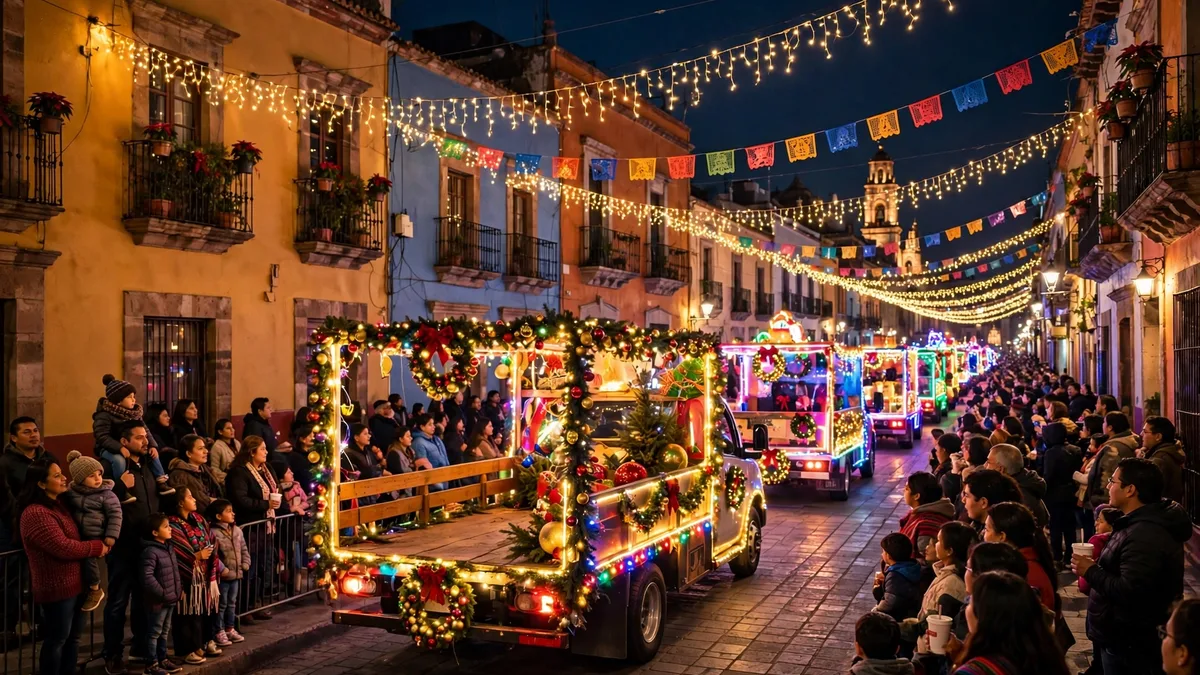

Mexicali drops Coca-Cola sponsorship is the story of a Mexican border city deciding not to run its traditional Coca-Cola Christmas caravan in the 2025 holiday season. The central question is straightforward: what actually happened? According to reports, the city’s Christmas festivities went ahead without the company’s sponsorship, after federal health guidance urged local governments not to spotlight sugary drinks at events attended by children, although the reports differ on who made the final call.
The story matters because the caravan was a long-standing tradition, and because it sits at the meeting point of public health policy, festive tradition and corporate sponsorship. This article sets out what was reported, what the city said, and what remains unclear, without filling in the gaps with guesswork.
Key takeaways
- Mexicali is a city in Baja California, Mexico, on the border with California, and the story concerns its Christmas celebrations.
- Reports say the traditional Coca-Cola Christmas caravan did not run in Mexicali for the 2025 holiday season.
- The city’s festivities went ahead on 18 December without corporate sponsorship, according to the reports.
- Mexican President Claudia Sheinbaum had urged local governments to avoid promoting sugary drinks at events with children.
- Reports differ on whether the city dropped the company or the company withdrew after reviewing federal health rules.
- Other Mexican cities also skipped the caravan in 2025, while the company still sponsored celebrations in some smaller cities.
What Mexicali is
Mexicali is the capital of the Mexican state of Baja California, a desert city on the border with California, across from Calexico. It is a large, working city rather than a resort, and its Christmas celebrations are a local affair: families gather in the streets, children wait for the parade, and the evening is built around lights, music and food. That local character is part of why the story travelled so widely, because the caravan was something families had watched together for years.
The Coca-Cola Christmas caravan is a travelling parade of illuminated trucks, decorated with lights and festive figures, which the company has run in many countries during the holiday season. In Mexico it had become a familiar part of December, with trucks rolling through city centres and crowds lining the streets. The trucks are advertising, but for many families they were also simply part of Christmas.
What was reported
The clearest account comes from The Cooldown, reporting on coverage by the Imperial Valley Press, a newspaper serving the border region. It reported that the traditional Coca-Cola Christmas caravans did not happen in Mexicali for the 2025 holiday season, and that the city’s festivities moved forward without corporate sponsorship on 18 December. The Press quoted municipal leaders as saying their intention was to preserve the joy and tradition of the season while adhering to federal guidance.
Another account, in La Crónica, a Mexicali newspaper, reported the decision differently, saying that Coca-Cola dropped out after looking at federal health regulations. The two versions do not agree on who ended the arrangement, which is why this article describes it as a reported decision rather than a settled fact. What the reports agree on is the outcome: no Coca-Cola caravan in Mexicali for Christmas 2025, and a city celebration that went ahead without it.
Why health guidance was cited
The background to the decision is a push by the Mexican federal government to reduce the promotion of sugary drinks, particularly to children. President Claudia Sheinbaum told local governments to avoid spotlighting sugary drinks at public events with children in attendance, and the guidance was part of a wider health agenda that also included measures on sugary drinks more generally.
Mexico has some of the highest rates of sugary drink consumption in the world, and the health concerns are well documented: sugary drinks are linked to obesity and diabetes, and children are seen as particularly vulnerable to advertising. A Christmas parade is an event built around children and families, which is exactly the setting the federal guidance was aimed at. Whether the city or the company acted first, the health argument is the reason both accounts give for the change.
The wider picture. Mexicali was not alone. The Cooldown also reported that Mexico City and other Mexican cities cancelled their traditional Coca-Cola holiday events for the 2025 season, after the president and consumer rights organisations called for officials to stop spotlighting sugary drinks at children’s events. The company still sponsored holiday displays in some smaller Mexican cities, but its presence in the major hubs fell noticeably, according to the International Business Times, as cited in the same reporting.
What the decision means for the tradition
For families in Mexicali, the immediate effect was a Christmas celebration without the illuminated trucks. The city said its intention was to preserve the joy and tradition of the season, and the festivities went ahead on 18 December, according to the reports. A parade can be staged without a corporate sponsor, but the trucks themselves, with their lights and scale, were a distinctive part of the event, and their absence would have been obvious to anyone who had watched them in previous years.
The longer question is whether the change is permanent. Nothing in the reporting so far answers that, and it would be wrong to present a one-year decision as a lasting break. Sponsorship arrangements are usually agreed year by year, and a decision taken for one holiday season does not automatically decide the next. The federal health guidance that shaped the decision is still in place, which suggests the question will return each December until the city, the company or both say otherwise.
How sponsorship works at public celebrations
Corporate sponsorship of a public celebration is a trade: the company pays for part of the event, and in return its brand is visible to the crowds. For a city, sponsorship can pay for lights, staging, security and entertainment that the municipal budget might not stretch to. For a company, a parade puts its brand in front of families in a warm, festive setting that ordinary advertising struggles to match.
The trade has limits, and public health is one of them. When a sponsor’s product is the subject of health guidance, a city faces a choice between the funding and the message the event sends, and the details matter: whether the city declined the sponsorship or the company withdrew changes how the story reads.

What is confirmed and what is not
Because the accounts differ, it is worth separating what the reporting establishes from what it leaves open. The table below does that, using only the published reports as its source.
| Point | What was reported | Status |
|---|---|---|
| The caravan did not run in Mexicali in 2025 | Reported by The Cooldown, citing the Imperial Valley Press | Confirmed by the reporting |
| City festivities went ahead on 18 December | Reported by The Cooldown, citing the Imperial Valley Press | Confirmed by the reporting |
| City leaders cited federal guidance | Quoted in the Imperial Valley Press | Confirmed by the reporting |
| President Sheinbaum urged limits on sugary drink promotion | Reported across the coverage | Confirmed by the reporting |
| Who ended the arrangement | City dropped it, or the company withdrew | Unclear: accounts differ |
| Whether the change is permanent | No statement in the reporting so far | Unknown |
The reaction to the news
The story was widely discussed online, and the reaction was mixed. Some people welcomed the decision as a sensible step for children’s health, arguing that a public celebration should not be used to advertise sugary drinks to children. Others saw it as the loss of a beloved tradition, and argued that a Christmas parade should be judged on the joy it brings families rather than on the brand on the trucks.
Marketing commentators picked up the story as a case study in how sponsorship can go wrong for both sides. A brand that is welcome one year can become a liability the next, and a city that relies on a sponsor can find its celebration caught up in a national debate it did not start.
Your checklist for following a developing story
Use this checklist when a news story like this one is still developing and the accounts do not fully agree.
- Note which outlet reported each claim, and whether it cites a named source.
- Separate what happened from who decided it: the outcome can be clear while the cause is not.
- Look for direct quotes from the people involved, rather than summaries of their position.
- Check whether local reporting, such as a city newspaper, says something different from national coverage.
- Be wary of articles that present one year’s decision as permanent without evidence.
- Check the dates: a story about the 2025 season may be republished long after the event.
- Look for what is missing, such as a statement from the company or the city.
- Compare the story with nearby cities: a pattern across several cities is stronger evidence than one case.
- Remember that sponsorship deals are usually annual, so one season’s decision may not decide the next.
- Revisit the story later: the full picture often emerges only after the first reports.
Frequently asked questions
What is the Mexicali Coca-Cola sponsorship story?
It is the reported decision that the traditional Coca-Cola Christmas caravan did not run in Mexicali, Mexico, for the 2025 holiday season. The city’s Christmas festivities went ahead on 18 December without corporate sponsorship, according to reports citing the Imperial Valley Press.
Why did Mexicali drop the Coca-Cola sponsorship?
The reason cited in the reporting is federal health guidance: President Claudia Sheinbaum urged local governments not to spotlight sugary drinks at public events attended by children. City leaders were quoted as saying they wanted to preserve the season’s joy and tradition while adhering to that guidance.
Did the city drop Coca-Cola, or did Coca-Cola withdraw?
The accounts differ. The Imperial Valley Press reported that Mexicali dropped the sponsorship, while La Crónica reported that Coca-Cola dropped out after reviewing federal health regulations. On the reporting available, it is not possible to say definitively which side made the final call.
Did other Mexican cities do the same thing?
Yes, according to the same reporting. Mexico City and other cities also cancelled their traditional Coca-Cola holiday events for the 2025 season, while the company continued to sponsor celebrations in some smaller cities.
Did Mexicali still hold Christmas celebrations in 2025?
Yes, according to the reports. The city’s festivities went ahead on 18 December, without corporate sponsorship, and municipal leaders said their intention was to preserve the joy and tradition of the season.
Will the Coca-Cola caravan return to Mexicali?
That is unknown. Nothing in the reporting so far says whether the change is permanent, and sponsorship arrangements are usually agreed year by year. The federal health guidance remains in place, so the question is likely to return each December.
The bottom line
Mexicali drops Coca-Cola sponsorship is a small story with a large argument inside it: a city’s Christmas tradition, a company’s festive advertising, and a government’s health guidance meeting in the same street. What the reporting establishes is that the caravan did not run in Mexicali for Christmas 2025, that the city’s celebrations went ahead without it, and that sugary drink promotion to children was the reason given. What it does not establish is who made the final call, or whether the change will last, and those questions deserve honest answers rather than confident guesses. If you want to read more about travel and festive seasons, explore our guide to the best places to visit in Norway for a winter trip, our round-up of the best inexpensive wines for the festive table, and our look at beer subscriptions for drinks delivered to your door.