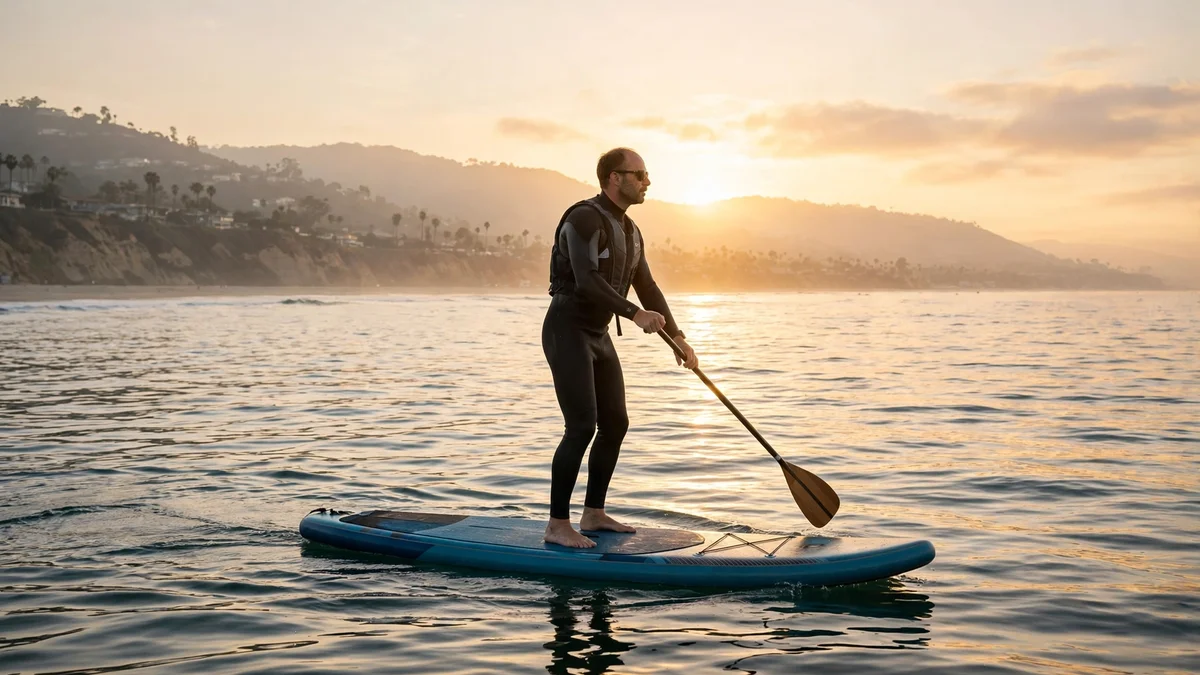

Los Angeles stand up paddle boarding is one of the easiest ways to get out on the water in Southern California, and the question most beginners ask is a simple one: where do you start, and what do you actually need? The short answer is that Los Angeles stand up paddle boarding suits complete beginners, because the city has calm marina water, sheltered bays and gentle beaches where you can learn to stand, balance and paddle without fighting surf.
Key takeaways
- Calm marina and bay water is the best place to learn, not open surf.
- A wide, stable board and a paddle that reaches your wrist make starting easier.
- A leash and a life jacket are the two most important pieces of safety kit.
- Early mornings usually bring the calmest water and the lightest wind.
- Los Angeles is warm enough to paddle all year round.
- Check the wind, the swell and the local rules before every session.
Where to paddle in Los Angeles
The best place to start is flat water, and Los Angeles has plenty of it. The marina at Marina del Rey is the classic beginner spot: a large, sheltered harbour with calm water, no surf and plenty of room to practise. Rental shops near the marina hire boards by the hour, and the protected channels let you build confidence before you ever face a wave.
Further south, the sheltered waters of the Los Angeles harbour and the bay around Long Beach offer a similar kind of paddling, with long stretches of flat water. Conditions are usually gentle in the morning before the afternoon sea breeze arrives. To the north, the coves along the Malibu coast can be beautiful on a calm day, but they are more exposed to swell and wind, so they suit paddlers who are already comfortable standing and steering.
Open beaches are a different matter. The surf beaches of Los Angeles, from Santa Monica to Venice and beyond, are fun for experienced paddlers who want to ride small waves, but they are not the place to learn. Waves, shore break and crowds make standing up far harder, and a beginner is likely to spend most of the session falling in. If your goal is to learn, choose the marina or the bay first, and save the surf beaches for later, when you can handle a board in moving water. The Wikipedia page on standup paddleboarding gives a clear overview of the sport, its history and the different disciplines, from flat-water cruising to surf.
What beginners need
You do not need much kit to start, and most beginners hire a board for their first few sessions before deciding whether to buy one. A rental board is usually wide and stable, which is exactly what you want while you are learning to balance. The table below covers the essentials.
| Item | What to look for | Why it matters |
|---|---|---|
| Board | Wide, thick and stable, with a non-slip deck pad | Stability matters more than speed when you are learning |
| Paddle | Long enough to reach your wrist when your arm is raised | The right length keeps your posture upright and your strokes efficient |
| Leash | Attaches your ankle to the board | Keeps the board with you if you fall in |
| Life jacket | A comfortable, well-fitting personal flotation device | Keeps you afloat if you tire or fall in deep water |
| Sun protection | Sunscreen, a hat and a long-sleeve top | Reflection off the water makes sunburn likely |
| Water and a dry bag | A bottle and a small waterproof bag for your phone and keys | Keeps you hydrated and your belongings dry |
Clothing is simple: swimwear or light, quick-drying clothes, and shoes you do not mind getting wet. In the cooler months a light wetsuit top can take the edge off the water temperature, but the ocean off Los Angeles stays mild enough that a full wetsuit is rarely needed for flat-water paddling. If you are hiring, the rental shop will usually provide the board, paddle and leash, and will often have life jackets available too.

Learning the basics
Standing up for the first time is easier than it looks, and most people manage it within a few minutes. Start on your knees in the middle of the board, with the paddle in the water for balance, and take a few strokes to get a feel for how the board moves. When you are ready, place the paddle across the board, put one foot where each knee was, and stand up slowly, keeping your knees slightly bent and your eyes on the horizon. Stand in the middle of the board, feet about shoulder-width apart.
Paddling itself is straightforward. Hold the paddle with one hand on the top grip and the other about halfway down the shaft, reach forward, plant the blade in the water and pull it back past your feet. Switch sides every few strokes to keep the board travelling straight. If the board starts to turn, a few strokes on one side will correct it. Falling in is part of learning, and it is nothing to worry about in calm water: fall away from the board, hold on to the paddle, and climb back on from the side by kicking your legs and pulling yourself up across the middle of the board.
A short lesson is worth considering for a first session. Many rental shops and local instructors offer introductory sessions that cover balance, paddle technique, how to fall safely and how to get back on the board, and an hour with an instructor can save several frustrating sessions of trial and error. Learning with a friend helps too, and the same is true of other habits worth building, from simple daily self-care to learning effectively in any new pursuit.
Staying safe on the water
Paddle boarding is a low-impact activity, but it is still a water sport, and the ocean deserves respect. The most important rule is to wear a leash at all times, so the board stays with you if you fall in, and to wear a life jacket, especially if you are not a strong swimmer or you are paddling further from shore. Tell someone where you are going and when you expect to be back, and keep your phone in a waterproof case or a dry bag in case you need it.
Wind is the factor beginners underestimate most. A gentle offshore breeze that feels like nothing on the beach can make paddling back to shore surprisingly hard, so check the forecast before you go and be cautious if the wind is blowing away from land. Stay close to shore until you know your limits, keep clear of boat channels and moored vessels, and watch for other water users. If you feel tired, sit or kneel on the board and paddle back slowly rather than pushing on.
A quick safety checklist
- Wear a leash and a life jacket on every session, without exception.
- Check the wind, swell and weather forecast before you leave home.
- Tell someone where you are paddling and when you expect to return.
- Stay close to shore until you are confident in your balance and stamina.
- Keep clear of boat channels, piers and moored vessels.
- Carry water and sun protection, and reapply sunscreen during the session.
- Keep your phone in a waterproof case or a dry bag.
- If conditions change or you feel tired, head back to shore calmly.
Seasons and conditions
One of the great advantages of Los Angeles is that paddle boarding is a year-round activity. The air stays mild through the winter, and the water rarely drops far enough to need more than a light wetsuit top. Summer brings the warmest water and the longest days, but also more people, so mornings are the best time to paddle if you want quiet water. Autumn is often the most pleasant season of all, with warm air, calm mornings and fewer crowds.
The time of day matters as much as the season. Early mornings are usually the calmest, with light wind and flat water, while the afternoon often brings a sea breeze that can chop up the surface and make paddling harder. If you can only paddle in the afternoon, choose the most sheltered water you can find, and be ready to cut the session short if the wind picks up. Winter storms can bring larger swells to the open coast, but the marina and the harbour stay sheltered. Planning around the seasons helps with many outdoor activities, and a quick look at the May 2026 calendar is a useful way to plan a run of spring sessions before the summer crowds arrive.
Do I need to be a strong swimmer to try paddle boarding?
You should be comfortable in the water and able to swim, but you do not need to be a strong swimmer to start on flat water, provided you wear a life jacket and stay close to shore. A leash keeps the board with you if you fall in, and the board itself is a large flotation device. If you cannot swim at all, take a lesson with an instructor present.
How long does it take to learn stand up paddle boarding?
Most people stand up and paddle in a straight line within their first session, usually inside an hour. Becoming confident in wind, handling small waves and turning smoothly takes a few more outings, but the learning curve is gentle compared with surfing or kayaking.
What should I wear for paddle boarding in Los Angeles?
Swimwear or light, quick-drying clothes are enough for most of the year, along with sunscreen, a hat and sunglasses with a strap. In the cooler months a light wetsuit top is a sensible addition. Avoid cotton, which stays wet and cold, and wear shoes you do not mind getting wet.
Is paddle boarding good exercise?
Yes. Paddle boarding works the legs, core, arms and shoulders, and it improves balance, all without the impact of running or jumping. A relaxed cruise is gentle exercise, while paddling against the wind or over a longer distance is a serious workout.
Can children try stand up paddle boarding?
Yes, children can paddle, provided they can swim, wear a life jacket and are supervised by an adult. Smaller boards are available for lighter paddlers, and a child can also ride on the front of an adult’s board in calm water. Keep the first session short and stay in sheltered water.
Where is the best place for a beginner to paddle in Los Angeles?
The marina at Marina del Rey is the usual recommendation for beginners, because the water is sheltered, flat and free of surf, and rental shops nearby provide boards and advice. The harbour waters around Long Beach offer similar flat-water paddling. Save the open surf beaches for later, once you are confident standing and steering.
The bottom line
Los Angeles stand up paddle boarding is one of the most accessible water sports in the city, and it suits complete beginners as well as regulars. Start on the flat water of the marina or the harbour, hire a wide stable board, wear a leash and a life jacket, and paddle in the calm of the early morning. Learn the basics at your own pace, respect the wind and the water, and you will soon find that an hour on a paddle board is one of the simplest pleasures the Los Angeles coast has to offer.
A brief note on water safety: always check local conditions before you paddle, never paddle alone in unfamiliar water, and if you get into difficulty, stay with your board, signal for help and wait for assistance rather than trying to swim to shore against the wind or current.