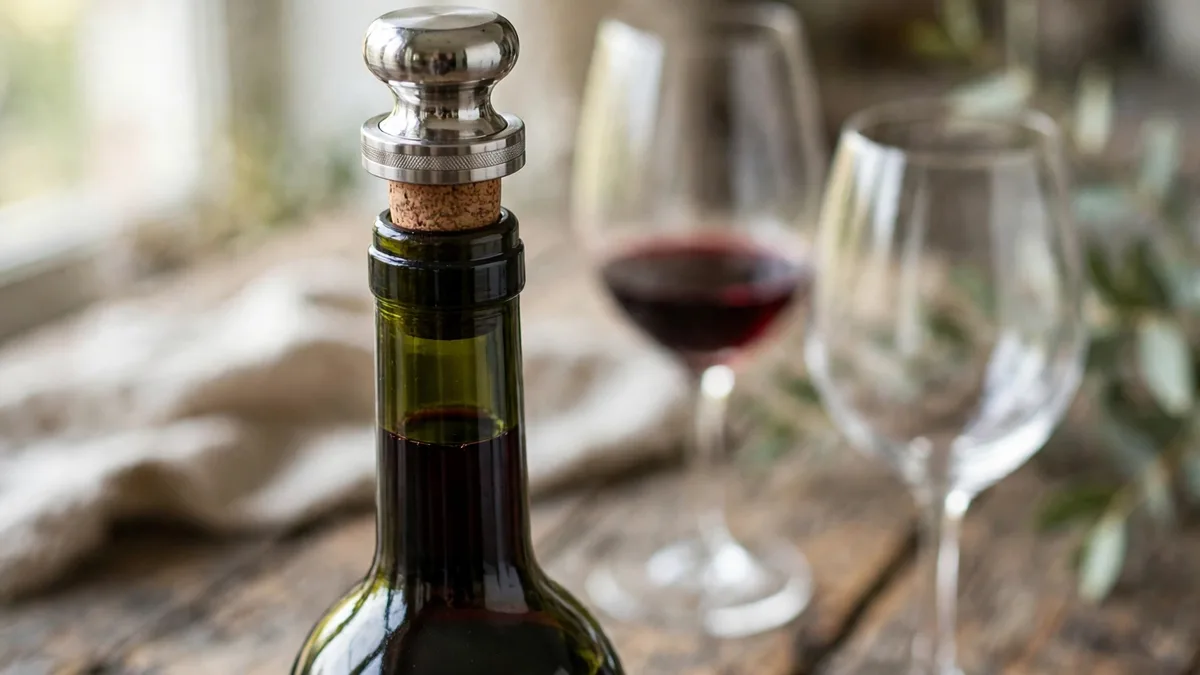

A bottle stopper is a small closure that seals an opened bottle so the contents stay fresh for longer, and for wine it is the simplest tool a home drinker can own. The central question is straightforward: does a bottle stopper actually work? Yes, it does, provided you choose the right type for the wine and store the bottle properly, because the main enemy of opened wine is oxygen, and a good seal slows it down.
Wine begins to change the moment the cork comes out. Air reaches the surface, and oxidation starts to dull the fruit flavours and flatten the aroma. A stopper cannot reverse that process or make a bottle last forever, but it can stretch a bottle from one evening into two or three days, which is often all that is needed.
Key takeaways
- A bottle stopper slows oxidation by limiting the air that reaches the wine.
- Match the stopper to the wine: still, sparkling and fortified wines need different closures.
- Store a resealed bottle upright in the fridge, whatever the colour of the wine.
- A vacuum pump stopper removes air but does not suit sparkling wine.
- Most opened still wine keeps for two to three days with a good stopper.
- Trust your nose and palate: if it smells of vinegar or tastes flat, pour it away.
What a bottle stopper does
An opened bottle of wine has two problems. The first is oxygen, which reacts with the wine and gradually strips away its fresh fruit character. The second is evaporation and contamination: aromas escape, and a bottle left open on a worktop can pick up kitchen smells nobody wants. A bottle stopper addresses both by closing the neck of the bottle as tightly as the original cork did, or as close to it as a reusable device can manage.
The seal does not need to be perfect to be useful. Even a simple rubber stopper cuts the flow of fresh air dramatically, and that alone is usually enough to keep a wine pleasant for another day or two. What a stopper cannot do is remove the oxygen already in the bottle, which is why the amount of wine left matters: a nearly empty bottle holds a large pocket of air and will fade faster than a nearly full one.
The main types of bottle stopper
Stoppers come in several designs, and each suits a different job. The simplest is the reusable cork or rubber stopper, a tapered plug that pushes into the neck and seals by friction. These are cheap, easy to clean and fine for still wine that will be finished within a day or two.
Metal stoppers with a rubber ring are a step up in durability. The metal cap gives the stopper weight and a firm grip, while the rubber ring forms the seal. Many have a lever or a twist mechanism that expands the rubber slightly inside the neck. They look better on the table than a plain rubber plug, they last for years, and they suit anyone who opens wine regularly.
Vacuum pump stoppers. A vacuum pump stopper pairs a special stopper with a small hand pump. You place the stopper in the bottle and pump several times to draw air out of the headspace, which slows oxidation further than a plain seal alone. Many drinkers find these effective for still red and white wine. The drawback is that they are useless for sparkling wine, where removing air also removes the bubbles you want to keep.
Champagne and sparkling wine stoppers. Sparkling wine needs a stopper built to hold pressure in, not to keep air out. These stoppers have a wide cap that sits over the rim of the bottle and a clamp or lever that locks it down, often with a rubber seal underneath. A standard still-wine stopper will not hold the pressure and may pop out, while a champagne stopper keeps the fizz for a day or two. Some people swear by the old trick of a teaspoon in the neck; it does not work, and a proper stopper is the only reliable option.
How to use a bottle stopper properly
Good technique matters as much as the device. Push the stopper in firmly until it sits snugly, and give it a gentle tug to check that it holds. If it slides out easily, the fit is wrong for that bottle. For a vacuum stopper, pump until you feel real resistance, usually after several strokes.
Storage matters just as much. Stand a resealed bottle upright, which keeps the surface area of wine exposed to air as small as possible and stops wine from seeping around the seal. Put the bottle in the fridge, even red wine, because cold slows oxidation. Take a red out about half an hour before serving so it warms back towards room temperature.

Bottle stopper compared
Choosing between the main types is easier when their strengths and limits are side by side. The table below compares the common options for everyday use at home.
| Type | Best for | Limitations |
|---|---|---|
| Rubber or cork plug | Still wine finished within a day or two | Basic seal only, fit varies by bottle |
| Metal stopper with rubber ring | Regular use and a firm, durable seal | Costs more than a plug, still lets some air in |
| Vacuum pump stopper | Still red and white wine kept for several days | Not for sparkling wine, pump adds a step |
| Champagne stopper | Sparkling wine and keeping the fizz | Only fits sparkling wine bottles |
| Pourer with stopper | Pouring a glass at a time over days | Flap must close fully or the seal fails |
| Original cork, pushed back in | A stopgap when nothing else is at hand | Often crumbles and rarely seals well |
How long does opened wine last with a stopper
There is no single answer, because wines differ. A robust red with plenty of tannin and acidity will usually hold for two to three days in the fridge with a good stopper, and some will still taste pleasant on the fourth day. Lighter whites and rosés are more delicate and are best within one to two days. Fortified wines such as port and sherry last much longer, often for a week or more, because their higher alcohol content slows spoilage.
Sparkling wine is the exception in the other direction. Even with a proper champagne stopper, the bubbles fade steadily, and most sparkling wine is at its best within a day of opening. After two days it will usually taste flat, even if it has not turned. The rule for all wine is to trust your senses: if it smells sharp or vinegary, or the flavour has gone dull and lifeless, it is past its best.
Choosing a bottle stopper
Start with the wine you drink most. If you mainly open still red and white, a metal stopper with a rubber ring or a vacuum pump set will cover most evenings. If you open sparkling wine often, add a champagne stopper. If you drink a glass at a time, a pourer-stopper that stays in the bottle while you serve may be the most convenient option of all.
Look for a stopper that fits the bottles you buy. A stopper that is hard to push in or that wobbles once seated is the wrong size. Check that the materials are food-safe and easy to clean. Avoid anything with a strong rubber smell, which can taint the wine.
Caring for your bottle stopper
A stopper lasts longer if it is cleaned after every use. Rinse it under warm water, wash it with a little washing-up liquid, and dry it fully before putting it away, since trapped moisture can breed mould. Rubber rings wear out over time, so check them every few months: if the ring is cracked or flattened, replace the stopper.
Keep stoppers in a drawer or a small box rather than loose in a cupboard, where they pick up dust and kitchen odours. If a stopper has absorbed a smell, soak it in warm water with a little bicarbonate of soda, rinse it well and let it dry in the air.
Your bottle stopper checklist
Use this checklist the next time you open a bottle you will not finish.
- Choose the right stopper: still, sparkling or vacuum, to match the wine.
- Check the fit before pouring: a loose stopper is no stopper at all.
- Push the stopper in firmly and give it a gentle tug to test the seal.
- Pump a vacuum stopper until you feel real resistance.
- Stand the bottle upright so the wine surface stays small.
- Put the bottle in the fridge, even if it is a red wine.
- Keep the bottle away from light, heat and strong kitchen smells.
- Label the bottle with the date if you will not finish it tomorrow.
- Smell and taste before serving: vinegar notes mean it is past its best.
- Clean and dry the stopper after every use so it stays fresh.
Frequently asked questions
Does a bottle stopper keep wine fresh?
Yes, within limits. A good stopper slows oxidation by sealing the bottle neck, which usually keeps still wine pleasant for two to three days in the fridge. It cannot remove the oxygen already inside the bottle, and it cannot make wine last indefinitely.
Can I use a bottle stopper on sparkling wine?
Only use a stopper made for sparkling wine. A champagne stopper clamps over the rim to hold the pressure in, while a still-wine stopper or vacuum pump will let the bubbles escape or may pop out of the bottle.
Is a vacuum pump stopper better than a plain stopper?
For still wine, usually yes, because it removes some of the air above the wine as well as sealing the neck. The difference is modest but real. For sparkling wine it is the wrong tool entirely, since it removes the gas that makes the wine sparkle.
Should a resealed bottle be stored upright or on its side?
Upright. A bottle on its side has a larger wine surface exposed to the air in the headspace, and wine can seep around the seal. The old rule about storing bottles on their side applies to unopened bottles with natural corks, not to resealed ones.
Can I just push the original cork back in?
You can, as a stopgap, but it rarely seals well. The cork has expanded and may crumble, and it seldom sits as tightly as it did before opening. A reusable stopper is a better answer for any bottle you plan to keep for more than a few hours.
How do I know when opened wine has gone off?
Trust your nose first: wine that has turned smells sharp, vinegary or stale, and the fruit aromas will have faded. Taste a small sip; if it is dull, sour or flat, it is past its best.
The bottom line
A bottle stopper is a small, inexpensive tool that earns its place in the kitchen, because it turns an opened bottle from a race against time into something you can enjoy over two or three evenings. Choose the right type for the wine, seal the bottle firmly, stand it upright in the fridge, and trust your senses before serving. If you want to put the habit to good use, explore our guide to the best inexpensive wines for bottles worth opening, our tips on the best white wine for cooking for using up the last of a bottle, and our round-up of the best wineries in Napa for your next wine trip.
Drink responsibly: wine is for enjoyment, and a stopper that helps a bottle last longer is also a reminder that there is no rush to finish it in one sitting.