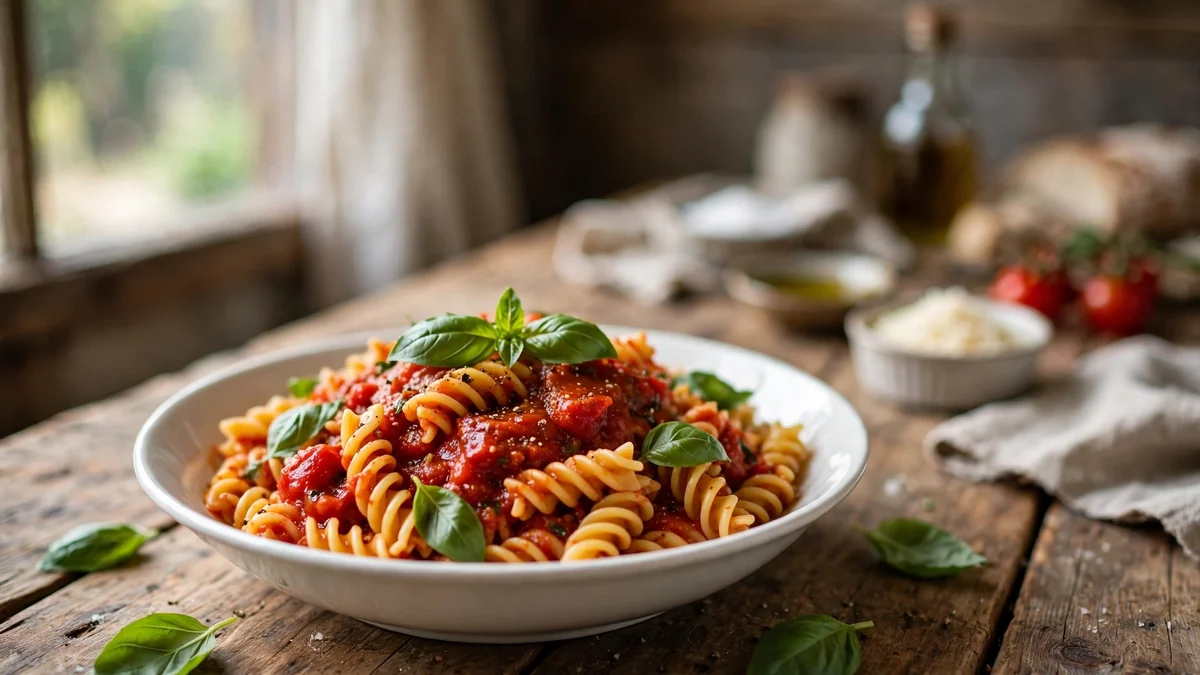

Fusili, properly spelled fusilli, is the corkscrew-shaped pasta that seems designed by someone who got tired of sauce sliding off. Those tight little spirals catch sauce in every twist, so each mouthful carries flavour instead of leaving it behind in the bowl, and that one quality explains why it has become a weeknight staple in kitchens far beyond Italy.
The name comes from the Italian word fuso, meaning spindle, because the earliest versions were made by winding strips of pasta around a thin rod. Today most fusilli is machine-made from durum wheat semolina, it cooks in about ten minutes, and it is one of the most forgiving shapes in the cupboard: hard to overcook badly, easy to dress up, and just as good cold in a salad the next day.
Key takeaways
- Fusilli is a spiral, corkscrew-shaped pasta from Italy, also spelled fusili by many shoppers.
- Its twists trap sauce, which makes it ideal for chunky and creamy sauces alike.
- Dried fusilli usually cooks in 10 to 12 minutes in plenty of salted water.
- It suits tomato sauce, pesto, creamy sauces, baked pasta and pasta salads.
- Save a mug of the starchy cooking water to loosen and bind the sauce.
- Dried fusilli keeps for months in an airtight container in a cool cupboard.
What fusilli is, and where it comes from
Fusilli belongs to the short pasta family, the shapes that are meant to be scooped up with a fork rather than twirled. Each piece is a short helix, usually about three or four centimetres long, with grooves that run along the spiral. The shape is southern Italian in origin, and it was traditionally made by hand, with pasta dough wrapped around a thin iron rod or knitting needle and then slipped off to dry. That hand-made version is still found in parts of southern Italy, where it is sometimes called by local names.
The version in most supermarkets is extruded, which means the dough is pushed through a shaped die, and the spiral is formed as it comes out. It is made from durum wheat semolina and water, sometimes with egg in fresh versions, and it dries to a pale gold. In the United States you will also see the name rotini, which is essentially the same shape sold under a different name, though some brands make rotini slightly tighter and shorter. The Wikipedia page on fusilli covers the shape’s history and its regional names in more detail.
How to cook fusilli properly
Start with a big pot and plenty of water, at least a litre for every 100 grams of pasta, and bring it to a proper rolling boil before the pasta goes in. Salt the water generously, about a tablespoon per litre, because this is the only chance to season the pasta itself. Add the fusilli, give it a good stir so the spirals do not stick together in the first minute, and then leave it to boil. Dried fusilli usually needs 10 to 12 minutes, but the packet time is a guide rather than a rule, so start tasting a minute or two early.
You are aiming for al dente, which means tender with a little bite left in the centre. Fish out a piece, let it cool for a second, and bite it: it should yield easily but still have a firm core. Before you drain, scoop out a mug of the cooking water, because that cloudy liquid is full of starch and it is the secret to a sauce that clings instead of pooling at the bottom of the bowl. Drain the pasta, but do not rinse it, and get it into the sauce straight away while it is still hot.
| Pasta | Shape | Best for | What to watch |
|---|---|---|---|
| Fusilli | Tight spiral | Chunky and creamy sauces, baked pasta, salads | Stir well at the start so spirals do not clump |
| Penne | Short angled tubes | Tomato sauces and baked dishes | Sauce can hide inside the tubes |
| Rotini | Short tight corkscrew | Much the same as fusilli | Often slightly smaller, so check the time |
| Farfalle | Bow ties | Light creamy sauces and salads | The pinched centre cooks slower than the edges |
| Conchiglie | Small shells | Chunky vegetable sauces | Shells trap sauce well but need a good stir |
One mistake is worth avoiding: cooking fusilli in too little water. The spirals need room to move, and in a crowded pot they stick together and cook unevenly. Another is adding oil to the water, which does nothing to stop sticking and only makes it harder for sauce to grip the pasta later. A big pot, plenty of salt, a good stir at the start and a taste test near the end will take care of almost everything.

Sauces that suit fusilli best
Tomato sauce is the natural partner. A simple sauce of garlic, tinned tomatoes, olive oil and basil wraps itself around the spirals, and the grooves hold little pockets of it, so every forkful tastes of tomato rather than plain pasta. Chunky sauces work even better than smooth ones, because pieces of aubergine, courgette or sausage wedge themselves into the twists. If you have a jar of passata and a tin of tomatoes in the cupboard, you are already most of the way there.
Pesto is another classic, and fusilli might be the best shape for it. The green sauce coats the spirals evenly, and the little ridges catch the flecks of basil and pine nut that would slide off a smoother shape. Creamy sauces work well too, from a simple garlic and cream sauce to a baked dish with cheese, where the spirals hold the sauce through the oven and come out bubbling. For a lighter option, try fusilli tossed with olive oil, lemon, cherry tomatoes and rocket, which works warm or cold. Our roundup of the best soups for winter pairs nicely with a small bowl of fusilli on the side.
Fusilli in baked dishes and pasta salads
Fusilli is one of the best shapes for baking, because it holds its shape in the oven and does not go soft the way some shapes do. For a baked pasta, cook the fusilli two minutes less than the packet says, mix it with sauce and cheese, top with more cheese, and bake until golden and bubbling. The undercooking matters: the pasta finishes in the oven, and if it goes in fully cooked it comes out mushy. A dish like this feeds a crowd, keeps well, and reheats without complaint.
Cold pasta salads are where fusilli quietly beats almost every other shape. Cook it, drain it, toss it with a little olive oil while it is still warm so it does not stick, and let it cool before adding chopped vegetables, mozzarella, olives and a sharp vinaigrette. The spirals hold the dressing instead of letting it sink to the bottom of the bowl, which is the usual failure of a pasta salad. It travels well too, which is why it turns up in so many lunchboxes and picnic hampers. Our best picnic recipes include several dishes that sit happily next to a fusilli salad.
Choosing, storing and using up fusilli
When you are buying fusilli, look for pasta made from 100 percent durum wheat semolina, which holds its shape and gives a better bite than softer wheat blends. Bronze-cut pasta, where the dough is pushed through bronze dies, has a rougher surface that grips sauce even better, and it is worth the small extra cost if you cook pasta often. Wholewheat fusilli is nuttier and more filling, and it needs a minute or two longer in the pot. Fresh fusilli cooks much faster, usually in two to four minutes, so watch it closely.
Dried fusilli keeps for months, even years, in an airtight container in a cool, dark cupboard, which is why it is such a useful thing to have on hand. Cooked fusilli keeps in the fridge for three to five days in a sealed container, with a drizzle of oil tossed through it to stop it sticking. Leftover plain fusilli is never a problem: fry it with garlic and chilli, fold it into a frittata with eggs and cheese, or toss it into soup, where it soaks up flavour beautifully. Our guide to the best breakfast foods has ideas for using up odds and ends like this first thing in the morning.
Your fusilli checklist
Keep this list on the fridge until cooking fusilli becomes second nature.
- Use a big pot with at least a litre of water per 100 grams of pasta.
- Salt the water generously before the pasta goes in, about a tablespoon per litre.
- Stir well in the first minute so the spirals do not stick together.
- Start tasting a minute or two before the packet time says it is done.
- Save a mug of starchy cooking water before you drain the pot.
- Never rinse cooked fusilli, and get it into the sauce while it is hot.
- Match chunky or creamy sauces to the shape, and save delicate sauces for long pasta.
- Store dried fusilli airtight in a cool cupboard, and cooked fusilli in the fridge for up to five days.
FAQs
Is fusili the same as fusilli?
Yes, it is the same pasta. Fusilli is the standard Italian spelling, with two Ls, while fusili with one L is a common variant spelling that many shoppers and recipe writers use. If you see fusili on a packet or a menu, you are looking at the same spiral pasta, and it cooks and tastes exactly the same.
How long does fusilli take to cook?
Dried fusilli usually takes 10 to 12 minutes in boiling salted water, but brands vary, so always check the packet and start tasting a minute or two early. Fresh fusilli is much quicker, often ready in two to four minutes. You want it al dente, tender with a little bite left in the middle.
What is the difference between fusilli and rotini?
Very little. Rotini is the name often used in the United States for the same corkscrew shape, and the two are interchangeable in recipes. Some brands make rotini slightly shorter and tighter than fusilli, but the difference is small, and either shape works with the same sauces.
Can I use fusilli in a pasta bake?
Yes, it is one of the best shapes for baking. Cook it two minutes less than the packet says, mix it with sauce and cheese, and bake until golden. The spirals hold their shape in the oven and catch the sauce, and undercooking slightly stops the pasta going soft while it bakes.
Why does my fusilli stick together?
It usually means the pot was too small, the water was not at a full boil, or the pasta was not stirred in the first minute. Use a big pot, plenty of water, and a good stir as soon as the fusilli goes in. Adding oil to the water does not help, and it makes sauce grip the pasta less well.
How long does cooked fusilli keep?
Cooked fusilli keeps for three to five days in a sealed container in the fridge. Toss it with a little olive oil before storing so the spirals do not stick together. Reheat it gently with a splash of water or sauce, or use it cold in a pasta salad.
The bottom line
Fusilli earns its place in the cupboard because it solves the oldest pasta problem: sauce that slides off. Its spirals catch tomato, pesto and cream alike, it cooks in about ten minutes, and it is as happy in a bake or a salad as it is in a bowl with sauce. Buy the bronze-cut kind if you can, salt the water, save a mug of it before draining, and you will rarely go wrong.