
Cat breeders Scotland is a search that needs care, because the rules changed in 2021 and the most famous Scottish breed of all, the Scottish Fold, cannot legally be bred there at all. Anyone looking for a pedigree kitten north of the border needs to know three things: which breeds are on offer, what the licensing law requires, and how to tell a careful breeder from a careless one. This guide covers all three, with the rules as they stand and the questions worth asking before you pay a deposit.
Key takeaways
- Anyone in Scotland breeding 3 or more litters in any 12-month period must hold a local-authority licence.
- No kitten under 8 weeks old may be sold or permanently separated from its mother.
- Breeding Scottish Folds is prohibited in Scotland, because the fold is linked to a painful bone and cartilage disorder.
- The British Shorthair is the most popular pedigreed breed in the UK, about half of GCCF-registered kittens each year.
- Licensed breeders must show their licence number, issuing authority and the kitten’s age in adverts.
- A good breeder rears kittens on the premises where they were born and hands over full veterinary records.
What cat breeding in Scotland actually involves
Breeding cats in Scotland is not a free-for-all, and it has not been since the Animal Welfare (Licensing of Activities Involving Animals) (Scotland) Regulations 2021 came into force on 1 September 2021. Those regulations brought licensing to cat and rabbit breeders for the first time, and the threshold is clear: anyone breeding three or more litters of kittens in any twelve-month period must be licensed, whether or not the kittens are sold. Licences are issued by the local authority, after an inspection of the premises.
The conditions attached to a licence cover the things that matter most to a kitten’s welfare. No kitten under eight weeks old may be sold or permanently separated from its mother. Adverts must include the licence number, the issuing local authority and the cat’s age. The buyer must be told the cat’s age, sex and veterinary record, and the breeder’s name and address must be disclosed to the buyer. Kittens should be reared on the premises where they were born, with a clean, warm, dry sleeping area and space to exercise. The Wikipedia page on the Scottish Fold explains the breed at the centre of the ban, and a guide to the best cat breeds sets the Scottish breeds in their wider context.
| Rule | What it means |
|---|---|
| Licence threshold | 3 or more litters in any 12 months needs a licence |
| Who issues it | The local authority, after a premises inspection |
| Minimum age for sale | No kitten under 8 weeks may be sold or separated from its mother |
| What adverts must show | Licence number, issuing local authority and the cat’s age |
| What the buyer must be told | The cat’s age, sex and veterinary record, plus the breeder’s name and address |

The Scottish Fold: the breed Scotland will not breed
The Scottish Fold is the breed most people picture when they think of Scottish cats, and it is the one you cannot buy from a Scottish breeder. It is a breed of domestic cat from Scotland, known for ears that fold forward and down, giving it an owl-like look. It began with a white barn cat named Susie, found at a farm near Coupar Angus in Tayside in 1961, and the breed name became Scottish Fold in 1966. Males typically weigh 4 to 6 kilograms, and females 2.7 to 4 kilograms.
The fold itself is the problem. It is caused by a mutation linked to feline osteochondrodysplasia, known as FOCD, a cartilage and bone disorder, and research shows that all Scottish Folds are affected. It can cause painful, progressive, degenerative joint disease, which is why breeding Scottish Folds is prohibited in several countries, including Scotland, alongside Australia, Austria, Belgium, the Netherlands, Norway and Sweden. The breed is not recognised by the GCCF or by FIFe. That ban is the single most important fact in this whole guide: any advert offering Scottish Fold kittens bred in Scotland is offering something the law does not allow, and the kindest thing a buyer can do is walk away.
The British Shorthair: Scotland’s safer famous face
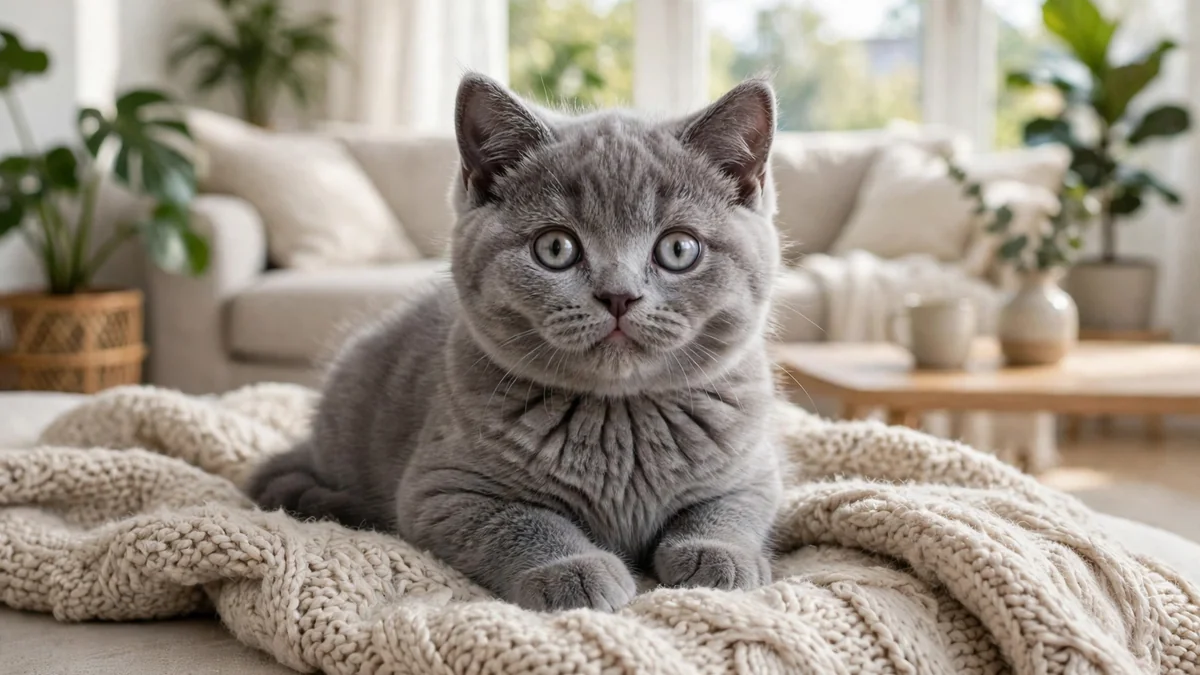
If the Fold is the breed Scotland cannot breed, the British Shorthair is the one it can be proud of without a footnote. It is the pedigree version of the British domestic cat landrace, a stocky cat with a thick coat and a broad face, and its most familiar colour is British Blue, a solid grey-blue coat with copper eyes. It is among the oldest cat landraces, and it was shown at the first-ever cat show, held at Crystal Palace in London in 1871.
The breed’s standing in Britain is hard to overstate. It is the most popular pedigreed breed in the UK, with about half of all kittens registered with the GCCF each year being British Shorthairs. Males weigh 4 to 8 kilograms and females 3 to 5 kilograms, and the breed takes its time growing, reaching full physical maturity at around three years. The temperament is calm, and the breed is said to have inspired Tenniel’s Cheshire Cat. None of that makes it trouble-free: the health watch for the breed is hypertrophic cardiomyopathy, known as HCM, and polycystic kidney disease, known as PKD, and a good breeder will test for both and show you the results. A guide to the best cat food brands and a guide to the best canned cat food will help once the kitten is home.
Other cats you will meet: Scottish Straights and Highland Folds
Two more names turn up in Scottish adverts, and both need a plain explanation. Scottish Straights are Scottish Fold kittens that do not develop folded ears: they are born in Fold litters, their ears stay upright, and they look like ordinary short-haired cats. Because they come from Fold breeding, they sit in the same legal and welfare picture as the Fold itself, and a buyer should ask exactly what was bred and why before going further.
Longhaired Scottish Folds are known as Highland Folds, or Scottish Fold Longhairs, and the same ban and the same health warning apply to them. The coat is different; the folded-ear mutation and the FOCD behind it are not. Beyond the Fold family, Scotland’s breeders work with the usual range of pedigree cats, and the same licensing rules and the same checks apply to all of them. The breed is only the start of the decision. How the kittens were reared, and whether the breeder is licensed where the law requires it, matters at least as much as the name on the advert.
How to check a breeder, step by step
Start with the advert. If the breeder produces three or more litters a year, the advert must show a valid local-authority licence number, the issuing authority and the kitten’s age, and the absence of those details is a reason to stop, not a detail to overlook. Ask for the licence number directly if it is not shown, and check it with the local authority named. A breeder who is licensed will have been inspected, and will not mind being asked.
Then visit, and look at the place rather than the photographs. Kittens should be reared on the premises where they were born, in a clean, warm, dry sleeping area with room to exercise, and the mother should be there to see. Ask to see the veterinary records, and check that the kitten is at least eight weeks old before it goes home. A breeder who rushes a sale, who will not show you the mother, or who offers to meet you in a car park rather than at home, is telling you everything you need to know. Take your time, and be ready to walk away: the right kitten from the right breeder is worth waiting for.
Your cat breeder checklist
- Check whether the breeder needs a licence: 3 or more litters in any 12 months means they must hold one.
- Ask for the licence number and the issuing local authority, and check both before you pay anything.
- Make sure no kitten is sold or separated from its mother before 8 weeks old.
- Visit the premises and see the mother cat, the sleeping area and the exercise space.
- Ask for the kitten’s age, sex and full veterinary record in writing.
- Check the breeder’s name and address, which a licensed breeder must disclose to the buyer.
- Ask about health testing for the breed, including HCM and PKD for British Shorthairs.
- Do not buy a Scottish Fold bred in Scotland: breeding them is prohibited there.
Do cat breeders in Scotland need a licence?
Yes, if they breed 3 or more litters of kittens in any 12-month period, whether or not the kittens are sold. The licence is issued by the local authority after a premises inspection, under the 2021 regulations in force since 1 September 2021.
How old must a kitten be before it can go home?
At least 8 weeks old. No kitten under 8 weeks may be sold or permanently separated from its mother, and the buyer must be told the kitten’s age, sex and veterinary record.
Can you buy a Scottish Fold in Scotland?
Breeding Scottish Folds is prohibited in Scotland. The fold is linked to feline osteochondrodysplasia, a cartilage and bone disorder that research shows affects all Scottish Folds, and the breed is not recognised by the GCCF or FIFe.
What is a Scottish Straight?
A Scottish Straight is a Scottish Fold kitten that does not develop folded ears. Its ears stay upright, and it comes from Fold breeding, so the same questions about breeding and welfare apply.
What is the most popular pedigreed breed in the UK?
The British Shorthair. About half of all kittens registered with the GCCF each year are British Shorthairs, and the breed was shown at the first-ever cat show at Crystal Palace, London, in 1871.
What should a good breeder show you?
A valid licence number in adverts if they breed 3 or more litters a year, kittens reared on the premises where they were born, the mother cat, full veterinary records, and a clean, warm, dry sleeping area with exercise space.
The bottom line
Finding a cat breeder in Scotland comes down to two checks: the law, and the living conditions. The law says three or more litters a year needs a licence, kittens must be at least eight weeks old, and Scottish Folds must not be bred at all. The living conditions say the rest: a clean, warm home, a mother cat you can see, and records you can read. Get both right, and the kitten you bring home will have had the start it deserves.
Rules and guidance can change, so confirm the current licensing requirements with the relevant local authority before you buy, and seek veterinary advice about any breed-specific health testing.