
NMES vs TENS is a comparison that confuses many people, because both treatments use small electrical pulses delivered through pads stuck to the skin, and both are used for pain and recovery. The short answer is that TENS is designed to ease pain, while NMES is designed to make muscles contract and grow stronger, so the right choice depends on whether your main problem is pain or muscle weakness.
Key takeaways
- TENS stands for transcutaneous electrical nerve stimulation, and it targets pain.
- NMES stands for neuromuscular electrical stimulation, and it targets weak muscles.
- Both use electrode pads on the skin, but they use different pulse settings.
- TENS works by calming pain signals and encouraging the body to release its own painkillers.
- NMES works by making muscles contract, as they would during exercise.
- Neither should be used by people with a pacemaker, and both need care around pregnancy, epilepsy, and broken skin.
What is TENS?
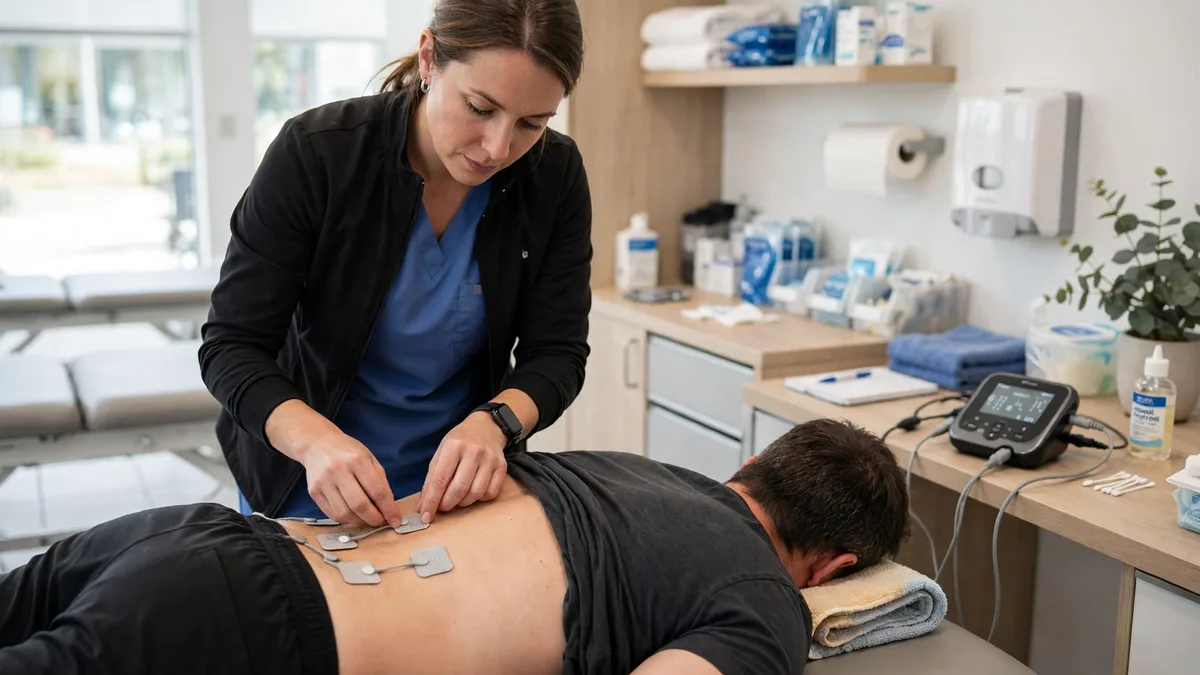
TENS, short for transcutaneous electrical nerve stimulation, is a drug-free way to ease pain. A small battery-powered device sends gentle electrical pulses through electrode pads placed on the skin near the painful area. The pulses tingle rather than hurt, and most people can adjust the strength until it feels comfortable. Sessions usually last from fifteen minutes to an hour, and many people use TENS several times a day.
TENS is thought to work in two ways. First, the pulses stimulate the nerves under the skin, which can partly block pain signals on their way to the brain, a mechanism often described as closing a gate on pain. Second, the stimulation encourages the body to release endorphins, its own natural pain-relieving chemicals. The effect is usually temporary, lasting while the device is on and for a while afterwards, which is why TENS is best seen as a tool for managing pain rather than curing its cause. The Wikipedia page on transcutaneous electrical nerve stimulation gives a clear overview of how TENS works and what the evidence shows.
TENS is commonly used for back pain, neck pain, arthritis, period pain, labour pain, and nerve pain, and it is often recommended after surgery or injury when pain makes movement difficult. It is widely available without a prescription, and many physiotherapists lend or recommend a unit for home use. It does not suit everyone, and it works better for some people than others, but because it is non-invasive and has few side effects when used correctly, it is often one of the first options tried for persistent pain.
What is NMES?
NMES, short for neuromuscular electrical stimulation, also uses electrical pulses through pads on the skin, but its aim is different: to make a muscle contract. The pulses are stronger and slower than those used in TENS, and they are set to trigger a visible contraction, much like the muscle contracting during exercise. The muscle tightens, holds for a few seconds, and then relaxes, and the cycle repeats for the length of the session.
NMES is mainly used in rehabilitation, when a muscle has become weak or is not working properly. After knee surgery, a stroke, or a long period in bed, for example, the thigh muscle can waste quickly and become hard to switch on voluntarily. NMES can help rebuild strength and retrain the muscle to fire, and it is often used alongside ordinary exercises rather than instead of them. It is also used by athletes to support recovery and by some people with long-term conditions that affect muscle control.
The key point is that NMES is a form of exercise for the muscle, delivered electrically. It can be uncomfortable, because a real contraction is stronger than a tingle, and the intensity needs to be high enough to produce a good contraction to be useful. That is why NMES is usually started under the guidance of a physiotherapist, who can place the pads correctly, set the intensity, and build a programme around it.
NMES vs TENS: how they compare
Although the two devices look similar, they are built for different jobs, and the table below sets out the main differences.
| Feature | TENS | NMES |
|---|---|---|
| Main purpose | Relieve pain | Strengthen weak muscles |
| What you feel | Gentle tingling over the painful area | A visible muscle contraction, like exercise |
| Typical use | Back pain, arthritis, nerve pain, period pain | Rehabilitation after surgery, stroke, or injury |
| Session length | Often 15 to 60 minutes, several times a day | Often 15 to 30 minutes, with rest days |
| Needs a professional? | Often bought and used at home | Best started with a physiotherapist |

Which one is right for you?
The choice starts with your main problem. If pain is the issue and your muscles are working reasonably well, TENS is usually the better fit. It can make daily activities more comfortable, help you move more, and reduce the need for painkillers, though it will not fix the underlying cause of the pain. Many people with long-term back pain, arthritis, or nerve pain keep a TENS unit at home and use it when pain flares.
If weakness is the issue, NMES is usually the better fit. After surgery or a stroke, or when a muscle has wasted through disuse, NMES can help the muscle contract again and rebuild strength. It is not a shortcut around exercise, though: the best results come when NMES is combined with a programme of voluntary movement and strengthening, so the brain relearns how to use the muscle as well. A physiotherapist can advise whether NMES is suitable and how to fit it into your rehabilitation.
Some people use both, at different times and for different reasons. Someone recovering from knee surgery, for example, might use TENS to manage pain so they can move, and NMES to strengthen the thigh muscle that has wasted. Some modern devices can do both, with different programmes for pain relief and muscle stimulation, but the settings matter, so it is worth getting advice before switching between modes. Pain that spreads, tingles, or follows a nerve pattern can have many causes, and a guide to carpal tunnel syndrome symptoms explains how a trapped nerve can produce pain, tingling, and weakness in the hand and wrist.
How to use them safely
Both devices are generally safe when used as directed, but there are important exceptions. Neither should be used by anyone with a pacemaker, an implanted defibrillator, or another implanted electronic device, because the electrical pulses can interfere with it. Both should be avoided over the front of the neck, over the eyes, over broken or irritated skin, and over areas with no feeling, where you cannot tell if the intensity is too high. People with epilepsy, heart disease, or a history of blood clots should ask a doctor before using either device, and a guide to heart disease explains why heart conditions need particular care with any new treatment.
Pregnancy needs care too. TENS is sometimes used during labour, under the guidance of a midwife, but it should not be used over the abdomen or lower back in early pregnancy without medical advice. NMES should not be used over the abdomen during pregnancy. If you are pregnant, ask your doctor or midwife before using either device.
Practical care matters as well. Place the pads on clean, dry skin, following the diagrams that come with the device, and do not place pads directly over a painful joint or over a wound. Start at a low intensity and increase it slowly, and stop if you feel pain, dizziness, or skin irritation. Keep the device away from water, do not use it while driving, and do not fall asleep with it switched on. If you use the device at home while recovering from surgery or a stroke, a guide to non-medical home care explains the kinds of practical support that can help during rehabilitation.
A checklist before you start NMES or TENS
- Work out whether your main problem is pain, muscle weakness, or both.
- Ask a physiotherapist or doctor which device and programme suit you.
- Check that you do not have a pacemaker, implanted defibrillator, epilepsy, or a heart condition that rules it out.
- Read the instructions and learn where to place the pads.
- Start at a low intensity and increase it slowly until it feels right.
- Do not use either device over broken skin, the front of the neck, or the eyes.
- Use TENS for pain relief and NMES alongside exercise, not instead of it.
- Stop and seek advice if you feel pain, dizziness, or skin irritation.
Can I use NMES and TENS at the same time?
Not on the same area at the same time, because the two use different pulse settings. Many people use both at different times, for example TENS for pain relief during the day and NMES for muscle strengthening as part of rehabilitation, and some devices offer both programmes.
Does TENS cure pain?
No. TENS manages pain while the device is on and for a while afterwards, but it does not cure the cause of the pain. It is best used as part of a wider plan that includes movement, exercise, and treatment of the underlying problem.
Does NMES build muscle on its own?
NMES can help a weak muscle contract and grow stronger, but it works best alongside voluntary exercise. The best results come when stimulation is combined with a programme of movement and strengthening, so the brain relearns how to use the muscle too.
Is TENS safe to use at home?
For most people, yes, when it is used as directed. It should not be used by anyone with a pacemaker or implanted defibrillator, and it should be avoided over the front of the neck, the eyes, broken skin, and areas with no feeling. Ask a doctor first if you have epilepsy, heart disease, or are pregnant.
How long does a TENS session last?
Sessions commonly last from fifteen minutes to an hour, and many people use TENS several times a day. Follow the guidance that comes with your device, and stop if the skin becomes irritated or the pain changes in an unexpected way.
Can NMES help after a stroke?
NMES is often used in stroke rehabilitation to help weak muscles contract again, particularly in the arm, hand, or leg. It is usually part of a wider programme led by a physiotherapist, and its benefits depend on the individual and the stage of recovery.
The bottom line
NMES vs TENS comes down to one question: is your main problem pain or weakness? TENS calms pain signals and is the better choice for sore backs, joints, and nerves, while NMES makes muscles contract and is the better choice for rebuilding strength after surgery, injury, or a stroke. Either way, get advice before you start, use the device as directed, and treat it as one part of a wider plan that includes movement and proper care.
This article is for general information only and is not medical advice. Electrical stimulation is not suitable for everyone, and only a doctor or physiotherapist who knows your medical history can advise whether NMES or TENS is safe for you, so seek professional advice before using either device.