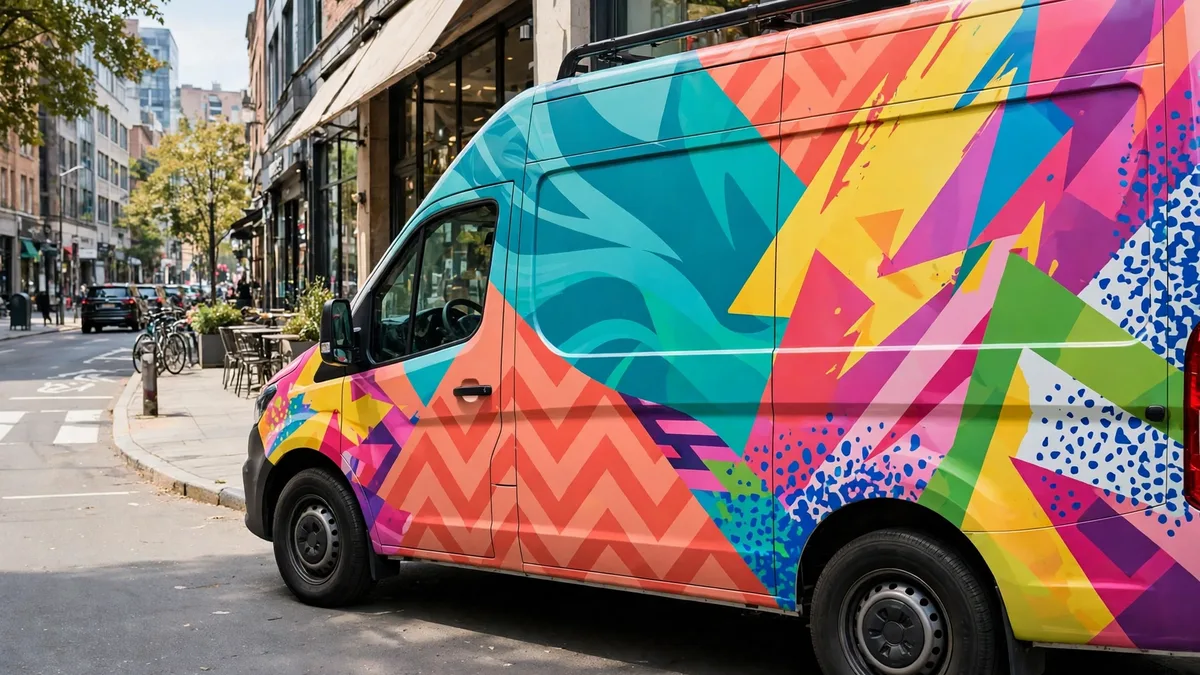

A vehicle wraps car project turns an ordinary car, van or lorry into a moving canvas. The short answer to how it works is simple: a large sheet of adhesive vinyl is printed or coloured, then applied by hand to the panels of the vehicle, where heat and pressure help it follow every curve. The result can be a bold new colour, a full photographic design, or a business name and logo that travels with the vehicle. Unlike a respray, a wrap sits on top of the paint, so the original finish stays underneath and the wrap can be removed later.
Vehicle wraps are now a familiar sight on British roads, from delivery vans carrying a company livery to private cars finished in matte black or satin blue. A wrap changes the look of a vehicle without the permanence of paint, and a business can advertise on a surface it already owns. This guide explains what a vehicle wraps car job involves, the types of vinyl available, how long a wrap lasts, and how to look after one.
Key takeaways
- A vehicle wrap is a large sheet of adhesive vinyl applied to a car, van or lorry.
- Full wraps cover the whole vehicle, while partial wraps cover chosen panels such as the bonnet or roof.
- Cast vinyl suits curves better than calendared vinyl, which is best for flat panels.
- A well-fitted wrap protects the paint beneath it from stone chips and sunlight.
- Wraps need gentle hand washing, not harsh automatic car washes.
- A professional fitter matters more than the brand of vinyl, because poor fitting causes lifting.
What is a vehicle wrap?
A vehicle wrap is a thin, flexible film of vinyl with an adhesive backing, designed to cling to the painted panels of a vehicle. The vinyl is printed with a design or made in a solid colour, then cut to fit each panel before a fitter applies it by hand. Heat softens the film so it can stretch around curves, door handles and mirrors, and a squeegee presses it flat to push out air. When the job is finished, the vehicle looks as though it was painted in the new design, although a close look at panel edges will usually reveal the film.
The idea is not new. Vinyl lettering has been used on vans and shop signs for decades, and the step from letters to full wraps came as printing and vinyl technology improved. Modern films are far more flexible than the early ones, so fitters can now wrap bumpers, mirrors and deep recesses that once defeated them. The Wikipedia guide to vehicle wraps gives a useful overview of the materials and the history behind them, including the difference between the main film types.
Types of vehicle wrap
The first choice is between a full wrap and a partial wrap. A full wrap covers every painted panel, so the vehicle appears to have been finished in an entirely new colour or design. A partial wrap covers only some panels, such as the bonnet and roof, or adds graphics and lettering to an otherwise unchanged vehicle. Partial wraps suit businesses that want a logo and contact details on the doors and rear, and they suit owners who want a contrast roof or bonnet without wrapping the whole car. Finishes range from gloss and matte to satin, metallic and colour-shift films, and a good fitter will advise which one suits the shape of your vehicle.
The second choice is the film itself. Cast vinyl is thin and stable, so it stretches around complex curves without shrinking back. Calendared vinyl is thicker and less flexible, so it suits flat panels and short-term signs. Cast film is the usual choice for a full vehicle wrap, while calendared film is fine for flat-sided vans and simple graphics.
How long does a vehicle wrap last?
A well-fitted wrap on a vehicle that is looked after can last for several years. The exact life depends on the quality of the film, the skill of the fitter, and how the vehicle is stored and cleaned. A car kept in a garage and washed by hand will keep its wrap looking fresh far longer than a van parked in strong sun every day. Horizontal panels such as the bonnet and roof age fastest, because they take the most sun and rain.
Signs of ageing are easy to spot: edges start to lift, colour fades on sun-facing panels, and the surface loses its shine. Small areas of lifting can sometimes be repaired, but widespread fading or cracking means the wrap has reached the end of its useful life. Removing it is still possible, although old vinyl can be harder to peel and may need gentle heat.
One advantage of wrapping is that the paint underneath is protected while the film is in place. Stone chips, bird droppings and sunlight reach the vinyl first, so the original paint often looks fresh when the wrap comes off. That protection is one reason leased vehicles are sometimes wrapped: the owner gets a new look while the lease company gets its paint back in good order. The same idea applies to other protective finishes, as our guide to polishing wood furniture shows: a protective layer only works when it is kept clean and treated gently.
Vehicle wraps at a glance
| Wrap type | Coverage | Best for | Care needed |
|---|---|---|---|
| Full colour change | Every painted panel | A new look without a respray | Hand wash only, gentle products |
| Partial wrap | Chosen panels only | Contrast roof, bonnet or doors | Check edges regularly for lifting |
| Printed graphics | Design across panels | Business branding and adverts | Avoid pressure washers near edges |
| Matte finish | Full or partial | A modern flat look | Special matte cleaner, no wax |
| Protective film | Front panels often | Shielding paint from chips | Inspect yearly for yellowing |

Choosing a wrap and a fitter
Start by deciding what you want the wrap to do. If the aim is advertising, the design matters most: a clear business name, a simple message and contact details that can be read at a glance. If the aim is a colour change, the finish matters most, so ask to see samples in daylight rather than under workshop lights, where colours can look very different.
Choosing the fitter is just as important as choosing the film. Ask to see recent work on vehicles like yours, and look closely at the edges, mirrors and door handles, where poor fitting shows first. A good fitter will inspect your paint before quoting, because wraps do not stick well to rust, peeling lacquer or fresh paint that has not fully cured. They should also explain how long the job will take and what you need to do afterwards, such as waiting before the first wash.
Preparation is part of the job. The vehicle is washed thoroughly, then wiped with a cleaner that removes wax and grease, because any residue under the vinyl will cause bubbles or lifting. The vinyl is cut with a small margin, then applied panel by panel, working from the centre outwards and using heat to stretch the film around curves. A full wrap on a car usually takes a few days, and rushing it is the surest way to a poor result. Keeping a wrapped vehicle clean is much like keeping any valued possession clean, and a reusable water bottle is a small reminder of the same habit: the less grime you let build up, the easier the regular clean becomes.
Looking after a wrapped vehicle
Hand washing is the safest way to clean a wrapped vehicle. Use a mild car shampoo, a soft wash mitt and plenty of water, and rinse thoroughly so no soap dries on the film. Dry the vehicle with a soft towel rather than leaving it to dry in the sun, because water spots can mark matte and satin finishes. Avoid automatic car washes with stiff brushes, which can catch the edges of the vinyl, and keep pressure washers well back from edges and seams.
Bird droppings, tree sap and fuel spills should be cleaned off promptly, because they can stain vinyl if left to bake in the sun. A gentle cleaner made for wraps will deal with most marks. Do not use abrasive polishes or wax on a wrapped vehicle, and never use a gloss wax on a matte finish, which will leave patchy shine. If a small section lifts at an edge, have it repaired quickly, because dirt and water will work their way underneath. A careful owner who washes by hand and parks in shade will get the longest life from any wrap. As our guide to the metal detector shows, a short regular check finds small faults before they become large ones.
A checklist for your vehicle wrap
- Decide whether you want a full wrap, a partial wrap or printed graphics.
- Choose a finish in daylight: gloss, matte, satin, metallic or a colour-shift film.
- Ask the fitter which vinyl they use, cast or calendared.
- Check the fitter’s recent work at mirrors, handles and panel edges.
- Make sure the paint is sound, clean and fully cured before any vinyl goes on.
- Plan to hand wash only, with mild shampoo and a soft mitt.
- Keep pressure washers and stiff car wash brushes away from the wrap.
- Clean bird droppings, sap and fuel spills promptly, and repair lifted edges at once.
Frequently asked questions
Does a vehicle wrap damage the paint underneath?
No, a wrap fitted to sound paint does not damage it, and it usually protects the paint from stone chips and sunlight. Problems arise only when the paint is already failing, with rust or peeling lacquer, because the vinyl can pull loose paint away when removed. A good fitter inspects the paint first.
Can a vehicle wrap be removed?
Yes, wraps are designed to be removable. A fitter uses gentle heat to soften the adhesive, then peels the vinyl away panel by panel and cleans off any residue. Fresh vinyl usually comes off cleanly, while very old or sun-damaged vinyl can take longer. The paint underneath is normally in good condition.
How do I wash a wrapped car?
Wash it by hand with mild car shampoo, a soft wash mitt and plenty of water, then dry it with a soft towel. Avoid automatic car washes with stiff brushes, keep pressure washers away from edges, and do not use abrasive polishes or wax. Matte finishes need a cleaner made for matte surfaces.
Will a wrap hide scratches and dents?
A wrap will hide very light swirls and minor marks, but it will not hide dents, deep scratches or rust. Vinyl follows the shape of the panel underneath, so any dent will still show through. Dents and paint damage should be repaired before wrapping, otherwise the result will look uneven.
Can I wrap a leased vehicle?
In most cases yes, but check the lease agreement first and get written permission from the lease company if required. Many lease companies accept wraps because the film protects the paint, provided the wrap is removed and the vehicle is returned in its original condition.
How long does fitting a full wrap take?
A full wrap on a car usually takes a few days, including washing, preparation, fitting and a final check. Larger vehicles such as vans take longer, and complex designs take longer still. The fitter should give you a clear timetable before the work starts.
The bottom line
A vehicle wraps car project is a flexible way to change how a vehicle looks or to advertise a business, because the vinyl protects the paint beneath it and can be removed when tastes or branding change. The keys to a good result are choosing the right film and finish, finding a fitter whose work you have inspected, and looking after the wrap with gentle hand washing.