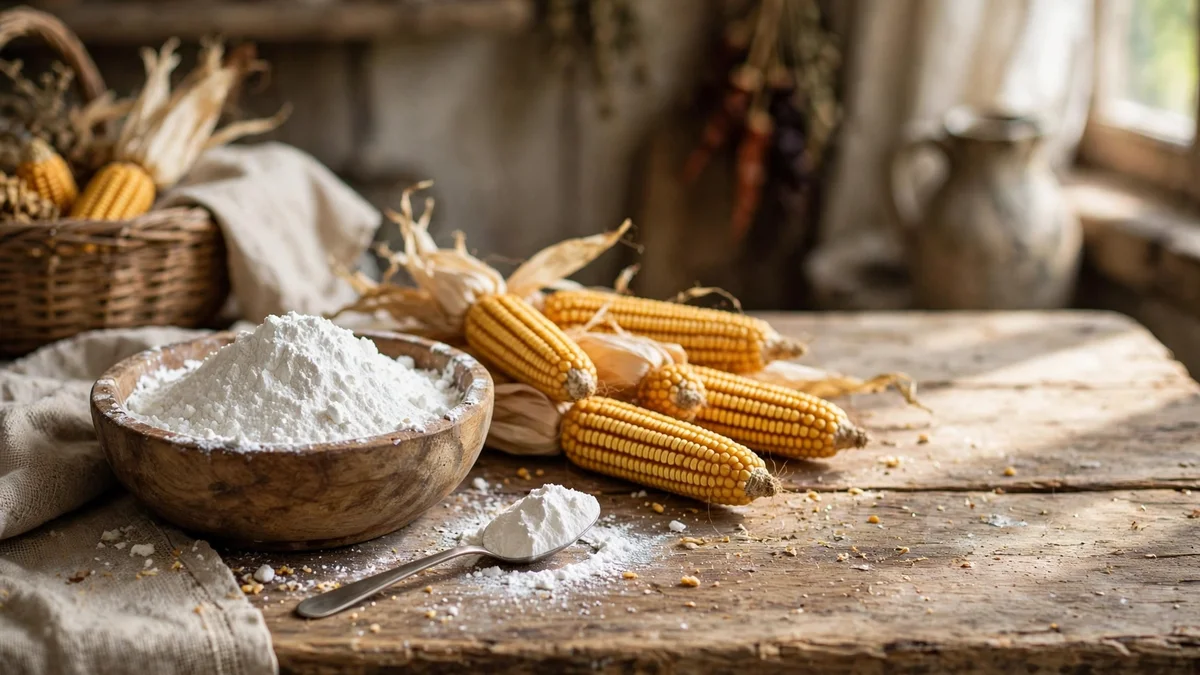

Starch of maize is the fine, white, powdery starch extracted from the endosperm of corn kernels, and it is the same ingredient sold in most shops as cornflour in Britain or cornstarch in the United States. It has almost no flavour of its own, which is exactly why cooks reach for it: it thickens sauces, soups and custards without changing how they taste. If you have ever wondered whether the box in your cupboard is the same thing as the maize starch listed in a recipe, the answer is yes, provided the packet says it comes from maize rather than from wheat or potato.
Key takeaways
- Starch of maize is pure starch milled from the endosperm of corn kernels, with almost no flavour of its own.
- In Britain it is sold as cornflour; in the United States the same product is called cornstarch.
- It thickens best when mixed with cold liquid first, then stirred into a hot liquid and brought briefly to the boil.
- It gives sauces a clear, glossy finish, unlike flour, which makes them opaque and heavier.
- It is naturally gluten-free, but check the packet if you need certified gluten-free status.
- Potato starch, tapioca starch and arrowroot are the closest substitutes, though each behaves slightly differently.
What exactly is starch of maize?
Maize kernels contain starch, protein, fibre, oil and water, and the starch sits in the endosperm, the pale, starchy heart of each kernel. To make starch of maize, manufacturers steep the kernels in water, separate the components, wash the starch and dry it into a soft white powder. What remains is almost pure carbohydrate, with the protein and fibre removed, which is why the powder feels silky between the fingers and dissolves into a smooth paste with cold water. Store the powder sealed in a dry cupboard, and keep the kitchen itself in good order with the care described in our guide to polishing wood furniture.
How starch of maize thickens food
Starch thickens through a process called gelatinisation. When starch granules are heated in liquid, they absorb water, swell and eventually burst, releasing long starch molecules that tangle together and slow the liquid down. With maize starch this happens at a fairly high temperature, so a sauce thickened with it needs to come to a gentle boil and stay there for a minute or so before it reaches its full thickness. A sauce that is only warmed will stay thin, which is the most common reason a first attempt seems to fail.
The standard method is to make a slurry first: mix the starch with an equal amount of cold water until it is completely smooth, then stir that slurry into the hot liquid. Adding dry starch straight into a hot pan is a mistake, because the outside of each clump gels instantly and seals dry powder inside, leaving lumps that no amount of whisking will remove. A slurry avoids that problem entirely, and it takes only seconds to prepare. Stir the sauce as it comes back to the boil, and you will feel it thicken and turn glossy.
Cooking with starch of maize
In everyday cooking, starch of maize earns its place in a handful of jobs. It thickens gravies, stir-fry sauces, soups and fruit fillings, where its clear finish shows off the food rather than clouding it. It gives a glossy sheen to the sauces spooned over steamed puddings and fruit pies, and it helps custards and blancmanges set with a clean, delicate texture. Bakers use a spoonful in shortbread and sponge cakes to lighten the crumb, because replacing a little wheat flour with starch reduces the gluten in the mix and produces a more tender bite. For more on food served on the move, see our guide to the food lorry.
Measuring matters, because the starch is a powerful thickener. A single tablespoon is usually enough to thicken a medium pan of sauce, and adding more than the recipe asks for will turn the result gluey rather than silky. If a sauce ends up too thick, thin it with a splash of the cooking liquid rather than plain water, so the flavour stays balanced. If it ends up too thin, mix another small slurry and stir it in, then bring the pan back to the boil for a minute. The starch only works once it has been heated, so a thin sauce that never reaches the boil will not improve by standing. Keep a bottle of water by the stove while you cook; our guide to the best water bottle can help you choose one.
Starch of maize compared with other thickeners
Every thickener has its own character, and choosing between them is a matter of matching the thickener to the dish. Wheat flour is the old workhorse: it thickens gently, adds a little flavour, and makes sauces opaque, which suits a brown gravy or a white sauce. Maize starch thickens more powerfully by weight, leaves sauces clear and glossy, and adds no flavour, which suits fruit sauces, clear soups and stir-fry glazes. The trade-off is that flour is more forgiving, while maize starch punishes a cook who adds it dry or undercooks it.
| Thickener | Finish | Best for | Watch out for |
|---|---|---|---|
| Starch of maize | Clear and glossy | Sauces, soups, fruit fillings | Needs a full boil; weakens in acid |
| Wheat flour | Opaque and creamy | Gravies, white sauce, roux | Needs longer cooking to lose raw taste |
| Potato starch | Very clear and silky | Gentle sauces, Asian dishes | Breaks down if boiled hard |
| Tapioca starch | Glossy, slightly stretchy | Pie fillings, frozen sauces | Can turn stringy if overused |
| Arrowroot | Clear and light | Acidic sauces, delicate glazes | Costly; turns slimy if overcooked |
| Rice flour | Matte and light | Dusting, frying, gluten-free baking | Thickens less cleanly in sauces |

Is starch of maize gluten-free?
Maize itself contains no gluten, so pure starch of maize is naturally gluten-free, and it is a staple in gluten-free baking for that reason. The catch is the factory it was made in. If the same lines also handle wheat, a packet can carry traces of gluten, so anyone cooking for a coeliac needs to look for a certified gluten-free label rather than assuming every packet is safe. Most supermarket own-brand cornflour in Britain is labelled gluten-free, but the label is the guarantee, not the ingredient list alone.
Substitutes when you run out
Running out of maize starch halfway through a recipe is a familiar kitchen moment, and the best substitute depends on what you are making. For a sauce or soup, potato starch is the closest match: use the same amount, mix it into a cold slurry in the same way, and keep the heat gentle once it thickens. Tapioca starch works in the same quantity too, and it is a good choice for fruit fillings that will be frozen. Arrowroot is the most delicate of the three, so use it where the sauce is acidic or will not be boiled hard, and add it at the end of cooking.
A checklist for using starch of maize well
- Check the packet says maize starch or cornflour, not cornmeal or masa flour.
- Always mix the starch into a smooth slurry with cold water before it meets a hot pan.
- Bring the sauce to a gentle boil and hold it there for a minute so the starch thickens fully.
- Start with a tablespoon for a medium pan, and add more only as a second slurry if needed.
- Add lemon juice, vinegar or tomato near the end of cooking to protect the thickening power.
- Do not boil a thickened sauce hard for a long time, or it may thin again.
- Store the powder sealed in a dry cupboard, and sift it if it forms lumps in humidity.
- Choose a certified gluten-free packet when cooking for someone with coeliac disease.
Frequently asked questions
Is starch of maize the same as cornflour?
In Britain, yes. Cornflour is the British name for starch of maize, the fine white powder milled from corn kernels. In the United States, the same product is called cornstarch, while American cornflour is finely ground whole cornmeal, a different product entirely. Always check whether the packet says the starch comes from maize, and whether the powder is white and silky rather than yellow and gritty.
Can I use cornmeal instead of starch of maize?
No, not in a recipe that asks for starch. Cornmeal is the whole kernel ground into a yellow, gritty flour, and it will make a sauce cloudy and grainy instead of smooth and glossy. It also thickens differently and adds a distinct corn flavour. Cornmeal is the right choice for polenta, cornbread and tortillas, while starch of maize is the right choice for thickening sauces and lightening cakes.
Why has my sauce gone lumpy?
Lumps almost always come from adding dry starch straight into a hot liquid, where the outside of each clump gels instantly and seals dry powder inside. Mix the starch with cold water first to make a smooth slurry, then stir the slurry into the hot liquid and bring it back to the boil. If lumps have already formed, strain the sauce through a fine sieve, or blend it briefly, and it will usually recover.
How much starch of maize should I use to thicken a sauce?
A tablespoon is usually enough for a medium pan of sauce serving four people, mixed with an equal amount of cold water as a slurry. The exact amount depends on how thick you want the result and how much liquid is in the pan. Start with less than you think you need, bring the sauce to the boil, and add a second small slurry only if it is still too thin after a minute at the boil.
Does starch of maize need to be cooked?
Yes. The starch only thickens once its granules have been heated in liquid and swollen, which needs a gentle boil held for about a minute. A sauce that is merely warmed will stay thin, and raw starch stirred into a cold dish will taste chalky and feel gritty. The one exception is dusting and coating, where the starch cooks in the hot oil or oven rather than in a sauce.
Can I freeze a sauce thickened with starch of maize?
You can, but the texture may suffer. Maize starch tends to turn spongy or weep liquid after freezing and thawing, so a frozen sauce may need to be whisked hard or re-thickened when it is reheated. Tapioca starch handles freezing better, so it is the steadier choice for sauces and pie fillings you plan to freeze. If you do freeze a maize-starch sauce, thaw it gently and stir it well as it reheats.
The bottom line
Starch of maize is one of the simplest tools in the kitchen: a flavourless white powder that turns a thin liquid into a glossy sauce, lightens a cake crumb, and crisps a fried coating. Its only real demands are that you mix it with cold liquid first and give it a proper boil, and its only real rival is the confusion over its name. Buy the white powder, keep it dry, use a tablespoon at a time, and it will do its quiet job for years without ever asking for attention.