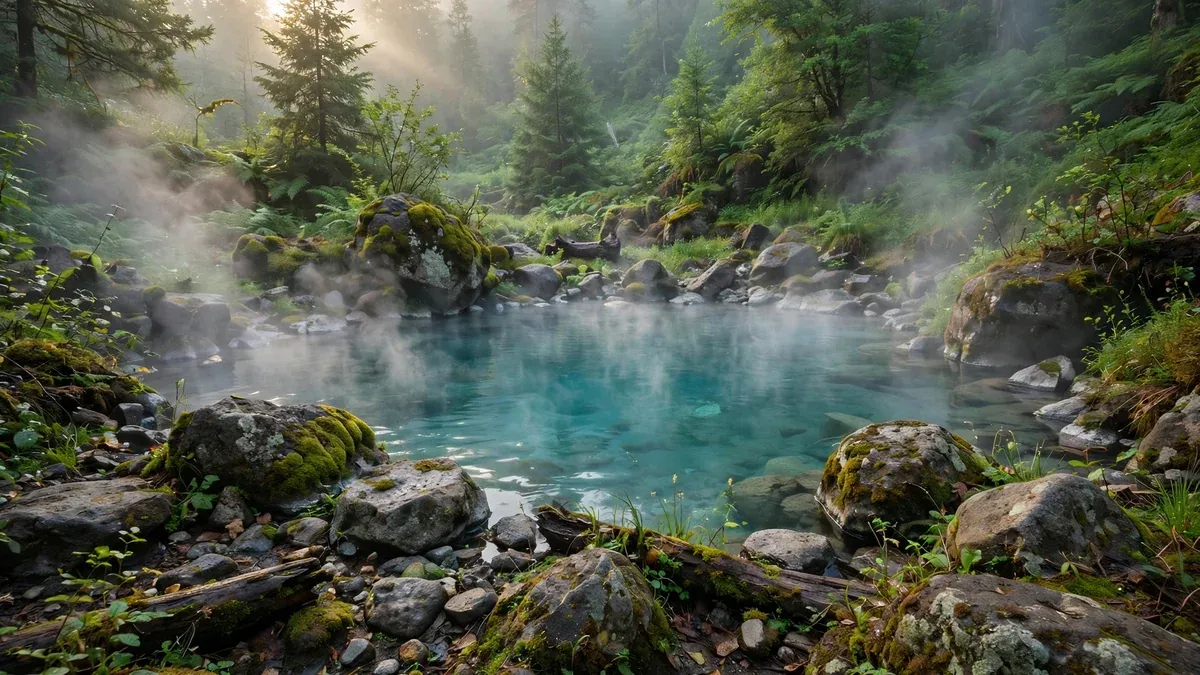

Finding a hot spring closest to you is easier than it used to be, thanks to maps, apps and local guides. Search for a hot spring closest to me and the nearest option may be a developed resort with changing rooms and set hours, or a wild pool reached by a forest trail, and the two need different preparation. This guide explains how to search for a hot spring near you, what to check before visiting, and the safety and etiquette for a good soak.
A hot spring is a natural pool of water heated by the earth, and it is worth knowing that not all of them are safe to enter. Some are pleasantly warm, some are scalding, and some contain minerals or bacteria that make soaking unwise. The temperature, the rules, the walk in and the facilities all vary, so a little research before setting off keeps the visit safe.
Key takeaways
- Search maps, hot spring guides and park websites to find a hot spring closest to you.
- Check the water temperature, access, opening hours and rules before you set off.
- Developed springs offer facilities and supervision; wild springs offer solitude and need more care.
- Never soak in a spring that is untested, unsigned or visibly boiling.
- Shower before entering, keep soaks short, and stay hydrated.
- Leave no trace, keep noise down, and respect local customs and other bathers.
How to search for a hot spring near you
The simplest starting point is a map search. Searching for “hot springs near me” in a maps app will show developed resorts and public baths, usually with reviews, photos, opening hours and directions. Dedicated hot spring guides and websites go further, listing wild and semi-wild springs with details on the walk in, the water temperature and the condition of the pools. National and state park websites are useful too, since many famous springs sit inside protected areas with their own rules.
Local knowledge is often the best source. Visitor centres, local tourism offices and outdoor shops can tell you which springs are open, which are seasonal, and which have changed since the last guidebook. Online forums can help too, but treat their advice with care: conditions change with the weather. Always cross-check a tip against an official source.
When you have a shortlist, compare the options on practical points rather than looks alone. How far is the drive, and how long is the walk from the car? Is there a fee, and do you need to book? Does it allow children? Answering those questions first narrows the list to the springs you can actually visit, and it avoids a wasted journey.
Developed springs and wild springs
Developed hot springs are the easiest introduction. They usually have pools with tested water temperatures, changing rooms, showers, lifeguards or staff, and clear rules about swimwear, time limits and children. Resorts, hotels and public bathhouses all fall into this group. The water is monitored, the surroundings are maintained, and help is nearby if something goes wrong. For a first visit, or a visit with children, a developed spring is the sensible choice.
Wild hot springs are natural pools with little or no development, often reached by a trail and sometimes free to use. They can be beautiful, quiet and memorable, but they carry more risk. The temperature may not be tested, the pools may be slippery or deep, and there may be no phone signal or help nearby. Some wild springs sit on private land, where access is only allowed with permission. Others are in national parks where soaking is not allowed at all, even if the water looks inviting.
The difference matters most for safety. In a developed spring, the operator has already done the checking. In a wild spring, that checking falls to you. That does not mean wild springs should be avoided, only that they need more preparation: check the temperature, go with someone else, and carry water and a first aid kit.

What to check before visiting
Water temperature is the first thing to check. Most people find soaking comfortable between about 37 and 40 degrees Celsius, and water above 43 degrees can scald in minutes. Wild springs can be far hotter, and some are near boiling at the source. If no temperature is published, test the water with a hand or foot before stepping in, and never jump or dive into a spring you have not tested.
Access and rules come next. Check whether the spring is open, whether there is a fee or a booking system, and whether it is on public or private land. Some springs close in winter, some close after heavy rain, and some limit numbers to protect the site. Check the walk as well: a spring that is a gentle stroll from the car park is very different from one that needs a steep hour-long hike, and the walk back, wet and in the dark, can be harder than the walk in.
Facilities and health guidance round out the checks. Find out whether there are toilets, changing rooms and drinking water, and whether swimwear is required or whether bathing is nude, as in some traditional baths. People who are pregnant, or who have heart conditions or high blood pressure, should check with a doctor before soaking in very hot water. Children should only soak in shallow, tested pools under close supervision, and for short periods.
Types of hot spring at a glance
Hot springs come in several forms, and each suits a different kind of visit. The table below compares the main types.
| Type | What it is | Facilities | Best for |
|---|---|---|---|
| Resort spring | Developed pools at a hotel or spa | Full: changing rooms, showers, staff | First visits, families, comfort |
| Public bathhouse | Shared indoor or outdoor baths | Good: showers, lockers, rules | Regular soaking, local culture |
| Park spring | Pools inside a national or state park | Basic: signs, paths, toilets | Scenery combined with a soak |
| Wild spring | Natural pools with little development | None or minimal | Experienced visitors, solitude |
| Onsen | Japanese hot spring bath | Varies: traditional rules apply | Cultural experience in Japan |
| Thermal river | Warm water flowing in a riverbed | None | Short dips, not full soaking |
Safety at a hot spring
Hot water is the main risk, and it deserves respect. Never soak alone in a wild spring, and never put your head under the water. Keep soaks short, usually 15 to 20 minutes at a time, then get out, cool down and drink water before going back in. Alcohol and hot water are a poor combination, since both lower blood pressure. If you feel dizzy, nauseous or unusually hot, get out at once and cool down in the shade.
Water quality is the second concern. Natural hot water can carry bacteria, including in rare cases the amoeba that causes primary amoebic meningoencephalitis, which enters through the nose. The risk is very low, but it is a reason not to dunk your head, especially in warm, still water. Cuts and grazes should be covered, and anyone with an open wound or a skin infection should stay out of shared pools. In parks such as Yellowstone, soaking in thermal features is not allowed at all, because the water can be boiling and acidic.
Etiquette for a good soak
Hot springs are shared spaces, and a little courtesy goes a long way. Shower before entering the water, and wash off sunscreen, lotions and sweat first. Keep your voice down, since many people visit hot springs for quiet and rest. Do not bring glass, food or soap into the pool. Follow the spring’s rules about swimwear, photography and time limits, even if other visitors do not.
Local customs vary, and they are worth learning before you go. In Japan, bathers wash thoroughly before entering an onsen, swimwear is not worn, and tattoos may need to be covered. In Iceland, showering before entering a pool is the norm. In the United States, most developed springs require swimwear. A quick check of the local rules avoids embarrassment and shows respect for the place and the people who look after it.
A checklist for your hot spring visit
Pack for the spring you are visiting, not the one you imagine. This checklist covers the basics.
- Check the temperature, access, hours and rules before you set off.
- Tell someone where you are going, especially for a wild spring.
- Bring swimwear, a towel, water shoes and drinking water.
- Pack a dry bag for your phone, keys and clothes.
- Carry a first aid kit and a way to call for help.
- Shower before entering and keep your first soak short.
- Do not put your head under the water or splash water up your nose.
- Take all rubbish home and leave the pools as you found them.
- Check the weather and the walk back.
Frequently asked questions
How do I find the hot spring closest to me?
Start with a maps search for “hot springs near me”, then check dedicated hot spring guides and park websites for details on temperature, access and rules. Visitor centres can confirm which springs are open. Compare the options on distance, the walk in, fees and facilities before choosing.
Are natural hot springs safe to swim in?
Many are, but not all. A safe spring has water at a comfortable temperature, usually around 37 to 40 degrees Celsius, and is in a place where soaking is allowed. Springs that are untested, visibly boiling or in parks where soaking is banned should not be entered. Test the water before getting in, keep your head above the surface, and never soak alone in a wild spring.
What temperature should a hot spring be?
Most people find soaking comfortable between about 37 and 40 degrees Celsius. Water above 43 degrees can scald in minutes, and some natural springs are near boiling at the source. If no temperature is published, test the water with a hand or foot first. Children and people with heart conditions should be extra careful with very hot water. See Wikipedia’s overview of hot springs.
What should I bring to a hot spring?
Bring swimwear, a towel, water shoes, drinking water and a dry bag for valuables. For a wild spring, add a first aid kit, a charged phone and a torch if you may walk back in the dark. Leave glass, soap and food out of the pool, and take all rubbish home with you.
Can children visit hot springs?
Yes, at developed springs with tested water and shallow pools, under close supervision and for short periods. Children overheat faster than adults, so keep their soaks brief and make sure they drink water. Wild springs with untested temperatures, deep pools or difficult access are not suitable for young children.
Do I need to book a hot spring visit?
It depends on the spring. Popular resorts and bathhouses often need booking, especially at weekends, and some limit numbers to protect the site. Public and wild springs are usually first come, first served. Check the website or call ahead before travelling.
The bottom line
Finding a hot spring closest to you is the easy part: a map search and a local guide will give you a shortlist in minutes. The useful work is the checking that follows: the water temperature, the access, the rules and the facilities. Choose a developed spring for a first visit, and save wild springs for when you have the experience to enjoy them safely. Test the water, keep soaks short, shower first, and leave the pools as you found them. For more ideas for getting out and about, read our guide to the best places to visit in spring, our article on the best water bottle, and our guide to the best places to visit in Norway.