
Medium ground coffee is coffee beans ground to a texture like coarse sand or granulated sugar, and it is the most versatile grind size most home brewers will ever need. It sits between fine ground coffee, which suits espresso, and coarse ground coffee, which suits a cafetiere, and it works well in drip machines, pour over brewers and many automatic coffee makers. If you buy one bag of pre-ground coffee and want it to work in more than one brewer, medium is the grind to choose, because it extracts evenly in the three to five minutes that most everyday brewing takes.
Grind size matters because it controls how quickly water pulls flavour from the coffee. Finer grounds expose more surface to the water and extract quickly, while coarser grounds extract slowly. Get the grind wrong and the same beans can taste bitter and harsh or weak and sour, even when everything else stays the same. This guide explains what medium ground coffee looks like, which brewers it suits, how to brew with it, and how to tell when your grind needs adjusting.
Key takeaways
- Medium ground coffee feels like coarse sand or granulated sugar between your fingers.
- It suits drip machines, pour over brewers and most automatic coffee makers.
- It is the most versatile grind size, and the best choice if you buy pre-ground coffee.
- Water should be just off the boil, around 93 to 96 degrees, for a balanced cup.
- A good starting ratio is about 60 grams of coffee per litre of water.
- If the coffee tastes bitter, grind coarser; if it tastes sour and weak, grind finer.
What medium ground coffee looks and feels like
The simplest test is to rub a pinch between your thumb and forefinger. Medium ground coffee feels gritty, like coarse sand or granulated sugar, with visible particles that hold their shape rather than clumping into a powder. Fine ground coffee, by contrast, feels smooth and floury, while coarse ground coffee feels like rough sea salt, with distinct chunks you can pick out individually. Once you have felt all three, the differences are easy to recognise, and you can judge a new bag in a few seconds.
Appearance is a useful second check. Medium grounds look like rough brown sand, with pieces that are mostly the same size and few dusty fines mixed in. A grind with a lot of dust suggests a cheap blade grinder, which chops beans unevenly and leaves both powder and chunks in the same batch. Uneven grounds extract unevenly: the dust over-extracts and turns bitter while the chunks under-extract and taste sour, so the cup ends up muddled. A burr grinder, which crushes beans between two plates, gives a far more even medium grind than a blade grinder, and it is the single best upgrade for anyone who brews at home.
Most pre-ground coffee sold in bags is ground to a medium or medium-fine size, because that is what suits the drip machines and filter makers most people own. If a bag simply says ground coffee without naming a size, it is almost certainly in the medium range, and it will work well in a drip machine or pour over brewer. Espresso drinkers and cafetiere users need to be more careful, since both of those methods are fussy about grind size, but for everyday filter brewing, a standard bag of ground coffee is a safe starting point.
Which brewers suit a medium grind
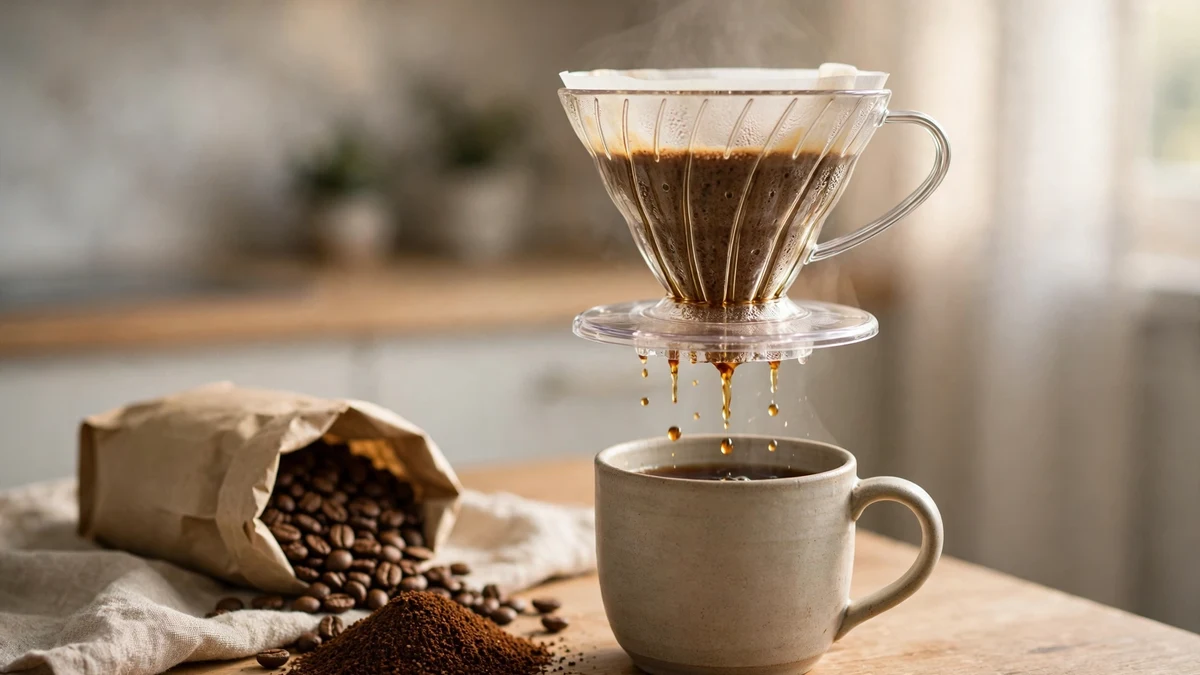
Drip machines are the natural home of medium ground coffee. Water drips through the grounds over three to five minutes, which is exactly the contact time a medium grind needs to extract evenly. A medium-fine grind can also work in a drip machine, but a fine grind risks over-extraction and a bitter cup, while a coarse grind will taste thin and weak. If your drip coffee tastes flat, try a slightly finer grind before you change anything else.
Pour over brewers, such as the V60 and the Chemex, also suit a medium grind, although the exact setting depends on the brewer. A V60 with a single cup of water usually needs a medium-fine grind, because the water passes through quickly, while a Chemex, with its thicker paper filter, often works best with a medium to medium-coarse grind. The rule is simple: the faster the water passes through, the finer the grind should be, and the slower it passes, the coarser. Start with a medium grind and adjust one step at a time until the cup tastes balanced.

A cafetiere, or French press, is the one common brewer where a medium grind is not ideal. The metal mesh filter lets fine particles through, so a medium grind produces a cup with a lot of sediment and a muddy flavour. A coarse grind is the standard choice for a cafetiere, because the larger particles stay behind the mesh. Automatic coffee makers with built-in grinders usually offer a grind setting, and medium is the usual default. Espresso machines need a fine grind, and a medium grind will run through far too quickly and taste sour and weak.
How to brew medium ground coffee
Start with fresh beans if you can, and grind just before brewing. Coffee loses flavour quickly once it is ground, because the extra surface lets aroma escape and lets oxygen in, so pre-ground coffee is best used within a week or two of opening. Store beans and grounds in an airtight container away from light and heat, and keep them out of the fridge, where moisture and food smells can spoil them.
The ratio is the next thing to get right. A good starting point is about 60 grams of coffee per litre of water, which works out at roughly two tablespoons of ground coffee per 180 millilitre cup. Weighing the coffee is more reliable than scooping, because a tablespoon of dark roast weighs less than a tablespoon of light roast, but a scoop is fine while you are learning. Use filtered water if your tap water tastes of chlorine, and heat it to just off the boil, around 93 to 96 degrees, since boiling water scorches the grounds and flat water under-extracts them.
For a pour over, rinse the paper filter with hot water first, then add the grounds and pour just enough water to wet them, letting the coffee bloom for about thirty seconds. The bloom releases trapped gas and helps the water extract evenly. Then pour the rest of the water in slow circles, keeping the water level steady, and aim to finish in about three minutes. For a drip machine, the process is simpler: fill the reservoir, add the grounds to the filter, and let the machine do the work, but rinse the carafe with hot water first so the coffee stays hot.
| Brewer | Best grind | Typical brew time |
|---|---|---|
| Drip machine | Medium | Three to five minutes |
| Pour over, small cup | Medium-fine | Two to three minutes |
| Pour over, large pot | Medium | Three to four minutes |
| Cafetiere | Coarse | Four minutes |
| Espresso machine | Fine | About thirty seconds |
| Cold brew | Extra coarse | Twelve to twenty-four hours |
Fixing a cup that tastes wrong
A bitter, harsh cup usually means over-extraction: the water has pulled too much from the grounds. The fix is to grind a little coarser, shorten the brew time, or lower the water temperature slightly. Check the ratio too, since too much coffee for the water can also taste bitter and heavy. Change one thing at a time, so you know which change made the difference, and give each change a day or two before judging it.
A sour, weak cup usually means under-extraction: the water has not pulled enough from the grounds. The fix is the opposite: grind a little finer, lengthen the brew time, or use slightly hotter water. A sour cup is also a sign of stale beans or water that was not hot enough, so check those before you blame the grind. If the cup tastes both bitter and sour at once, the grind is probably uneven, with dust over-extracting and chunks under-extracting, and a better grinder or a fresh bag of grounds will help more than any change to the recipe.
Your medium ground coffee checklist
Use this list to get a balanced cup from a medium grind.
- Buy whole beans when you can, and grind them just before brewing.
- Check the grind by touch: medium feels like coarse sand or sugar.
- Match the grind to the brewer, starting with medium for drip and pour over.
- Use about 60 grams of coffee per litre of water as a starting ratio.
- Heat water to just off the boil, around 93 to 96 degrees.
- Let pour over coffee bloom for about thirty seconds before the main pour.
- Keep brew time near three to five minutes for filter methods.
- Store coffee in an airtight container, away from light, heat and moisture.
- Change one variable at a time when a cup tastes wrong.
- Use a cafetiere only with a coarse grind, and an espresso machine only with a fine one.
Frequently asked questions
What is medium ground coffee?
Medium ground coffee is coffee beans ground to a texture like coarse sand or granulated sugar. It is the middle grind size, between fine ground coffee for espresso and coarse ground coffee for a cafetiere, and it suits drip machines, pour over brewers and most automatic coffee makers.
Is medium ground coffee good for a cafetiere?
Not really. A cafetiere uses a metal mesh filter that lets fine particles through, so a medium grind produces a muddy cup with a lot of sediment. A coarse grind is the standard choice for a cafetiere, because the larger particles stay behind the mesh.
Can I use medium ground coffee in an espresso machine?
No, a medium grind is too coarse for espresso. Water runs through it too quickly, so the coffee tastes sour and weak. Espresso needs a fine grind that slows the water down to about thirty seconds of contact time.
How much medium ground coffee should I use per cup?
A good starting point is about 60 grams of coffee per litre of water, which is roughly two tablespoons per 180 millilitre cup. Weighing is more accurate than scooping, but a scoop is fine while you are learning, and you can adjust to taste.
How long does ground coffee stay fresh?
Ground coffee loses flavour quickly once it is opened, and it is best used within a week or two. Whole beans keep longer, especially in an airtight container away from light and heat, so grinding just before brewing gives the freshest cup.
Why does my medium ground coffee taste bitter?
Bitter coffee usually means over-extraction, so try grinding a little coarser, shortening the brew time, or lowering the water temperature slightly. Change one thing at a time, and check the ratio as well, since too much coffee for the water can also taste bitter.
The bottom line
Medium ground coffee is the most useful grind size for everyday brewing: coarse enough to avoid bitterness, fine enough to avoid weakness, and suited to drip machines, pour over brewers and most automatic makers. Learn what it feels like, match it to your brewer, use fresh water just off the boil, and adjust one step at a time when the cup tastes wrong. For more kitchen guidance, see our guide to the best smoothie blender, our round-up of the best stand mixer, and our guide to the best toaster oven.