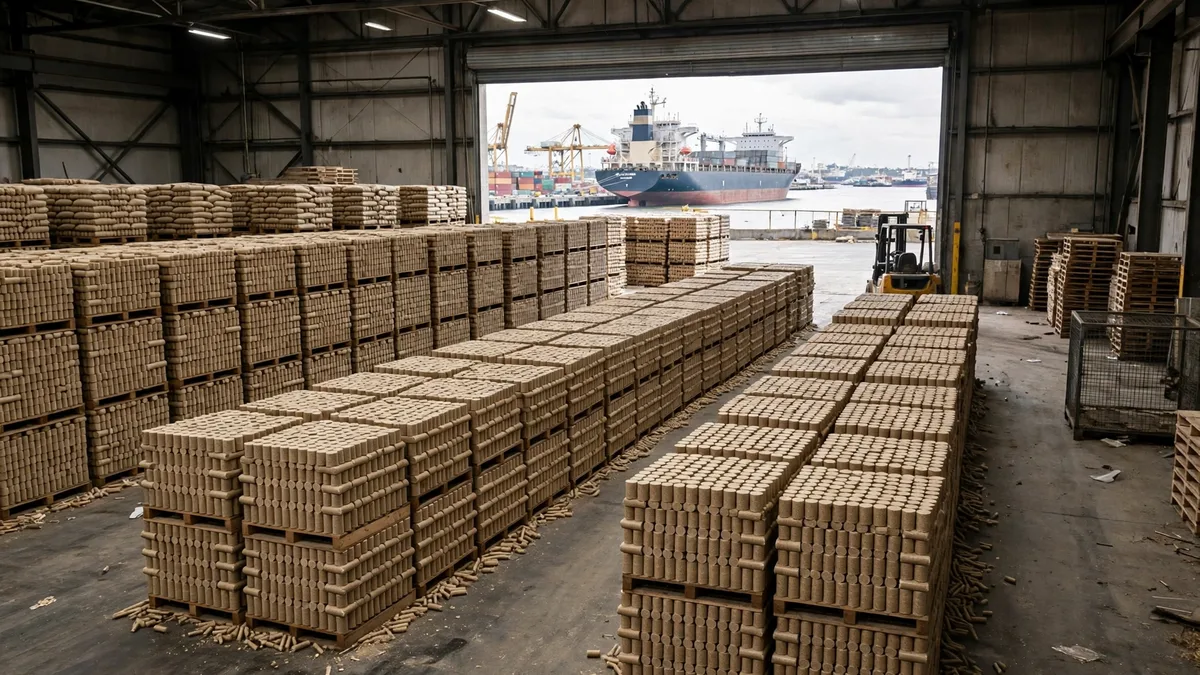

Wood pellets import UK is a large and closely watched trade, because Britain is one of the world’s biggest buyers of wood pellets, most of which arrive by ship from overseas. The short answer to what importers and buyers need to know is this: pellets are mainly burned for heat and power, imports dominate the market because home-grown supply is small, and every shipment has to meet sustainability, customs and quality rules before it can be used. Get those rules right and the trade runs smoothly; get them wrong and a shipment can be delayed, rejected or left unsellable.
This guide explains, in general terms, where the UK’s pellets come from, how they travel, which rules apply, and what to check before ordering. It names no importers and gives no prices, because both change constantly.
Key takeaways
- The UK is one of the world’s largest consumers of wood pellets, and most of its supply is imported.
- Pellets are mainly used for biomass heat and power, with a smaller share going to homes and small businesses.
- Imports arrive mostly by ship in bulk, then move by road or rail to power stations, distributors and homes.
- Sustainability rules matter: biomass used for supported energy must come from legal, sustainable sources with proper records.
- Quality certification, such as ENplus for heating pellets, helps buyers know what they are getting.
- Customs paperwork, tariffs and checks apply like any other import, so documents must be ready before the ship docks.
What wood pellets are and who uses them
Wood pellets are small cylinders of compressed sawdust and wood residues, made by forcing dried wood material through a die under pressure. The natural lignin in the wood binds them together, so no glue is needed. They are dense, dry and uniform in size, which makes them easy to transport, store and feed into boilers and power stations automatically. A tonne of pellets takes up far less space than the loose wood it came from.
In the UK, the biggest user by far is the biomass energy sector, where pellets are burned in large power stations to generate electricity. Homes, farms and small businesses use them too, in pellet boilers and stoves, and some animal bedding and other niche uses exist. The common thread is that pellets are treated as a renewable fuel, which is why the rules around where they come from matter so much.

Where the UK’s pellets come from
The UK grows only a small share of the pellets it uses, so imports dominate. The United States has long been the largest single source, supplying roughly three quarters of UK imports in recent years, with other sources including Canada and parts of Europe. That pattern reflects where large-scale pellet production exists and where shipping routes are established, and it can shift as markets and policies change.
Because so much supply crosses the Atlantic, the trade is sensitive to shipping costs, exchange rates and policy decisions on both sides. That is why availability and delivery times can vary, and why it pays to plan orders ahead rather than at the last minute.
How pellets travel from forest to boiler
The journey starts in the country of origin, where pellets are made from forestry residues and sawmill by-products, then loaded in bulk onto ships. On arrival at a UK port, they are unloaded into storage, checked, and moved onward by road or rail. Large power stations often take deliveries directly at dedicated terminals, while smaller buyers receive bagged pellets through distributors.
Storage matters at every stage. Pellets must be kept dry, because wet pellets swell, crumble and lose energy value, and they can also be a safety risk in enclosed stores, where wood dust and the gases pellets give off need proper ventilation. Good importers treat dry, ventilated storage as a basic requirement, not a luxury, and buyers should check the same at home.
Sustainability rules in general terms
Wood pellets are counted as a renewable fuel in the UK, but only when they meet sustainability criteria. The rules, which broadly mirror European standards that were carried into UK law, require that biomass comes from legal and sustainable forestry, with a chain of custody showing where the wood came from. Independent certification schemes exist to check this, and the best-known in the sector is the Sustainable Biomass Program.
These rules matter most where public support is involved: energy from biomass that qualifies for support must prove its sustainability, and generators must keep records. For ordinary buyers the lesson is simpler: ask where the pellets came from, look for recognised certification, and keep the paperwork.
Quality standards buyers should know
Not all pellets are the same. For heating use, the widely recognised quality mark is ENplus, which sets grades for residential and commercial pellets, with the top grade being the most consistent in size, ash content and energy value. Industrial buyers use different specifications, agreed directly with their suppliers, but the principle is the same: a clear specification, tested regularly, protects both sides.
For a household buyer, the checks are straightforward: look for certification on the bag, check that pellets are dry and intact rather than dusty or swollen, and store them somewhere dry and ventilated. Poor-quality pellets can clog a boiler, produce more ash and give less heat, so the cheapest bag is not always the best value.
Customs, tariffs and paperwork
Like any other import, wood pellets must clear UK customs, with the right commodity code, origin documents and declarations. Since the UK left the European Union, imports from the EU face customs procedures that did not apply before, and tariffs can apply to goods from particular countries, as has been the case for pellets from Russia and Belarus. The details change with policy, so the reliable approach is to check the current position with a customs adviser or the official guidance before ordering.
Paperwork is where most import problems start: missing or incorrect documents can hold a shipment at the port, adding storage costs and delaying delivery. Importers usually work with freight forwarders and customs agents who handle this routinely. Have the documents ready before the ship arrives, not after.
Wood pellets import UK: comparing the routes
The table below compares the main ways pellets reach UK buyers, so the differences in scale, handling and paperwork are clear.
| Route | Who it suits | How pellets travel | Main thing to check |
|---|---|---|---|
| Bulk by ship | Power stations, large users | Loose in bulk carriers | Sustainability records and port handling |
| Bagged by ship | Distributors, retailers | Bags in containers or bulk | Quality grade and dry storage |
| Overland from Europe | Smaller, regular orders | Lorries and ferries | Customs declarations since Brexit |
| Domestic supply | Local buyers | Road, short distances | Availability, as supply is limited |
| Direct from producer | Large, regular buyers | Ship then road or rail | Contract terms and certification |
| Through a distributor | Homes and small businesses | Bagged, delivered by lorry | Certification on the bag |
What to check before you order
Before placing an order, ask the supplier for the basics in writing: the origin of the pellets, the quality grade and certification, the moisture and ash figures, and the delivery and storage arrangements. A supplier who answers clearly and quickly is usually a supplier who has nothing to hide. Compare those answers across suppliers rather than comparing price alone, because a low price on uncertified or damp pellets is rarely a saving.
Also think about storage before the delivery arrives: pellets need a dry, ventilated space, and bagged pellets need to stay off damp floors. Plan the delivery route too, since a lorry needs access to your property. A little planning here prevents most of the problems buyers report.
Risks and how to reduce them
The main risks in importing pellets are quality, delay and paperwork, and all three can be reduced with preparation. Quality risk falls when you buy certified pellets from a supplier who can show test results. Delay risk falls when you order early and allow time for shipping and customs. Paperwork risk falls when documents are checked before the ship sails, not when it docks.
There is also a market risk: prices and availability move with shipping costs, exchange rates and policy changes, so a price quoted today may not hold for long. Long-term contracts and regular ordering can smooth this out for larger buyers, while household buyers can simply order before the heating season rather than during it. None of these risks is a reason to avoid imported pellets; they are reasons to plan.
Your wood pellets import UK checklist
Use this list before ordering imported pellets, whether for a business or a home.
- Confirm what the pellets will be used for, since heating and power uses have different specifications.
- Ask the supplier where the pellets come from and how sustainability is evidenced.
- Check for recognised certification, such as ENplus for heating pellets.
- Ask for the quality figures, including moisture and ash content, in writing.
- Confirm the delivery method, the timing and who handles customs paperwork.
- Check the current customs and tariff position for the country of origin.
- Make sure dry, ventilated storage is ready before the delivery arrives.
- Inspect the delivery on arrival and report damaged or damp bags at once.
- Keep all paperwork, including certificates and delivery notes, for your records.
- Order ahead of the heating season rather than waiting until stocks run low.
Frequently asked questions
Does the UK import most of its wood pellets?
Yes. The UK is one of the world’s largest consumers of wood pellets, and domestic production covers only a small share of demand, so most pellets are imported, with the United States the largest single source in recent years.
What are wood pellets mainly used for in the UK?
Most UK pellets are burned for biomass energy, mainly in large power stations, with a smaller share used for heating in homes, farms and small businesses. A small amount goes to other uses such as animal bedding.
What sustainability rules apply to imported wood pellets?
Biomass counted as renewable in the UK must come from legal and sustainable sources, with records showing the chain of custody from forest to user. Independent schemes such as the Sustainable Biomass Program check this, and generators claiming support must report on their supply chains.
What is ENplus certification?
ENplus is a quality certification for wood pellets used for heating. It sets grades based on factors such as size, ash content and energy value, so buyers can tell what they are getting and compare suppliers on a like-for-like basis.
Do I need customs paperwork to import wood pellets?
Yes, like any import, wood pellets must clear UK customs with the right commodity code, origin documents and declarations. Since Brexit, imports from the EU also face customs procedures, and tariffs can apply to some countries of origin.
How should imported wood pellets be stored?
Keep them dry and ventilated, whether loose in a store or bagged in a shed. Wet pellets swell and crumble, lose energy value and can be a safety risk in enclosed spaces, so dry storage is essential from the port to the boiler.
The bottom line
Wood pellets import UK is a trade built on scale: Britain buys most of its pellets from overseas, mainly for biomass energy, and the shipments that run smoothly are the ones with certified quality, proven sustainability and paperwork ready before the ship docks. For buyers, the checks are simple: know the origin, look for certification, confirm the quality figures, and have dry storage ready. Do that, and imported pellets are a reliable fuel. For more home and heating guides, see our advice on the best way to heat up pizza, our guide to how to reseal windows, and our notes on how to clean soapstone countertops.