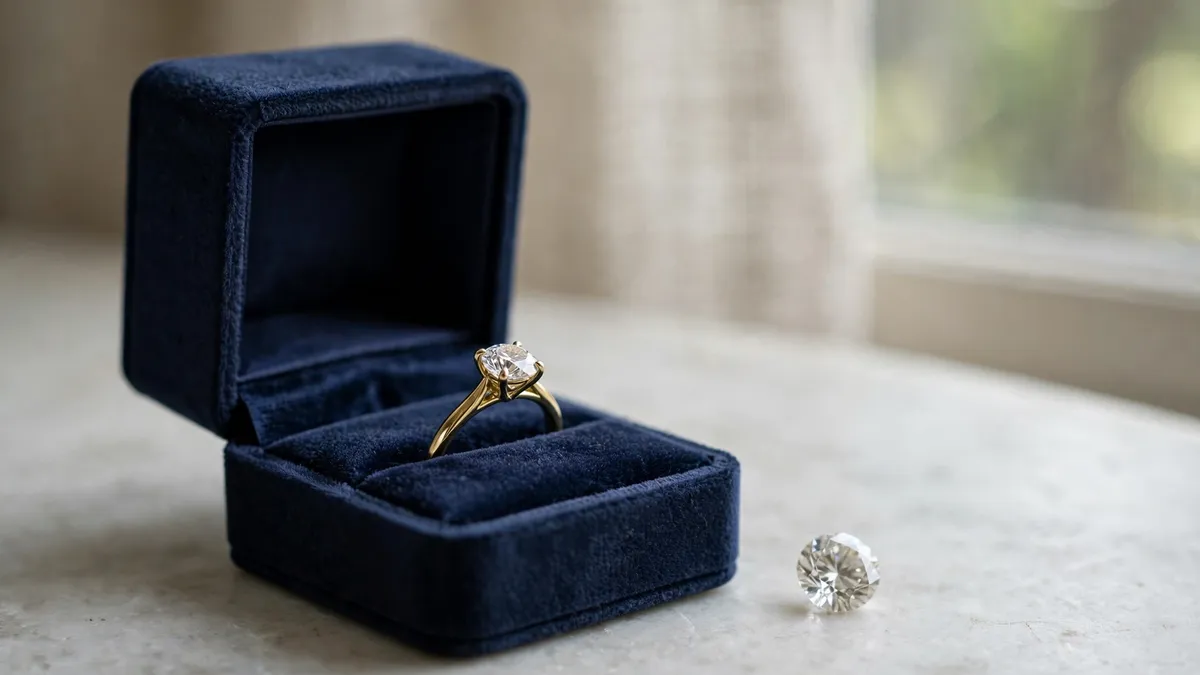

Rare Carat is an online diamond marketplace that gathers loose diamonds from many sellers into a single search, so shoppers can compare stones side by side instead of opening dozens of retailer websites. The central question is straightforward: how does Rare Carat actually work, and can it help you find a fair price? You enter your shape, size and budget, the site returns matching diamonds with a price score and a gemologist review, and you buy through Rare Carat itself, which handles the order and the customer service.
Buying a diamond is one of the more confusing purchases most people ever make. The same stone can carry a different price at every seller, the grading reports are full of unfamiliar terms, and the difference between a good deal and a poor one can be invisible to the naked eye. Rare Carat was built to reduce that confusion, and this guide explains what it does, how its tools work, what to check before you buy, and where its limits lie.
Key takeaways
- Rare Carat is a diamond marketplace that lists stones from many sellers in one search.
- Every diamond carries a price score comparing it with similar stones, plus a gemologist review.
- Stones are graded by independent laboratories such as GIA, GCAL or IGI, not by Rare Carat itself.
- You pay Rare Carat, which fulfils the order and handles customer service in-house.
- Natural and lab-grown diamonds are listed side by side, with filters to separate them.
- A price score is a guide, not a guarantee: always read the grading report before deciding.
What Rare Carat is
Rare Carat began with a familiar frustration: one person shopping for an engagement ring, faced with wildly different prices for stones that looked identical on paper. The answer the founders built was a search engine for diamonds, modelled on the way travel sites compare flights. Instead of visiting jeweller after jeweller, a shopper enters the details once and sees comparable stones from many sellers in a single list, with prices shown openly.
The business has grown since then from a pure comparison site into a marketplace. The stones in its search come from sellers on its platform, and Rare Carat fulfils the order and handles customer service itself. That matters, because it means the company you pay is also the company you deal with afterwards, rather than a seller you have never heard of. The site also offers free advice from gemologists, educational guides for first-time buyers, and tools that explain what each line of a grading report means.
How the search works
The search starts with the basics: shape, carat weight, colour, clarity, cut and budget. Round, oval, cushion, princess and emerald are among the shapes offered, and the filters narrow thousands of listings to a shortlist that matches your brief. You can also choose between natural diamonds, formed in the earth, and lab-grown diamonds, which are chemically the same but made in a laboratory and usually cost less for the same size and quality.
Each listing shows high-resolution photographs and usually a 360-degree video, so you can rotate the stone and look for inclusions or a tint of colour before committing. The listing also shows the grading report, the price, and the price score. The score compares that stone with similar stones on the market, so a high score suggests the price is fair for the specification, while a low score suggests you may be paying more than the stone is worth. It is a quick way to sort a long list, though it is no substitute for reading the report itself.
Price scores and grading reports
One distinction matters more than any other on Rare Carat: laboratories grade diamonds, and Rare Carat scores them. The grade comes from the report issued by an independent laboratory, most often the Gemological Institute of America (GIA), the Gem Certification and Assurance Lab (GCAL) or the International Gemological Institute (IGI). Rare Carat’s diamonds are certified by one of these laboratories, and the report sets out the four Cs, carat, cut, colour and clarity, along with measurements such as table depth, polish and symmetry.
What Rare Carat adds on top of that report is a price score and a gemologist’s review. The price score is an algorithmic read on how the price compares with similar stones, while the gemologist review is a human check: a Rare Carat gemologist reviews the stone you choose before purchase. Before a stone is set, it is also checked physically against its certificate, including verifying the laser inscription on the girdle under magnification. That layering, a lab report plus a price score plus a human review, is the core of what the site sells.
Buying a ring step by step
The buying path follows a consistent sequence. First, search and filter, narrowing the catalogue by shape, size, budget and whether you want a natural or lab-grown stone. Second, check the price score on each shortlisted diamond, and read the grading report rather than relying on the score alone. Third, talk to a gemologist, a free service that can explain what a fluorescence grade or a table percentage will actually look like in normal light.
Fourth comes verification, where the diamond is checked against its certificate before it is set. Fifth is the setting and delivery: the stone is set into a ring of your choice, with many settings and metal options available, and shipped as a finished piece. Settings are made to fit the diamond, and orders typically take two to three weeks. Because Rare Carat is the merchant of record, the payment, the setting and any after-sales questions all go through one company.
Natural versus lab-grown diamonds
The choice between natural and lab-grown diamonds is the biggest decision most Rare Carat shoppers face, and the site lists both side by side. A lab-grown diamond is a real diamond, with the same chemical composition and hardness as a mined stone, grown in a laboratory over weeks rather than formed underground over millions of years. For the same budget, a lab-grown stone is usually larger or of higher clarity than a natural one.
The case for a natural diamond is not about how it looks, since the two are visually identical, but about rarity, tradition and resale. Natural diamonds are finite, and some buyers value that, while others see no reason to pay more for it. There is no right answer, and the honest way to decide is to compare like with like: the same shape, size and grades in both categories, with the price difference in front of you. Rare Carat’s filters make that comparison easy, which is exactly the point of the site.

Rare Carat compared with other ways to buy
Rare Carat is one of several ways to buy a diamond, and each route suits a different kind of shopper. The table below sets out the main options in general terms.
| Way to buy | Best for | Keep in mind |
|---|---|---|
| Rare Carat | Comparing many sellers at once | Everything happens online, with no showroom |
| High street jeweller | Seeing stones in person | Smaller selection and often higher prices |
| Single online retailer | A simple, guided purchase | One seller’s prices, with nothing to compare against |
| Wholesale dealer | Trade prices for confident buyers | Usually no guidance or after-sales service |
| Auction or second-hand | Unusual or vintage stones | Reports and condition need careful checking |
| Custom jeweller | A bespoke design | Longer waits and a higher budget |
What to check before you buy
The grading report is the document that matters. Check that the report number matches the stone, that the laboratory is one you recognise, and that the grades for cut, colour and clarity match what the listing claims. Look at the 360-degree video for inclusions near the centre of the stone, which are more visible than ones near the edge, and check the fluorescence grade, since strong fluorescence can make a diamond look hazy in daylight.
Then look beyond the stone. Check the return policy and the warranty, and confirm who insures the shipment, since a finished ring is a valuable parcel. If you are paying by bank transfer for a discount, weigh the saving against the protection a card payment offers. And keep the budget in view: the four Cs trade off against each other, so a slightly lower colour or clarity grade can buy a noticeably larger stone, and size is what most people notice first.
Your Rare Carat checklist
Work through this list before you pay for any diamond.
- Decide your shape, size and budget before you start browsing.
- Choose between natural and lab-grown, and compare like with like.
- Read the grading report, not just the price score.
- Check the laboratory is GIA, GCAL or IGI.
- Watch the 360-degree video for inclusions and colour tint.
- Ask a gemologist about anything in the report you do not understand.
- Confirm the return policy and warranty before ordering.
- Check who insures the delivery of the finished ring.
- Weigh a bank transfer discount against card payment protection.
- Keep the receipt, the grading report and the gemologist review together.
Frequently asked questions
Is Rare Carat a jeweller or a search engine?
It is both. It began as a comparison search engine for diamonds from many sellers, and it now operates as a marketplace: the stones come from sellers on its platform, but Rare Carat fulfils the order and handles customer service itself. You pay Rare Carat, not the individual seller.
What is a Rare Carat price score?
The price score compares a diamond’s price with similar stones on the market, based on its grading report. A high score suggests the price is fair for the specification, while a low score suggests you may be paying more than comparable stones cost. It is a guide for sorting a shortlist, not a valuation.
Are Rare Carat diamonds certified?
Rare Carat says its diamonds are certified by independent laboratories, principally GIA, GCAL or IGI. The certificate is issued by the laboratory, not by Rare Carat, and the stone is checked against it before setting, including the laser inscription on the girdle.
Can I buy a lab-grown diamond on Rare Carat?
Yes. The catalogue includes both natural and lab-grown diamonds, and the search filters let you show one or the other. Lab-grown stones are chemically identical to natural diamonds and usually cost less for the same size and grades.
Does Rare Carat have a showroom I can visit?
No. Everything happens online, with photographs, 360-degree videos and advice from gemologists by phone or video call. If seeing a stone in person before buying matters to you, a high street jeweller may suit you better.
How long does a Rare Carat order take?
Settings are made to fit the diamond, and orders typically take two to three weeks from purchase to delivery. The exact timing depends on the setting chosen and the seller, so confirm the delivery window before ordering if the ring is needed for a particular date.
The bottom line
Rare Carat works best as a way to compare diamonds openly: one search across many sellers, a price score on every stone, a grading report from an independent laboratory, and a gemologist review before you commit. Used carefully, with the report read and the questions asked, it takes much of the guesswork out of a purchase that deserves care. For more on style and buying well, see our guide to different clothing styles, our fall 2025 fashion trends, and our men’s fashion guide.
This article is general information only and is not financial advice. Diamond prices vary with the market and with grading, so treat any price score as a guide, read the grading report carefully, and consider independent advice before a large purchase.