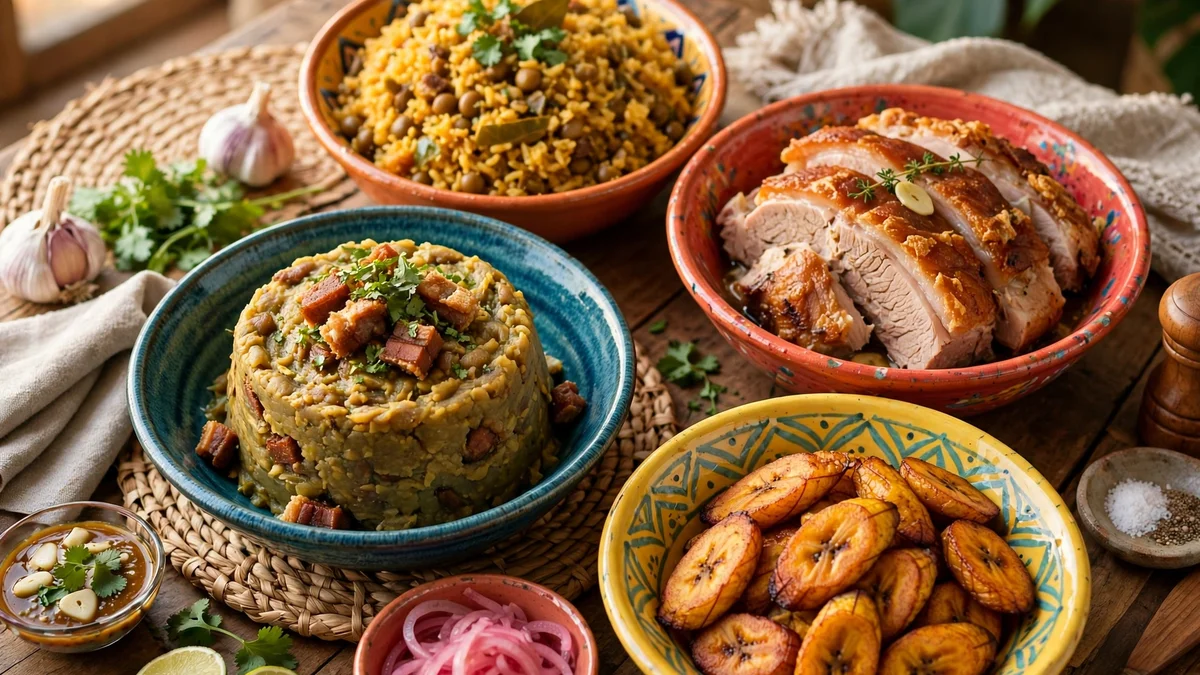

Puerto Rican food is the cooking of an island where Taíno, Spanish and African traditions have been layered together over centuries, producing a cuisine built on plantains, rice, pork, sofrito and slow cooking. The central question is a simple one: what makes Puerto Rican food special, and which dishes should a first-time eater try? The answer is a generous, flavour-first cuisine where a few core ingredients appear again and again, from the garlicky mashed plantains of mofongo to the saffron-yellow rice of arroz con gandules and the crackling roast pork of lechón.
The food is best understood as home cooking that became celebration cooking. Many of the famous dishes are the ones families make for Sundays and holidays, served in large portions and shared from the middle of the table. This guide walks through the classic dishes, the ingredients that define them, and the influences that shaped the island’s table.
Key takeaways
- Puerto Rican food blends Taíno, Spanish and African influences into one generous cuisine.
- Sofrito, a cooked base of peppers, onions, garlic and herbs, seasons a great many dishes.
- Mofongo is fried green plantain mashed with garlic and pork cracklings in a wooden pilón.
- Arroz con gandules, rice with pigeon peas, is the island’s best-known rice dish.
- Lechón, slow-roasted pork with crisp skin, is the centrepiece of festive meals.
- Tostones, pasteles, alcapurrias and tembleque cover snacks, street food and dessert.
What defines Puerto Rican food
Three influences run through Puerto Rican cooking. The Taíno, the island’s Indigenous people, contributed root vegetables such as yuca and yautía, and the caldero, the heavy pot that gives rice dishes their prized crust. Spanish colonists brought rice, pork, olive oil, garlic and citrus. Enslaved Africans brought plantain and the technique of pounding starchy foods into a mash, the direct ancestor of mofongo.
The result is a cuisine that is rich rather than fiery. Chillies appear, but the heat is usually gentle, and the flavour comes instead from sofrito, the aromatic base that starts countless dishes. A typical sofrito is made from onions, sweet peppers, garlic, culantro and ají dulce, blended and cooked in oil with annatto, which gives the food its golden colour.
Two ingredients deserve special attention. Plantain, a starchy cousin of the banana, is used green for mofongo and tostones, and ripe for sweet maduros. Pigeon peas, called gandules, are the small, nutty legume that gives arroz con gandules its name.
Mofongo: the dish that starts every conversation
Mofongo is the dish most people name first when they talk about Puerto Rican food, and it is also the most distinctive. Green plantains are peeled, cut into rounds and fried until golden, then mashed in a wooden mortar called a pilón with garlic, salt, olive oil and chicharrones, crisp pieces of fried pork skin. The mash is pressed into a dome shape and served hot, or filled with shrimp, chicken, beef or vegetables to make mofongo relleno.
The texture is the point: firm enough to hold its shape, soft enough to cut with a fork, and deeply savoury from the garlic and pork. Mofongo is usually made to order, because the mash stiffens as it cools. It is a dish with African roots, descended from the pounded starchy foods of West Africa.
Arroz con gandules and the island’s rice dishes
If mofongo is the island’s signature, arroz con gandules is its everyday pride. Rice is cooked in a caldero with pigeon peas, sofrito, tomato sauce, olives and pork, coloured golden with annatto. The dish is cooked slowly until the rice is tender and the bottom of the pot forms pegao, the crisp crust that cooks prize.
Rice appears in many other forms too. Arroz con pollo is chicken and rice cooked together in the same pot, while asopao is a soupy rice stew, often made with chicken or seafood. Arroz con dulce, a sweet rice pudding with coconut milk and cinnamon, is a holiday dessert.
Lechón: roast pork for a crowd
Lechón is whole or large-cut pork, seasoned with garlic, oregano and sour orange, and roasted slowly until the meat is tender and the skin is shatteringly crisp. It is the centrepiece of Christmas and festive gatherings, and the town of Guavate is famous for its lechoneras, roadside restaurants where whole pigs turn over charcoal.
The skin, called cuerito, is the prize: crackling that shatters when bitten, seasoned and salty. The meat is served with arroz con gandules and tostones. Lechón is not everyday food; it is celebration food, and it carries the Spanish influence most clearly.

Tostones, pasteles and alcapurrias: snacks and street food
Between the famous main dishes sits a whole world of snacks. Tostones are twice-fried green plantain: sliced, fried, smashed flat, fried again until crisp, and salted. Maduros are their sweet counterpart, ripe plantains fried until caramelised.
Pasteles are parcels of grated green banana and root vegetables, filled with seasoned pork and wrapped in banana leaves, then boiled. They are labour-intensive, usually made in large batches by the family at Christmas. Alcapurrias are fritters of grated yuca and green banana, stuffed with seasoned beef or crab and fried until crisp.
These are the dishes that show the cuisine at its most practical: starchy, filling, fried, and made to be eaten with the hands. They are often the first thing Puerto Rican families living abroad learn to make, because they taste of home.
The classic dishes at a glance
With so many dishes to remember, a short guide helps. The table below sets out the classics, what they are made from, and when they are usually eaten.
| Dish | What it is | When it is eaten |
|---|---|---|
| Mofongo | Fried green plantain mashed with garlic and pork cracklings | Main course, often filled with meat or seafood |
| Arroz con gandules | Rice with pigeon peas, sofrito and pork | Everyday meals and holidays |
| Lechón | Slow-roasted pork with crisp skin | Christmas and festive gatherings |
| Tostones | Twice-fried green plantain, salted | Side dish and snack |
| Pasteles | Root vegetable parcels filled with pork, wrapped in banana leaf | Christmas, made in batches |
| Alcapurrias | Fried yuca and plantain fritters with a savoury filling | Street food and beach snacks |
| Tembleque | Coconut milk pudding set with cornflour, dusted with cinnamon | Dessert, especially at Christmas |
Drinks, desserts and the sweet side
Puerto Rican desserts are gentle and comforting rather than elaborate. Tembleque is a coconut milk pudding, set with cornflour until it barely holds its shape, then dusted with cinnamon and served cold. Flan, a caramel custard brought by the Spanish, is common, and arroz con dulce appears at Christmas.
Coquito is the island’s festive drink: a creamy, coconut-based drink made with coconut milk, condensed milk, cinnamon and rum, served cold in small glasses at Christmas. Rum itself is central to the island, and a piña colada, said to have been created in San Juan, is the drink most visitors order first.
Coffee also matters. Puerto Rico grows its own coffee in the central mountains, and a strong, sweet café con leche is the way many days begin.
How to eat Puerto Rican food for the first time
For a first-timer, the best approach is to order a combination plate rather than a single dish. A plate with arroz con gandules, a piece of lechón or stewed chicken, tostones and a small salad gives a fair picture of the cuisine in one sitting.
At a restaurant, ask what the kitchen does best. At a lechonera, order the lechón and accept the cuerito that comes with it. At a beach kiosk, try the alcapurrias and a cold drink. The food is meant to be shared, so order more than you think you need.
Cooking at home is also straightforward once the pantry is set. Sofrito can be made in a batch and frozen, annatto oil keeps for weeks, and any heavy pot will do for the rice. Start with arroz con gandules, which is forgiving, then try tostones, which need only plantains, oil and salt.
Your Puerto Rican food checklist
Use this list to plan a first taste of the cuisine, at a restaurant or at home.
- Try mofongo, ideally filled with shrimp, chicken or beef.
- Order arroz con gandules and look for the crisp pegao at the bottom.
- Taste lechón with its crackling skin at a festive meal or lechonera.
- Snack on tostones, and compare them with sweet fried maduros.
- Try an alcapurria from a street stand or beach kiosk.
- Save room for tembleque or flan for dessert.
- Sip a coquito at Christmas, or a piña colada in San Juan.
- Learn to make sofrito; it is the base of the whole cuisine.
- Keep green plantains and ripe plantains apart; they cook very differently.
- Share the meal: order a combination plate and let the table taste everything.
Frequently asked questions
What is the most famous Puerto Rican dish?
Mofongo is usually named first: fried green plantains mashed with garlic and pork cracklings in a wooden pilón. Arroz con gandules, rice with pigeon peas, runs it close, and lechón is the festive favourite.
Is Puerto Rican food spicy?
Not usually. The flavour comes from sofrito, garlic, oregano and annatto rather than from chilli heat. Some dishes carry a mild warmth from ají dulce, a sweet pepper, but the cuisine is rich and savoury rather than hot.
What is sofrito?
Sofrito is the aromatic base of the cuisine, made from onions, sweet peppers, garlic, culantro and ají dulce, blended and cooked in oil with annatto. It is added at the start of cooking and flavours rice, stews and beans.
What is the difference between tostones and maduros?
Both are fried plantain, but tostones are made from green plantains, fried twice and salted, while maduros are made from ripe plantains, fried once until sweet and caramelised. They taste quite different despite sharing an ingredient.
What is pegao?
Pegao is the crisp, golden crust of rice that forms at the bottom of the caldero when arroz con gandules is cooked. It is highly prized, and families often compete for the best piece.
What should I drink with Puerto Rican food?
Rum-based drinks are the classic choice, from a piña colada to a simple rum and cola, and coquito is the Christmas favourite. A strong café con leche is the usual way to start the day.
The bottom line
Puerto Rican food is a cuisine of generosity and layering: Taíno roots, Spanish technique and African ingenuity, built on plantain, rice, pork and sofrito, and served in portions meant for sharing. Start with mofongo and arroz con gandules, add lechón when the occasion calls for it, and finish with tembleque and a coffee. For more cooking inspiration, see our easy Belgian recipes at home, our advice on eating healthier with cooked vegetables, and our guide to the best inexpensive wines for pairing a bottle with a feast.