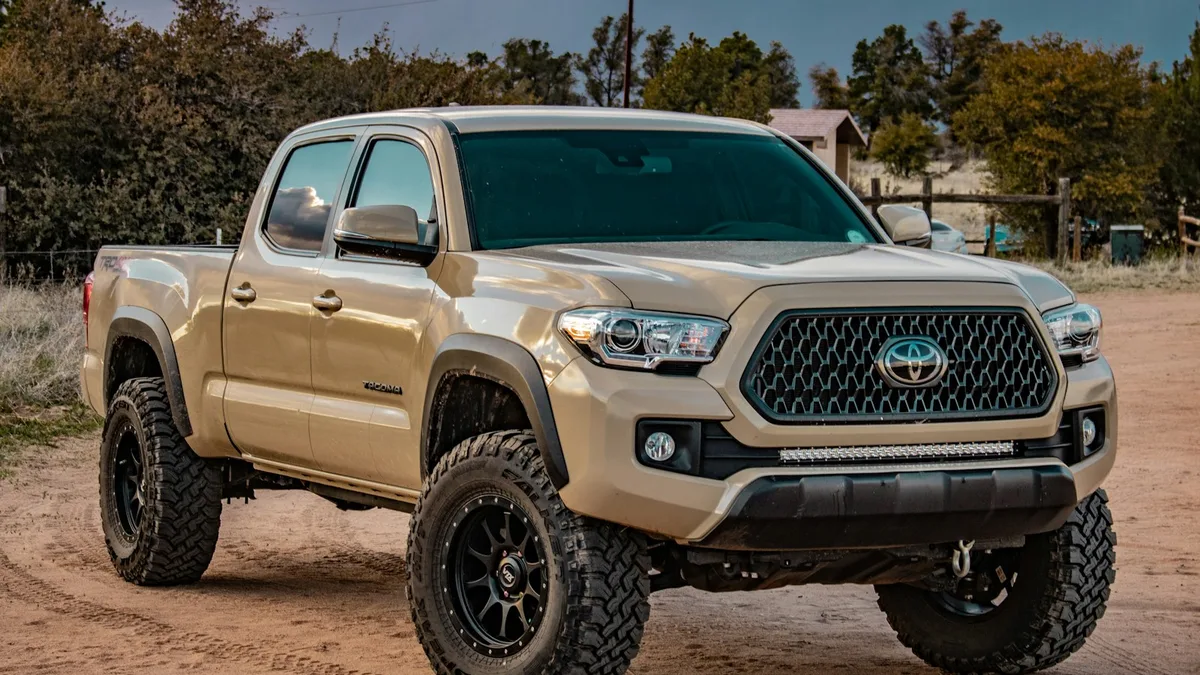

The 2026 Ford F-150 engine changes are smaller than the headlines suggest: Ford has kept all six engines from the previous year and changed which trims can have them, rather than introducing a new engine. The short answer is that the line-up still runs from the 2.7-litre EcoBoost V6 to the 720-horsepower supercharged V8 in the Raptor R, with the PowerBoost hybrid now available on more trims, including the STX.
There is one wrinkle buyers should know about before comparing figures. Two of Ford’s own March 2026 documents disagree on horsepower for the 3.5-litre engines, so the rating on the exact truck you are buying matters more than any article, including this one.
Key takeaways
- No new engine for 2026: all six engines carry over, from the 2.7-litre EcoBoost V6 to the 5.2-litre supercharged V8.
- The 3.5-litre PowerBoost full hybrid is now available on the STX trim, and rear-wheel-drive hybrid versions spread across more trims.
- The 3.5-litre EcoBoost becomes standard on more configurations, including long-wheelbase XL and XLT models, Lariat 4×2 and Tremor.
- Ford’s own March 2026 documents disagree on horsepower for the 3.5-litre engines, so check the window sticker of the exact truck.
- All six engines pair with a 10-speed automatic transmission, and the battery-electric F-150 Lightning is a separate model.
- Gasoline particulate filters were confirmed for the regular 3.5-litre EcoBoost and the PowerBoost for 2026.
What changed for 2026
The 2026 F-150 is a targeted update, not a redesign. The current fourteenth-generation truck dates from the 2021 model year and received a significant update for 2024, and for 2026 Ford has focused on widening choice and moving equipment around the line-up. The trims remain XL, STX, XLT, Lariat, Tremor, King Ranch, Platinum and Raptor, with the Lightning sold as a separate battery-electric model.
Instead, Ford has made the stronger engines available on more trucks: the 3.5-litre EcoBoost becomes standard on XL and XLT models with the 157-inch wheelbase, on Lariat 4×2 and on Tremor, while the 5.0-litre V8 becomes optional on additional XLT, Lariat and Tremor configurations. The PowerBoost hybrid reaches the STX trim for the first time, and rear-wheel-drive hybrid versions spread to STX, XLT, Lariat, King Ranch and Platinum through a later order-guide update.
Around the engines, Ford added lower equipment groups for King Ranch, Platinum and Tremor, made Zone Lighting standard on XLT and above, expanded Pro Power Onboard availability, and added a Ford Connectivity Package across the line-up. BlueCruise gained a one-time purchase option on selected trims.
The six 2026 engines
Ford’s technical specification sheet dated 31 March 2026 lists six engines, all paired with a 10-speed automatic transmission. The figures below come from that sheet, and the one figure to treat with care is explained in the next section.
2.7-litre EcoBoost V6
The entry engine is the 2.7-litre twin-turbo EcoBoost V6, rated at 325 horsepower and 400 pound-feet of torque. It is the lightest engine in the range and suits daily driving and light hauling, with the lowest maximum towing figure of the core line-up.
5.0-litre V8
The 5.0-litre V8 produces 400 horsepower and 410 pound-feet of torque. It is the traditional choice, with the sound and character that V8 buyers expect, and it offers the highest payload figures in the core line-up on some configurations.
3.5-litre EcoBoost V6
The 3.5-litre twin-turbo EcoBoost V6 is rated at 400 horsepower and 500 pound-feet of torque on the March technical sheet, and it is the towing leader of the core range, with a maximum conventional tow rating of up to 13,500 pounds on four-wheel-drive models when properly equipped.
3.5-litre PowerBoost full hybrid V6
The PowerBoost pairs the 3.5-litre EcoBoost V6 with an electric motor, and Ford rates the combined output at 430 horsepower and 570 pound-feet of torque on the March technical sheet. It is the only hybrid in the range, it offers the strongest low-speed response in the core line-up, and it unlocks the most powerful Pro Power Onboard generator options, including up to 7.2 kilowatts for running tools or camping equipment.
Raptor engines
Two engines are reserved for the Raptor range. The Raptor uses a high-output 3.5-litre EcoBoost V6 rated at 450 horsepower and 510 pound-feet of torque, while the Raptor R uses a 5.2-litre supercharged V8 rated at 720 horsepower and 640 pound-feet of torque.

The horsepower figures that do not agree
Here is the part that needs care. Ford’s March 2026 towing guide lists the regular 3.5-litre EcoBoost at 382 horsepower and the PowerBoost at 420 horsepower, while the March 31 technical specification sheet lists the same engines at 400 and 430 horsepower. Both are Ford documents published in the same month, and the difference is not explained in either one. Ford’s consumer website has also shown different torque figures for the PowerBoost at different times, listing 578 pound-feet against the technical sheet’s 570.
Reporting on the change points to gasoline particulate filters as the likely hardware difference. In November 2025, a Ford truck communications manager confirmed to a specialist reporter that the regular 3.5-litre EcoBoost and the PowerBoost gain gasoline particulate filters for 2026, and later reporting noted that Ford’s April 2026 order guide distinguishes federal and 50-state emissions packages without mapping the competing horsepower figures to them.
What this means for a buyer is simple: verify the rating for the exact truck you are buying. Check the window sticker, ask the dealer to confirm the figure for that vehicle identification number, and do not rely on a brochure or a website summary.
Engines compared
Choosing between the six engines depends on how the truck will be used. This comparison uses the March 31 technical sheet figures, which are the ones Ford lists in its headline specifications.
| Engine | Power | Torque | Best for |
|---|---|---|---|
| 2.7-litre EcoBoost V6 | 325 hp | 400 lb-ft | Daily driving, light hauling |
| 5.0-litre V8 | 400 hp | 410 lb-ft | Traditional V8 feel, payload |
| 3.5-litre EcoBoost V6 | 400 hp | 500 lb-ft | Maximum towing, heavy hauling |
| 3.5-litre PowerBoost hybrid V6 | 430 hp | 570 lb-ft | City driving, job-site power |
| 3.5-litre high-output EcoBoost V6 | 450 hp | 510 lb-ft | Raptor off-road driving |
| 5.2-litre supercharged V8 | 720 hp | 640 lb-ft | Raptor R performance |
Which engine should you choose
Start with the job, not the badge. For a daily driver that tows occasionally, the 2.7-litre or the 5.0-litre V8 will do the work, and the V8 is the better pick if payload matters most. For regular heavy towing, the 3.5-litre EcoBoost is the natural choice, with the highest tow rating in the core range and the most low-end torque of the petrol-only engines.
The PowerBoost suits drivers who spend a lot of time in town, where the hybrid system does its best work, and anyone who wants to run tools or equipment from the truck, since it offers the most powerful generator options. The Raptor engines are specialist choices for off-road performance, and they should be judged on that basis alone, not as work trucks.
Finally, remember that towing and payload figures depend on the exact configuration: cab, bed length, axle ratio, drive type and options all matter. Check the figures for the configuration you are ordering rather than relying on a headline number.
Your 2026 F-150 engine checklist
- Confirm the exact engine and trim combination you want, since availability changed for 2026.
- Check whether the PowerBoost is now available on your preferred trim, including STX.
- Verify the horsepower figure on the window sticker for the exact truck, not just the brochure.
- Compare torque as well as horsepower, since torque matters more when towing.
- Check the maximum towing and payload figures for your exact cab, bed and axle combination.
- Ask whether the truck has a gasoline particulate filter and which emissions package it carries.
- Compare Pro Power Onboard options if you plan to run tools or equipment from the truck.
- Weigh the PowerBoost’s extra cost and weight against its generator and city-driving benefits.
- Remember the F-150 Lightning is a separate battery-electric model with its own specifications.
- Take a test drive with a trailer or a load if you can, since towing feel matters as much as figures.
Frequently asked questions
Did Ford add a new engine to the 2026 F-150?
No. All six engines carry over from the previous year, with no new engine family and no displacement change. What changed is availability: the PowerBoost hybrid reaches the STX trim, the 3.5-litre EcoBoost becomes standard on more configurations, and rear-wheel-drive hybrids spread across more trims.
What is the most powerful 2026 F-150 engine?
The 5.2-litre supercharged V8 in the Raptor R, rated at 720 horsepower and 640 pound-feet of torque on Ford’s March 2026 technical sheet. Among the core non-Raptor engines, the 3.5-litre PowerBoost hybrid is the most powerful, at 430 horsepower and 570 pound-feet on the same sheet.
Why do sources disagree on the 3.5-litre horsepower figures?
Ford’s March 2026 towing guide lists the regular 3.5-litre EcoBoost at 382 horsepower and the PowerBoost at 420, while its March 31 technical sheet lists 400 and 430. The reason is not explained in the documents, and reporting links the change to gasoline particulate filters and emissions packages. Check the window sticker of the exact truck.
Is the PowerBoost hybrid available on the STX for 2026?
Yes. Ford’s model-year announcement made the 3.5-litre PowerBoost available on the STX trim, and a later order-guide update expanded rear-wheel-drive hybrid availability to STX, XLT, Lariat, King Ranch and Platinum. It was previously limited to higher trims.
What is the maximum towing capacity of the 2026 F-150?
On Ford’s March 2026 technical sheet, the 3.5-litre EcoBoost reaches up to 13,500 pounds of conventional towing on four-wheel-drive models when properly equipped. The PowerBoost is listed at up to 11,600 pounds on Ford’s consumer website. Figures vary by configuration, so check the rating for the truck you order.
Does the 2026 F-150 still offer a V8?
Yes. The 5.0-litre V8 continues, rated at 400 horsepower and 410 pound-feet of torque, and it becomes optional on additional XLT, Lariat and Tremor configurations for 2026. The Raptor R keeps the 5.2-litre supercharged V8.
The bottom line
The 2026 Ford F-150 engine changes are about availability, not reinvention: the same six engines, led by the 3.5-litre EcoBoost and the PowerBoost hybrid, now reach more trims, with the hybrid finally available on the STX. The one thing to double-check is the horsepower figure on the exact truck you buy, since Ford’s own March 2026 documents disagree on the 3.5-litre ratings. Verify the window sticker, match the engine to the work you will actually do, and let the configuration, not the headline, decide. For more practical motoring reading, our guide to the best water bottles covers staying hydrated on long drives, our guide to the best single-serve coffee maker is handy for early starts, and our guide to the best slow cooker is useful when you get home after a long day on the road.