
An empanada is a pocket of dough folded around a filling, then baked or fried, and it is one of the most travelled foods on earth. What is an empanada, exactly? It is a turnover made by folding a round of dough over a spoonful of filling and sealing the edge, and it comes from Spain, where it has been eaten for centuries before spreading across Latin America and the Philippines.
This guide explains where empanadas come from, how the doughs differ, what the main regional styles taste like, and how to make them at home. Whether you buy them or fold your own, the rules are the same: a filling cooked and cooled first, a seal that holds, and a hot oven or hot oil to finish.
Key takeaways
- An empanada is dough folded around a filling and sealed, then baked or fried; the name comes from the Spanish verb empanar, to wrap in bread.
- Empanadas come from Galicia in north-west Spain, with roots in medieval Arab stuffed pastries.
- Wheat dough is the Argentine standard, while corn dough is the rule in Colombia and Venezuela.
- Argentina alone has a dozen regional styles, from spicy Salta salteñas to the large, olive-studded empanadas of Mendoza.
- Use a cooled filling, seal the edge firmly, and cook until the pastry is golden and crisp.
What an empanada is
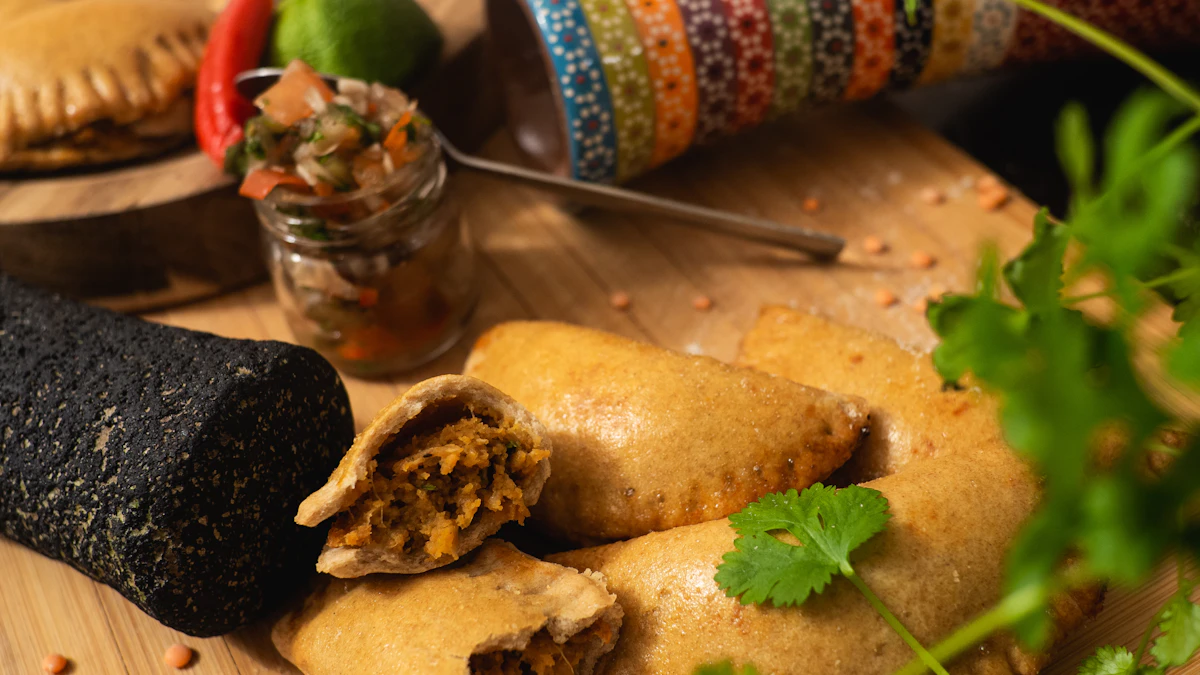
At its simplest, an empanada is three things: dough, filling and a cooking method. A round of dough goes around a spoonful of filling, gets folded into a half-moon and sealed, then baked or fried. The shape is usually a half-moon, and the sealed edge, called the repulgue, is often twisted into a braid or crimped with a fork.
Most empanadas are savoury and eaten as a snack, a street food, a party appetiser or a light meal. Fillings are highly regional, with countless variations: ground beef with onion, bell pepper, hard-boiled egg and sometimes raisins in Buenos Aires; cheese and onion, spinach or corn for vegetarian versions; chicken, pork and seafood elsewhere. Sweet empanadas are generally a more modern creation, filled with dulce de leche, custards, guava and cheese, or fruit jellies.
Best for: a first taste — a baked Argentine beef empanada, the classic that defines the dish for most people.
Where empanadas come from
The origin of the empanada is uncertain, but food historians trace it to Galicia, in the north-west of Spain, and think it emerged around the 7th century. The dish may have evolved from the stuffed pastries of the Middle East, such as sambusak, which arrived on the Iberian Peninsula during centuries of Moorish rule. One of the earliest written recipes appears in the Llibre del Coch, a Catalan cookbook printed in 1520, which includes empanadas filled with seafood.
In Galicia, the large empanada gallega is still baked today as a whole pie filled with tuna, sardines, pork or octopus. Spanish and Portuguese colonists carried empanadas to the Americas in the 16th century, and each region adapted them with local ingredients: corn dough in the Andes and the Caribbean, potatoes and chilli peppers in Bolivia and Colombia, plantain in El Salvador, achiote and sofrito in the islands.
Best for: a taste of the original — the Galician empanada gallega, a large tuna or pork pie cut into slices.
The dough: wheat, corn and everything between
Empanada dough is typically made of wheat flour and a fat, such as lard or butter, and it is often airy and flaky like puff pastry or pie crust. That wheat dough is the Argentine standard, and it is what most bakeries outside Latin America use: a tender, golden pastry that bakes crisp and holds a juicy filling without tearing.
Corn dough is the other great tradition. In Venezuela and Colombia, empanadas are made from pre-cooked cornmeal, which fries into a crisp, golden shell with a distinctive snap, and the filling is usually drier than a wheat empanada’s, because cornmeal needs a filling that will not soak through. Doughs of cassava or plantain appear in the Caribbean and elsewhere, and each one changes the character of the finished pastry. Match the dough to the filling: a wheat filling in a corn shell will leak, and a corn filling in wheat dough will taste flat.
Best for: everyday baking — a wheat dough with butter; for a crisp fried shell, a cornmeal dough in the Colombian style.
Argentina’s regional map
Argentina is the heartland of the empanada, and every region has its own characteristic variant. The empanadas of Salta, called salteñas, are small, juicy and spicy, and contain potatoes, peppers and ground chilli. The Jujuy variant adds peas and garlic, and its filling is called recado; the La Rioja variant includes hard-boiled egg, red bell pepper, olives and raisins.
The empanadas of Mendoza are large and include olives and garlic, while those of Tucumán are known for the empanada criolla, and an annual National Empanada festival is held in Famaillá, where the local empanadas are made with matambre and fried in good fat. In the Litoral region, empanadas are filled with river fish or white sauce and cheese, while Patagonia uses lamb and the coast uses seafood.
Best for: a tour of Argentina in one meal — Salta salteñas for spice, Mendoza for olives and garlic, and Tucumán for the classic criolla.
Beyond Argentina: Colombia, Venezuela, Bolivia and Peru
Colombia fries its empanadas in corn dough until the shell is crisp and golden, usually filled with potato and beef, and serves them with a spicy ají sauce. Venezuela’s version is similar in dough but different in filling, and the most famous Venezuelan empanada is the pabellón, filled with shredded beef, black beans and fried sweet plantains, a combination that mirrors the country’s national dish.
Bolivia fills its salteñas with a soupy, slightly sweet stew, eaten as a mid-morning snack. Peru tops its empanadas with icing sugar and a squeeze of lime. In the Philippines, empanadas arrived with Spanish colonists and took on local fillings, while in the Caribbean they appear as pastelitos with plantain and cassava doughs.
Best for: trying something different — a Colombian corn empanada with ají sauce, or a Venezuelan pabellón empanada for a fuller meal.
Baked or fried: how to choose
Baking is the Argentine default. A baked empanada has a tender, flaky crust that browns evenly, and it holds a juicy filling without the heaviness of frying. Fried empanadas, by contrast, are crisper and richer, with a shell that shatters slightly when you bite it, and they suit corn dough best, since the hot oil sets the cornmeal quickly and seals in the filling.
Whichever method you choose, the filling must be cooked and cooled before it goes into the dough, because a hot filling steams the pastry from the inside and makes the base soggy. Use one and a half to two tablespoons of filling per empanada: overfilling is the most common mistake, and the reason most empanadas burst open.
Best for: a weeknight batch — baked wheat empanadas; for a weekend treat, fried corn empanadas with ají sauce.
Making them at home
Start with the filling, made the day before if you can. Cook ground beef with onion, bell pepper and cumin, then stir in chopped hard-boiled egg and olives, and leave the mixture to cool completely in the fridge. Roll the dough thin, cut rounds about the size of a saucer, and dampen the edge of each round with water before you fold.
Seal with care, because the seal is the whole dish. Fold the dough over the filling, press the edge firmly, and finish with a repulgue: a braided twist made by folding small sections of the edge over one another, or a simple crimp with a fork. Bake at a hot oven until golden, or fry in oil until crisp, and let the empanadas rest for five minutes before eating, so the filling settles and the pastry finishes crisping.
Best for: a first attempt — a beef and egg filling in wheat dough, baked, with a fork-crimped edge rather than a braided one.

| Style | Dough | Filling | Cooking |
|---|---|---|---|
| Argentine beef | Wheat | Beef, onion, egg, olive | Baked |
| Salta salteña | Wheat | Beef, potato, pepper, chilli | Baked |
| Colombian | Cornmeal | Potato and beef | Fried |
| Venezuelan pabellón | Cornmeal | Shredded beef, beans, plantain | Fried |
| Bolivian salteña | Wheat | Soupy stew with raisins | Baked |
| Peruvian | Wheat | Beef or chicken, icing sugar and lime | Baked |
How to choose: a quick checklist
- Pick the dough first: wheat for baked Argentine styles, cornmeal for fried Colombian and Venezuelan styles.
- Cook the filling the day before and chill it completely, so it is firm and will not steam the pastry.
- Use one and a half to two tablespoons of filling per empanada, and keep it away from the edge.
- Seal firmly all the way around, with a braided repulgue or a fork crimp, and check for gaps before cooking.
- Bake on a hot tray with an egg wash for shine, or fry in hot oil until the shell is crisp and golden.
- Let empanadas rest for five minutes after cooking, so the filling settles and the pastry finishes crisping.
For more food in the same spirit, the guide to the best tacos in Los Angeles covers another hand-held favourite, the guide to the best sourdough bread covers the dough side of baking, and the recipe for carne asada marinade covers a filling-worthy cut of beef.
Frequently asked questions
What is an empanada?
An empanada is a baked or fried turnover made by folding dough over a filling and sealing the edge. The name comes from the Spanish verb empanar, to wrap in bread. Fillings range from beef, chicken and cheese to seafood and sweet fillings such as dulce de leche.
Where do empanadas come from?
Empanadas come from Spain, with roots in Galicia in the north-west, and they may have evolved from medieval Arab stuffed pastries. An early recipe appears in the Catalan cookbook Llibre del Coch, printed in 1520. Spanish colonists carried them to the Americas in the 16th century.
What is the difference between an empanada and an empanadilla?
Size is the main difference. Empanadas are the standard hand-held size, while empanadillas, or empanaditas, are smaller versions, often served as appetisers.
Are empanadas baked or fried?
Both. Argentine empanadas are usually baked in wheat dough, while Colombian and Venezuelan empanadas are usually fried in corn dough. Baking gives a tender, flaky crust, and frying gives a crisper, richer shell. An air fryer works well as a middle ground for small batches.
What fillings go in an empanada?
The classic Argentine filling is ground beef with onion, bell pepper, hard-boiled egg and olives. Other common fillings include chicken, pork, cheese and onion, spinach, corn and seafood. In Venezuela, the pabellón empanada holds shredded beef, black beans and fried sweet plantains.
Why do my empanadas burst open?
Overfilling is the usual cause, along with a weak seal or a hot filling that steams the pastry from inside. Use no more than two tablespoons of filling, chill it completely before assembling, and seal firmly all the way around.
The bottom line
An empanada is a simple idea that has travelled further than almost any other pastry: dough, filling and heat, changed by every country it reached. Start with a baked Argentine beef empanada, then try a fried Colombian corn empanada with ají sauce, and you will understand the range in two bites.
A quick food-safety note: cook meat fillings right through before they go into the pastry, chill the filling before assembling, and do not leave cooked empanadas at room temperature for more than two hours. Reheat leftovers until they are piping hot all the way through, and store them in the fridge for no more than three days.