
West Virginia area code 304 is the telephone code for the whole of West Virginia, in place since October 1947 as one of the 86 original North American area codes. Every number first assigned anywhere in the state carries either 304 or its overlay code, 681. If you see a number starting with 304, it began life in West Virginia, in the mountain state.
Key takeaways
- West Virginia area code 304 covers the entire state of West Virginia.
- It was established in October 1947 as one of the 86 original North American area codes.
- Area code 681 was added as an overlay in 2009, covering exactly the same territory.
- Mandatory ten-digit dialling for local calls took effect on 28 February 2009.
- New 681 numbers became available on 28 March 2009, a month after ten-digit dialling began.
- A 304 number shows where the number was assigned, not necessarily where its owner lives now.
Where area code 304 covers
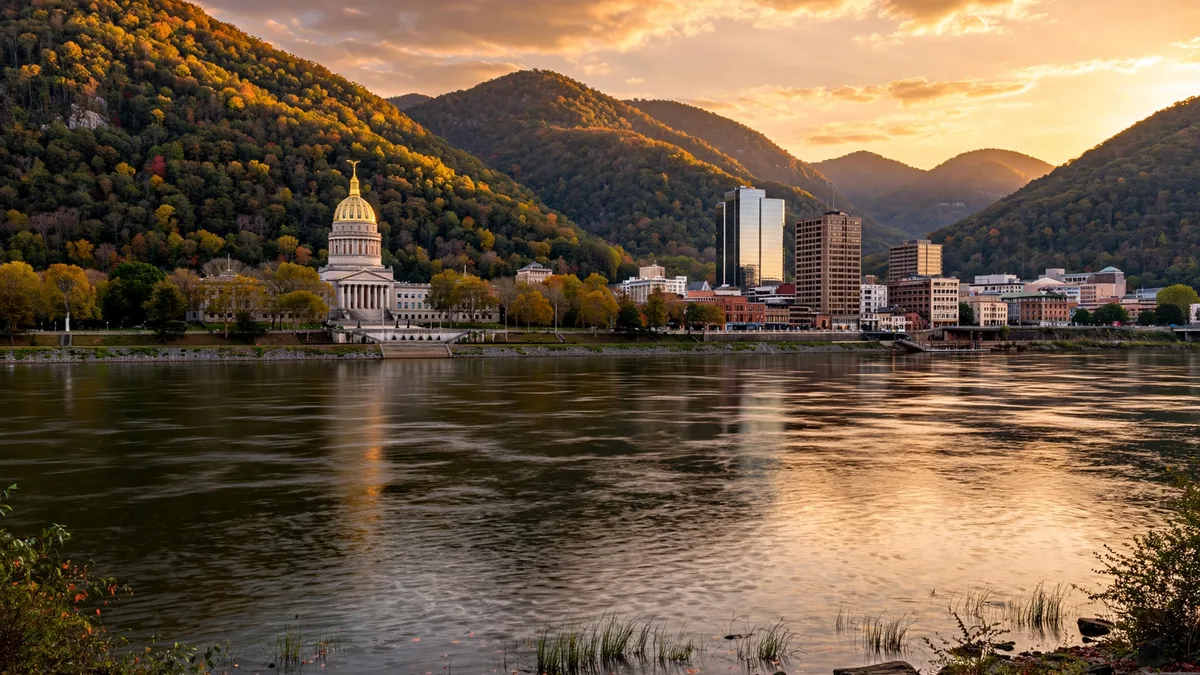
Area code 304 covers all of West Virginia, a state of steep forested ridges, narrow river valleys and small towns spread across the Appalachian Mountains. Its capital and largest city is Charleston, which sits where the Elk River meets the Kanawha River in the south-central part of the state. Charleston is the seat of state government and home to the gold-domed State Capitol. No part of West Virginia uses any other code except the 681 overlay.
To the west, the code covers Huntington, the state’s second-largest city, on the Ohio River at the border with Ohio and Kentucky. To the north, it covers Wheeling, an old industrial city on the Ohio River in the Northern Panhandle, and Parkersburg, on the Ohio River where the Little Kanawha joins it. To the north-east, it covers Morgantown, home of West Virginia University. In the south, it covers Beckley and Bluefield, and in the east, Martinsburg and the Eastern Panhandle.
The state is small in population but large in landscape, and the code’s territory is defined by mountains rather than cities. The Appalachian ridges run from the north-east to the south-west, and the valleys between them hold the towns: the Kanawha, Monongahela, Greenbrier and Shenandoah valleys all lie inside 304. The New River Gorge, now a national park, cuts through the southern part of the state, and the high Allegheny Mountains stand in the east. A number from any of these places carries the same code, which is part of what makes 304 unusual: in most states, the code tells you which city or region a number belongs to, but in West Virginia it tells you only the state.
The history of area code 304
West Virginia’s telephone history began with a single code and stayed that way for more than sixty years. When the North American numbering plan was drawn up in 1947, the state was given 304, one of the 86 original area codes. The state’s low population meant that one code was enough for decades, while other states split their codes again and again. By the early years of the twenty-first century it was one of the few states still served by a single area code.
That changed with the spread of mobile phones. By 2007, news reports were warning that West Virginia would soon need a new area code, as mobile phones and other services ate into the supply of 304 numbers. On 29 January 2008, the West Virginia Public Service Commission voted to split the state in two. The commission’s chairman dissented, favouring an overlay instead, and the telephone companies agreed with him: they wanted to spare their northern customers, particularly in rural areas, the burden of changing numbers and reprogramming mobile phones.
State and local officials and business groups spoke out against the split, with Governor Joe Manchin supporting the overlay. The commission unanimously approved the overlay on 13 February 2008. It was the first time an entire state previously served by a single code had installed an overlay plan. The area codes 304 and 681 entry on Wikipedia sets out this history in full, including the commission’s decisions and the dates each step took effect.
How the 304 and 681 overlay works
An overlay works by adding numbers rather than dividing territory. Before 681, every new number in West Virginia had to be a 304 number, and when those ran out the state would have needed a split, with half its people changing their code. With the overlay, new numbers can be assigned from either code, so the supply effectively doubled without anyone having to change an existing number. The two codes are two labels for one place, not two halves of a map.
The trade-off is dialling. In an overlay, the area code is no longer optional for local calls, because the same seven-digit number can exist under both codes. Permissive ten-digit dialling began no later than 26 July 2008, while local calls could still be dialled with seven digits. Mandatory ten-digit dialling took effect on 28 February 2009, and since then every local call in West Virginia has needed all ten digits: the area code plus the seven-digit number. New numbers for area code 681 became available on 28 March 2009, one month after the start of mandatory ten-digit dialling.
One curiosity of the plan is the code that never was. Area code 932 was once reserved for use as a future area code in West Virginia, but the central office code 932 was later assigned in Charleston, so 932 can no longer be used as an area code there. The guide to location of area code 619 covers a California code that went through a similar change, with an overlay added when its original code ran low.
West Virginia codes and their neighbours
West Virginia has only two area codes, both covering the whole state. The table below sets out the pair alongside the codes a caller is most likely to meet just across its borders.
| Area code | Where it serves | Relationship to West Virginia |
|---|---|---|
| 304 | All of West Virginia | Original code, in service since 1947 |
| 681 | All of West Virginia | Overlay of 304, in service since 2009 |
| 740 | Southeastern Ohio | Borders West Virginia along the Ohio River |
| 606 | Eastern Kentucky | Borders southern West Virginia |
| 276 | Southwest Virginia | Borders southern West Virginia |
| 240 | Western Maryland | Borders the Eastern Panhandle |

Dialling rules for 304 numbers
Dialling a 304 number follows the same pattern as any other American area code, with one difference that matters: every local call needs ten digits. From inside West Virginia, dial 304 or 681, then the seven-digit number, even when you are calling next door, and even when both numbers share the same code. The same seven-digit number can exist under both codes, so the area code is what tells them apart.
From elsewhere in the United States, dial 1, then 304 or 681, then the seven-digit number. From outside the United States, dial the international access code, then 1, the country code for the United States, then 304 or 681 and the seven-digit number. Calls to 304 and 681 numbers are charged like any other call to West Virginia, and neither code is a premium-rate number, so calling one costs no extra beyond the usual charge for the call.
What a 304 number does and does not tell you
A 304 number tells you less about location than most area codes, because it covers a whole state rather than a city or region. What it tells you reliably is that the number was first assigned in West Virginia, whether it was a landline in a Charleston office, a mobile bought in Morgantown, or a business line in Beckley. That places a call in the mountain state, but it does not narrow the location down to a city.
What it does not tell you is where the owner is now. Mobile numbers travel with their owners, and number portability means a person can move to another state and keep a 304 number for years. So a 304 number is evidence of a West Virginia connection, but not proof that the caller is standing in West Virginia when the phone rings. The guide to phone code 941 makes the same point about the Florida code for the Sarasota area: the code shows where the number began, not where its owner happens to be.
It is also worth knowing what 304 is not. It is not a premium-rate code, and it is not a sign of a scam on its own, although scammers can spoof any area code, including 304. The guide to 218 area code covers a Minnesota code that works in a similar way and gives the same advice about unfamiliar numbers.
Your West Virginia area code 304 checklist
- Remember that 304 covers the whole of West Virginia, from Charleston to Wheeling and Morgantown to Bluefield.
- Know that 304 dates from October 1947, as one of the 86 original North American area codes.
- Know that 681 is an overlay of 304: the two codes cover exactly the same territory.
- Dial all ten digits for every local call in West Virginia, including the area code.
- From outside the state, dial 1, then 304 or 681, then the seven-digit number.
- Treat a 304 or 681 number as fully local: neither is a premium-rate code.
- Remember that a 304 number shows where the number was assigned, not where its owner is now.
- Do not judge a caller by the code alone: scammers can spoof any area code, including 304.
What area is West Virginia area code 304?
West Virginia area code 304 covers the entire state of West Virginia, including Charleston, Huntington, Morgantown, Parkersburg, Wheeling, Beckley, Martinsburg and Clarksburg. It is the state’s original area code, and it shares its territory exactly with the overlay code 681.
When was area code 304 introduced?
Area code 304 was established in October 1947 as one of the 86 original North American area codes. It served the whole state alone for more than sixty years, until the overlay code 681 was added in 2009.
What is area code 681?
Area code 681 is the overlay of 304, added to the same territory in 2009 when 304 numbers were running low. New numbers in West Virginia can be given either 304 or 681, and calls between the two codes are local calls.
Do I need to dial the area code for local calls in West Virginia?
Yes. Since 28 February 2009, all local calls in West Virginia need ten digits, including the area code, even when you are calling next door. The same seven-digit number can exist under both 304 and 681, so the area code is what tells them apart.
Is calling a 304 number long distance?
Not if you are calling from inside West Virginia. A call between a 304 number and a 681 number in the state is a local call. From outside the state, the usual charges for calling West Virginia apply.
Why did West Virginia get an overlay instead of a split?
The commission first voted to split the state in January 2008, but officials, businesses and the telephone companies opposed it, because half the state’s customers would have had to change numbers. The commission approved an overlay instead on 13 February 2008.
The bottom line
West Virginia area code 304 is the number for a whole state, and it has been since October 1947, when it was created as one of the original North American area codes. It survived alone for more than sixty years, and when numbers ran low in 2009, the state added 681 on top of 304 so nobody had to change number. The price is ten-digit dialling for every local call; the reward is a simple plan: in West Virginia, 304 and 681 both mean the mountain state, and nothing more specific than that.